
 By Isnaini Azizah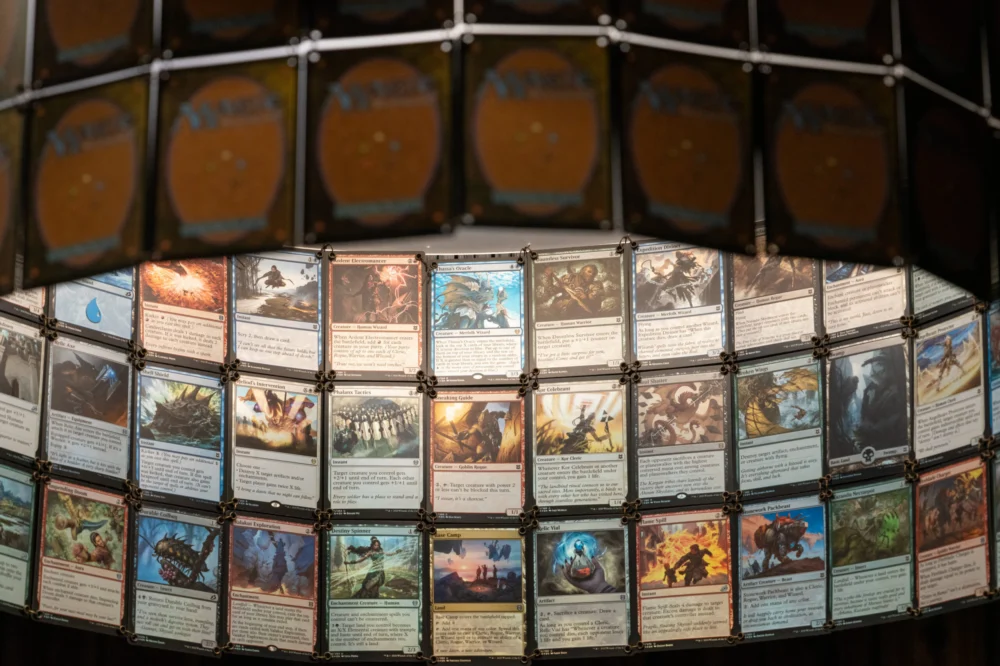
The financial data for the fiscal year 2025 paints a stark picture of two companies moving in opposite directions. Hasbro reported a robust revenue increase of 14%, reaching $4.7 billion, a feat that signaled a successful turnaround after several quarters of restructuring. In contrast, Mattel’s net sales dipped by 1% to $5.3 billion. While Mattel still maintains a larger overall revenue footprint than its rival, the lack of growth has become a primary concern for analysts. Eric Handler, the managing director and senior research analyst at Roth Capital Partners, pointed out that Mattel’s revenue has remained locked in a narrow, uninspiring range for nearly half a decade. This stagnation is reflected in the stock market, where Hasbro’s shares have surged by approximately 46% over the last 12 months, trading near the $100 mark. Meanwhile, Mattel’s stock has plummeted by more than 20% during the same period, languishing around $17 per share.
Hasbro’s current ascent is particularly notable because it follows a period of significant internal upheaval. The company recently underwent a painful but strategic divestment of its film and television production arm, eOne, a move intended to lean the organization down and refocus on its core intellectual properties. Furthermore, Hasbro’s entertainment segment bore the brunt of the 2023 dual labor strikes in Hollywood, which delayed several high-profile projects and licensing opportunities. Despite these headwinds, Hasbro CEO Chris Cocks has remained bullish, telling investors during a recent earnings call that the company has successfully returned to "meaningful growth" by navigating market volatility and a shifting consumer environment.
The engine driving Hasbro’s success is undoubtedly its Wizards of the Coast (WotC) division. This segment, which houses legendary franchises like "Dungeons & Dragons" and "Magic: The Gathering" (MTG), has become the crown jewel of the company’s portfolio. In 2025, Wizards of the Coast saw its revenue skyrocket by 45% to $2.1 billion. While the division accounts for less than half of Hasbro’s total revenue, its high-margin nature means it generates a staggering 88% of the company’s adjusted profits. The success of MTG, a trading card game that celebrated its 30th anniversary in 2023, is a masterclass in modern brand management.
Under the "Universes Beyond" initiative, Hasbro has expanded MTG beyond its original high-fantasy lore to include characters and settings from massive external franchises. Recent collaborations with Marvel’s "Spider-Man," "Lord of the Rings," and "Avatar: The Last Airbender" have proven to be gold mines. The mid-2025 release of a "Final Fantasy" set shattered records, becoming the fastest-selling expansion pack in the game’s history and generating $200 million in sales in just 24 hours. These crossover events do more than just sell cards to existing players; they act as a "funnel," drawing in fans from other fandoms who might never have considered playing a tactical card game before. This "sticky" player base is growing rapidly, with organized play tournaments seeing a 22% year-over-year increase and the Wizards Play Network of retail stores expanding to over 10,000 locations globally.
Looking ahead to 2026, Hasbro plans to double down on this strategy with new "Magic: The Gathering" sets featuring "The Hobbit," "Teenage Mutant Ninja Turtles," and "Star Trek." While the company has officially forecast mid-single-digit growth for the Wizards unit in 2026, many analysts, including Keegan Cox of D.A. Davidson, believe these estimates are intentionally conservative, given the momentum of the "Universes Beyond" pipeline.
While Hasbro consolidates its lead in the tabletop and trading card space, it is also outmaneuvering Mattel in the digital frontier. The runaway success of "Monopoly Go!", a mobile adaptation of the classic board game, has provided a significant boost to Hasbro’s digital and licensed gaming revenues, which rose 6% in 2025. CEO Chris Cocks has frequently emphasized that the "future of play" is increasingly digital and social. To capitalize on this, Hasbro has established an in-house video game studio in Montreal and is aggressively pursuing a "digital-first" strategy for its most popular brands.

Mattel, by comparison, is in the nascent stages of its digital journey. The company recently announced it would acquire full ownership of the Mattel163 mobile games studio by buying out its partner NetEase’s 50% stake. While this move allows Mattel to take full control of digital versions of "Uno" and "Skip-Bo," analysts suggest the company is roughly seven years behind Hasbro in terms of digital infrastructure and monetization. Keegan Cox noted that while Mattel is not yet in a position to compete directly with Hasbro’s gaming juggernaut, the acquisition should eventually improve profit margins as they leverage their own IP for mobile platforms.
The challenges for Mattel are compounded by a slump in its most iconic physical toy categories. While the 2023 "Barbie" movie was a cultural phenomenon that briefly revitalized the brand, the "Barbie" doll segment saw a 7% decline in gross billings in 2025 as the cinematic hype faded. Even more concerning is the 17% drop in the infant, toddler, and preschool segment, led by "Fisher-Price." This category has been in a long-term decline due to lower birth rates in key markets and the "KGOY" (Kids Getting Older Younger) phenomenon, where children abandon traditional physical toys for electronic devices at an earlier age.
The one bright spot in Mattel’s traditional toy portfolio remains "Hot Wheels." The vehicles division saw an 11% jump in gross billings in 2025, proving that some classic play patterns remain resilient. However, the growth of a single brand has not been enough to offset the broader stagnation of Mattel’s core business.
Despite the divergence in their fortunes, both companies stand to benefit from a stabilizing toy market and a packed theatrical calendar. Data from Circana indicates that U.S. toy sales rose 6% in dollars and 3% in units in 2025. This increase in unit sales is a critical metric, suggesting that despite inflationary pressures, consumers are still willing to purchase toys, albeit with more scrutiny on value. James Zahn, senior editor of The Toy Insider, noted that the rise in unit sales is the most important indicator of industry health, as it proves that demand is not merely being driven by price hikes.
The upcoming year promises a "box office boost" for both firms. Mattel is pinning its hopes on the "Masters of the Universe" film slated for June 2026 and a "Matchbox" movie in October. Additionally, Mattel’s hold on the Disney Princess and "Toy Story" licenses means it will be the primary beneficiary of the merchandise blitz surrounding "Toy Story 5" and the live-action "Moana." Hasbro, meanwhile, will lean on its longstanding partnership with Disney for "The Mandalorian and Grogu," "Spider-Man: Brand New Day," and "Avengers: Doomsday."
In a rare move that highlights the shifting dynamics of the industry, the two rivals are even collaborating on a joint product line for Netflix’s animated hit "KPop Demon Hunters." This partnership will see both companies producing a variety of goods, from dolls and plush items to roleplay foam weapons and games. According to Zahn, this specific property is expected to do "big business" for both houses, suggesting that in an increasingly fragmented entertainment landscape, even the fiercest of enemies may find common ground to capture the attention of a fickle consumer base.
As 2026 approaches, the narrative of the toy industry is no longer just about who can sell the most plastic figurines. It is a battle of ecosystems. Hasbro’s transformation into an IP-driven powerhouse fueled by high-margin gaming has given it a significant lead in the eyes of Wall Street. Mattel remains a formidable force with legendary brands, but its path to growth requires a successful pivot into the digital and cinematic realms that Hasbro has already begun to master. For now, the "Magic" is firmly on Hasbro’s side.
