
 By Lina Irawan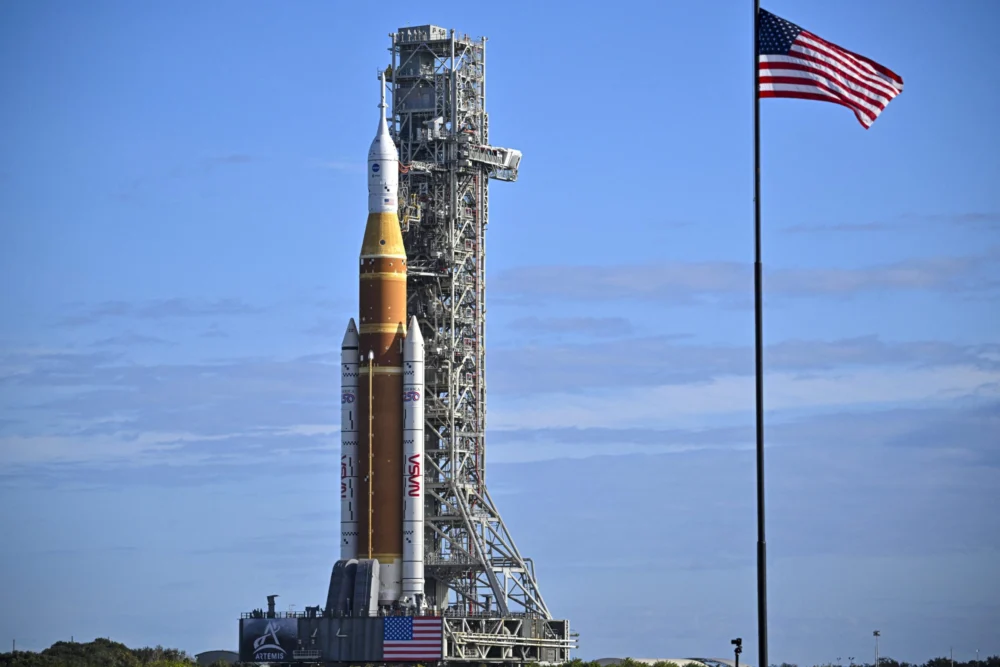
On Saturday, February 21, 2026, NASA officially announced its decision to proceed with the rollback. The issue, identified in the upper portion of the Boeing-built SLS vehicle, involves an interruption in the flow of helium. Helium plays a vital role in rocket operations, primarily used for pressurization of propellant tanks, purging of fuel lines, and actuation of various valves and systems during the complex countdown and launch sequence. A reliable and consistent flow of helium is absolutely critical to ensure the structural integrity of the tanks as propellants are loaded and consumed, and to guarantee the proper functioning of sensitive components that enable the rocket’s ascent. Any anomaly in this system poses a significant risk to mission success and, more importantly, to crew safety.
NASA Administrator Bill Nelson, addressing the development, emphasized that the intricate nature of the repair work mandates the rocket’s return to the VAB. "This isn’t a simple fix that can be done on the pad," Nelson stated, acknowledging the frustration this might cause but reiterating the agency’s unwavering commitment to safety. "The work needed to thoroughly diagnose and rectify this helium flow interruption can only be performed in the controlled environment of the Vehicle Assembly Building, where our engineers and technicians have the necessary tools, access, and space to conduct these complex procedures." He also drew attention to a similar helium issue that surfaced during the SLS’s inaugural flight, the uncrewed Artemis I mission, back in 2022. This historical context highlights a recurring challenge with the system, suggesting either a design sensitivity or a recurring manufacturing/integration issue that NASA is determined to resolve definitively before risking a crewed mission.
Administrator Nelson further expressed the collective disappointment within the agency, writing in a statement on X (formerly Twitter), “I understand people are disappointed by this development. That disappointment is felt most by the team at NASA, who have been working tirelessly to prepare for this great endeavor.” His words underscore the immense effort and dedication poured into the Artemis program by thousands of engineers, scientists, and support staff across the nation.
The announcement of the delay comes less than 24 hours after NASA had optimistically targeted March 6 as the new launch date for Artemis II. This specific date had been set following an extensive wet dress rehearsal conducted on Thursday, February 19, where engineers successfully filled the SLS core and upper stages with cryogenic propellants (liquid hydrogen and liquid oxygen) and simulated many of the critical countdown procedures that would take place on launch day. While the dress rehearsal was largely deemed successful, allowing for the March 6 target to be announced, it appears the helium anomaly either manifested itself during this exercise or was detected during post-test data analysis. The swift transition from an announced launch target to a significant delay highlights the dynamic and often unpredictable nature of large-scale spaceflight operations. Nelson confirmed that the March launch window is now out of the question, with April being the earliest possible next launch opportunity, pending the successful resolution of the technical issue and subsequent re-testing.
The Artemis Program: A New Era of Lunar Exploration
Artemis II is a pivotal mission in NASA’s ambitious Artemis program, a multi-stage initiative designed not only to return humans to the Moon but also to establish a sustainable lunar presence and lay the groundwork for future human missions to Mars. The program represents a dramatic resurgence in lunar exploration, building on the legacy of the Apollo era while leveraging advanced technologies and international partnerships.
The first mission, Artemis I, successfully launched in November 2022, sending an uncrewed Orion spacecraft on a 25-day journey around the Moon and back. This mission was a critical test of the SLS rocket, the Orion capsule, and ground systems, demonstrating their capabilities in a real space environment. The successful splashdown of Orion validated many of the core technologies and procedures, paving the way for crewed flights.
Artemis II is designed to carry a crew of four astronauts – Commander Reid Wiseman, Pilot Victor Glover, Mission Specialist Christina Koch, and Canadian Space Agency astronaut Jeremy Hansen – on a roughly 10-day mission that will loop around the Moon. This will be the first time humans have ventured beyond low Earth orbit since Apollo 17 in 1972, marking a monumental step towards deep-space exploration. The crew will perform various tests of Orion’s systems, including life support, communications, and navigation, while flying to an altitude of approximately 4,600 miles (7,400 kilometers) beyond the far side of the Moon. This "free-return trajectory" will use the Moon’s gravity to slingshot Orion back to Earth, culminating in a splashdown in the Pacific Ocean. The success of Artemis II is paramount for clearing the path for Artemis III, which aims to land astronauts on the lunar south pole, including the first woman and first person of color on the Moon.
The Space Launch System (SLS): Backbone of Artemis
At the heart of the Artemis program is the Space Launch System (SLS), currently the world’s most powerful operational rocket. Developed by NASA with major contributions from companies like Boeing (core stage and upper stage), Aerojet Rocketdyne (engines), and Northrop Grumman (solid rocket boosters), the SLS is a super heavy-lift launch vehicle designed to transport the Orion spacecraft and heavy cargo payloads to the Moon and beyond.
The specific configuration for Artemis II is the SLS Block 1, standing at an imposing 322 feet (98 meters) tall. It consists of:
- Core Stage: The massive central stage, powered by four RS-25 engines (derived from the Space Shuttle Main Engine), which burn cryogenic liquid hydrogen and liquid oxygen propellants. This stage provides the primary thrust for the initial ascent.
- Solid Rocket Boosters (SRBs): Two five-segment SRBs, strapped to the sides of the core stage, provide more than 75% of the total thrust during the first two minutes of flight.
- Interim Cryogenic Propulsion Stage (ICPS): This is the upper stage where the helium issue has been identified. Built by Boeing, the ICPS is powered by a single RL10 engine. Its crucial role is to perform the trans-lunar injection (TLI) burn, a powerful firing that sends Orion out of Earth orbit and onto its trajectory towards the Moon.
- Orion Spacecraft: Perched atop the rocket, the Orion capsule houses the crew and provides life support, propulsion, and navigation for the deep-space mission.
The helium system in question is integral to the ICPS. During the launch sequence, as the ICPS burns its propellants, helium is used to maintain pressure inside the fuel and oxidizer tanks. This pressurization is essential to ensure a steady flow of propellants to the RL10 engine and to prevent the tanks from collapsing under changing pressure conditions. An "interruption in the flow" could mean a leak, a blockage, a malfunctioning valve, or an issue with the helium supply itself. Any of these scenarios could compromise the integrity of the stage or prevent the engine from operating effectively during the critical TLI burn, which would strand the crew in Earth orbit or worse.
The Rollback: A Complex and Time-Consuming Operation
The decision to roll back the SLS and Orion to the VAB is not taken lightly, as it is a highly complex and time-consuming operation. The VAB, one of the largest buildings in the world by volume, was originally constructed for the assembly of Apollo’s Saturn V rockets and later the Space Shuttle. It provides a climate-controlled environment where technicians can safely access all parts of the rocket, including the upper stage, using massive cranes and work platforms.
The rollback process involves:
- Detaching Umbilical Lines: All ground support umbilical lines connecting the rocket to the launch tower must be disconnected.
- Crawler-Transporter: The gargantuan Crawler-Transporter, a tracked vehicle weighing over 6 million pounds and capable of carrying over 18 million pounds, will slowly move under the Mobile Launcher (the platform holding the rocket).
- Slow Journey: The Crawler-Transporter will then transport the Mobile Launcher and the fully stacked SLS/Orion at a painstakingly slow pace – typically less than 1 mile per hour – along the crawlerway from Launch Complex 39B back to the VAB, a distance of approximately 4 miles (6.4 kilometers). This journey can take 8-12 hours.
- Re-Integration: Once inside the VAB, the Mobile Launcher will be lifted onto pedestals, and access platforms will be extended to allow engineers to reach the upper stage.
The entire process of rolling back, diagnosing the issue, performing the necessary repairs, re-verifying the systems, and then rolling out to the pad again, can easily take several weeks, if not months. This directly contributes to the projected delay into April or beyond.
Implications of the Delay
The postponement of Artemis II carries significant implications beyond the immediate schedule.
- Launch Windows: Lunar missions are constrained by specific launch windows dictated by orbital mechanics, the relative positions of Earth and Moon, and lighting conditions for landing sites (for later missions). Missing a window can mean waiting weeks or even months for the next opportune alignment.
- Cost Overruns: Delays in such large-scale government programs invariably lead to increased costs. Maintaining the launch pad infrastructure, paying personnel, and storing propellants all contribute to operational expenses that accumulate with each day of delay. The SLS program itself has faced criticism for its high cost per launch, and further delays will only intensify this scrutiny.
- Program Momentum: While safety is paramount, repeated delays can affect public perception, political support, and the morale of the teams working on the program. Maintaining momentum is crucial for such an ambitious endeavor.
- Artemis III and Beyond: Any delay in Artemis II has a ripple effect on subsequent missions, particularly Artemis III, which relies on data and lessons learned from the crewed circumlunar flight. The goal of landing astronauts on the Moon by 2026 or 2027 is already ambitious, and these setbacks could push that timeline further out.
NASA’s Safety Culture and Historical Context
NASA’s decision to roll back the rocket underscores its deep-seated safety culture, particularly for crewed missions. The agency has a painful history with spaceflight tragedies, including the Apollo 1 fire, the Challenger disaster, and the Columbia breakup, which instilled an unyielding commitment to identifying and mitigating all possible risks before launch. This current issue, though seemingly minor on the surface, involves a critical system for propulsion and tank pressurization, making a thorough investigation and repair non-negotiable.
The mention of a "similar helium issue" during Artemis I is particularly instructive. During the countdown for the first launch attempt of Artemis I in August 2022, a hydrogen leak was detected in a quick-disconnect umbilical. While this was ultimately resolved, there were also reports of issues with the ground support equipment’s helium purging system. While not identical to the current upper stage issue, it points to the complexity and sensitivity of cryogenic fluid handling and related pressurization systems that have consistently posed challenges for the SLS. Learning from and thoroughly addressing these recurring issues is vital for the long-term reliability of the rocket.
Looking Ahead
While the delay is undoubtedly frustrating for the public, the astronauts, and the dedicated teams at NASA, it reflects a pragmatic and responsible approach to human spaceflight. The successful return of humans to the Moon, and eventually Mars, hinges on an unwavering commitment to engineering excellence and safety.
Once the SLS and Orion are back in the VAB, engineers will systematically troubleshoot the helium flow interruption. This will involve detailed inspections, component replacements if necessary, and rigorous testing to ensure the system performs as expected. Only after these steps are completed and verified will NASA set a new, confident launch date. The world will be watching as NASA navigates this latest challenge, knowing that each delay, while disappointing, is a testament to the agency’s priority: ensuring that when Artemis II does launch, it does so safely and successfully, propelling humanity forward in its journey of exploration.
