
 By Rifan Muazin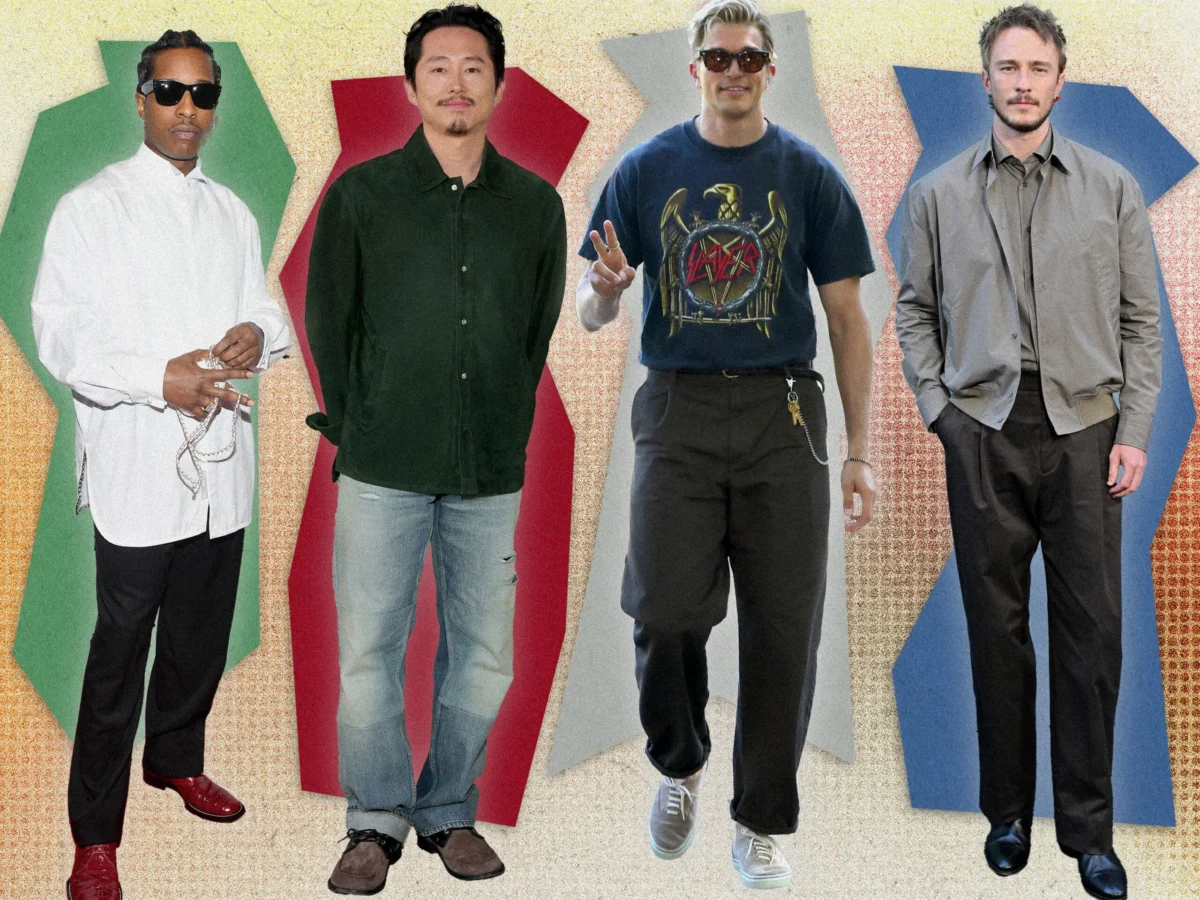
The short answer to the seasonal conundrum of fit is to pretend it is the 1990s. This is not a suggestion to embrace the more caricatured elements of that decade’s fashion, but rather a return to the "Goldilocks" territory that defined the mid-90s: a silhouette that is neither too baggy nor too slim. Earlier this year, as menswear insiders and creative directors debated the trajectory of the trouser, a clear "center of gravity" emerged for the fall 2024 and 2025 collections. The industry has landed on a shape that is straight, relaxed, and vaguely 1990s in its proportions. It is a look that prioritizes comfort without sacrificing intentionality, offering a sturdy foundation for the complex layering that autumn demands.
This aesthetic shift is grounded in historical precedent. If one examines archival imagery from 1992 to 1995, the blueprint for today’s most stylish pants is everywhere. Take, for instance, the effortless cool of Steve Martin in 1994, sporting chinos with a higher rise and a generous, straight leg, or the members of Nirvana in 1992, whose denim choices favored a relaxed thigh and a clean drop to the sneaker. These were not "fashion" statements at the time; they were simply the standard of well-made, functional clothing. Today, that lack of artifice is exactly what makes the look feel contemporary. After years of "influencer" fashion dictating hyper-specific, often uncomfortable trends, the return to a no-frills, straight-leg pant feels like a breath of fresh air for the average consumer.
While this vibe has been percolating through high-fashion circles for several years—championed by labels like Acne Studios and Demna Gvasalia’s Balenciaga—it has recently reached a tipping point in mainstream retail. The democratization of the relaxed-straight fit is perhaps the most significant market development of the season. A quick survey of the American shopping landscape reveals that nearly every major retailer, from the revitalized J.Crew and Abercrombie & Fitch to heritage brands like Gap and Banana Republic, is betting heavily on this specific cut. Many have even leaned into the nostalgia directly, offering styles with names like the "1991 Loose Straight Leg." These aren’t just jeans; the silhouette has permeated the worlds of corduroy, heavy-weight chinos, carpenter pants, and even formal wool trousers.

The technical specifications of this "new" fit are consistent across brands. We are seeing a move away from the low-slung waists of the past. Instead, higher rises are becoming the norm, sitting closer to the natural waistline. This change is not merely for comfort; a higher rise elongates the leg and provides a more flattering drape, especially when a shirt or sweater is tucked in. From the hip, the fabric offers a fuller thigh, allowing for ease of movement, and then falls in a clean, straight line toward the shoe. There is a notable absence of the aggressive tapering that characterized the "tapered fit" craze of five years ago. By maintaining a consistent width from the knee down, the pant creates a more balanced visual weight that complements the bulkier footwear of fall, such as lug-sole boots or chunky heritage sneakers.
Proportions are never more important than in the autumn. As the mercury drops, the upper half of the body becomes a playground for volume: thick flannels, denim jackets, chore coats, tweedy blazers, and heavy overcoats. The physics of style dictates that these layers need a substantial base. If a man pairs a voluminous down puffer or a structured wool overcoat with skinny-fit jeans, the resulting "lollipop" effect can make the legs look disproportionately small and the overall outfit feel top-heavy. Conversely, if the pants are too wide or excessively baggy, the wearer risks looking like they are "swimming" in fabric, losing all sense of their physical frame. The relaxed straight leg provides the perfect structural support, offering enough volume to match the outerwear while maintaining a clean, masculine line.
Designers like Brendon Babenzien have been instrumental in steering the ship toward this balanced middle ground. During his tenure at J.Crew, Babenzien famously introduced the "Giant Fit" chino—a move that initially shocked a public accustomed to slim-fit dominance but eventually shifted the entire industry’s perspective. At his own label, Noah, Babenzien has refined this concept into what many consider the platonic ideal of the contemporary pant. The Noah trouser offers ample room in the seat and thighs, but with a silhouette that feels tailored and intentional rather than sloppy. It is a "grown-up" version of the 90s skate pant, stripped of excess and rendered in high-quality fabrics.
For those who want to experiment with different degrees of this trend, the market currently offers a spectrum of "relaxed." On one end, you have the "Iconic Big Fit" from Polo Ralph Lauren. This style, long a favorite of vintage hunters and eBay scavengers, has seen a massive resurgence in its new iterations. It offers a classic, almost architectural straightness with virtually no taper. On the slightly more adventurous side, brands like Lady White Co. offer a "wide straight leg," which introduces a touch more slouch and fabric for those who want a bit of "drape" in their daily look.

However, it is important to note that the rise of the relaxed straight leg does not mean the "big pant" era is over. The trend toward gigantic, floor-pooling trousers remains a valid style "swerve." Fashion icons like Jacob Elordi and Harry Styles continue to push the boundaries of volume, often wearing pants that are cut dramatically wide, reminiscent of the oversized aesthetics found in Japanese style bibles like Popeye magazine. For the fashion-forward, a pair of trousers that artfully pools over the shoe—as seen on actor Dominic Sessa in his recent Celine appearances—can add a rock-and-roll edge to a traditional blazer. The key distinction this season is that such extremes have become an option rather than the default.
The modern approach to style is increasingly defined by "optionality" and "contextual dressing." This is best exemplified by the recent sartorial run of actor Drew Starkey. Starkey’s outfits demonstrate a masterful understanding of how to use pant silhouettes to balance a look. His baseline is the relaxed-straight fit, but he is not afraid to go wider to anchor an oversized double-breasted blazer, or narrower with a slight bootcut when wearing statement footwear. In this new era, the silhouette of the pant is dictated by the requirements of the entire outfit, rather than the outfit being a slave to a single trending fit.
Ultimately, the most useful way to think about your wardrobe this fall is to ignore the pressure of chasing extremes. The "Goldilocks" pant—the one that sits comfortably at your waist, gives your thighs room to breathe, and falls in a straight, uninterrupted line—is the most versatile tool a man can own. It bridges the gap between the casual and the formal, the vintage and the futuristic. If your trousers look like something a well-dressed man would have worn to a gallery opening in Soho in 1995, you have found the sweet spot. Once you have mastered this baseline, you gain the stylistic freedom to occasionally break out the slouchy, the oversized, or the flared, knowing that your foundational look is rooted in a timeless, proportional reality. This fall, the best way to move forward is to take a very stylish step back.
