
 By Titik Puspa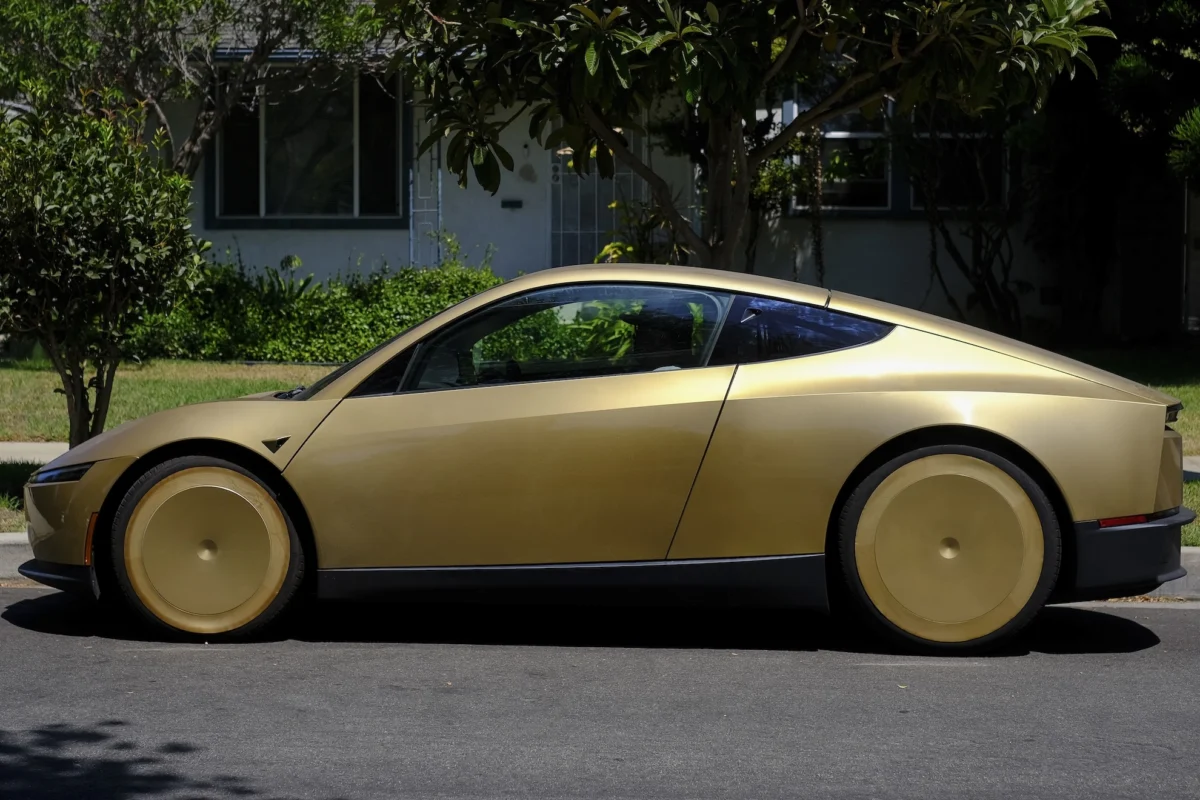
The United States’ top automotive safety regulator, the National Highway Traffic Safety Administration (NHTSA), has initiated a formal investigation into Tesla’s decision to deploy its innovative Cybercab on public roads without a traditional steering wheel or pedals. This significant move by NHTSA comes just hours after Tesla began its first Cybercab operations in Austin, Texas, signaling a critical juncture in the ongoing debate surrounding autonomous vehicle regulation and public safety. The investigation centers on Tesla’s self-certification of the Cybercab as compliant with Federal Motor Vehicle Safety Standards (FMVSS), a process that traditionally relies on automakers attesting to their vehicles’ adherence to established safety rules.
At the heart of NHTSA’s concern lies the fundamental requirement for manual controls in vehicles, such as brake pedals. For decades, federal regulations have mandated these essential components for human-operated vehicles. However, the regulatory landscape has been evolving rapidly. In a development that could significantly impact the future of autonomous mobility, the Department of Transportation had recently proposed the removal of these specific requirements for vehicles explicitly designed for autonomous driving. This proposal, which would represent a substantial shift in regulatory thinking, was seen by many as a direct boon to companies like Tesla, pushing the boundaries of what is considered road-legal for self-driving technology.
NHTSA’s investigation filing explicitly states that Tesla informed the agency of its self-certification for the Cybercab. This self-certification process, while standard practice in the automotive industry, places a significant onus on the manufacturer to thoroughly assess and validate their vehicle’s compliance. The agency’s probe aims to meticulously "examine the process and technical data on which Tesla relied when certifying the Cybercab and related issues." This includes a detailed review of the extent to which Tesla’s certification was predicated on the determination that certain federal motor standards are, in fact, inapplicable to the unique design of the Cybercab. In essence, NHTSA is seeking to understand the technical and regulatory basis for Tesla’s assertion that a vehicle without traditional human interface controls can still meet safety imperatives.
The introduction of the Cybercab represents a bold stride by Tesla into the nascent but rapidly expanding robotaxi market. Unlike conventional ride-sharing services that rely on human drivers, the Cybercab is engineered from the ground up for fully autonomous operation. This design philosophy necessitates the removal of the steering wheel and pedals, features that are integral to human control but redundant in a vehicle that navigates and operates solely through its advanced AI and sensor suite. Tesla’s vision for the Cybercab is not merely to offer a new mode of transportation but to fundamentally redefine urban mobility, promising increased efficiency, reduced congestion, and potentially enhanced safety through the elimination of human error.
Tesla has long been a pioneer in the field of electric vehicles and autonomous driving technology. The company’s Autopilot and Full Self-Driving (FSD) capabilities, while subject to their own set of regulatory scrutiny and public debate, have consistently pushed the envelope. The Cybercab, however, represents a quantum leap. It is not an adaptation of an existing passenger vehicle but a purpose-built machine designed for a specific service. The sleek, futuristic design of the Cybercab, reminiscent of the company’s equally unconventional Cybertruck, underscores Tesla’s commitment to innovation and its willingness to challenge established norms in both vehicle design and functionality.
The decision by NHTSA to investigate so swiftly after the Cybercab’s public debut underscores the high stakes involved. The agency is tasked with balancing the promotion of technological innovation with its paramount responsibility of ensuring public safety on the nation’s roadways. Autonomous vehicles, while holding immense potential to revolutionize transportation, also present a complex array of safety challenges. These include the reliability of sensor systems in diverse weather conditions, the ethical decision-making capabilities of AI in unavoidable accident scenarios, and the cybersecurity of interconnected vehicle systems.
The regulatory framework for autonomous vehicles has been a subject of intense discussion and development globally. While some jurisdictions have embraced a more permissive approach to testing and deployment, others have adopted a more cautious stance, emphasizing the need for robust safety validation and clear regulatory guidelines. The United States, under different administrations, has seen varying degrees of emphasis on autonomous vehicle development and regulation. The proposed removal of the manual control requirements by the Trump administration, for instance, signaled a proactive stance towards facilitating the growth of autonomous technology. However, the Biden administration, through NHTSA, has also demonstrated a commitment to ensuring that safety remains at the forefront.
The self-certification process, while efficient, relies heavily on the integrity and thoroughness of the manufacturer’s internal testing and validation. For a vehicle as novel as the Cybercab, with its complete departure from conventional driver controls, the data and methodologies used for self-certification are of critical importance to NHTSA. The agency will be scrutinizing Tesla’s analysis of its autonomous driving system’s performance, its fail-safe mechanisms, and its ability to handle unexpected situations safely. This includes understanding how the Cybercab’s system is designed to detect and respond to potential hazards, and what redundancies are in place should the primary autonomous system encounter an unforeseen issue.
Expert perspectives on the Cybercab’s regulatory journey are varied. Some industry analysts and safety advocates express concerns about the potential for unforeseen consequences when removing human override capabilities entirely from a vehicle operating in mixed traffic environments. They point to the complexities of real-world driving, where unpredictable events and the behavior of human drivers can pose significant challenges for even the most advanced autonomous systems. The absence of a steering wheel and pedals, in these views, removes a crucial layer of immediate human intervention that could be vital in certain critical moments.
Conversely, proponents of autonomous technology, including Tesla itself, argue that human drivers are inherently fallible and contribute to a vast majority of traffic accidents. They posit that well-designed autonomous systems, free from distraction, fatigue, and emotional responses, have the potential to significantly reduce accident rates. The Cybercab, in this context, represents a logical evolution, where the vehicle’s design is optimized for its autonomous function, rather than being an adaptation of a human-driven vehicle. The argument is that the safety of the Cybercab is not dependent on human control but on the robustness and reliability of its autonomous driving system.
The current investigation by NHTSA is not unprecedented in the realm of automotive safety. Regulators have historically stepped in when concerns arise about the safety of new vehicle technologies or designs. The investigation will likely involve a thorough review of Tesla’s internal documentation, testing protocols, and safety assessments. It may also include requests for Tesla to provide data from its real-world operations, as well as potentially requiring further independent testing or validation of the Cybercab’s systems. The outcome of this investigation could have far-reaching implications, not only for Tesla and the future of its Cybercab service but also for the broader regulatory framework governing autonomous vehicles in the United States and potentially worldwide.
The self-certification process is a cornerstone of automotive regulation, designed to streamline the introduction of new vehicles. However, it relies on a framework built for traditional vehicles. The Cybercab, by its very nature, challenges this framework. Tesla’s assertion of compliance implies that the company believes its autonomous system, coupled with the vehicle’s design, meets the intent of safety regulations, even if it deviates from the literal interpretation of requirements designed for human-operated vehicles. NHTSA’s role is to determine if this interpretation is sound and if the Cybercab, in practice, upholds the highest standards of public safety.
The development of autonomous driving technology is a complex interplay of innovation, engineering, consumer acceptance, and regulatory oversight. Tesla, with its ambitious goals and distinctive approach, has often found itself at the forefront of these debates. The Cybercab, representing one of the most radical departures from traditional vehicle design, is no exception. As NHTSA delves into the technical merits and safety assurances of this novel autonomous taxi, the public will be watching closely. The outcome of this investigation will undoubtedly shape the future trajectory of autonomous vehicle deployment and the evolving definition of automotive safety in an increasingly automated world. The "story is developing," and the regulatory and technological ramifications are significant, pointing towards a future where the very definition of a "vehicle" and its "driver" may be fundamentally redefined.
