
 By admin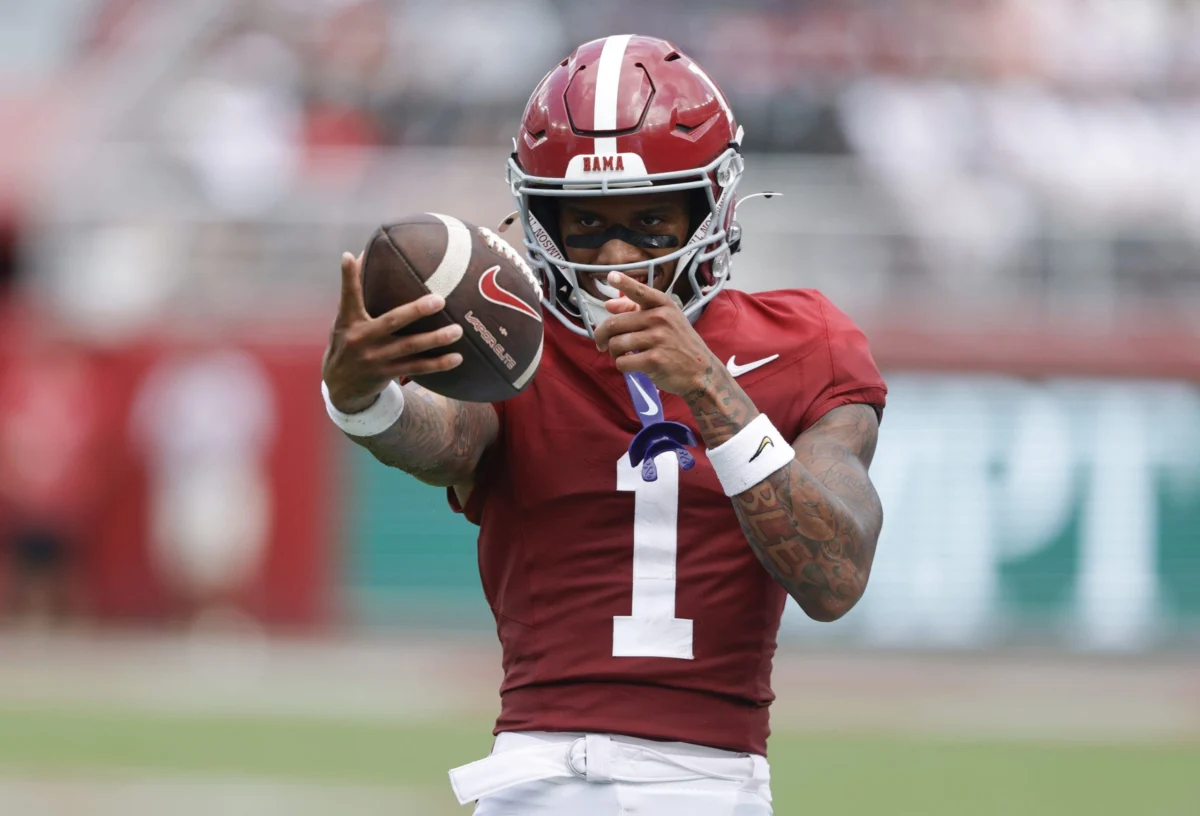
The narrative surrounding Alabama wide receiver Ryan Coleman-Williams, known to many as Ryan Williams during his heralded freshman campaign, has evolved from one of impending superstardom to a complex discussion of potential versus performance. His initial foray into college football at the University of Alabama was nothing short of electrifying, painting a vivid picture of a future NFL talent poised to etch his name among the Crimson Tide’s storied pass-catching lineage. As a true freshman, Coleman-Williams burst onto the scene in the 2024 season opener against Western Kentucky, a game where he showcased his explosive capabilities with two receptions totaling 139 yards, both culminating in touchdowns. At the tender age of 17, one of the youngest players gracing the FBS landscape, his debut was a resounding statement of intent, hinting at a trajectory towards collegiate and potentially professional superstardom.
The momentum generated by that auspicious debut carried Coleman-Williams through a remarkable true freshman season. He delivered a series of prodigious performances against formidable opponents such as Vanderbilt, Georgia, and Tennessee, solidifying his reputation as a game-changer. By the end of his inaugural collegiate year, he had amassed an impressive 48 catches for 865 receiving yards and secured a total of 10 touchdowns. These statistics were not merely impressive; they were recognition-worthy, earning him a coveted spot on the first-team All-SEC and a second-team All-American nod. Furthermore, his exceptional play as a first-year student led to him being named a freshman All-American, an honor reserved for the most impactful newcomers in the nation. His physical attributes – a 6-foot frame with a listed weight of 184 pounds – combined with his speed, agility, and reliable hands, made him a matchup nightmare for opposing defenses and a focal point of Alabama’s offensive attack.
However, the anticipated seamless progression into his sophomore season, a period where many young stars solidify their dominance, proved to be a different story for Coleman-Williams. Despite playing alongside an elite quarterback in Ty Simpson, who would later be a first-round selection in the 2026 NFL Draft by the Los Angeles Rams, Coleman-Williams failed to build upon his freshman brilliance. The sophomore slump, a phenomenon that can derail promising careers, seemed to cast a shadow over his performance. The dynamic explosiveness and consistent playmaking that characterized his initial season were noticeably absent, leaving both fans and analysts questioning the reasons behind his plateau. This stagnation in development, particularly with a quarterback of Simpson’s caliber, fueled speculation about underlying issues that might be hindering his ascent.
Now, as the Crimson Tide prepares for the upcoming season with sophomore Keelon Russell under center, and with another full offseason of development under his belt, the prevailing sentiment is that this should be the year Coleman-Williams finally reaches the elevated level of play that many predicted. Russell, a highly touted prospect in his own right, brings a different skillset to the quarterback position, and the hope is that his leadership and connection with Coleman-Williams will unlock the receiver’s full potential. The offseason training regimen, coupled with the renewed focus on offensive execution, was expected to be the catalyst for a breakout sophomore campaign, transforming him from a promising talent into an undeniable force.
Yet, early indications from the team’s Week 1 opener have cast a shadow of doubt, suggesting that Coleman-Williams may still be grappling with elements that impede his readiness for true superstar status. The game against Western Kentucky, ironically the same opponent against whom he made his sensational debut, was marked by a series of uncharacteristic and, frankly, inexplicable drops. These miscues, particularly coming from a player with his pedigree, have ignited discussions among the fanbase and media alike, with the term "yips" beginning to surface in conversations. The "yips," a form of performance anxiety that can manifest as involuntary muscle contractions and a loss of fine motor control, are a dreaded affliction for athletes across various disciplines, and its potential presence in a receiver’s game can be devastating.
The first instance of this troubling trend occurred midway through the opening quarter. Quarterback Keelon Russell, demonstrating poise and vision, found Coleman-Williams wide open down the seam of the field, a prime opportunity for a significant gain. However, in a moment that left spectators bewildered, Coleman-Williams leaped for the catch, only for the ball to slip through his outstretched hands and fall harmlessly to the turf. The broadcast crew, observing the play, immediately commented, "That’s the bugaboo from last season," a poignant observation that linked this seemingly isolated incident to potential lingering issues from his sophomore year. This comment suggested that the struggles with dropped passes, while not as pronounced as in the opening game, might have been an underlying concern that was masked by other factors or simply overlooked.
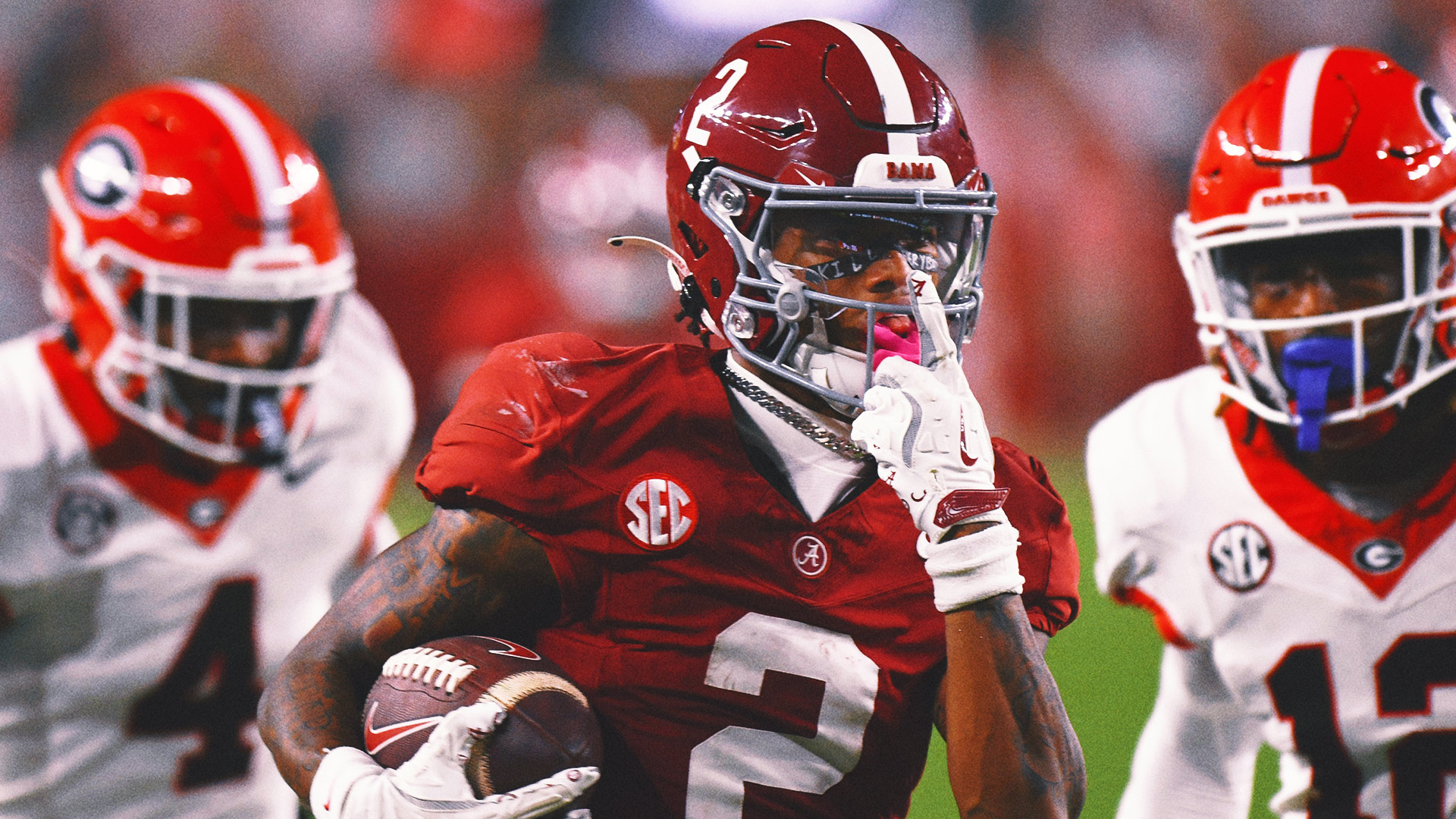
Later in the first half, as the Crimson Tide was orchestrating another promising drive, the scenario repeated itself. Coleman-Williams executed a fade-stop route, a common route designed to create separation in the end zone, and Russell delivered a well-placed ball. Once again, the opportunity was present, the coverage was beatable, but the outcome was unfortunately familiar. The ball, intended for Coleman-Williams’s grasp in the end zone, once again eluded him, falling incomplete. These two drops, occurring in crucial moments and against what should have been manageable plays, raised significant concerns about his mental fortitude and consistency under pressure.
Despite these costly lapses, it is important to note that Coleman-Williams did manage to salvage a respectable performance in the first half, finishing with four catches for 100 yards. This duality of play – the frustrating drops interspersed with flashes of his undeniable talent – is what makes his current situation so intriguing and, for Alabama fans, so concerning. His ability to still rack up significant yardage and make impactful plays demonstrates that the raw talent and athletic ability that propelled him to prominence as a freshman are still very much present. The 100 yards in the first half serve as a stark reminder of the playmaking potential that made him such a highly touted prospect when he initially arrived in Tuscaloosa. It highlights the dichotomy of his game: moments of brilliance that can electrify a stadium, juxtaposed with moments of uncharacteristic failure that can stall an offense.
For Coleman-Williams, the significance of these drops cannot be overstated, especially considering the immense expectations that have been placed upon him entering his junior season. The narrative surrounding his development has been one of steady progression, and these early-season struggles threaten to derail that narrative. However, the fact that he still managed to produce 100 yards in the first half also offers a crucial counterpoint. It signifies that the foundation of his talent remains intact. The question now becomes whether he can bridge the gap between these flashes of brilliance and consistent, reliable execution.
In the grand scheme of Alabama’s aspirations for a national championship this season, the performance of their star wideout will undoubtedly be a critical factor. The Crimson Tide, a program accustomed to competing for the highest honors, relies on its playmakers to deliver in key moments. If Coleman-Williams is to truly embody the "star wideout" role that his talent suggests, he must learn to overcome the mental hurdles that are currently impeding his progress. This involves not only improving his technique and focus on catching the football but also developing the mental resilience to shake off mistakes and perform consistently under the immense pressure of playing for a top-tier program like Alabama.
The journey from highly touted freshman sensation to consistent, elite performer is often the most challenging phase of a college football player’s career. For Ryan Coleman-Williams, this juncture represents a critical test of his character, his dedication, and his ability to adapt. The "yips," if indeed they are the underlying issue, are not insurmountable, but they require a dedicated and multifaceted approach to overcome. This may involve working with sports psychologists, refining pre-catch routines, and building confidence through repetition and positive reinforcement. The coaching staff, under head coach Kalen DeBoer, will play a pivotal role in providing the necessary support and guidance. They must help Coleman-Williams identify the root causes of his struggles and implement strategies to address them effectively.
The upcoming games will serve as a proving ground for Coleman-Williams. Can he rebound from these early-season setbacks and begin to consistently display the playmaking ability that made him a sensation? Or will the struggles with dropped passes continue to haunt his junior campaign? The answers to these questions will not only shape his individual legacy but also have a significant impact on Alabama’s chances of achieving their championship aspirations. The talent is undeniable, the potential is vast, but the path to unlocking that potential is clearly fraught with challenges. The story of Ryan Coleman-Williams in his junior year is one that will be closely watched, as it represents a pivotal moment in his burgeoning career and a key variable in the Crimson Tide’s quest for gridiron glory. The transition from a heralded freshman to a dependable, elite-level receiver requires a mental fortitude that transcends physical ability, and it is this aspect of his game that will be under the most intense scrutiny in the coming weeks and months.
