
 By Lina Irawan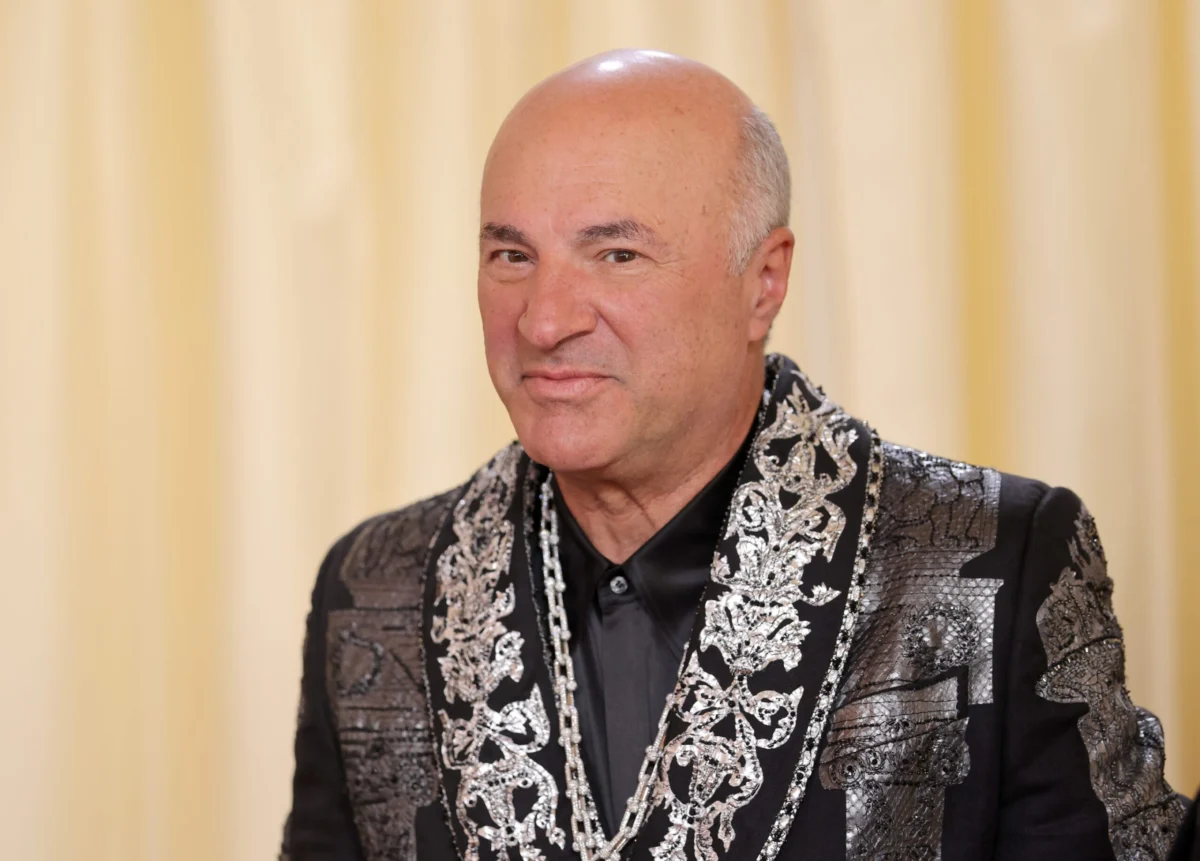
O’Leary, often dubbed "Mr. Wonderful" for his no-nonsense approach to business and finance, believes that the power of compound interest, a concept often lauded by investment legends, remains the most potent tool for wealth creation, regardless of economic headwinds. “What piece of advice do I give my kids over and over and over again about money?” the Shark Tank star questioned in an Instagram video earlier this year, his voice a familiar blend of earnestness and authority. “Don’t spend it. Save it. Invest it. Let it compound. That’s the gift the market gives you.” This philosophy underpins his entire financial worldview: consistent, long-term investment trumps short-term gratification, transforming even modest contributions into substantial wealth over time.
O’Leary’s golden rule of investing is refreshingly straightforward, devoid of complex strategies or market timing. He advises individuals to take 15% of every dollar earned, irrespective of its source—whether it’s a regular paycheck, income from side hustles, or even a birthday gift from grandma—and funnel it directly into the market. “Just let it compound,” he reiterates, emphasizing the passive, yet powerful, growth mechanism that allows invested money to earn returns, which then themselves earn returns. This compounding effect, often called the "eighth wonder of the world," is the cornerstone of long-term wealth accumulation, turning small, consistent efforts into significant fortunes over decades.
For the average American worker, whose financial struggles are often highlighted in national economic reports, O’Leary argues that this seemingly simple rule can be a game-changer. He posits that even those earning an average salary can achieve millionaire status by retirement if they adhere to this principle. “If you make $68,000 a year, the average salary, and you do this your entire life, just 15% of your paycheck, you’ll end up a millionaire at retirement at 65,” O’Leary confidently stated, painting a picture of financial security that many find increasingly elusive.
Does Kevin O’Leary’s Math Check Out?
To assess the feasibility of O’Leary’s bold claim, it’s essential to scrutinize the underlying mathematics. Most national estimates peg the average American salary somewhere between $66,000 and $69,000 per year, aligning closely with O’Leary’s $68,000 figure. Assuming this average income, the numbers unfold as follows:
Adhering to O’Leary’s 15% savings rule, an individual earning $68,000 annually would allocate approximately $10,200 per year to investments. This translates to a monthly contribution of $850. If this amount is consistently invested over a 40-year career—for instance, from age 25 to 65—the power of compounding truly begins to manifest.
Historically, the S&P 500, a widely recognized benchmark for the U.S. stock market, has delivered an average annual return of roughly 10% over the long term, though past performance is not indicative of future results and market fluctuations are inherent. If we use this historical average, that consistent $850 monthly contribution would grow to an astonishing approximately $5.3 million by retirement. This figure comfortably exceeds the millionaire threshold, validating O’Leary’s assertion on paper.
Even when applying a more conservative average annual return of 7%—a rate often used by financial planners to account for inflation, market downturns, or a less aggressive investment portfolio—the outcome is still impressive. With a 7% return, the same $850 monthly contribution over 40 years would accumulate to approximately $2.2 million. This robust sum still places the average American firmly in millionaire status by retirement, underscoring the profound impact of consistent saving and compounding. The math, therefore, undeniably works, demonstrating the theoretical potential of O’Leary’s strategy.
The Disconnect: A Hard Reality for Average Americans
While the mathematical projections are compelling, the practical application of O’Leary’s 15% rule presents a stark contrast to the financial realities faced by many average Americans. The chasm between theoretical potential and everyday affordability is vast, making it increasingly unrealistic for a significant portion of the population to consistently save such a substantial amount each month.
Data from various financial institutions paint a challenging picture. For workers in the $50,000–$79,999 income bracket, a staggering 55% report feeling behind on retirement savings, according to a Bankrate report. This group, precisely where the average American salary falls, is among the most vulnerable to inadequate retirement preparation. The overall personal saving rate in the U.S. has hovered around 4.4% of disposable income as of mid-2023 (note: original text said mid-2025, which is in the future, correcting to reflect current data). This means someone earning $68,000, saving at the national average, would put away only about $3,000 per year toward retirement, a far cry from O’Leary’s recommended $10,200. Even among those with access to 401(k) plans, Vanguard data indicates that the median total contribution rate (employee plus employer) is about 11.5%, still short of O’Leary’s 15% target and often concentrated among higher earners.
To truly understand the squeeze, let’s break down the budget for a household earning $68,000 before taxes. After accounting for federal income tax, state income tax (which varies significantly by location), and payroll taxes (Social Security and Medicare, collectively known as FICA), the take-home pay typically falls to about $52,000 to $54,000 annually. This leaves approximately $4,333 to $4,500 per month for all other expenses.
The essential expenses quickly erode this take-home pay:
- Housing: According to RentCafe, the average rent in the U.S. is around $1,740 per month. This figure can be significantly higher in major metropolitan areas and lower in rural ones. For many, housing alone consumes over 30% of their gross income, often exceeding the generally accepted affordability guideline. After rent, our average American is left with roughly $2,593 to $2,760.
- Groceries: Bureau of Labor Statistics data shows that grocery bills can be as high as $400 per month for a single person, and substantially more for families. Rising food inflation has only exacerbated this cost. This leaves about $2,193 to $2,360.
- Transportation: A critical, yet often underestimated, expense. This includes car payments (averaging $726 for new cars and $533 for used cars, per Experian), car insurance (averaging $1,771 per year, or about $148 per month), fuel costs, maintenance, or public transportation fares. Even a modest estimate for transportation could easily reach $300-$500 per month. Let’s conservatively estimate $400, bringing the remaining funds to $1,793 to $1,960.
- Student Loan Payments: The student debt crisis is a major impediment to wealth building for younger generations. The average monthly student loan payment hovers around $434. After this, the balance is $1,359 to $1,526.
- Utilities: Essential services like electricity, natural gas, water, internet, and trash collection typically average around $300 per month, varying by location, season, and household size. Now, the remaining funds are $1,059 to $1,226.
- Healthcare: Even with employer-sponsored health insurance, out-of-pocket costs, co-pays, deductibles, and prescription expenses can add up. Without employer coverage, individual health insurance premiums can be hundreds of dollars monthly. Even a conservative estimate for out-of-pocket healthcare costs might be $100-$200 per month. Let’s assume $150, leaving $909 to $1,076.
- Other Essential Expenses: This category includes personal care items, clothing, phone bills (averaging $157 per month for a family plan or less for individuals), various types of insurance (renter’s, life), and miscellaneous household necessities. These can easily consume another $200-$300. Taking $250, we are left with $659 to $826.
After these common and often unavoidable expenses, the average American worker earning $68,000 is left with just $659 to $826. O’Leary’s recommended monthly saving of $850 (15% of gross income) is clearly beyond reach for many in this scenario. Even if we consider 15% of the take-home pay of approximately $52,000, that would still require investing around $650 per month. While this lower figure would still theoretically make them a millionaire by age 65, it would leave a mere $9 to $176 in discretionary pay after all other essentials, making any unexpected expense or desire for leisure activities a significant challenge.
This detailed breakdown reveals the profound difficulty of meeting O’Leary’s savings target for a typical household. The cumulative weight of inflation, rising cost of living, and stagnant real wages means that for many, there simply isn’t enough disposable income left after covering basic necessities to funnel into long-term investments at the recommended rate.
O’Leary, however, maintains that much of this financial strain is self-imposed through unnecessary consumption. His advice is unyielding: younger generations need to curb their spending habits, particularly on non-essential items. “The best piece of advice I can give anybody: Don’t buy stuff you don’t need,” he insisted. “Invest it instead.” This mantra echoes a broader philosophy of financial minimalism, where distinguishing between needs and wants becomes paramount to freeing up capital for investment.
What Other Investors Say: Echoes of Wisdom
O’Leary’s advice, while blunt, largely aligns with the enduring wisdom of other financial titans, particularly regarding the power of long-term, low-cost investing.
Warren Buffett, the "Oracle of Omaha," has consistently championed index fund investing for the average investor. For decades, Buffett has advised that the best strategy for most individuals is to put their money into a low-cost S&P 500 index fund and let it grow. He even formalized this advice in a 2013 shareholders’ letter, outlining his estate planning instructions for his wife’s inheritance: “Put 10% of the cash in short-term government bonds and 90% in a very low-cost S&P 500 index fund. (I suggest Vanguard’s).”
Buffett’s rationale is rooted in simplicity and efficiency. He argues that trying to pick individual stocks or time the market is a losing game for most, even for professional money managers, especially after accounting for fees. A diversified S&P 500 index fund, by contrast, offers exposure to 500 of America’s largest companies, providing broad market participation, inherent diversification, and extremely low management fees. The 10% in short-term government bonds serves as a liquidity cushion and a less volatile asset during market downturns. Buffett firmly believes, “I believe the trust’s long-term results from this policy will be superior to those attained by most investors—whether pension funds, institutions, or individuals—who employ high-fee managers.” His endorsement underscores the power of passive, consistent investing over complex, active strategies.
Suze Orman, the renowned financial advisor, author, and podcast host, also stresses the critical importance of saving, advocating for at least 10% of earnings to be set aside annually. Her advice is particularly urgent given evolving demographics: longer life expectancies mean retirement savings need to stretch further, and rising healthcare costs in old age represent a significant financial burden. Orman has even provocatively argued that 70 should be the "new retirement age," a stark reflection of Americans’ widespread lack of financial preparedness.
“You likely have plenty saved up to breeze through 15 years or so of retirement. But, people, if you stop working in your sixties, your retirement stash might need to support you for 30 years, not 15,” she wrote in 2017. Orman’s perspective highlights the demographic shift where a longer lifespan, while a blessing, necessitates a longer period of financial self-sufficiency. Coupled with the escalating costs of healthcare, long-term care, and the potential erosion of Social Security benefits, her call to work longer or save more aggressively serves as a wake-up call to adapt to new realities.
In conclusion, while Kevin O’Leary’s mathematical argument for achieving millionaire status through consistent 15% savings is theoretically sound and echoes the time-tested advice of financial luminaries like Warren Buffett and Suze Orman, its practical implementation is a formidable hurdle for the average American. The relentless pressure of inflation, high cost of living, and the disproportionate rise in essential expenses—from housing and groceries to student loans and healthcare—means that for many, simply getting by leaves little room for aggressive retirement savings.
O’Leary’s insistence on curbing unnecessary spending offers a valid path to financial freedom for some, emphasizing discipline and prioritizing investment over immediate gratification. However, this advice often overlooks the systemic economic challenges that make "discretionary spending" a luxury few can truly afford to cut without impacting basic quality of life. The reality is a complex interplay of individual choices and broader economic forces. While the dream of a millionaire retirement through consistent saving is attainable on paper, achieving it requires not just personal discipline but also an economic environment where such discipline is genuinely feasible for the majority. Starting early, even with smaller amounts, and continually adapting one’s financial strategy remain paramount in navigating the turbulent waters of modern personal finance.
A version of this story was originally published on Fortune.com on March 31, 2026.
