
 By admin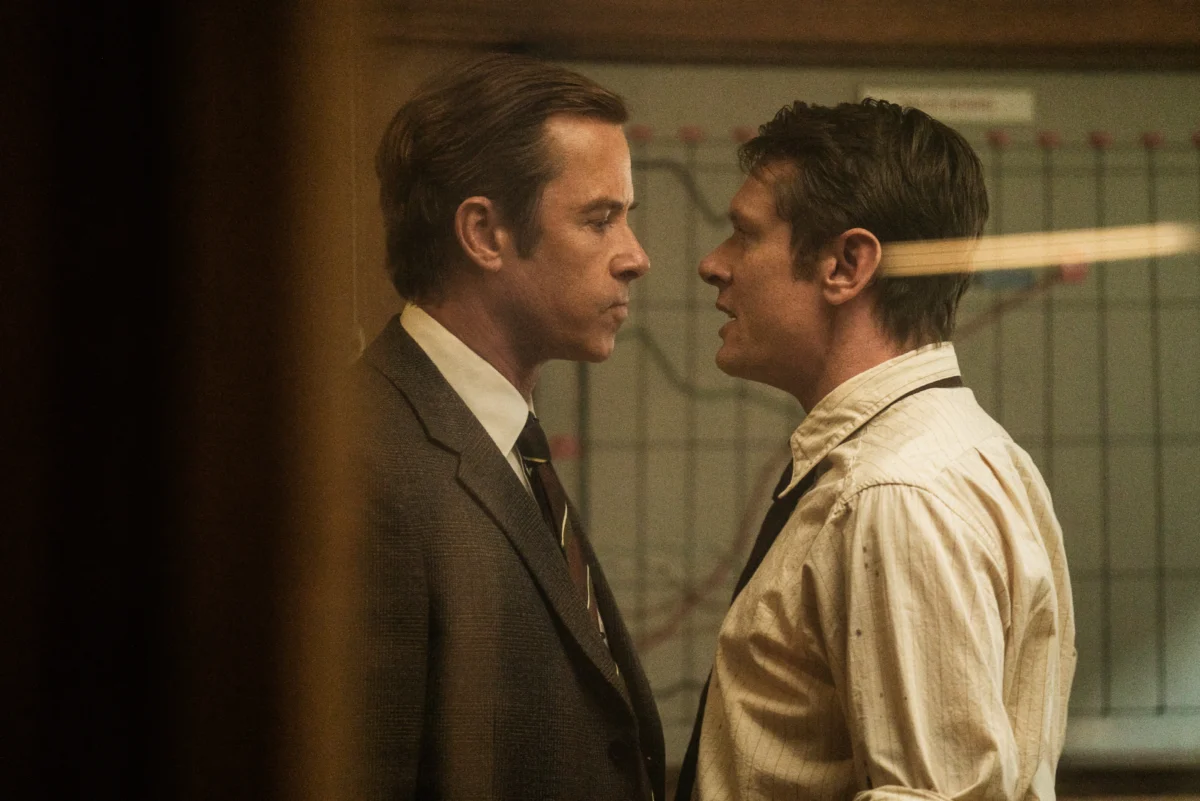
Netflix is strategically positioning "Ink," Danny Boyle’s electrifying adaptation of James Graham’s acclaimed stage play, as a formidable contender for the upcoming Academy Awards. The streamer has meticulously orchestrated the film’s rollout, beginning with its prestigious opening slot at the 83rd Venice International Film Festival, followed by coveted screenings at Telluride and Toronto. This deliberate festival circuit, coupled with a limited December theatrical release and a January streaming debut, signals Netflix’s serious Oscar ambitions for the period drama. Early critical reception has been overwhelmingly positive, with "Ink" receiving a remarkable four-minute standing ovation on its opening night in Venice, and subsequent buzz from Telluride indicating the kind of industry enthusiasm that fuels robust awards campaigns.
"Ink" delves into the foundational mythology of contemporary media, chronicling Rupert Murdoch’s pivotal 1969 acquisition of the struggling tabloid, The Sun, and the subsequent radical transformation he orchestrated. Playwright James Graham, adapting his own Tony-nominated work, imbues the narrative with the precision and tension of a heist, a stylistic approach amplified by Boyle’s signature kinetic direction. The film transcends a simple historical account of newspaper acquisition; it interrogates the very genesis of the modern attention economy, a force that profoundly shapes our daily lives. At its core, "Ink" explores how two ambitious men, Murdoch and his chosen editor, Larry Lamb, pioneered the strategies that would ultimately define how information is consumed and disseminated globally.
Guy Pearce delivers a compelling portrayal of a brash, ambitious, and still relatively young Rupert Murdoch. As an outsider with a palpable chip on his shoulder, Pearce embodies Murdoch’s disruptive vision for Fleet Street, a force that would irrevocably alter the landscape of British journalism. Opposite him, Jack O’Connell is captivating as Larry Lamb, the working-class newspaperman tasked with executing Murdoch’s audacious plans, pushing boundaries and challenging established norms. O’Connell’s performance is particularly charged as Lamb is depicted as the engine of this media revolution, a man willing to transgress ethical lines for the sake of circulation and influence.
Both Pearce and O’Connell are positioned for significant awards recognition, though their paths to potential nominations appear distinct. Pearce, having recently earned a supporting actor nomination for "The Brutalist," benefits from recent Academy acknowledgment and a career trajectory that has consistently showcased his versatility. His role as Murdoch is particularly resonant in the current sociopolitical climate, where the media mogul is often cited as a central figure in the fragmented and polarized information environment of the United States. Pearce’s ability to humanize the young Murdoch, the individual who arguably ignited the fuse of this new media era, offers a potent and timely narrative for an Oscar campaign. This timeliness, the ability to connect a historical figure to contemporary anxieties, is a powerful propellant for awards consideration.
O’Connell, on the other hand, arrives with significant momentum, buoyed by critically acclaimed performances in recent projects like "Sinners" and the "28 Years Later" franchise. His rising profile and the sheer force of his performance position him as a strong contender in a highly competitive Best Actor field. The possibility of O’Connell and Pearce being perceived as a compelling duo from a single film could also amplify their individual campaigns, creating a symbiotic energy that draws voter attention.

The history of Oscar nominations provides ample precedent for actors portraying real-life figures to gain traction, even when their initial campaigns might be underestimated. Figures like Jon Voight in "Ali," Matt Damon in "Invictus," Kenneth Branagh in "My Week with Marilyn," Christopher Plummer in "All the Money in the World," Sam Rockwell in "Vice," J.K. Simmons in "Being the Ricardos," and Jeremy Strong in "The Apprentice" have all secured supporting actor nominations for their transformative portrayals of historical personalities. Pearce, while perhaps not possessing the most screen time, delivers a performance of indelible impact in every frame he occupies. O’Connell, meanwhile, commands the narrative with a more overt breakout trajectory and a dramatic arc that serves as the emotional core of the film.
The presence of two strong acting performances from a single film can be a boon for an awards campaign, but it also presents a strategic challenge for the distributor. Netflix must artfully articulate the distinct merits of each performance, ensuring that neither actor’s campaign is perceived as undermining the other’s chances. The goal is to highlight their essential contributions to the film’s success without creating an internal competition that might dilute their collective impact.
Beyond the compelling performances, "Ink" is meticulously crafted to contend in the technical and creative categories. The film’s production design, spearheaded by Carson McColl and Gareth Pugh, masterfully reconstructs the vanished world of Fleet Street, transporting audiences back to a pivotal era in media history. Fin Oates’s editing imbues the film with a fragmented, kinetic energy, reminiscent of the stylistic innovation seen in Adam McKay’s "The Big Short" and "Vice," effectively mirroring the rapid-fire nature of the burgeoning media landscape. The sound design, helmed by Oscar-winning sound designer Johnnie Burn ("The Zone of Interest"), is a testament to his celebrated expertise, creating an immersive auditory experience. Furthermore, Daniel Pemberton’s original score provides the propulsive, bombastic energy that Boyle’s films demand, capping a remarkably productive year for the composer, who also contributed to "Project Hail Mary."
Netflix possesses the considerable resources necessary to champion "Ink" across multiple Oscar categories. However, the streamer faces the internal challenge of a crowded fall slate. With other significant releases like "La Bola Negra," "The Adventures of Cliff Booth," "Possible Love," "Gentle Monster," and "The Mosquito Bowl" also vying for attention, "Ink" will need to navigate not only competition from rival distributors but also from within its own ambitious lineup. The extensive festival circuit—Venice, Telluride, and Toronto—provides a crucial advantage, establishing an early critical footprint that can sustain a prolonged awards conversation.
Danny Boyle’s directorial presence adds another compelling narrative layer to "Ink’s" campaign. As the Oscar-winning filmmaker behind the critically acclaimed "Slumdog Millionaire," Boyle brings a distinctive visual and kinetic signature that made the fall festival circuit an ideal launchpad for the film. His established reputation and directorial prowess lend immediate gravitas to "Ink," signaling its artistic merit and potential for broad appeal.
The connection to James Graham further elevates "Ink’s" cultural relevance. Graham’s body of work consistently explores the intricate intersections of power, institutions, and public life, spanning politics and journalism. "Ink" arrives at a time when the implications of Rupert Murdoch’s influence on the media landscape are more pronounced and debated than ever. The film’s exploration of this origin story of our current media environment, where questions of truth, influence, and public discourse are paramount, resonates deeply with contemporary audiences. This inherent resonance is arguably "Ink’s" most potent weapon, a narrative advantage that requires no manufactured hype. The film powerfully argues that the foundations laid by the media revolution depicted in "Ink" continue to shape the world we inhabit today, suggesting that we are, in essence, still living within the narratives they printed. This profound connection to the present moment provides a fertile ground for critical acclaim and awards recognition, positioning "Ink" not just as a historical drama, but as a vital commentary on the modern age.
