
 By Lina Irawan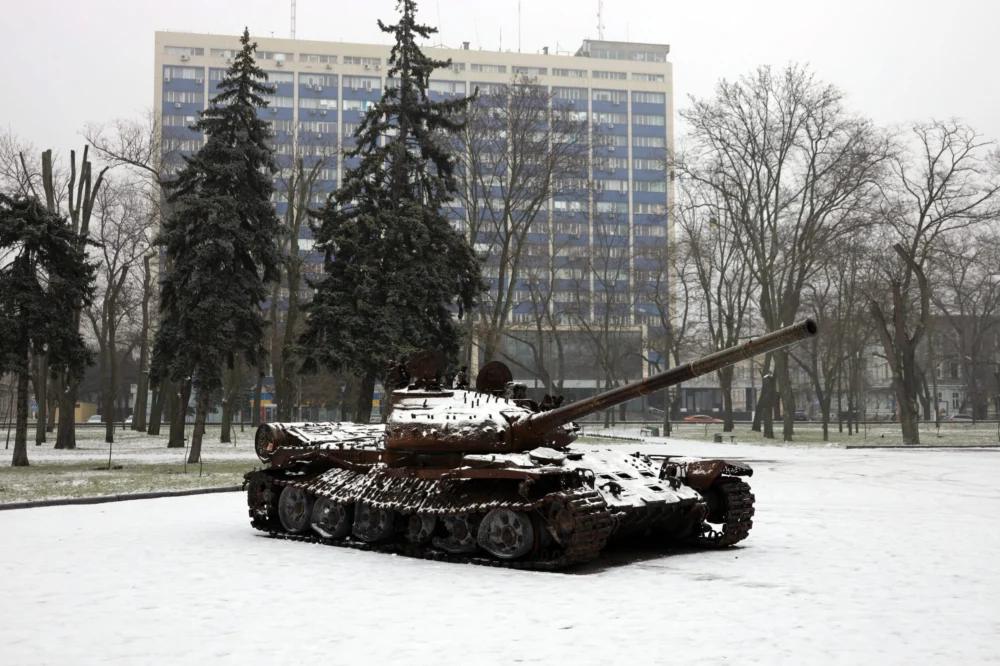
Four years after Vladimir Putin ordered a full-scale invasion of Ukraine, Russia’s economy has entered a “death zone,” a precarious and self-destructive state akin to the extreme altitudes faced by mountaineers. This stark assessment comes from Alexandra Prokopenko, a respected fellow at the Carnegie Russia Eurasia Center and a former adviser to the Russian central bank. In a recent Economist op-ed, Prokopenko vividly invoked the climbing term to describe a situation where, much like a body at extreme altitude, Russia’s economy is consuming itself faster than it can regenerate, systematically eroding its long-term potential for the sake of short-term survival and military sustenance.
Prokopenko articulates this predicament as a “negative equilibrium”: an economic state that manages to hold itself together in the immediate term while steadily dismantling its own future capacity. Unlike a typical recession or cyclical downturn, this isn’t a temporary dip that can be corrected with standard monetary or fiscal adjustments. Instead, it represents a deeper, structural malaise, akin to altitude sickness, where the condition only worsens with prolonged exposure, regardless of temporary respite.
The visible symptoms of this "death zone" are manifold and concerning. Despite official figures often painted in a rosier light by the Kremlin, underlying economic growth, as measured by GDP, has largely stagnated. Crucially, the lifeblood of the Russian economy – oil and gas revenues – has been halved amid the comprehensive Western sanctions regime. These sanctions, including the G7 price cap on Russian oil and the EU embargo on seaborne crude and refined products, have significantly reduced Moscow’s energy income, forcing it to sell oil at a discount and redirect exports to less lucrative markets. This revenue shortfall, coupled with soaring military expenditures, has caused the government’s budget deficit to balloon, rapidly draining the nation’s financial reserves, particularly the National Wealth Fund, which was once seen as a strategic rainy-day fund.
A critical feature of this new economic landscape, as Prokopenko highlights, is the emergence of two distinct, increasingly divergent economic systems. One is the Kremlin-backed military-industrial complex, which receives absolute priority in terms of funding, resources, and talent. This sector, encompassing arms manufacturing, metallurgy, and specialized electronics, has seen unprecedented growth and investment, becoming the primary engine, albeit an artificial one, of economic activity. The other system comprises everything else – the civilian economy, which has been “left in the cold.” This vast segment of the economy, ranging from consumer goods to services and non-military industries, struggles with a lack of investment, dwindling access to Western technology and markets, and a diminishing pool of skilled labor.
The "most dangerous feature of this new structure," Prokopenko warns, "is the fuel it burns." She introduces the concept of “military rent,” explaining that Russia’s economy is now running on massive budget transfers directed towards defense enterprises. These transfers generate wages, stimulate production in related industries, and superficially boost economic activity. However, this economic activity is fundamentally sterile from a long-term growth perspective. The assets produced – tanks, armored vehicles, missiles, and other weapons – are designed for destruction. They are consumed on the battlefield, damaged, or lost, yielding no sustainable economic return or productive capacity for the future. This is a stark contrast to investments in infrastructure, education, or civilian industry, which typically contribute to a nation’s enduring wealth and productivity.
The human cost of this military-driven economy is equally devastating and contributes directly to the "death zone" metaphor. Money spent on attracting fresh recruits to the Russian army, often through lucrative contracts, does not retrain them for more productive civilian roles. Instead, these individuals, often drawn from poorer regions or those seeking to escape economic hardship, are deployed to a brutal war where many are killed or return home permanently wounded, becoming a burden on the state and losing their productive capacity. The Center for Strategic and International Studies has estimated Russian military casualties at a staggering 1.2 million, including approximately 325,000 killed. This catastrophic loss of human capital, particularly young and working-age men, represents a demographic crisis that will cripple Russia’s labor force and innovation potential for decades. Beyond direct casualties, the ongoing "brain drain" of skilled professionals, particularly in the IT sector, who have fled Russia since the invasion and subsequent mobilizations, further exacerbates the decline in national productivity and future economic prospects. As Prokopenko grimly concludes, "The body is metabolizing its own muscle tissue for energy," sacrificing its vital long-term components for immediate, unsustainable survival.
‘The longer you stay, the worse it gets’
While the Central Bank of Russia has attempted to manage the situation by initially hiking interest rates to curb inflation and then cutting them to prop up growth, and the Kremlin has taken steps to rein in the budget deficit through various means, Prokopenko asserts that Russia’s economic predicament cannot be fixed with conventional monetary or fiscal policies. The problem is systemic, not cyclical. A stark illustration of this misallocation of resources is the projection that interest payments on government debt this year are set to exceed combined spending on education and healthcare – a clear indication of the state prioritizing military financing over human development and public welfare.
This unique economic "altitude sickness" means that "the longer you stay, the worse it gets, regardless of rest." Putin, however, finds himself trapped. He cannot afford to "climb back down the mountain." The Russian economy has become perilously reliant on the defense sector; a sudden military demobilization would likely trigger an immediate and severe economic crisis, flooding the labor market with demobilized soldiers, drastically reducing "military rent" transfers, and causing a collapse in the war-driven industrial output. Politically, ending the war would also be an admission of failure that Putin, having staked his legacy and regime stability on this conflict, cannot countenance. Instead, he stubbornly insists on continuing the war, evidently waiting to see if Ukraine or its Western backers will exhaust themselves or "crack first."
Prokopenko’s prediction is sobering: "Russia can probably continue waging war for the foreseeable future." However, she adds a crucial caveat, echoing the mountaineering metaphor: "But no climber can survive the death zone indefinitely—and not all climbers who attempt the descent survive it." This suggests that while Russia may exhibit a degree of resilience in the short term, its current economic trajectory is ultimately unsustainable and fraught with existential risks.
Internal Alarm Bells and Putin’s Bluff
Indeed, alarm bells about the economy have been ringing not only from external analysts but also from within Russia itself in recent months. Reports from the Washington Post earlier this month, citing sources close to the Kremlin, indicated that Russian officials have warned Putin that a financial crisis could hit by the summer. These warnings specifically pointed to the drastic decline in oil revenue, which crashed by 50% in January from a year earlier, and a continuously widening budget deficit, even after Putin hiked taxes on consumers in an attempt to shore up state finances. A Moscow business executive interviewed by the Post went further, suggesting the crisis could arrive in "three or four months," citing spiraling inflation, the closure of restaurants, and thousands of workers being laid off.
These economic strains are a direct consequence of the war, stretching back to the initial invasion four years ago. As comprehensive Western sanctions took hold and Putin mobilized the economy for a prolonged conflict, a tight labor market – exacerbated by military mobilization and emigration – combined with high inflation, forced the central bank to maintain high interest rates. While there has been some recent easing, it has failed to prevent significant spending declines across several consumer categories. Companies, squeezed by high borrowing costs and weaker consumer demand in the civilian sector, are increasingly resorting to desperate measures: more workers are going unpaid, being furloughed, or having their hours cut. This precarious situation has led to a growing number of consumers struggling to service their loans, raising serious concerns of a potential crash in the financial sector. An anonymous Russian official confided to the Post in December, "A banking crisis is possible. A nonpayments crisis is possible. I don’t want to think about a continuation of the war or an escalation."
Amidst these internal economic woes, Western officials have been actively working to counter the narrative that Russia is winning the war. Far from being an unstoppable force, the Russian military is facing its own set of profound challenges. Ukraine, for instance, has recently launched a localized counterattack in recent weeks, exploiting instances where Russian troops have been cut off from crucial Starlink internet service, hindering their communication and coordination. The Institute for the Study of War (ISW) estimated that Ukraine liberated at least 168.9 square kilometers of territory in the southern part of the country since January 1, demonstrating ongoing tactical capabilities.
Furthermore, Christina Harward, deputy Russia team lead at the Institute for the Study of War, highlights a critical imbalance: Russia’s military is now suffering more casualties than it can recruit, a clear sign of unsustainable human resource drain. In an opinion piece for the New York Post, Harward suggested that Putin may soon need to initiate a limited, rolling military call-up to sustain his war efforts, indicating that his outward bravado in negotiations is increasingly becoming a mere bluff.
Harward’s conclusion resonates with Prokopenko’s economic analysis, painting a grim picture for Russia’s future: "With recruitment rates declining, inflation rates rising and his troops’ ability to actually seize the territory he so desires in question, it won’t be long before Putin has to force his population to suffer economic hardship—and death." The combined pressures of a self-consuming economy, a dwindling productive workforce, and a military struggling to sustain its numbers suggest that while Russia may appear resilient on the surface, the "death zone" metaphor accurately captures a nation trapped in a fundamentally self-destructive spiral, where long-term viability is being sacrificed for a war that increasingly looks unwinnable on its own terms.
