
 By admin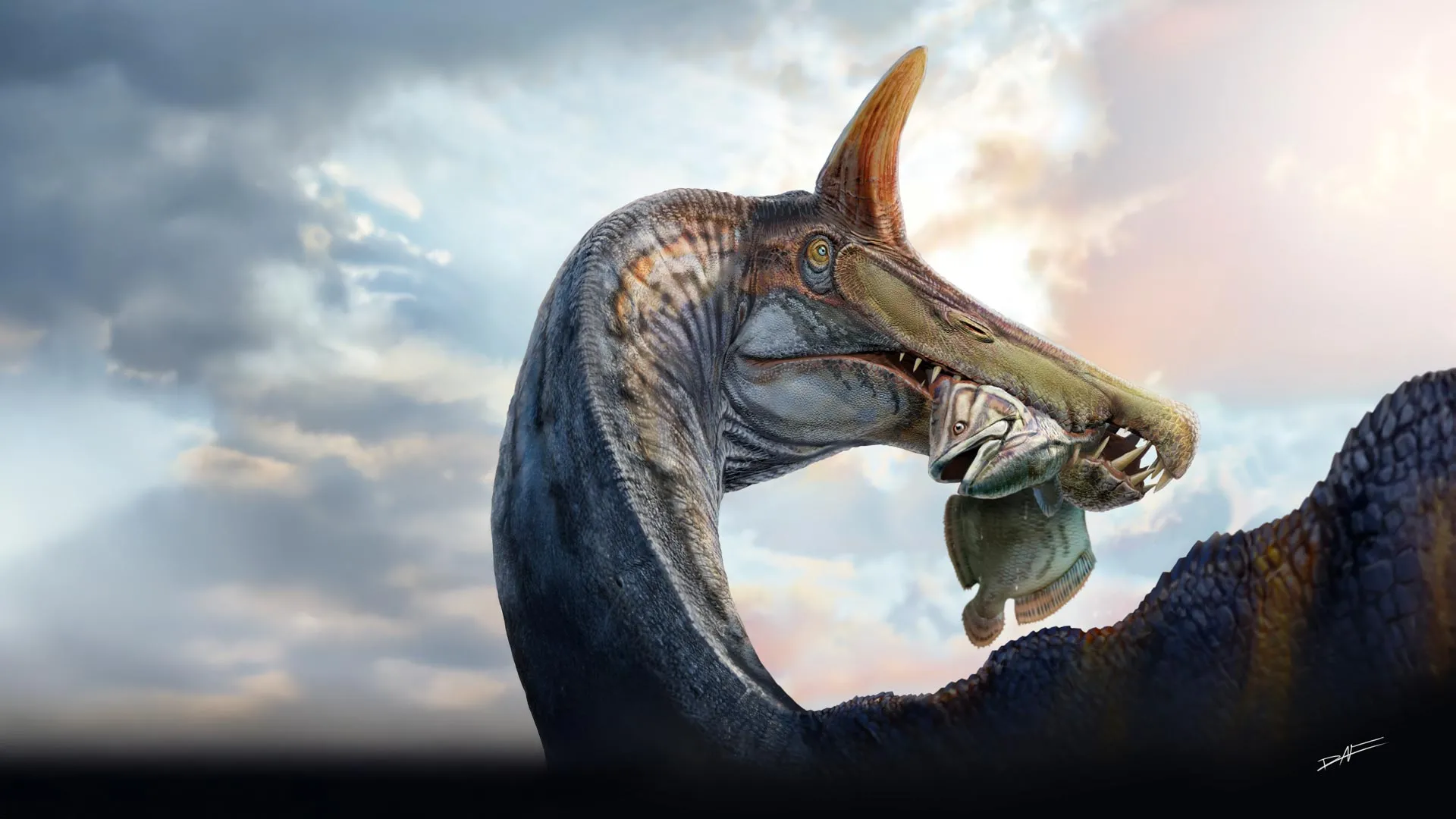
The journey to this extraordinary find began not with a grand expedition, but with a series of serendipitous encounters and a dedicated return to the field. In November 2019, a preliminary survey by Sereno’s team yielded tantalizing clues: a distinctive, scimitar-shaped crest fragment and several jaw pieces, partially exposed on the sun-baked desert surface. At that initial moment, the full implications of their discovery remained elusive. It was only upon their return in 2022, armed with a larger team and more extensive resources, that the true magnitude of the find became apparent. The uncovering of two additional, equally remarkable crests alongside further cranial elements unequivocally signaled the presence of a novel species, a creature previously unrecorded in the fossil annals. This painstaking process, often conducted under the harshest of conditions, underscores the meticulous nature of paleontological discovery.
One of the most arresting features of Spinosaurus mirabilis is undoubtedly its enormous, gracefully curved crest. This striking cranial appendage, a defining characteristic of the new species, presented a unique challenge and opportunity for the researchers. Detailed analysis of the fossilized crest revealed a complex internal structure: a network of intricate blood vessel channels permeating the bone, indicative of a highly vascularized living tissue. The external texture, too, offered crucial insights, suggesting that the crest was covered in keratin, the same resilient protein found in human fingernails, rhinoceros horns, and bird beaks. This keratinous sheathing, combined with the extensive blood supply, strongly implies that the crest was not merely an inert bony projection but a vibrant, metabolically active structure. Researchers postulate that during the dinosaur’s lifetime, this crest would have been brightly colored, perhaps displaying a dazzling array of hues for species recognition, sexual display, or even thermoregulation. Arching upward like a magnificent, curved blade, it would have served as a dramatic and unmistakable visual display, potentially communicating dominance, health, or readiness to mate within its ancient ecosystem.
Beyond its impressive crest, the skull of S. mirabilis presented further remarkable adaptations for its specialized diet. The fossilized remains reveal a unique dental arrangement characterized by tightly interlocking upper and lower teeth. This configuration created an exceptionally effective trap, ideally suited for grasping and securing slippery prey. When the jaws closed, the lower teeth extended outward, meticulously fitting into the spaces between the upper teeth, forming a formidable snare. This particular dental morphology, a prime example of convergent evolution, appears repeatedly throughout the fossil record among various aquatic and semi-aquatic fish-eating animals. Examples include the streamlined ichthyosaurs of the Mesozoic seas, the powerful semi-aquatic crocodiles, and even the agile flying pterosaurs. However, among dinosaurs, this highly specialized feature stands out as a distinguishing characteristic of Spinosaurus and its closest relatives, underscoring their unique ecological niche within the theropod lineage.
The profound significance of the discovery resonated deeply with the expedition team. "This find was so sudden and amazing, it was really emotional for our team," Sereno recounted, his voice still conveying the awe of the moment. He fondly recalled the communal excitement: "I’ll forever cherish the moment in camp when we crowded around a laptop to look at the new species for the first time, after one member of our team generated 3D digital models of the bones we found to assemble the skull — on solar power in the middle of the Sahara. That’s when the significance of the discovery really registered." This anecdote not only highlights the emotional impact of such a find but also emphasizes the innovative, tech-driven approach to modern paleontology, even in the most remote corners of the world.
Inland Habitat Challenges Aquatic Dinosaur Theory
Perhaps one of the most profound implications of the Spinosaurus mirabilis discovery lies in its geographical context, which directly challenges a long-standing theory regarding spinosaurid locomotion and habitat. Until now, the majority of spinosaurid fossils, including those of the iconic Spinosaurus aegyptiacus, had been recovered predominantly from coastal deposits. These ancient shorelines, particularly in North Africa, hinted at a strong association with marine or estuarine environments. This consistent pattern led many researchers to propose that these large, fish-eating theropods may have been fully aquatic predators, adapted to hunting underwater, a radical departure from the terrestrial lifestyle of most other large predatory dinosaurs. Interpretations of their anatomy, such as dense bones (osteosclerosis) for buoyancy control and the distinctive dorsal sail, have been used to support this "aquatic Spinosaurus" hypothesis.
However, the newly identified fossil site in Niger presents a starkly different narrative. The remains of Spinosaurus mirabilis were unearthed in an area situated an astonishing 500 to 1000 kilometers from the nearest ancient marine shoreline. This considerable distance from the coast fundamentally alters the prevailing picture of spinosaurid habitat. Further evidence from the site corroborates an inland, freshwater environment. Nearby, partial skeletons of long-necked sauropod dinosaurs were preserved in river sediments, indicating a lush, forested inland environment crisscrossed by numerous waterways, rather than a coastal marine setting. This ancient landscape would have been a stark contrast to the parched Sahara of today, supporting a rich biodiversity along its rivers and floodplains.
Sereno’s interpretation of this new evidence offers a compelling alternative to the fully aquatic hypothesis. "I envision this dinosaur as a kind of ‘hell heron’ that had no problem wading on its sturdy legs into two meters of water but probably spent most of its time stalking shallower traps for the many large fish of the day," Sereno explained. This "hell heron" analogy paints a picture of a formidable semi-aquatic predator, perfectly capable of navigating deeper waters but likely optimizing its hunting strategy in the more accessible, fish-rich shallows of ancient rivers and lakes. Such an environment would have teemed with diverse and often colossal freshwater fish, providing ample prey for a specialized predator like S. mirabilis. This perspective suggests a more nuanced understanding of spinosaurid ecology, highlighting their adaptability to various freshwater systems, rather than an exclusive reliance on marine or estuarine habitats. The debate over the extent of Spinosaurus‘s aquatic adaptations remains active, but this new find unequivocally broadens the known ecological range of the group.
A 70-Year-Old Clue Leads to the Sahara
The expedition that culminated in this groundbreaking discovery was not born from a satellite image or a recent geological survey, but from a decades-old, almost forgotten clue. The spark for the journey was a brief, enigmatic note tucked away in a 1950s monograph. In it, a French geologist mentioned the discovery of a single, sabre-shaped fossil tooth, remarkably similar to those of the massive predator Carcharodontosaurus, a formidable theropod first identified in Egypt’s Western Desert in the early 1900s. The tantalizing brevity of the note meant the precise location was vague, the description minimal, and the find largely overlooked for generations.
"No one had been back to that tooth site in over 70 years," Sereno revealed, highlighting the sheer audacity of following such a cold trail. "It was an adventure and a half wandering into the sand seas to search for this locale and then find an even more remote fossil area with the new species." This quest was not just a scientific endeavor but an epic journey into the unknown, navigating the treacherous and often disorienting vastness of the Sahara. The expedition required meticulous planning, robust logistics, and an unwavering spirit of exploration. It also underscored Sereno’s commitment to nurturing the next generation of paleontologists: "Now all of the young scholars who joined me are co-authors on the report gracing the cover of Science," a testament to the collaborative and educational ethos of his research.
During their arduous search for the elusive tooth site, the team encountered a local Tuareg man, a nomadic inhabitant of the Sahara with an intimate knowledge of its hidden landscapes. He offered an unexpected and invaluable lifeline: to guide them on his motorbike deep into the Sahara, to a place where he had seen "enormous fossil bones." After nearly a full day of travel, fraught with uncertainty and the relentless challenges of the desert, their guide led them to a truly fossil-rich area. With dwindling daylight and limited time before they had to return to their main camp, the researchers frantically collected what they could – teeth and jaw fragments – pieces that would later prove to belong to the remarkable new Spinosaurus species. This encounter exemplifies the critical role of local knowledge and community engagement in successful paleontological expeditions, particularly in remote and culturally rich regions.
Sereno’s deep connection to the Sahara is palpable. "I was attracted to the Sahara like a magnet once I set foot there 30 years ago," he reflected. "There’s nowhere else like it. It’s as beautiful as it is daunting." His decades of work in this challenging environment have yielded an astonishing harvest of over 100 tons of fossils. His philosophy is simple yet profound: "If you can brave the elements and are willing to go after the unknown, you might just uncover a lost world." This sentiment perfectly encapsulates the spirit of discovery that drives paleontologists into the planet’s most extreme environments.
Expanding Niger’s Paleontological Legacy
The discovery of Spinosaurus mirabilis further solidifies Niger’s burgeoning reputation as a global hotspot for paleontology and archaeology. The country has already yielded a treasure trove of Mesozoic fossils, including other spinosaurids like Suchomimus tenerensis, the giant crocodile Sarcosuchus imperator, and the massive sauropod Jobaria tiguidensis. Dr. Sereno has long been a key figure in developing Niger’s scientific infrastructure and has championed initiatives that bridge scientific discovery with local cultural heritage. A cornerstone of this effort is the creation of the world’s first zero-energy museum, aptly named the Museum of the River, strategically located on an island in the heart of Niamey, Niger’s capital.
This innovative museum is designed not only to showcase Niger’s extraordinary fossil heritage, which now proudly includes this newly identified Spinosaurus, but also to exhibit artifacts from the ancient Stone Age cultures that once thrived in a "Green Sahara," a period when the desert was a verdant, life-sustaining landscape. The museum’s zero-energy design reflects a commitment to sustainability and local resourcefulness, mirroring the ingenuity required for fieldwork in the region. Sereno’s vision extends beyond scientific papers and museum displays; it encompasses a profound respect for the local communities. "The local people we work with are my lifelong friends, now including the man who led us to Jenguebi and the astonishing spinosaur. They understand the importance of what we’re doing together — for science and for their country," Sereno affirmed, underscoring the collaborative spirit that is essential for impactful research in developing nations.
Bringing Spinosaurus mirabilis Back to Life
The journey from fossilized bone to vibrant, lifelike reconstruction is a complex and multidisciplinary process. At the University of Chicago’s South Side Fossil Lab in Washington Park, the team embarked on the painstaking task of preparing and analyzing the newly discovered fossils. Each fragment was meticulously cleaned, repaired, and then subjected to advanced CT scanning. These high-resolution scans provided a wealth of internal data, allowing researchers to create precise 3D digital models of the bones. These digital models were then virtually assembled, providing a comprehensive reconstruction of the Spinosaurus mirabilis skull for the scientific report.
Armed with this accurate digital model, Sereno collaborated with renowned paleoartist Dani Navarro in Madrid. Navarro, known for his scientific accuracy and artistic flair, used the digital data to produce a dramatic scene depicting the new species. The artwork captures S. mirabilis in a dynamic encounter, competing over the carcass of a coelacanth – an ancient lineage of fish that thrived during the Mesozoic Era and would have been a suitable prey item. Beyond the digital illustration, Navarro also meticulously constructed a detailed 3D physical model, layering muscle and skin over a skeletal framework to bring the creature to tangible life. Further artistic contributions came from paleoartists Jonathan Metzger in Chicago and Davide la Torre in Italy, who animated Navarro’s model, creating the captivating scene that ultimately graced the cover of Science. These artistic collaborations highlight the indispensable role of paleoart in visualizing and communicating scientific discoveries to a broader audience. The entire process also demonstrates the transformative impact of modern technology on paleontology, with advances in software, imaging tools, high-resolution cameras, and drones revolutionizing how paleontologists document, analyze, and visualize their discoveries, both in the challenging environment of the field and the controlled setting of the laboratory.
Inspiring the Next Generation
The scientific journey of Spinosaurus mirabilis culminates not just in academic publication, but in a powerful effort to inspire the next generation of scientists and explorers. As a key part of the reconstruction process, the team produced highly accurate replicas of the Spinosaurus mirabilis skull and, notably, a colorful, touchable version of its distinctive curved crest. These replicas serve as invaluable educational tools, bridging the gap between abstract scientific data and tangible experience.
Beginning March 1st, following the highly anticipated publication of the Science paper, these replicas will become central attractions in Sereno’s acclaimed Dinosaur Expedition exhibit at the Chicago Children’s Museum. Young visitors will be granted the unique opportunity to be among the very first to see and, crucially, to handle representations of this newly discovered dinosaur. This hands-on approach is designed to foster a direct connection with scientific discovery. "Letting kids feel the excitement of new discoveries — that’s key to ensuring the next generation of scientists who will discover many more things about our precious planet worth preserving," Sereno passionately articulated. His words encapsulate a profound commitment to public engagement and science education, recognizing that sparking curiosity and wonder in young minds today is paramount to safeguarding our planet’s future and continuing the grand human endeavor of exploration and understanding. The discovery of Spinosaurus mirabilis is therefore not just a chapter in paleontology but an enduring legacy for science and society.
