
 By admin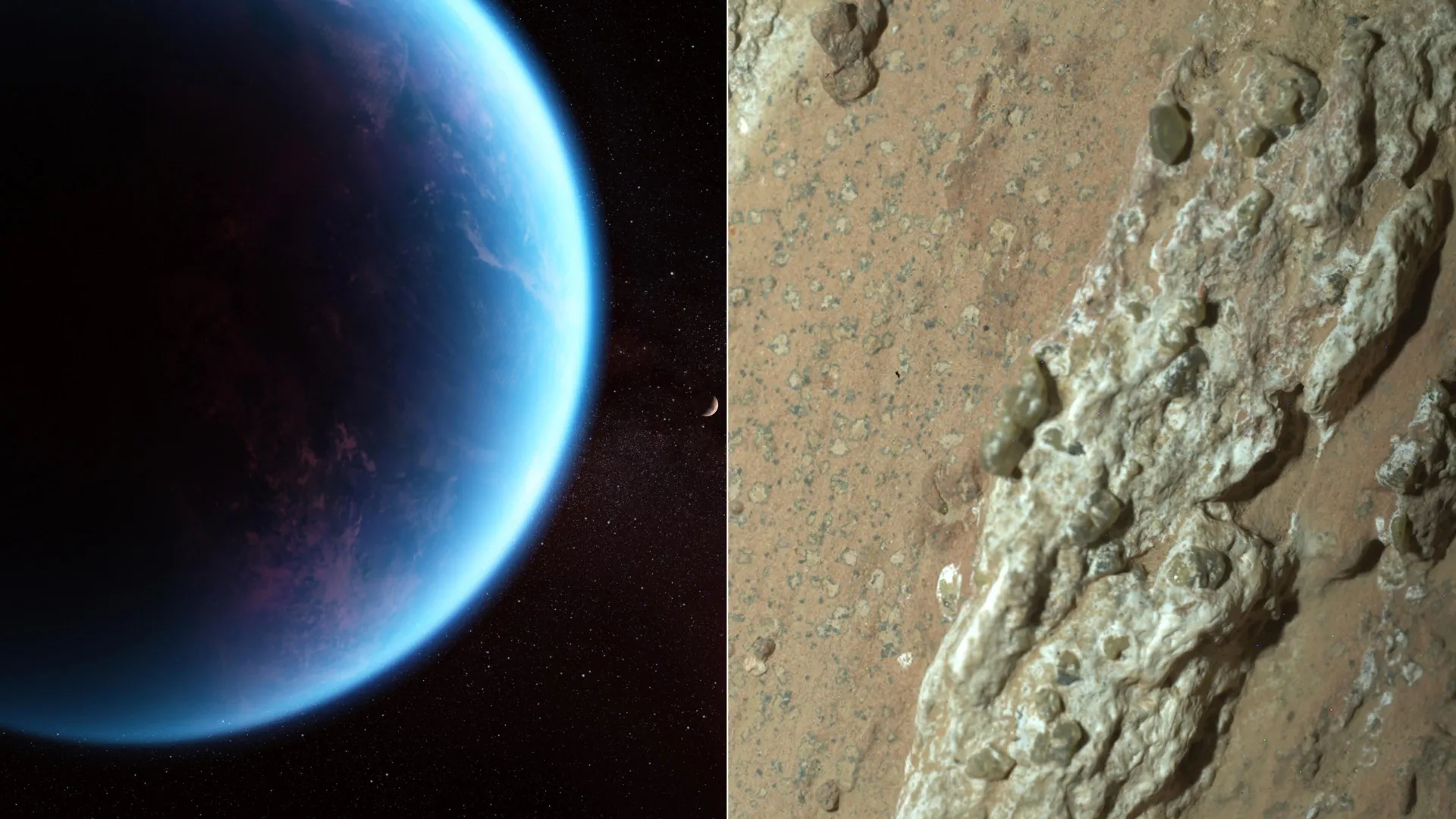
These pronouncements, delivered with the weight of scientific institutions, naturally captured the global imagination. They tapped into a deep-seated human curiosity, a longing to understand our place in the cosmos. Visions of microbial life, or perhaps even more complex organisms, danced in headlines and discussions across the world. But amidst the understandable excitement and media frenzy, a critical, yet often overlooked, question invariably arises: what do the vast majority of scientists actually think about these claims?
Surprisingly, the answer to this fundamental question is often elusive. When a scientific breakthrough or a contentious discovery dominates the news cycle, the public discourse is typically shaped by a select handful of voices. Press officers, eager to highlight their institution’s achievements, and journalists, seeking compelling narratives and quotable experts, tend to feature a few prominent researchers or official spokespersons. While these individuals undoubtedly offer insightful perspectives and are often leaders in their fields, their views, however authoritative, rarely provide a comprehensive picture of the wider scientific community’s collective judgment. Yet, public discussions and policy debates frequently invoke sweeping phrases such as “the science says” or “scientists believe,” implying a clear, unified, and measurable consensus that, in reality, may not exist or may be far more nuanced than portrayed.
The stark truth is that systematic, empirical evidence regarding the distribution of scientific opinion is frequently missing. This absence creates a significant gap between public perception, often fueled by sensationalized headlines, and the complex reality of scientific deliberation. Recognizing this critical void, my colleagues and I recently embarked on an initiative to bridge this gap within the dynamic and highly speculative domain of astrobiology. Shortly after the two significant announcements in 2025 regarding possible extraterrestrial life, we launched a targeted survey of astrobiologists, aiming to systematically map how expert judgment was distributed across this specialized field. Our objective was not to declare a winner or loser, but to understand the spectrum of professional opinion when faced with tantalizing, yet unconfirmed, evidence.
The first captivating case unfolded in April 2025, centered on the exoplanet K2-18b, a world roughly 8.6 times the mass of Earth, orbiting a red dwarf star 124 light-years away in the constellation Leo. K2-18b had already garnered significant attention as a “hycean” exoplanet, meaning it is thought to be a water world with a hydrogen-rich atmosphere, and potentially harbors subsurface oceans that could be habitable. Previous observations by the James Webb Space Telescope (JWST) had already detected methane and carbon dioxide in its atmosphere, alongside a potential absence of ammonia, which is consistent with the presence of a global ocean. Building on this, researchers reported the possible traces of two specific molecules: dimethyl sulfide (DMS) and/or dimethyl disulfide (DMDS). On Earth, these sulfur-containing compounds are overwhelmingly associated with biological activity, particularly produced by marine phytoplankton and other microbial life. The detection, if confirmed, would represent an extraordinary finding, suggesting the presence of active biology on an exoplanet. Media coverage was predictably extensive, with many reports framing the finding as an unprecedented and extraordinary advance in the millennia-long human search for alien life, pushing the boundaries of what was once considered science fiction into the realm of imminent discovery.
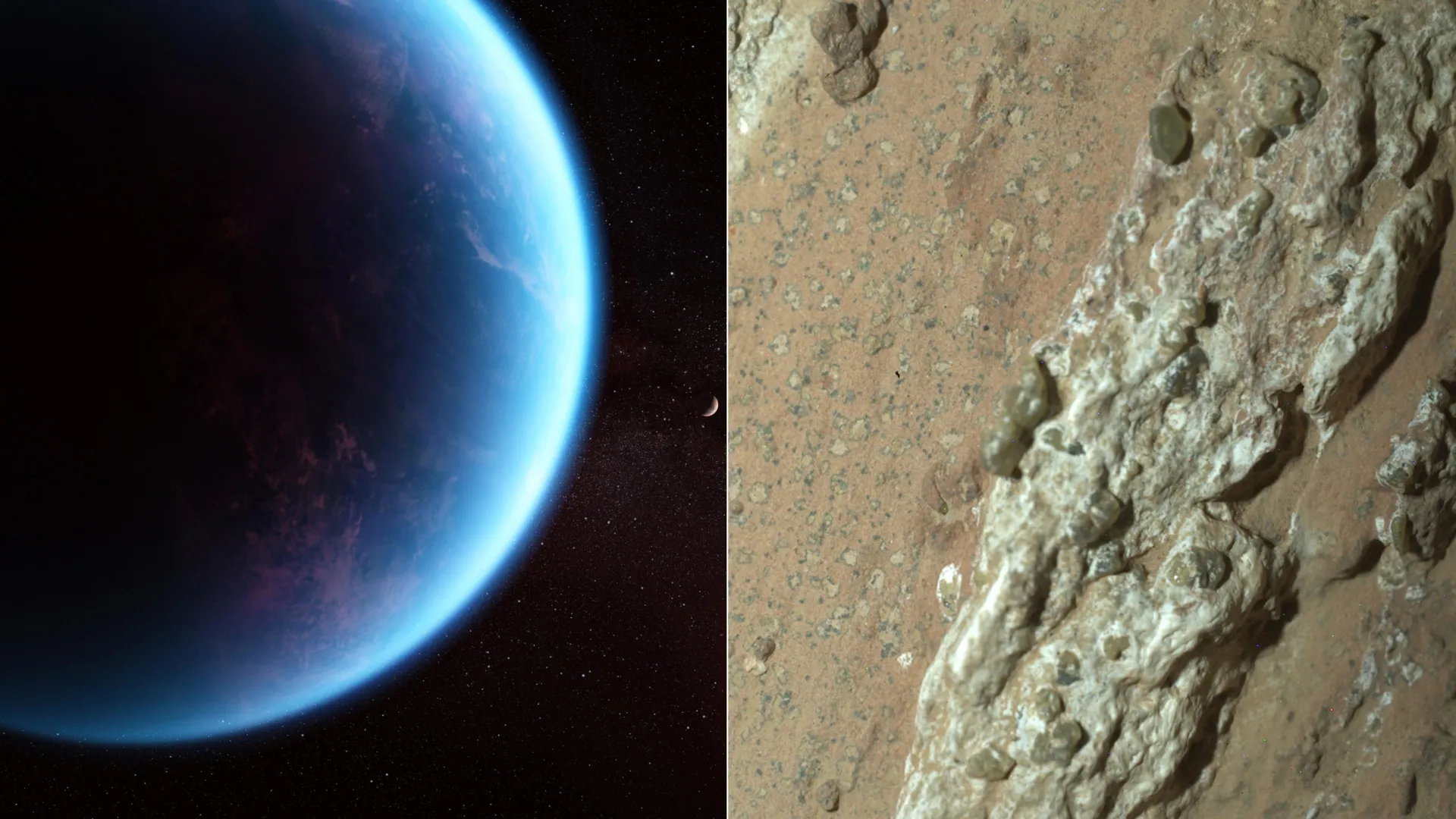
The second compelling case emerged in September of the same year, this time much closer to home, on Mars. NASA announced that its Perseverance rover, diligently exploring the Jezero Crater – an ancient lakebed and river delta system considered prime real estate for past Martian life – had encountered a rock named “Cheyava Falls.” Within this rock, the rover’s sophisticated instruments appeared to preserve a potential biosignature: so-called “leopard spots.” These intriguing features are described as mineral rings that, on Earth, are frequently formed by microbial activity, such as in the process of biomineralization or the fossilization of ancient microbial mats. The discovery was part of Perseverance’s broader mission to collect and cache samples for eventual return to Earth, allowing for more definitive laboratory analysis. Again, the announcement generated immense excitement. Headlines, and indeed NASA officials themselves, including Administrator Sean Duffy, suggested something truly momentous, implying that humanity was on the precipice of confirming life beyond Earth.
What Scientists Actually Thought: A Cautious Consensus
To gauge the authentic pulse of the scientific community, our research team quickly mobilized. We surveyed hundreds of astrobiologists drawn from across the global research community, ensuring a broad representation of expertise. Crucially, these surveys were conducted within days of each announcement, capturing the immediate, unfiltered reactions of experts as the news unfolded. Our central inquiry was straightforward: did scientists, based on the evidence presented, believe that extraterrestrial life had probably been found?
The results, when aggregated, painted a rather cautious and nuanced picture, significantly diverging from the public narrative of imminent discovery. For the exoplanet K2-18b, where the evidence was based on remote atmospheric spectroscopy, only a small fraction of surveyed astrobiologists – a mere 6.6% – agreed that scientists had probably found extraterrestrial life. The overwhelming majority expressed skepticism: nearly two-thirds (approximately 65.4%) actively disagreed with the statement, while a significant 28.0% remained neutral, neither agreeing nor disagreeing. This distribution starkly contrasted with the widespread media portrayal of K2-18b as a probable haven for alien life. The immense distance, the indirect nature of atmospheric spectral data, and the inherent challenges in distinguishing true biosignatures from abiogenic processes in such remote environments likely contributed to this pronounced skepticism.
For the Martian case involving Cheyava Falls, confidence among astrobiologists was notably higher, yet still remained firmly in the realm of caution. Here, 15.1% of respondents agreed that extraterrestrial life had probably been found. While more than double the agreement rate for K2-18b, it still represented a distinct minority. Disagreement, though still substantial, fell to 44.6%, and the proportion of neutral responses rose considerably to 40.3%. This shift suggests a greater openness to the possibility presented by the Martian rock, likely influenced by the prospect of direct sample analysis and the tangible, geological nature of the evidence, even if it wasn’t yet definitive.
However, a simple tally of agreement and disagreement misses a critical layer of insight. Our analysis revealed an important, structured shift in expert opinion. The proportion of astrobiologists who strongly disagreed with the proposition fell dramatically, from 35.1% in the K2-18b case to a much lower 11.1% for the Mars rock. This indicates that while outright endorsement remained low for both cases, the community’s stance evolved significantly. Much of the movement was not a direct leap from outright rejection to full endorsement, but rather a migration from strong, definitive skepticism towards more tentative, nuanced, or neutral positions.
In essence, expert opinion did not simply flip a binary switch from “no” to “yes.” Instead, it evolved in more sophisticated ways. The transition from the K2-18b findings to the Cheyava Falls announcement was characterized by the community becoming more open to the possibility of life without embracing it as a probable outcome. This reflects the inherent caution and rigor of scientific inquiry, particularly when dealing with claims of such monumental significance.
One primary reason for this nuanced distribution of opinion lies in the differing kinds of evidence presented. The K2-18b claim relied on interpreting possible atmospheric signatures detected from across vast interstellar distances. Such observations are indirect, subject to complex atmospheric models, and can be ambiguous, with potential for false positives from non-biological chemical reactions or instrumental artifacts. The high bar for proof in exoplanet biosignatures requires ruling out all plausible abiotic explanations, which is exceedingly difficult from light-years away. Conversely, the Martian case concerned a physical rock sample that could be studied directly, in much greater detail, potentially allowing for microscopic analysis, isotopic measurements, and a more robust geological context to assess the "leopard spots." The prospect of returning these samples to Earth for state-of-the-art laboratory analysis further elevates the potential for definitive conclusions.
At the same time, astrobiologists are acutely aware that apparently lifelike features can sometimes arise through purely non-biological processes. The geological record on Earth is replete with mineral formations, crystalline structures, and chemical reactions that, at first glance, might mimic biological activity. On Mars, with its unique geochemistry and geological history, the potential for "false biosignatures" is a well-recognized challenge, as highlighted by numerous studies, including the paper "False biosignatures on Mars: anticipating ambiguity" (J. Geological Society, 2022). Often, the challenge for scientists is not imagining how life could produce a particular signal, but rather understanding all the various ways nature might produce something similar without any biological involvement. This inherent ambiguity necessitates extreme caution and a rigorous process of elimination.
Scientific opinion, therefore, is rarely binary. Public discourse often treats science as though communities either definitively agree or disagree, but this oversimplification obscures vital information. The full distribution of opinion—encompassing strong agreement, agreement, neutrality, disagreement, and strong disagreement—can each tell us something profoundly different about how a scientific community is responding to a claim. A large neutral response, for instance, is not simply indecision. It can indicate that scientists genuinely judge the evidence to be inconclusive, that they hold an intermediate level of confidence requiring more data, or that they regard a claim as too speculative to either endorse or reject decisively. Similarly, a movement from strong disagreement towards ordinary disagreement, even if overall disagreement remains high, signals a softening of attitudes and a greater openness to future evidence. Treating scientific opinion as simply "for" or "against" risks flattening these critical distinctions and misrepresenting the complex, iterative nature of scientific progress.
Beyond Extraterrestrial Life: The Broader Implications
The broader lesson derived from our astrobiology survey extends far beyond the captivating quest for extraterrestrial life. This challenge of understanding and communicating scientific opinion is pervasive across numerous critical domains. In areas such as climate science, the management of pandemics, the rapid advancement of artificial intelligence, or complex medical research, public conversations frequently invoke the concept of "scientific consensus."
Sometimes, a robust, overwhelming agreement genuinely exists, backed by decades of research and mountains of evidence – for instance, the anthropogenic cause of climate change, where systematic surveys have repeatedly shown over 97% consensus among actively publishing climate scientists. In such cases, articulating this strong consensus is vital for informing public policy and action. However, there are also many instances, particularly at the cutting edge of discovery or during periods of rapid change, where such strong agreement has not yet coalesced, or where significant uncertainty remains.
In these scenarios, we often lack systematic, empirical ways of measuring what scientists actually think. Instead, public discussions rely heavily on selective quotation of a few vocal individuals, whether they are proponents or critics, or on unsubstantiated assumptions about community-wide views. This can lead to mischaracterizations of the state of scientific knowledge, fostering public confusion, undermining trust in science, and potentially hindering effective societal responses to pressing challenges. The rapid evolution of scientific understanding during the COVID-19 pandemic, for example, often left the public grappling with seemingly conflicting expert opinions, unaware that these shifts reflected the dynamic nature of science in real-time, rather than a lack of consensus on established facts.
Encouragingly, efforts to measure scientific opinion more systematically are beginning to emerge. At Durham University, our research group, C-Scope (the Centre for Scientific Community Opinion Polling and Evaluation), is dedicated to studying how expert opinion is distributed and how it changes over time across various scientific fields. It is crucial to emphasize that our aim is not to replace empirical evidence with polling data, nor to treat majority opinion as absolute truth. Scientific truth is determined by evidence, replication, and rigorous methodology, not by a vote. Rather, our objective is to better understand the internal dynamics of scientific communities, particularly how they respond to uncertainty, evaluate new evidence, and gradually converge or diverge on complex issues. By systematically mapping these landscapes of expert judgment, we can provide a more accurate and nuanced understanding of the scientific process itself.
Scientific knowledge, by its very nature, advances through uncertainty, through disagreement, through rigorous debate, and through gradual revision as new evidence emerges. If public discussion, and indeed political will, increasingly hinges on claims about what "scientists think," then it becomes imperative that we make a more concerted and systematic effort to find out, moving beyond anecdote and assumption towards empirical measurement. Only by doing so can we foster a more informed public discourse, grounded in a deeper appreciation for the complex, evolving, and often cautious journey of scientific discovery.
