
 By admin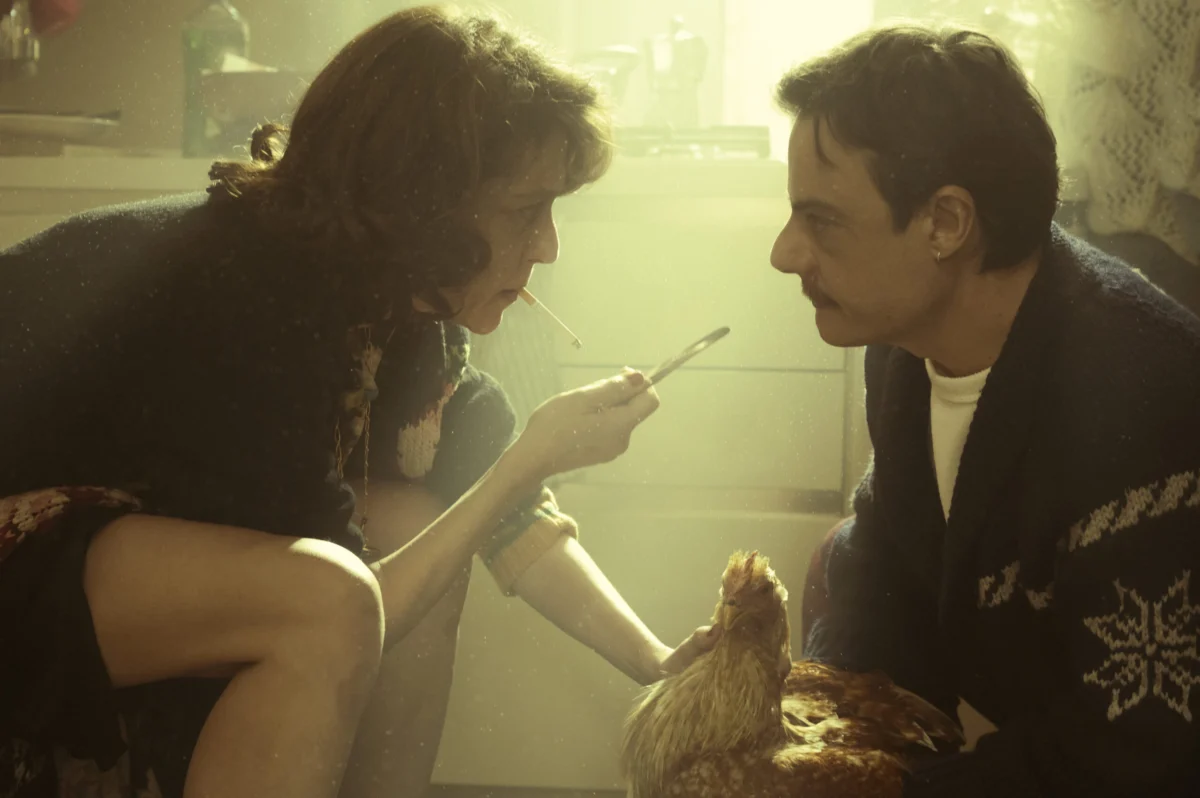
Let’s hope there was a giant extractor fan on the set of "The Fire Within You," because the stench of burnt oil must have been overwhelming. It’s not only food that gets blistered in Edoardo De Angelis’ overwrought screaming match, which makes one envious of the wax Odysseus had handy to plug up his sailors’ ears. In his case, the sounds were of sirens, whereas the characters here would give the harpies a run for their money, making them seem almost dulcet-toned in comparison. Set in a family’s apartment on Christmas Eve and featuring a mother so monstrous not even the Ancient Greeks could have conjured her up, one can only imagine what kind of pressure was on the Venice Film Festival to place it in competition. This intense, claustrophobic drama, a cinematic exploration of familial dysfunction and the indelible bonds that can both suffocate and sustain, offers a searing, albeit often uncomfortable, viewing experience.
The common Italian expression “La mamma è sempre la mamma” translates to “the mother is always the mother,” underscoring a deeply ingrained cultural reverence for maternal figures within the Italian psyche. This veneration, perhaps a residual echo of millennia spent worshiping the Virgin Mary, often renders mothers an inviolable, almost sacred, presence in the national consciousness. Even when a mother exhibits profoundly negative traits, displaying a lack of fitness for her role, her position within the family unit can remain remarkably untouchable. This cultural nuance is central to understanding the dynamics portrayed in "The Fire Within You." For Italian audiences, the relentless vitriol spewed by Angela (Vanessa Scalera) might be met with a resigned understanding, a tacit acceptance that her children, bound by this deeply ingrained respect, will inevitably stick by her. However, for those outside this specific cultural framework, the persistent endurance of such a termagant by her family raises a more challenging question: if they have tolerated such abuse for so many years, do they not, in some perverse way, deserve the continued torment? The film’s deliberate immersion of the audience into this suffocating domestic sphere compels viewers to confront this uncomfortable reality, asking why they are being subjected to such an extended period of familial discord.
Angela, clearly under the influence of alcohol even before the evening’s festivities truly begin, is introduced in the kitchen, her voice a venomous torrent as she excoriates her adult son Antonio (Lino Musella) for his perceived lack of courage in the face of a rather gruesome domestic task – slitting the throat of a live capon. With a cigarette perpetually dangling from her lips, a cloud of ash and a ready supply of profanity always poised to fall, Angela stalks through the house like a tempest, her criticisms aimed indiscriminately at everyone and everything. Her verbal assaults are particularly brutal towards Antonio, a successful literary editor, whom she dismisses as a useless wimp, a failure who hasn’t lived up to her exacting, and seemingly impossible, standards. Her daughter-in-law, Benedetta (Elena Radonicich), fares no better, earning Angela’s scorn for her perceived ineptitude in the kitchen, specifically her inability to navigate the complexities of a stovetop. Furthermore, Benedetta is implicitly blamed for Antonio’s relocation from his Neapolitan roots to the more distant city of Milan, a move that clearly displets his mother. The younger generation is not spared either. Her grandson Andrea (Samuele Mazza) is cruelly labeled a "faggot" simply because he participates in ballet classes, an activity deemed effeminate and unacceptable by Angela. Her granddaughter Valentina (Nicole Malaj) is similarly denigrated for her dietary choices, her vegetarianism earning her the label of "pathetic."
Angela’s culinary skills are as poisonous as her words, with both flowing in a relentless, unappetizing stream. The dining table becomes a battlefield, laden with over-fried eggplant, aggressively hacked cod, and salads drowning in an excessive amount of oil – a reflection of the overwhelming and suffocating nature of her presence. The arrival of Angela’s daughter, Paola (Ivana Lotito), initially seems to offer a potential for a more dynamic interaction. Paola possesses the rare ability to verbally spar with her mother, a stark contrast to Antonio’s passive acceptance of abuse. He endures a barrage of insults, including the chilling declaration that "it would have been better if you had died at birth," a comment that eventually pushes him to a dramatic outburst, culminating in a moment of shattered glass and raw emotional release. This scene, while cathartic for Antonio, underscores the profound damage inflicted by years of emotional abuse.
The narrative arc of "The Fire Within You" is, regrettably, tediously predictable. The film’s visual style, characterized by unsteady camera movements, seems to aim at reinforcing the palpable tensions within the confined single location of the family apartment. The script, in its effort to expose the deeper layers of the family’s dysfunctionality, introduces an uninvited guest: Giulio (Tommaso Ragno), a writer who is slated to collaborate with Antonio on his next novel. His arrival disrupts the already precarious equilibrium of the household. As the evening progresses and Angela’s alcohol consumption escalates, she becomes increasingly flirtatious, her suggestive glances intermingled with a barrage of pointed insults, each carefully crafted to inflict maximum emotional damage. The film then presents a plot twist, one that is so transparently foreshadowed it could be seen from a mile away, designed to elicit a modicum of sympathy for Angela’s long-suffering children, and by extension, the audience. However, the film’s ultimate message seems to circle back to the inescapable Italian adage: "La mamma è sempre la mamma."
Vanessa Scalera delivers a performance that can only be described as thankless, pushed to the absolute extremes of portraying a woman whose sole defining characteristic appears to be her all-consuming bitterness. The screenplay, adapted from Antonio Franchini’s novel, makes no attempt to imbue Angela with any discernible motivation beyond her inherent negativity. Angela’s overwhelming presence consumes so much narrative space that there is barely room for any other character to develop beyond caricature. This includes Paola’s husband, Edoardo (Tony Laudadio), who is presented as a laughable Buddhist, and even Andrea, who, after an initial flicker of personality, devolves into a ludicrous scene of performing ballet moves within the confines of the apartment, an almost surreal echo of Ann Miller in "The Man Who Came to Dinner," a film that, crucially, was a comedy.
Perhaps some Italian viewers might find Angela’s incessant harping about Milan, a city far from her Neapolitan roots, to be a source of humor. However, far more amusing, and indicative of a certain cinematic sloppiness, is the film’s attempt to pass off Antonio’s apartment as a Milanese location. Despite the visual cues and the context suggesting a different setting, the closing credits unequivocally confirm that the entire film was shot in Naples. Compounding these narrative and stylistic issues, De Angelis, known for his previous work like "The Vice of Hope," opts for a musical accompaniment of equal force to the film’s relentless screaming matches. The overall effect is one of sensory overload: between the noxious taunts, the bubbling grease from Angela’s culinary disasters, and the cigarettes stubbed out with abandon in bowls of pasta, the viewing experience is enough to induce a profound sense of indigestion, leaving the audience feeling more assaulted than enlightened. The film’s ambition to dissect the complexities of maternal love and familial obligation is, unfortunately, overshadowed by its unrelenting harshness and a narrative that, while culturally specific, ultimately alienates rather than resonates with a broader audience. The potential for a nuanced exploration of generational trauma and the cyclical nature of abuse is present, but it is largely obscured by the film’s commitment to a more melodramatic and, at times, gratuitous portrayal of familial conflict.
