
 By admin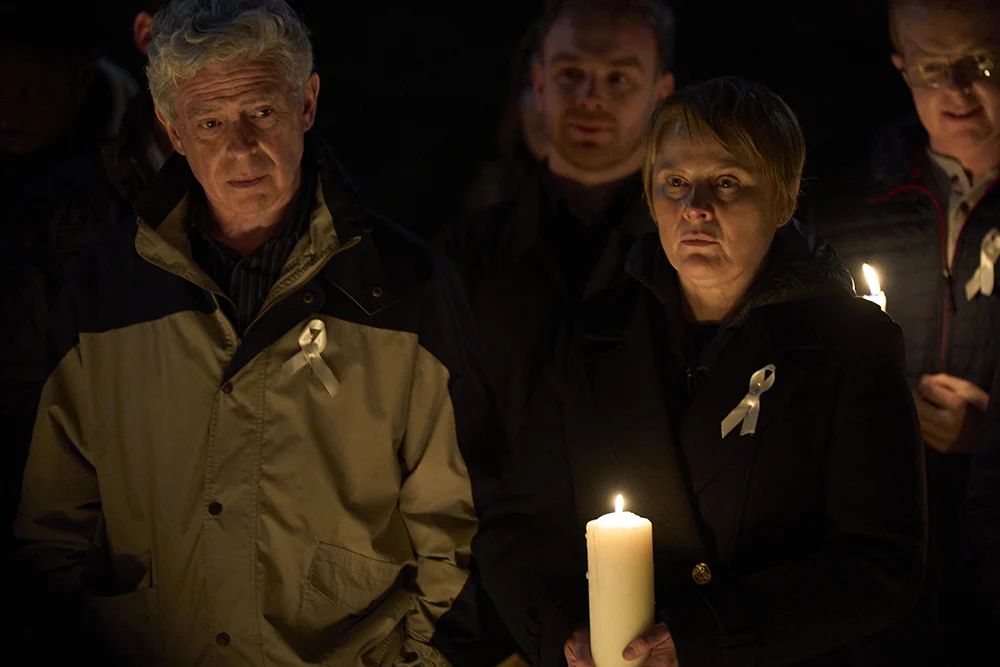
In the quiet solitude of his upstate New York home in late 2017, Liam Neeson received a digital link that would irrevocably alter his perspective and ignite a profound personal mission. The link led to a New York Times article by Dan Barry, a meticulously researched exposé detailing a shameful and deeply buried chapter in Ireland’s history. Almost a decade later, Neeson confided to Variety, he is "still coming to terms with my reaction to it." This wasn’t just another news story; it was a harrowing account of systemic neglect and the brutal silencing of innocence, centered on the Bon Secours Mother and Baby Home in Tuam, County Galway.
The article laid bare the shocking revelations from this Catholic-run institution, which operated for decades until the early 1960s. Within its walls, an estimated 796 infants and children met their end, their tiny bodies unceremoniously dumped into a disused sewage tank and left to decay in unmarked graves, effectively erased from memory and history. This stark reality, once confined to hushed whispers and fragmented memories, was brought into sharp international focus by Barry’s unflinching prose.
At the heart of this journalistic triumph was Catherine Corless, an unassuming local historian whose relentless dedication and unwavering moral compass pierced through layers of institutional indifference and, in the case of the Catholic Church, outright resistance. Corless’s tireless investigative work had already ignited national outrage within Ireland, but Dan Barry’s global reach amplified her discoveries, ensuring that the full horror of the Tuam scandal would resonate far beyond the Emerald Isle’s shores, reaching the consciousness of one of its most celebrated sons.
Neeson, a lifelong Catholic and former altar boy, described his immediate emotional response to the article as a "growing rage, an embarrassment." He confessed to being "staggered" by the revelations. In a moment of profound introspection, he realized that his own public platform could serve a greater purpose. "For the first time in my professional life," Neeson admitted, "I remember thinking: ‘Whatever my celebrity status is in this business, I want this story to be shown to more people.’" This visceral impact propelled him to action, a decision that marked a significant departure from his prolific on-screen career, which had already surpassed 100 film credits.
"I just had to respond to it in some way," Neeson stated, explaining his unprecedented decision to step behind the camera and take on his first producing role. He optioned the rights to Dan Barry’s article, which would ultimately become the film "The Lost Children of Tuam." The documentary, named after the article that inspired it, premiered at the Galway Film Fleadh on its home soil before making its international debut at the Toronto International Film Festival.

The directorial reins of "The Lost Children of Tuam" were entrusted to acclaimed Irish filmmaker Frank Berry, whose previous works, "Michael Inside" and "Aisha," had garnered significant critical praise for their raw authenticity and profound humanism. Berry’s script was penned by Rebecca Lenkiewicz, known for her sharp and incisive writing in films like "She Said." Neeson’s choice of Berry was deliberate. "When I saw those films, I thought – this is the man to tell this story," Neeson explained. He further bolstered the production by bringing on board his frequent collaborator Jules Daly and the powerhouse Irish production company Element Pictures.
Neeson lauded Berry’s directorial approach, noting, "Frank wonderfully eavesdrops with his camera and allows the story to breathe. And especially with this, you do not want to highlight the horror. You just let the story breathe, and the horror will reveal itself." This sensitivity to the subject matter was paramount in approaching such a deeply traumatic event.
Director Frank Berry, though joining the project years after Neeson secured the rights, immediately understood the immense gravity of the undertaking. "There’s a lot of people in Ireland and throughout the world who are affected by religious institutions, so that was on our minds every single step of the way," Berry shared. He emphasized the team’s constant consideration for the survivors: "How would survivors feel when they’re watching this scene or when they’re listening to this dialogue?" The creative team anchored their approach in the very foundation of the story: "But we started at the very beginning at the core of the film, which is this amazing character in Catherine Corless, and we let Catherine lead us."
At the film’s world premiere in Galway, Catherine Corless, portrayed onscreen by Monica Dolan, was a central figure. Berry recounted her reaction to learning of Neeson’s interest in her work: "And she said she nearly fell off her chair." Neeson later met Corless at her home, a decidedly unglamorous encounter he described with a touch of humor, noting, "I did not arrive by helicopter." He recalled a "wonderful afternoon just listening to her, assuring her this would come to the screen and for her to please exercise extraordinary patience." Drawing a parallel to the arduous journey of "Schindler’s List," Neeson told her, " ‘Schindler’s List’ took over 10 years."
Indeed, "The Lost Children of Tuam" would take nearly eight and a half years from its inception to its release. However, this extended gestation period was seen as a necessary commitment by all involved to ensure the story was told with the utmost accuracy and respect. "It was wait everyone was prepared to make to get it right," Berry affirmed.
The decision to film extensively on location in and around Tuam itself was a deliberate choice to imbue the documentary with authenticity. "It was very important for us to be authentic," Berry stated. During the filming process, Berry encountered a number of survivors of the Mother and Baby Home, some of whom even participated as extras. Neeson himself definitively ruled out any on-screen involvement, stating that while the idea "was in my head for about 10 seconds," there was never a serious consideration for him to star.

Berry’s commitment to integrating lived experience into every facet of his filmmaking was evident. "As with all my films, it’s really important to have lived experience at every part of the process," he explained. "It keeps conversations alive and fresh all the time." This philosophy ensured that the narrative remained rooted in the realities faced by the survivors and those who fought for their stories to be heard.
The resonance of "The Lost Children of Tuam" extended beyond those directly impacted by the Tuam home. Berry observed, "There’s so many religious institutions in Ireland that have hurt people, and that pain is very, very palpable in Irish society." He elaborated on the pervasive nature of these historical traumas, extending beyond Mother and Baby Homes to include the secondary school system and the Magdalene Laundries, which operated well into the 1990s. "There are survivors everywhere – and that’s why we made the film, and that’s why what Catherine’s doing is so important," Berry asserted. "A lot of that pain is hidden in Ireland and there’s a lot of wounds in Ireland that need air."
For Catherine Corless, her unwavering dedication to the Tuam scandal and her enthusiastic support for the film were driven by a singular, deeply personal goal: to ensure the area around the former Mother and Baby Home was excavated, that the lost children were reburied with dignity, and that their memory was finally honored. "So this film is part of that journey, and that’s the goal she’s looking at. And she’ll rest when that happens," Berry said, reflecting Corless’s enduring resolve.
Liam Neeson, who has indicated that "The Lost Children of Tuam" may be his sole producing credit, underscored the profound significance of Corless’s work with a poignant quote from the late Irish journalist Con Houlihan: "As the wonderful late Irish journalist, Con Houlihan, once said regarding mortality and memory, ‘to be forgotten is to die twice.’" This sentiment encapsulates the driving force behind the film – a powerful testament to the fight against oblivion and a crucial step in bringing long-overdue recognition and solace to the forgotten victims of Ireland’s painful past. The film serves not only as a memorial but as a vital act of remembrance, ensuring that these lost children, and the injustices they endured, will never again be relegated to the shadows of history.
