
 By Lina Irawan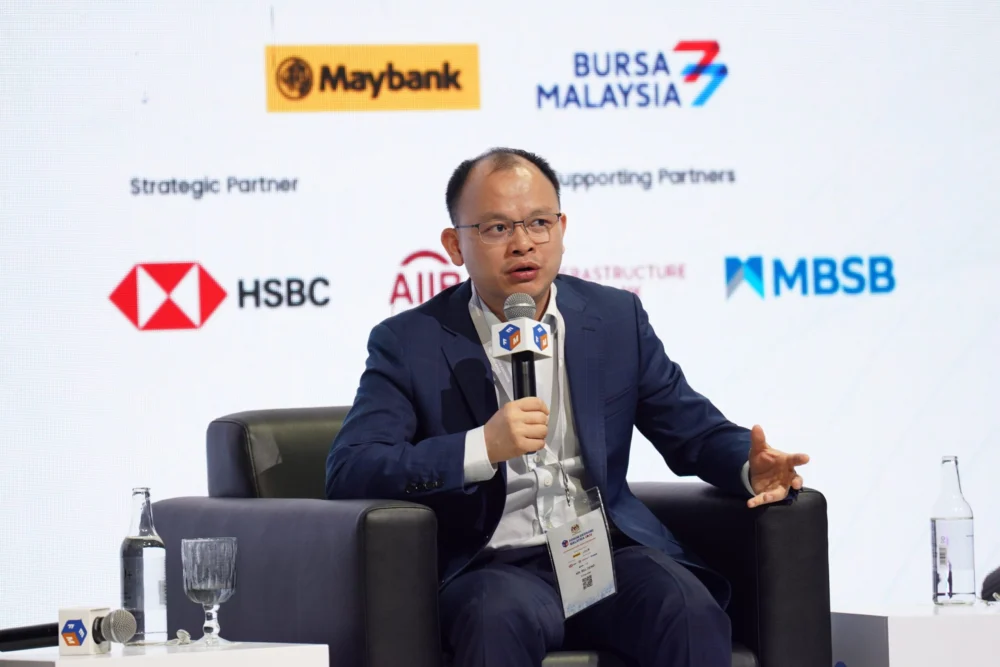
The global economy, in many respects, operates at an unprecedented pace, with supply chains spanning continents and fulfillment centers humming around the clock. Yet, within this hyper-connected ecosystem, a fundamental inefficiency persists: the antiquated methods governing business-to-business (B2B) financial transactions. Bill Deng, CEO of China-based fintech platform XTransfer, argues that stablecoins, digital tokens pegged to fiat currencies, represent the critical innovation needed to finally drag these transactions out of the realm of PDFs and emails and into the digital age.
Deng articulated his vision during an interview with Fortune on the sidelines of the Forum Ekonomi Malaysia in Kuala Lumpur in early February, highlighting the stark contrast between modern consumer finance and lagging corporate payments. "Much of cross-border trade now operates around the clock. Ports, airports, and fulfillment centers work at all hours of the day," Deng observed. "But when it comes to money, there’s no 24/7 infrastructure." While business-to-consumer (B2C) and peer-to-peer (P2P) financial transactions, even across international borders, can now be executed in mere minutes, the corporate world remains mired in slow, often manual processes. Businesses still "negotiate deals via pro forma invoices, and they still exchange information via email," he lamented, painting a picture of an anachronistic system ill-suited for the demands of a dynamic global economy.
The inefficiencies inherent in traditional B2B cross-border payments are manifold and deeply entrenched. They often involve a complex web of correspondent banks, multiple intermediaries, varying banking hours across time zones, and susceptibility to foreign exchange (FX) rate volatility. The existing infrastructure, largely built on systems like SWIFT (Society for Worldwide Interbank Financial Telecommunication), while robust, was not designed for the instantaneous, low-cost, and transparent transactions demanded by today’s digital economy. Each intermediary in the payment chain adds layers of fees, processing time, and potential for errors, leading to delays that can stretch from days to weeks. This not only increases operational costs for businesses but also creates liquidity challenges, particularly for small and medium-sized enterprises (SMEs) that depend on timely cash flow. Manual reconciliation processes further compound these issues, consuming valuable resources and increasing the risk of human error.
Deng firmly believes that stablecoins offer a compelling solution to these systemic problems. By leveraging blockchain technology, stablecoins can make payments "more transparent, faster, and with a much lower cost," he argued. Unlike volatile cryptocurrencies, stablecoins maintain a stable value by being pegged to a reserve asset, typically a fiat currency like the U.S. dollar (e.g., USD Coin, Tether). This stability, combined with the underlying blockchain’s efficiency, allows for near-instantaneous settlement, bypassing traditional banking hours and the need for multiple intermediaries. For domestic payments, Deng conceded, "stablecoins do not add that much value," as many countries already boast efficient real-time payment systems. "But for cross-border transactions, they can be extremely valuable," he stressed, owing to their ability to circumvent the complex and costly international banking framework.
The global stablecoin market is experiencing robust growth, signaling increasing interest and adoption. Its total market value has surged to an estimated $300 billion, marking a significant 75% year-on-year increase. This growth reflects a growing recognition of stablecoins’ potential beyond speculative trading, extending into areas like decentralized finance (DeFi) and international remittances. However, despite this impressive market capitalization, their integration into mainstream cross-border payments remains nascent. A McKinsey estimate indicates that annual stablecoin payments amount to only $390 billion, representing a mere 0.02% of the total global cross-border transaction volume. This stark contrast highlights the vast untapped potential and the significant hurdles that still need to be overcome, including regulatory clarity, scalability, and broad institutional acceptance.
Governments worldwide are beginning to acknowledge the transformative potential of stablecoins while also grappling with the need for robust regulatory oversight. Several jurisdictions, including the U.S., Japan, and the Chinese special administrative region of Hong Kong, have initiated or established regulatory frameworks. In the U.S., discussions are ongoing regarding federal oversight, with proposals aiming to classify stablecoin issuers as banks or money transmitters, addressing concerns around consumer protection, financial stability, and anti-money laundering (AML). Japan’s Payment Services Act, amended in 2022, was among the first in the world to provide a legal framework for stablecoins, recognizing them as digital money. Hong Kong has also moved towards a licensing regime for stablecoin issuers, signaling a pragmatic approach to fostering innovation while mitigating risks. These efforts are crucial for building trust and providing the necessary legal certainty for stablecoins to achieve broader adoption in legitimate financial flows. International bodies like the Bank for International Settlements (BIS) and the Financial Stability Board (FSB) are also actively studying and developing global standards for stablecoin regulation, emphasizing interoperability and risk management.
A significant driver for stablecoin adoption, particularly in developing economies, is the current reliance on informal "shadow banking" systems. Small and medium-sized enterprises (SMEs) in many parts of the developing world frequently resort to these unregulated channels to move money across borders, often due to a lack of access to formal banking services or the prohibitive costs and delays associated with them. A prime example is "hawala," a centuries-old, trust-based money transfer system that predates the formal international banking system. In a typical hawala transaction, a customer pays cash to a broker in one country, and a corresponding broker in the destination country pays out the equivalent to the intended recipient, often with minimal fees and great speed. Hawala’s enduring appeal lies in its efficiency and its ability to reach areas underserved by traditional financial infrastructure. "It’s become the mainstream for SMEs in many developing countries," Deng explained, underscoring its critical role for businesses operating outside the formal financial system.
However, the informal nature of hawala and similar shadow finance systems presents significant challenges, primarily concerning money laundering and illicit financial flows. Because these systems operate outside the purview of regulated financial institutions, they can be exploited by criminal networks to launder proceeds from fraud, drug trafficking, and other illegal activities. Governments worldwide scrutinize such systems due to these inherent risks. When traditional banks detect these "tainted flows" or suspect their involvement in illicit activities, they often resort to "de-risking" strategies, which involve freezing accounts or terminating relationships with customers deemed high-risk, including many SMEs engaged in cross-border trade. This creates a vicious cycle: "Banks are reluctant to provide services to SMEs, which forces enterprises to use hawala, and as a result, banks are even less willing to serve them," Deng articulated, highlighting the systemic exclusion faced by a vital segment of the global economy.
XTransfer aims to break this cycle by offering a compliant and efficient alternative for SMEs. The company leverages advanced technology, particularly artificial intelligence (AI), to navigate the intricate global landscape of anti-money laundering (AML) and counter-terrorist financing (CFT) regulations. Deng proudly stated that XTransfer’s AI-driven compliance framework allows the company to perform due diligence and transaction monitoring "more accurately than traditional banks at just 5% of the cost." This efficiency stems from AI’s ability to rapidly process vast amounts of data, identify anomalies, and flag suspicious activities with greater precision than manual processes, significantly reducing operational overheads.
Furthermore, Deng highlighted that stablecoins could play a crucial role in enhancing governmental efforts to monitor and curb illicit financial flows. Unlike opaque cash transactions or some informal systems, stablecoin transactions, by design, can be made to carry immutable data about the sender, receiver, and the explicit purpose of a payment on the blockchain. This inherent transparency makes it considerably easier for regulators and law enforcement agencies to track funds and act swiftly if any activity appears suspicious. "If there is some criminal evidence to show that the money needs to be frozen, issuers can freeze it within one second," Deng explained, underscoring the potential for real-time intervention and enhanced security that stablecoins offer. This capability contrasts sharply with the often protracted and complex legal processes required to freeze funds in traditional banking systems, especially across borders.
Bill Deng’s journey into fintech is rooted in a deep understanding of the payments sector. He spent over a decade honing his expertise, first at the global payments giant Visa, then at Ant Financial, an affiliate of Alibaba and the operator of Alipay, China’s ubiquitous mobile payment service. His experience at Visa provided him with insights into traditional card networks and international payment rails, while his tenure at Ant Financial immersed him in the cutting edge of digital payments and the power of fintech innovation, particularly in a B2C context. Inspired by several colleagues who left to found successful startups, including the ride-hailing firm Didi, Deng decided to make the entrepreneurial leap. In 2017, he co-founded XTransfer with five others, envisioning it as a B2B version of Alipay – a platform that could bring similar levels of convenience, speed, and cost-effectiveness to cross-border business transactions for SMEs.
Since its inception, XTransfer has rapidly scaled its operations, becoming a vital facilitator of global trade for SMEs. The platform now serves over 800,000 enterprises worldwide, with nearly half of its client base located outside of China. XTransfer processes an astounding $12 billion in payments each month, accounting for over 2% of China’s total exports. This impressive growth underscores the significant demand for its services and its pivotal role in enabling smaller businesses to participate more effectively in international commerce. Recognizing the importance of local integration and regulatory compliance, XTransfer forged strategic partnerships in late 2023 with prominent regional banks, including Malaysia’s Maybank, Thailand’s Kasikornbank, and Taiwan’s Bank SinoPac. These alliances are critical for expanding XTransfer’s reach, enhancing its local payment capabilities, and building trust within diverse regulatory environments.
XTransfer’s position at the nexus of global trade flows also provides its leadership with a unique vantage point on shifting geopolitical and economic landscapes. Deng noted a significant reorientation of trade patterns, particularly in response to former U.S. President Donald Trump’s decision to impose a wide array of tariffs on U.S. imports from China. Although the U.S. Supreme Court deemed many of these tariffs illegal on February 22, the protectionist sentiment they embodied has already catalyzed a substantial recalibration of global supply chains.
Deng observed a dramatic decline in the U.S. share of payments flowing through XTransfer’s platform, dropping from 22% a few years ago to just 9% today. This reduction reflects the impact of tariffs, de-risking strategies, and a broader move towards supply chain diversification away from China. In stark contrast, payments originating from "Global South" countries now constitute a commanding 70% of XTransfer’s total transaction volume. This surge highlights the increasing economic dynamism and intra-regional trade within emerging markets across Asia, Africa, and Latin America. XTransfer’s business in these regions collectively experienced a remarkable 106% growth in 2023, with Africa leading the charge with an astonishing increase of over 270%, according to a January press statement. This data unequivocally points to a significant rebalancing of global economic power and trade corridors.
Looking ahead, Deng envisions a future where global trade moves away from a reliance on individual manufacturing powerhouses like China towards a more diversified and networked model. In this future, supply chains will become more resilient and distributed, connecting a multitude of smaller, emerging economies. He posits that Chinese businesses are poised to play a crucial role in fostering the growth of manufacturing sectors in these other developing nations. "The first thing locals think about Chinese people is that they’re wealthy," Deng remarked with a chuckle, acknowledging the perception. He then drew a compelling historical parallel: "Many Chinese people are bringing business into these countries—just like how the U.S. and Britain brought business into China 40 years ago." This perspective suggests a new phase of globalization, where Chinese capital, technology, and manufacturing expertise are exported to catalyze industrial development and economic growth in other parts of the Global South, mirroring the trajectory China itself experienced decades ago.
In conclusion, Bill Deng’s insights from XTransfer underscore a pivotal moment in the evolution of global finance. The digital transformation of B2B cross-border transactions, propelled by the adoption of stablecoins, promises to dismantle long-standing inefficiencies, reduce costs, and enhance transparency for businesses worldwide. This shift is not merely technological; it is deeply intertwined with geopolitical realignments and the burgeoning economic power of the Global South. As XTransfer continues to facilitate these burgeoning trade relationships, particularly for SMEs, it stands at the forefront of a financial revolution that could redefine global commerce, fostering greater inclusion and efficiency in an increasingly interconnected, yet rapidly rebalancing, world economy.
