
 By admin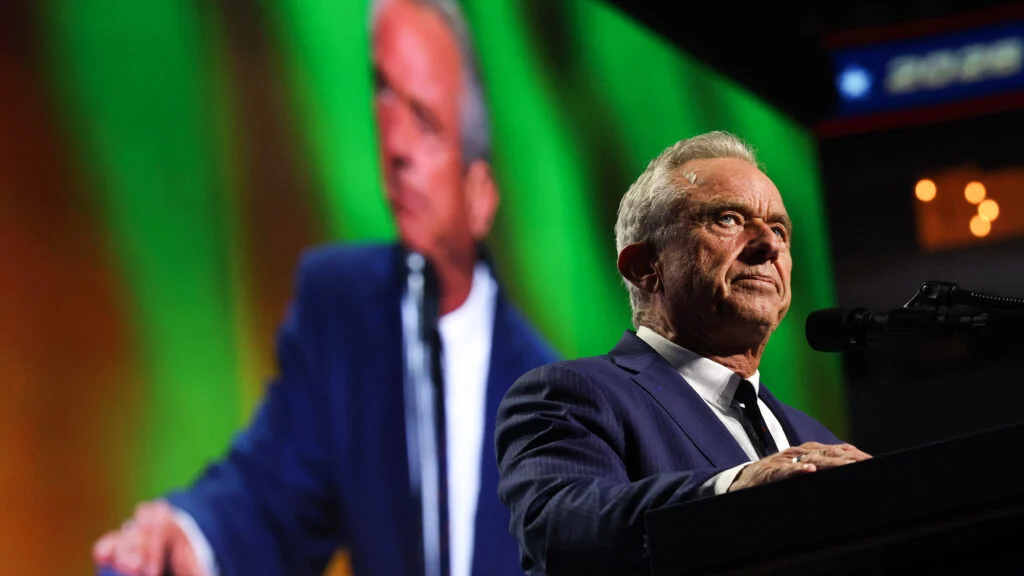
The upcoming appearance of the nation’s top health official at the Grand Hyatt Washington this Thursday represents a seismic shift in the relationship between the federal government and the modern anti-vaccine movement. By returning to the stage of Children’s Health Defense (CHD), the nonprofit organization he founded and led for nearly a decade, Health Secretary Robert F. Kennedy Jr. is signaling a definitive end to the strategic distancing he maintained during his confirmation process. This keynote address marks the first time a sitting Secretary of Health and Human Services (HHS) has formally headlined an event for an organization whose primary mission involves challenging the safety, efficacy, and legal mandates of the very vaccines the HHS is tasked with promoting.
The announcement, delivered via an exuberant email to CHD supporters, framed the event as a homecoming. "We couldn’t be more excited to welcome our founder back to the CHD stage," the nonprofit stated, underscoring the deep and enduring ties between the Secretary and the group. For many public health observers, this "full-circle moment" is less of a celebration and more of a confirmation of their greatest fears: that the fringe ideologies of the anti-vaccination movement have moved from the periphery of American discourse directly into the cockpit of federal health policy.
Kennedy’s history with Children’s Health Defense is both extensive and lucrative. He joined the organization in 2015, back when it was known as the World Mercury Project, and eventually rebranded it into the powerhouse it is today. Under his chairmanship, which lasted until December 2024, CHD transformed from a niche advocacy group into a multi-million-dollar operation with global reach. According to federal financial disclosures, Kennedy earned a substantial six-figure salary during his tenure, a period during which he spearheaded dozens of lawsuits targeting state-level vaccine policies, challenged the liability protections of pharmaceutical companies, and questioned the integrity of the Centers for Disease Control and Prevention (CDC).
The group’s core philosophy rests on the belief that a "toxic soup" of environmental factors—most notably childhood vaccines—is responsible for a rise in chronic illnesses, including autism, ADHD, and autoimmune disorders. While the scientific community has produced a mountain of evidence, including large-scale longitudinal studies involving millions of children, to disprove the link between vaccines and autism, CHD has remained steadfast. They have frequently cited the work of Andrew Wakefield, the disgraced former physician whose 1998 study in The Lancet was retracted and exposed as fraudulent, as a foundational text for their skepticism.
During his presidential campaign, Kennedy took a formal leave of absence from the group, a move widely interpreted as an attempt to broaden his appeal to a mainstream electorate. He eventually severed ties permanently shortly before President Donald Trump took office, a necessary step to navigate the ethics requirements of his cabinet appointment. However, the "severing" of ties appears to have been more administrative than ideological. Throughout the transition period, Kennedy’s "Make America Healthy Again" (MAHA) movement acted as a bridge, funneling CHD personnel and priorities into the burgeoning Trump administration.
The influence of CHD is no longer confined to the halls of its headquarters; it has permeated the Department of Health and Human Services. Key figures from the organization, including prominent attorney Mary Holland, have been frequent attendees at high-profile MAHA gatherings in the capital. More significantly, several individuals associated with CHD’s legal and advocacy arms have secured influential positions within HHS, where they now oversee policy areas related to vaccine safety monitoring and public health communications. This integration has sparked intense alarm among public health experts, who worry that the department’s mission to protect the population from preventable diseases is being subverted from within.
The significance of Thursday’s keynote address cannot be overstated when contrasted with Kennedy’s testimony before the United States Senate in January 2025. During those confirmation hearings, Kennedy adopted a conciliatory, almost defensive tone. He repeatedly assured skeptical lawmakers that he was "not anti-vaccine" and promised that he would do nothing to discourage Americans from seeking immunizations. He framed himself as a proponent of "choice" and "safety data transparency" rather than an opponent of the medical establishment.
One of the most memorable exchanges during those hearings occurred between Kennedy and Senator Bernie Sanders (I-Vt.). Sanders, known for his direct questioning, presented Kennedy with images of merchandise sold by Children’s Health Defense, specifically infant onesies emblazoned with the slogan "Unvaxxed, Unafraid." Sanders repeatedly pressed Kennedy on whether he supported the message behind such products, which many health advocates viewed as a dangerous promotion of vaccine refusal.
"Are you supportive of these onesies?" Sanders asked, his voice rising with incredulity. Kennedy’s response was a masterclass in political maneuvering. "I am supportive of vaccines," he claimed, while simultaneously disavowing any current responsibility for the nonprofit’s marketing choices, stating he had "no power" over the organization he had led for years.
His appearance at the CHD conference this week suggests that the "power" he claimed to lack has been replaced by a platform of unprecedented authority. For the Secretary to stand on that stage is to validate the group’s rhetoric in a way that no other federal official has ever done. It signals to the CHD base that the "Unvaxxed, Unafraid" sentiment now has a seat at the table of the highest health office in the land.
The timing of this address is also critical as the administration begins to implement its broader health agenda. President Trump has increasingly echoed CHD’s talking points, including the disproven theory linking vaccines to autism, during White House briefings and campaign-style rallies. The administration has hinted at plans to overhaul the CDC’s vaccine schedule, potentially delaying or spacing out shots in a manner that many pediatricians warn will leave children vulnerable to outbreaks of measles, polio, and whooping cough.
Data from the CDC already shows a troubling trend: vaccine exemptions for kindergarteners have reached an all-time high in several states, and confidence in routine immunizations has dipped significantly since the COVID-19 pandemic. Public health analysts argue that Kennedy’s embrace of CHD will only accelerate this decline. "When the Secretary of Health attends a conference hosted by an anti-vaccine group, he isn’t just speaking to a room of activists," says Dr. Lawrence Gostin, a professor of global health law at Georgetown University. "He is sending a signal to every parent in America that the scientific consensus on vaccines is up for debate. It creates a vacuum of trust that will inevitably be filled by preventable disease."
Furthermore, the CHD conference serves as a rallying point for the broader MAHA movement, which has expanded its focus beyond vaccines to include the removal of fluoride from drinking water, the banning of certain food dyes, and the regulation of "ultra-processed" foods. While some aspects of the MAHA agenda—such as improving school lunches—have found bipartisan support, the inclusion of vaccine skepticism as a pillar of the movement remains the most contentious issue.
As Kennedy prepares to take the stage at the Grand Hyatt, the eyes of the medical community are on him. Will he use the platform to urge for rigorous scientific inquiry, or will he lean into the populist rhetoric that fueled his rise? If his past actions are any indication, the speech will likely blend a call for "medical freedom" with a critique of "regulatory capture" by the pharmaceutical industry—themes that have long resonated with the CHD audience.
The political ramifications are equally significant. By aligning so closely with his former organization, Kennedy is testing the limits of his mandate. While he secured enough Republican votes for confirmation, his continued embrace of fringe activism could alienate moderate conservatives and health industry stakeholders who are concerned about the economic and social costs of a public health crisis.
Ultimately, the CHD conference marks a definitive transition for Robert F. Kennedy Jr. He is no longer the outsider throwing stones at the gates of HHS; he is the man who holds the keys. By returning to the CHD stage, he is demonstrating that he does not intend to change his views to fit the office, but rather intends to change the office to fit his views. This "full-circle moment" in the nation’s capital may well be remembered as the point where the decades-old firewall between federal health policy and the anti-vaccine movement finally collapsed.
