
 By Lina Irawan
This morning, a collective sigh of something akin to sober reflection is echoing through the financial nerve centers of Wall Street and the City of London. Yesterday’s market jitters, which saw significant sell-offs across major indices, are now being viewed with a critical eye, with many analysts and seasoned investors questioning the rationality of a global market reacting violently to a single, albeit widely circulated, blog post. The contentious piece, which provocatively opened by denying it was "AI doomer fan-fiction," nonetheless ignited a wave of fear regarding the future implications of artificial intelligence, underscoring the extreme sensitivity and perhaps underlying fragility of current market valuations.
The blog post in question, a lengthy 7,000-word hypothetical exploration of advanced AI capabilities and their potential societal disruption, struck a nerve in a market already brimming with speculative enthusiasm for AI stocks. Despite its author’s disclaimer, the narrative painted a sufficiently stark picture to trigger an emotional response from investors, leading to a palpable flight from risk assets. As the Financial Times astutely observed, "The stock market has reached the point where blog posts cause significant stock moves, or at least where people think that they do…the Citrini fuss is further evidence that we are in an expensive market that is looking for an excuse to fall, for reasons that are probably wider than just AI." This sentiment was echoed across the Atlantic, with The Wall Street Journal highlighting the absurdity: "Nothing underlines the sensitivity of stocks right now quite like what happened on Monday, when one of the factors behind the Dow’s 800-point drop was a 7,000-word hypothetical." The incident serves as a stark reminder that in an era of rapid information dissemination and high-frequency trading, perception can quickly become reality, even if the underlying catalysts are less than robust. This volatile reaction to an unsubstantiated narrative suggests that investor confidence, particularly in the tech sector, may be stretched thin, and any perceived threat to the AI-driven growth story is met with an outsized response. The broader market appears to be searching for an exit, and even the most tenuous justifications can trigger a cascade of selling, indicating a deeply overbought condition where fundamental analysis sometimes takes a backseat to viral speculation.
However, as the initial shock subsides, market attention is rapidly shifting from the abstract anxieties of AI to the concrete and immediate threat of a fast-moving, unpredictable tariff scenario emanating from the White House. The global trade landscape is currently being reshaped by an increasingly aggressive and erratic U.S. trade policy, pushing America’s foreign trade partners to their breaking point. Nations that had previously secured favorable, low-level tariff agreements, perhaps around 10%, are now staring down the barrel of potential 15% levies. Conversely, countries that fiercely resisted the White House’s initial demands and were hit with higher tariffs might now find themselves in a relatively better position, facing a reduced 10% tax level. This capricious approach, seemingly devoid of consistent logic, has created an environment of profound uncertainty and frustration among international allies and adversaries alike.
Andy Haldane, the former chief economist of the Bank of England and current president of the British Chambers of Commerce, minced no words in his assessment to the BBC: "The perversity of what happened at the weekend was that those who got good deals, the allies, have been most disadvantaged." This sentiment underscores the growing diplomatic strain caused by the administration’s transactional and unpredictable trade posture. The CEO of Etihad Airways, a sector acutely vulnerable to geopolitical shifts and economic volatility, went even further, stating that this level of uncertainty is "harder to deal with than war," highlighting the profound operational and strategic challenges faced by businesses operating in such a turbulent climate. Companies thrive on predictability and stable regulatory frameworks; the current tariff regime offers neither, forcing them into a constant state of contingency planning and re-evaluation of supply chains and market strategies.
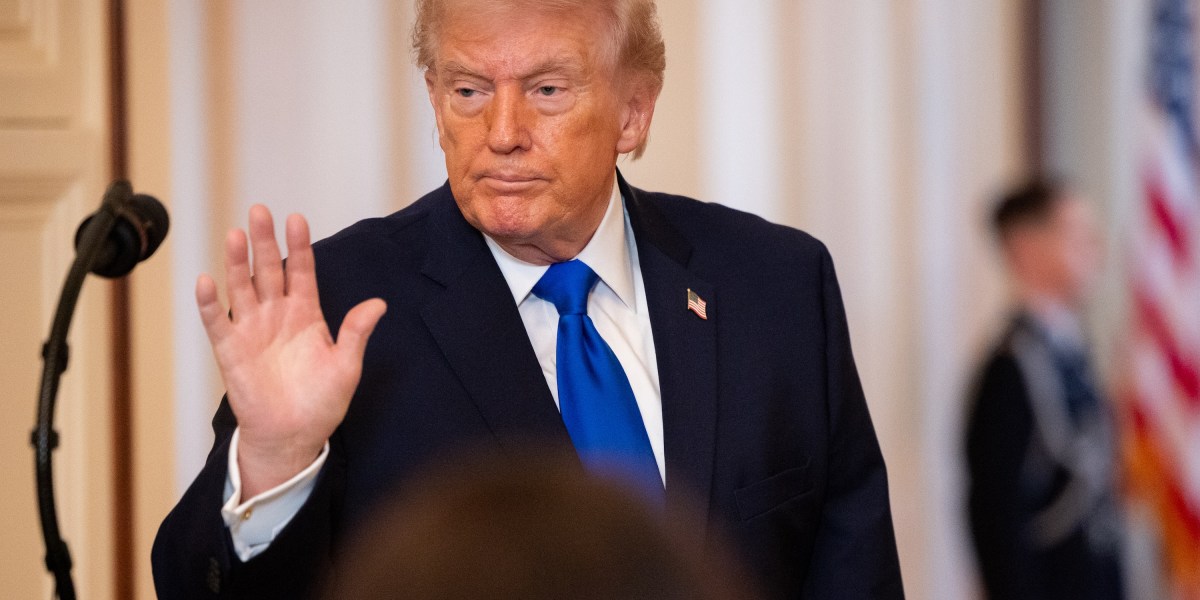
President Trump, characteristically, amplified the chaos with a flurry of incendiary posts on social media yesterday, issuing stark threats to trade partners. "Any Country that wants to ‘play games’ with the ridiculous supreme court decision, especially those that have ‘Ripped Off’ the U.S.A. for years, and even decades, will be met with a much higher Tariff, and worse," he declared, signaling an escalation of his ‘America First’ trade agenda. More disturbingly, the president claimed that a recent Supreme Court ruling had "accidentally and unwittingly gave me, as President of the United States, far more powers and strength than I had prior to their ridiculous, dumb, and very internationally divisive ruling." He further asserted, without citing specific legal evidence, that this decision empowers him to "use Licenses to do absolutely ‘terrible’ things to foreign countries" and that "The court has also approved all other Tariffs, of which there are many, and they can all be used in a much more powerful and obnoxious way, with legal certainty, than the Tariffs as initially used." This broad interpretation of executive power, particularly in the realm of trade, has sent shockwaves through legal and economic circles, raising serious questions about the checks and balances designed to govern U.S. trade policy.
The legal basis for these potential new tariffs remains highly ambiguous and a subject of intense debate among trade experts. Joseph Brusuelas, chief economist at the consulting firm RSM, explored one potential avenue: Section 122 of the Trade Act of 1974. This provision allows the president to impose tariffs up to 15% in situations involving "serious" balance-of-payments deficits or a dramatic currency depreciation. However, Brusuelas swiftly dismissed its applicability to the current economic climate, stating, "Do the new tariffs meet the definition? No matter how one looks the current circumstances—the condition of the U.S. economy, its balance of payments or its currency regime—none of these meet the standards outlined under section 122." This legal skepticism highlights the challenge the administration faces in justifying its actions under existing statutes.
Another possibility under consideration is Section 232 of the Trade Expansion Act of 1962, which grants the president authority to impose tariffs for national security reasons. This route, previously utilized by the administration for steel and aluminum imports, typically requires extensive investigations by the Department of Commerce to determine if imports genuinely threaten national security. While this section offers a broad discretionary power, the requirement for prior investigations could act as a procedural hurdle, potentially delaying immediate implementation or making it vulnerable to legal challenges if due process is not strictly followed. The ambiguity lies in what constitutes a national security threat in the administration’s view, which could be interpreted expansively to cover a wide array of goods and countries.
Perhaps the most potent and concerning tool at the president’s disposal, as highlighted by BNP analyst William Bratton, are Section 301 tariffs. These tariffs, which have no upper limit, have historically been used against countries deemed to be engaging in unfair trade practices. Bratton warns that they "have proved to be highly sticky once implemented (as with those imposed on China in 2018), and could, in theory, be applied to any country that does not agree to a trade agreement with the U.S. that embeds higher tariffs." The "no upper limit" aspect of Section 301 is particularly alarming, giving the executive branch immense leverage and the ability to inflict severe economic damage on trading partners, potentially without significant legislative oversight once the initial determination of unfair practices is made. The lack of clear criteria and the potentially arbitrary nature of their application make Section 301 tariffs a deeply unsettling prospect for global trade stability.
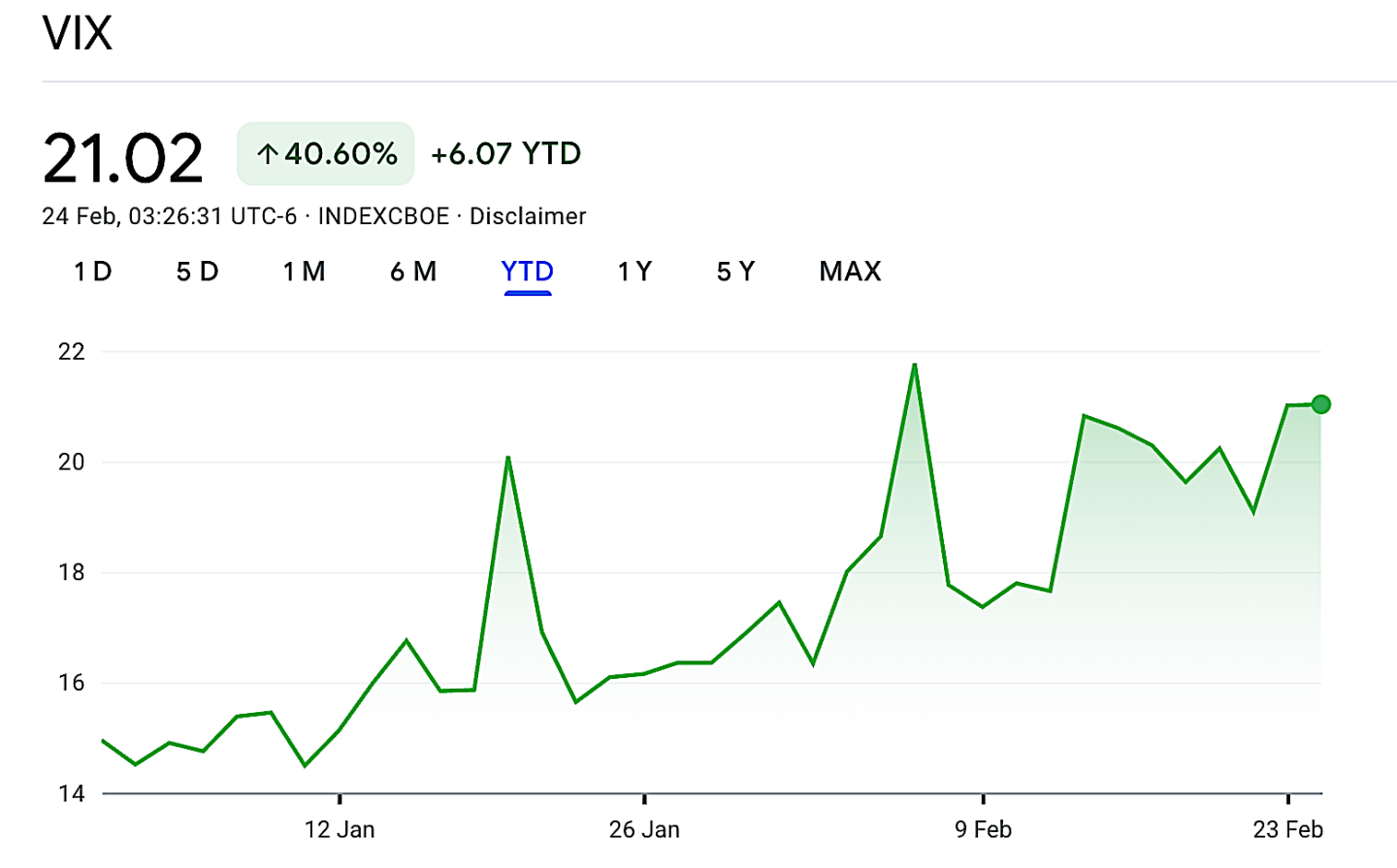
The cumulative effect of this aggressive and unpredictable tariff policy, coupled with the lingering uncertainty from the AI-driven market jitters, is widely expected to act as a significant drag on global trade, domestic GDP growth, and inevitably, the stock market. Economists and market strategists are now busily crunching numbers to quantify the potential damage.
Goldman Sachs analyst Pierfrancesco Mei provided some sobering estimates this morning to clients. He projects that "an additional 5pp [percentage point] increase in the effective tariff rate would boost core PCE inflation by 0.5pp relative to our baseline and reduce 2026 GDP growth by 0.4pp, mainly through its tax-like impact on consumers and businesses." Core Personal Consumption Expenditures (PCE) inflation is the Federal Reserve’s preferred measure of inflation, and a rise of this magnitude would likely complicate monetary policy decisions, potentially forcing the Fed to maintain a tighter stance for longer, or even consider rate hikes, thereby increasing borrowing costs for businesses and consumers. The reduction in GDP growth, a direct consequence of higher import costs for businesses and reduced purchasing power for consumers, signifies a tangible slowdown in economic activity. Businesses would face increased input costs, either absorbing them, thereby impacting profitability, or passing them on to consumers, further fueling inflation. Investment decisions would be delayed or canceled due to uncertainty, and export-oriented sectors would suffer from retaliatory tariffs.
Mei further warned about the potential ripple effect of market sentiment: "A potential stock market correction could weigh on consumer spending and business confidence. We estimate that a 10% decline in equity prices sustained through 2026Q2, for example, would reduce 2026 GDP growth by about 0.5pp relative to our baseline." A sustained drop in equity prices erodes household wealth, triggering a "wealth effect" where consumers feel poorer and reduce discretionary spending. Similarly, businesses become more cautious, curtailing expansion plans and hiring, further dampening economic momentum. This feedback loop between market volatility, consumer and business confidence, and economic growth underscores the precarious position the global economy finds itself in. The current environment, characterized by both speculative excesses in certain tech segments and tangible geopolitical risks, creates a perfect storm for a significant economic recalibration. Investors are thus grappling with a complex matrix of factors, where the immediate threat of trade wars now overshadows the fleeting concerns of AI dystopia, demanding a more fundamental reassessment of risk and value.
Here’s a snapshot of the markets this morning prior to the opening bell in New York:
- Dow Jones Industrial Average Futures: Down 280 points (-0.75%), indicating continued selling pressure from yesterday’s session.
- S&P 500 Futures: Down 35 points (-0.70%), with tech and industrial sectors showing particular weakness amidst tariff concerns.
- Nasdaq 100 Futures: Down 120 points (-0.65%), recovering slightly from yesterday’s AI-driven tech sell-off but still under pressure.
- Brent Crude Oil: Trading at $83.50 per barrel, down 1.2%, reflecting concerns over global demand contraction due to trade tensions.
- Gold: Up 0.8% at $2,125 per ounce, as investors seek safe-haven assets amidst rising geopolitical and economic uncertainty.
- U.S. Dollar Index (DXY): Up 0.3%, as capital flows into the U.S. in search of safety, despite the domestic policy turmoil.
- Euro/USD: Trading at 1.0780, down 0.4%, as the European economy faces the brunt of potential U.S. tariff hikes.
- 10-Year U.S. Treasury Yield: Holding steady at 4.25%, with demand for safe-haven bonds offsetting inflation fears from potential tariffs.
