
 By admin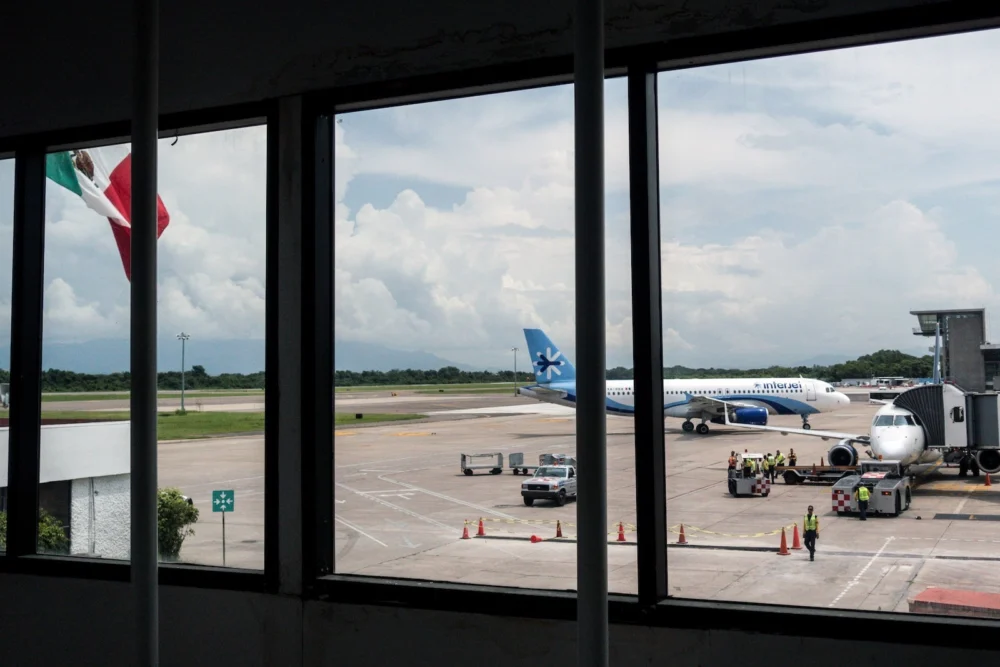
The U.S. Department of State has issued an urgent directive for American citizens currently located in several high-profile regions across Mexico to shelter in place immediately. This drastic security measure follows a massive surge in coordinated violence that erupted on Sunday in the wake of reports confirming the death of Nemesio "El Mencho" Oseguera Cervantes, the notorious leader of the Jalisco New Generation Cartel (CJNG). The volatility has primarily centered on the state of Jalisco, encompassing major urban hubs and international tourist magnets, including Guadalajara and Puerto Vallarta. As the Mexican government mobilizes military and National Guard units to restore order, the situation remains fluid, with localized reports of arson, roadblocks, and armed skirmishes.
According to the Emergency Alerts page maintained by the U.S. Embassy & Consulates in Mexico, the logistical infrastructure in these regions has been severely compromised. While official word indicates that airports have not been formally closed by the government, the practical reality for travelers is one of significant disruption. Illegal roadblocks—often referred to as "narcobloqueos"—have been strategically placed on primary arteries leading to aviation hubs, effectively paralyzing the movement of passengers and flight crews. Consequently, the vast majority of international and domestic flights at Guadalajara International Airport (GDL) and Puerto Vallarta’s Licenciado Gustavo Díaz Ordaz International Airport (PVR) have been canceled. In Puerto Vallarta, the crisis has extended to local transit; all major ride-hailing services, including Uber and Didi, have suspended operations due to safety concerns, and a significant portion of the city’s commercial sector has shuttered its doors to protect employees and patrons.
The atmosphere on the ground is one of tense uncertainty. TPG contributor Matt Moffitt, currently on the ground in Puerto Vallarta, provided a harrowing account of the escalating unrest. "We had our windows open overnight and woke up Sunday to lots of smoke from car bombings and stores on fire," Moffitt reported. Adhering to the State Department’s instructions to shelter in place, he noted the stark contrast between the city’s usual vibrant energy and the current silence. "Things were very quiet yesterday evening and still are now. Coming up to the rooftop of the Airbnb, we can see just a few people walking on the street and a couple of cars, but definitely not the usual level of busy." This eerie stillness reflects the broader fear of "narco-terrorism" tactics, where cartels use public displays of violence to signal power or protest government intervention.
To understand the scale of this crisis, one must look at the profile of Nemesio Oseguera Cervantes. As the head of the CJNG, "El Mencho" was one of the most wanted men in the world, with the U.S. government offering a $10 million reward for information leading to his arrest. His cartel is known for its paramilitary-style discipline and extreme aggression, often challenging the Mexican state directly. The death of such a figurehead almost invariably triggers a "succession war" or a retaliatory "show of force" aimed at preventing rival cartels from encroaching on CJNG territory. This explains why the violence is not limited to a single neighborhood but has manifested as a state-wide security emergency affecting regions traditionally considered safe for international visitors.
While the current epicenter is Jalisco, the ripples of unrest have been felt elsewhere. Security incidents were reported as recently as February 22 in the state of Quintana Roo—affecting the high-traffic Caribbean destinations of Cancun, Cozumel, Playa del Carmen, and Tulum—as well as in the states of Sinaloa and Tamaulipas. However, an updated report from the U.S. Embassy suggests that the situation in these specific eastern and northern regions has largely stabilized, allowing for a return to "normal" operations. Nevertheless, the State Department continues to monitor these areas closely, as the power vacuum created by El Mencho’s demise could lead to shifts in the criminal landscape across the entire country.
For Americans currently stranded or sheltering in affected areas, the U.S. government emphasizes the importance of the Smart Traveler Enrollment Program (STEP). This free service is the primary conduit through which the State Department communicates with citizens during international crises. By enrolling, travelers ensure that the embassy has their precise location and contact details, enabling the government to provide real-time security updates, evacuation notices if necessary, and assistance in contacting family members. In a digital age where misinformation can spread rapidly on social media, the STEP program serves as the authoritative source for safety protocols.
In addition to STEP enrollment, the U.S. Embassy has outlined several critical safety guidelines for those in Jalisco. Citizens are urged to avoid travel through the region until further notice, stay informed by monitoring local news, and remain vigilant of their surroundings. If caught in a situation involving gunfire or roadblocks, the advice is to "drop and cover" and avoid any confrontation with armed individuals. It is also vital to remember that 911 is the universal emergency number for assistance throughout Mexico. For those needing direct consular assistance, the U.S. Embassy’s emergency hotline is staffed 24 hours a day; it can be reached at 888-407-4747 from the United States or 202-501-4444 from international locations.
The impact on the aviation sector is particularly acute. Major U.S. carriers, including American Airlines, United, and Delta, as well as Mexican flag carriers like Aeromexico, are grappling with the logistics of thousands of displaced passengers. Travelers are strongly advised not to head to the airport without first confirming their flight status. Most airlines have activated "travel waivers," which allow passengers to rebook their flights without paying change fees or fare differences, provided the new travel occurs within a specific window. These waivers are often the first sign of a prolonged disruption and should be utilized by anyone seeking to exit the region as soon as the security situation permits.
The financial and legal complexities of the situation also extend to travel insurance. Many travelers assume that a State Department warning automatically triggers a full refund for their trip, but the reality is more nuanced. According to Suzanne Morrow, CEO of InsureMyTrip, coverage is highly dependent on the timing of the policy purchase and the specific definitions of "civil unrest" or "terrorism" within the contract. "If you’re already traveling and flights are delayed or canceled, some plans may offer benefits like travel delay, trip interruption, or, on select policies, political/security evacuation," Morrow explained. However, the "security evacuation" benefit is often an add-on or restricted to specific "Level 4: Do Not Travel" advisories.
Crucially, once the violence following El Mencho’s death was publicized, it became a "foreseeable" or "known" event. This has significant implications for anyone who had not yet purchased insurance. Chrissy Valdez, senior director of operations at Squaremouth, noted that policies bought after the initial reports of violence would likely exclude coverage for cancellations related to this specific unrest. This is a standard industry practice, similar to how insurance companies stop selling hurricane coverage once a storm is named. Travelers are encouraged to meticulously review their policy documents, particularly the sections regarding "Trip Cancellation for Any Reason" (CFAR), which is often the only way to recoup costs when a traveler chooses not to fly due to fear rather than a physical shutdown of services.
The broader geopolitical and economic implications for Mexico are significant. Tourism accounts for nearly 9% of Mexico’s GDP, and Jalisco is a cornerstone of that industry. The sight of burning vehicles and military patrols in Puerto Vallarta—a city that prides itself on being a safe haven for the LGBTQ+ community and international retirees—could have long-lasting effects on consumer confidence. Analysts suggest that the Mexican government faces a dual challenge: they must suppress the immediate cartel violence while simultaneously managing the international perception of the country’s safety.
As the situation develops, the U.S. Mission in Mexico continues to work with local authorities to ensure the safety of its citizens. The priority remains the "shelter-in-place" order, as the risk of being caught in the crossfire of "narcobloqueos" is currently deemed higher than the risk of staying put in a secure residence or hotel. Travelers are reminded to keep their mobile devices charged, maintain a supply of food and water, and stay away from windows if they are in an area where active skirmishes are reported. The next 48 to 72 hours will be critical in determining whether the violence will subside or if the death of El Mencho marks the beginning of a more protracted period of instability in Western Mexico.
