
 By admin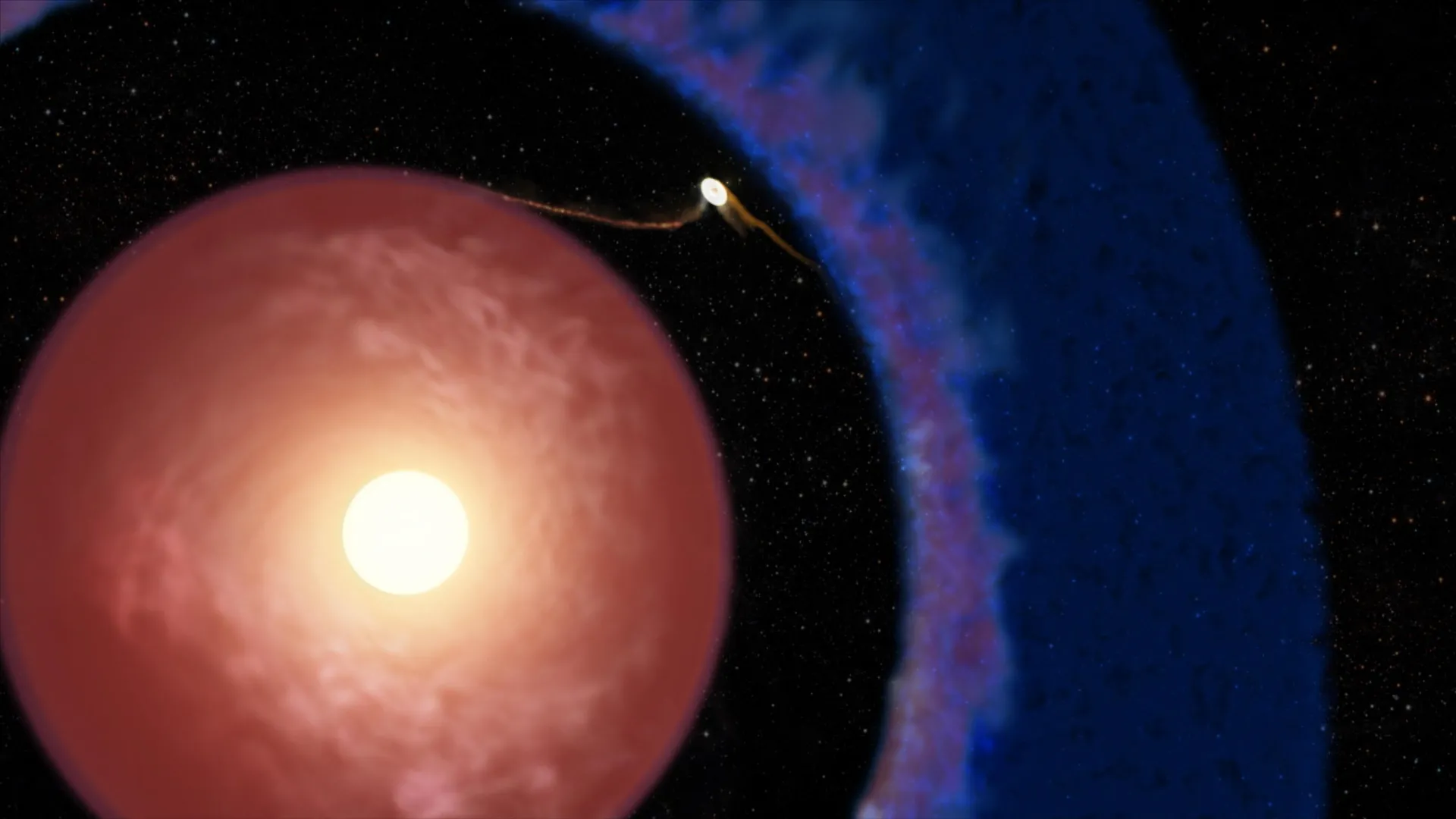
The planet, officially designated Elias 2-24 b, stands as a pivotal find in exoplanetary science. Its existence was meticulously pieced together from observations preserved within NASA-funded archives, highlighting the immense value of accessible scientific data repositories. Crucially, Elias 2-24 b continues to orbit within its young host star’s protoplanetary disk—a swirling cauldron of primordial material—providing scientists with a rare and invaluable opportunity to witness planet formation in real-time, an event akin to peering back billions of years to the infancy of our own solar system.
This confirmation sends ripples through the astrophysics community, forcing a critical re-evaluation of established planet-formation models. "Our planet-formation models already struggled to explain the previous record holders for the youngest known planet," stated Lucas Cieza, a distinguished professor at the Instituto de Estudios Astrofísicos in Chile and a co-author of the seminal paper detailing these results. He referenced a four-way tie among two planets orbiting the star PDS 70 and two planets orbiting the star WISPIT 2, all of which are more than 5 million years old. Cieza emphasized the profound implications: "Elias 2-24 b shows us that even our best planet-formation models are still missing some important processes, or perhaps entirely new mechanisms are at play."
The prevailing theories of giant planet formation, primarily core accretion and disk instability, face new scrutiny. Core accretion posits that planets grow gradually from the bottom up, with solid cores forming first, then slowly accreting gas from the surrounding disk. This process is generally believed to take several million years, especially for gas giants like Jupiter, and even longer for planets in wide orbits where material is sparser. Disk instability, on the other hand, suggests that massive clumps of gas and dust in the protoplanetary disk can collapse rapidly under their own gravity to form a giant planet in mere thousands of years. Elias 2-24 b, at less than 1 million years old and orbiting at a significant distance from its star, provides compelling evidence that rapid formation mechanisms might be more common or efficient than previously understood.
The prior record holders, such as the PDS 70 system, which hosts two confirmed protoplanets (PDS 70b and PDS 70c) actively forming within their star’s disk, were already considered remarkably young. Discovered via direct imaging, these planets, located approximately 370 light-years away, offered the first unambiguous proof of planets in the process of formation. However, their age, estimated at around 5 to 10 million years, still fit within the more optimistic timescales of core accretion. Elias 2-24 b, being five to ten times younger, pushes the boundaries of these models to their absolute limits, strongly suggesting that for some planets, nature finds a much faster path to creation.
The formal announcement of Elias 2-24 b’s confirmation appeared in a study published on September 16 in The Astrophysical Journal Letters. The research team, spearheaded by Andrea Bernardi, a doctoral candidate at the Universidad Diego Portales in Chile, undertook a meticulous examination of archived observations of seven young stars. These particular stars were selected because they were known to be surrounded by active protoplanetary disks, making them prime candidates for ongoing planet formation.
The critical data originated from the W. M. Keck Observatory in Hawaii, specifically utilizing its advanced coronagraphic capabilities. Keck, operating through a cooperative agreement with NASA, is renowned for its twin 10-meter telescopes, equipped with adaptive optics systems that correct for atmospheric distortions, allowing for incredibly sharp astronomical observations. A coronagraph is an ingenious instrument designed to block out the blinding glare of a star, much like holding a hand up to block the sun, thereby making it possible to discern much fainter objects—such as planets—orbiting in its immediate vicinity.
Each of the target stars in Bernardi’s study was enveloped by a protoplanetary disk, a vast expanse of dust, gas, and planetesimals—pieces of ice and rock that are the building blocks of planets. Within these disks, astronomers often look for specific structural features, such as gaps, rings, and spirals. These features are widely interpreted as tell-tale signs of planets in the making, as the gravitational influence of a nascent planet can sweep clear a path, accreting material and creating discernible voids in the disk.
"The planets should be found within the gaps, since they are carving them," Bernardi articulated, explaining the rationale behind their search strategy. "And that’s exactly where we found Elias 2-24 b." This direct correlation between a disk gap and the presence of a planet provides compelling empirical evidence for the gravitational interaction model of planet formation. Elias 2-24 b is estimated to be roughly as massive as Jupiter, placing it firmly in the category of a gas giant. It orbits a star located approximately 450 light-years from Earth, within a relatively nearby star-forming region. Its youth and the pristine state of its surrounding disk make the Elias 2-24 system an unparalleled natural laboratory, offering astronomers a direct window into what our own solar system may have resembled billions of years ago, during its chaotic and formative period.
Understanding how stars and planets come into being is a fundamental quest in astrophysics. Stars ignite within colossal clouds of gas and dust, and the leftover material swirling around these newborn stars coalesces to form planets. This process involves a complex interplay of gravity, gas dynamics, and collisions, with planets gradually gathering matter and gravitationally shaping intricate pathways through the surrounding protoplanetary disk. However, observing planets during these earliest, most dynamic stages is notoriously difficult. The very medium from which they form—thick dust and gas—acts as a cosmic veil, obscuring them from direct view.
Most of the approximately 6,000 confirmed exoplanets to date have been discovered through indirect methods, predominantly the transit method. This technique involves observing the minute, periodic dimming of a star’s light as an orbiting planet passes directly in front of it from our vantage point on Earth. While incredibly successful, the transit method becomes significantly harder to employ when planets are still deeply embedded in dusty disks, or when they orbit very far from their stars, leading to infrequent and often shallower transits. Consequently, the vast majority of known exoplanets are billions of years old and orbit relatively close to their parent stars, biasing our current understanding towards mature, inner-system planets. Other methods, such as radial velocity (detecting stellar "wobbles" caused by planetary gravity) and microlensing (gravitational bending of light from a background star), also have their own biases, generally favoring more massive planets or specific orbital configurations.
Direct imaging, the method employed for Elias 2-24 b, offers the unique advantage of seeing the planet itself, but it faces immense technical challenges. Stars are millions, if not billions, of times brighter than their orbiting planets, especially in visible light. Overcoming this extreme contrast ratio requires sophisticated instruments like coronagraphs and adaptive optics systems that can painstakingly suppress starlight while enhancing the faint planetary signal.
Scientists currently construct their planet formation models using a combination of theoretical frameworks, complex computer simulations, and observations of young stars surrounded by disks. However, in many cases, the forming planets within these disks remain too difficult to detect directly. This creates a significant gap between theoretical predictions and observational evidence. Discoveries such as Elias 2-24 b are therefore incredibly valuable, providing crucial real-world tests for these evolving models. "The galaxy churns out new stars and planets continuously, so there are many in every stage of evolution," Professor Cieza explained. "That means we can see the entire process in theory, but there is a large gap in what most telescopes can detect. We are mostly blind to these baby planets right now, and Elias 2-24 b helps bridge that gap."
The new confirmation of Elias 2-24 b also brings into sharp focus and ultimately resolves a decade-old astronomical mystery. Beginning around 2012, earlier observations from the Atacama Large Millimeter/submillimeter Array (ALMA) in Chile had revealed a distinct, intriguing gap within the dusty disk surrounding the young star Elias 2-24. ALMA, an array of 66 radio telescopes, provides unparalleled resolution at millimeter and submillimeter wavelengths, making it exquisitely sensitive to the cold dust and gas that constitute protoplanetary disks. Its observations revolutionized our understanding of disk structures, famously imaging the protoplanetary disk around HL Tau with unprecedented detail, showing multiple concentric rings indicative of forming planets.
Following ALMA’s discovery of the gap, the European Southern Observatory’s Very Large Telescope (VLT) in Chile, another powerhouse of astronomical observation equipped with advanced adaptive optics, subsequently spotted a faint point of light nestled inside that very gap. This observation, likely made with an instrument like SPHERE (Spectro-Polarimetric High-contrast Exoplanet Research), immediately sparked intense scientific debate. Could this faint object truly be a planet? The prevailing planet formation theories at the time suggested that a large planet, particularly one with a Jupiter-like mass, should not have been able to form so quickly, especially at such a considerable distance from its host star.
Current models suggested that forming a Jupiter-sized planet at Jupiter’s distance from the Sun (which is just over five times larger than the distance of Earth to the Sun, or approximately 5.2 Astronomical Units (AU)) typically takes about 5 million years. A giant planet forming much farther out in the disk, where material is sparser and orbital periods are longer, should theoretically take even longer—perhaps tens of millions of years. Yet, the faint object in the Elias 2-24 system was observed to sit at an astounding distance of about 55 times farther from its star than Earth is from the Sun (55 AU). Furthermore, the entire Elias 2-24 system was estimated to be less than 1 million years old, meaning any planet within it must have formed with incredible rapidity. This profound discrepancy between observation and theoretical expectation fueled a decade of scientific inquiry and speculation.
To definitively investigate the nature of this mysterious object, Bernardi and her colleagues turned to the vast resources of the Keck Observatory Archive (KOA). KOA is a publicly accessible, NASA-funded collaboration between Keck Observatory and the NASA Exoplanet Science Institute (NExScI) at Caltech/IPAC, which houses decades of valuable astronomical data. Their diligent search through these archives yielded a breakthrough: the team found the same faint object in observations collected by Keck in both 2018 and 2020. This archival treasure trove proved to be the "smoking gun."
By combining these multi-epoch observations and meticulously tracking how the object moved over the intervening two years, the team was able to determine its trajectory with high precision. This analysis revealed that the object exhibited proper motion consistent with an orbital path around the star, rather than remaining stationary like a distant background star or flickering inconsistently like an instrumental artifact. This definitive orbital signature ultimately confirmed the object as Elias 2-24 b, firmly establishing its planetary status.
"We usually hear about telescopes working separately, but this confirmation was possible only by using multiple telescopes together," Bernardi highlighted, underscoring the power of synergistic astronomical efforts. The initial detection by ALMA revealing the disk gap, followed by the VLT’s spotting of the candidate planet, and finally Keck’s multi-year observations providing the crucial orbital confirmation, exemplify how diverse observational capabilities can converge to unravel complex cosmic puzzles. Bernardi also acknowledged the current limitations: "Elias 2-24 b is at the limit of what current telescopes can detect, but with new instruments like NASA’s Nancy Grace Roman Space Telescope, such detections should become easier."
Indeed, the future of exoplanet discovery, particularly for these elusive "baby planets," looks brighter with upcoming missions. The Nancy Grace Roman Space Telescope, previously known as WFIRST (Wide Field Infrared Survey Telescope), is scheduled for launch in the mid-2020s and carries an even more advanced coronagraph than any currently in space. Roman’s Coronagraph Instrument (CGI) is a cutting-edge technological marvel designed to achieve unprecedented levels of starlight suppression, enabling it to detect planets that are far fainter and much harder to resolve with existing telescopes, whether ground-based or in orbit.
Using similar direct imaging and coronagraphic methods, Roman could identify planets in tighter orbits, including true "Jupiter analogs" that are currently hidden by the overwhelming glare of their stars. Elias 2-24 b, by comparison, orbits about 10 times farther from its star than a Jupiter analog would. Roman’s extraordinary sensitivity and high angular resolution will allow astronomers to peer closer to stars, directly imaging gas giants in orbits comparable to those of Jupiter and Saturn in our own solar system. This added capability will be instrumental in closing one of the biggest observational gaps in exoplanet science: the inability to directly observe giant planets in their early stages of formation, particularly those closer to their parent stars.
"This is just the beginning of a new era of discovery," Cieza affirmed, expressing palpable excitement for the future. "It’s incredible that with modern technology, we are actually able to see planet formation in action, and Roman will take planet hunting to the next level." The discovery of Elias 2-24 b serves as a powerful harbinger, demonstrating that the universe is far more dynamic and perhaps more efficient at forming planets than we once thought. As new generations of telescopes and instruments come online, fueled by discoveries like Elias 2-24 b, humanity’s understanding of planetary origins will undoubtedly continue to evolve, revealing the intricate processes that shape worlds across the cosmos.
