
 By Lina Irawan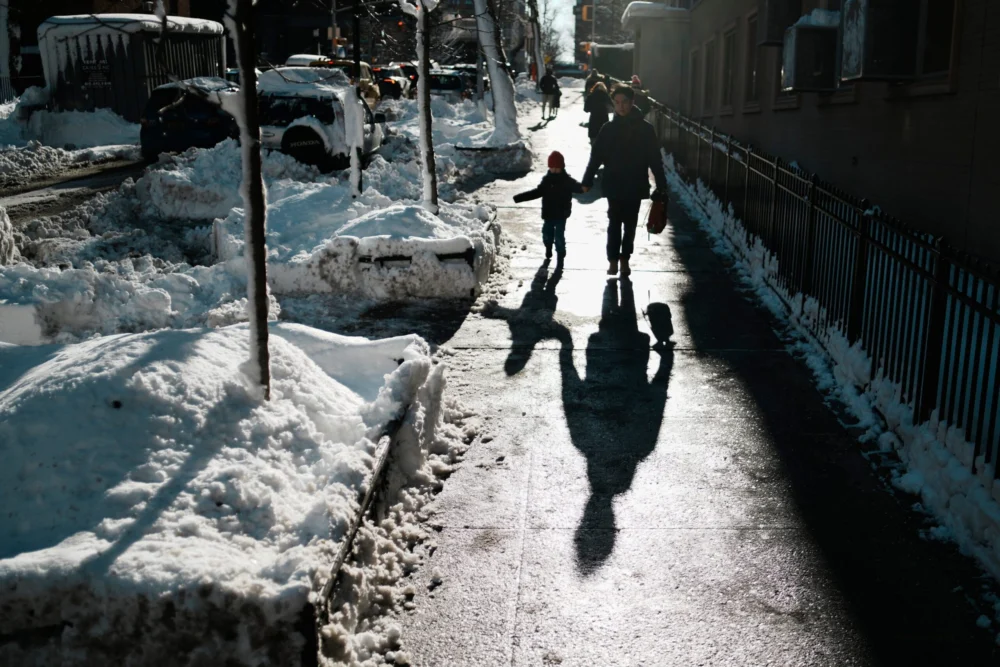
The powerful storm, which swept through on Monday, left an indelible mark on the landscape and infrastructure of the Northeast. Initial reports confirmed over two feet (0.6 meters) of snow in numerous locations, with some areas experiencing unprecedented accumulations. Rhode Island, in particular, bore the brunt of the blizzard, recording over three feet (0.9 meters) of snow in some localities, an astonishing figure that surpassed the historic totals from the infamous Blizzard of 1978. This comparison alone underscored the exceptional nature of the recent weather event, prompting emergency declarations and widespread travel advisories across multiple states.
A Region Divided: School Decisions and Daily Commutes
The aftermath of the blizzard presented a logistical nightmare for millions, particularly impacting the daily routine of school-aged children and their caregivers. Many large school districts across the Northeast opted to remain closed on Tuesday, prioritizing safety and allowing more time for snow removal efforts. Cities like Boston and Hartford, Connecticut, saw their public schools shuttered, giving students an unexpected extended break as crews worked tirelessly to clear streets and sidewalks.
However, the approach varied significantly, most notably in New York City. Despite the heavy snowfall that transformed the metropolitan area into a winter wonderland, the nation’s largest public school system, serving more than 900,000 students, declared a regular school day. Mayor Zohran Mamdani, a Democrat, publicly stood by the decision, even playfully inviting children to pelt him with snowballs in response to his call. Schools Chancellor Kamar Samuels echoed the mayor’s sentiment, emphasizing the critical role schools play beyond education, including providing essential childcare for working parents and daily meals for many students. They also highlighted the logistical complexities of rapidly transitioning to remote learning immediately following a midwinter break, arguing that an abrupt shift would have been more disruptive.
The decision was met with a mix of frustration and grudging acceptance from parents and students navigating treacherous commutes. Danielle Obloj, the parent of a Brooklyn fifth-grader, voiced a common sentiment of exasperation: "We’re walking on thin ice here. One more day would’ve been fine. They should never have let these kids come back to school." Indeed, the morning drop-off was a chaotic scene of individuals scrambling over mountainous snow banks and deftly dodging salt spreaders clearing residual slush. The physical effort required just to reach school was a stark reminder of the storm’s lingering impact.
The challenges extended to the school staff as well. City officials revealed that nearly one in six teachers called out sick on Tuesday, the first day back after the blizzard and a scheduled midwinter break. This significant absenteeism rate—approximately 12,000 out of 78,800 teachers—necessitated the call-in of over 5,000 substitute teachers to maintain classroom coverage, underscoring the strain on the system. Preliminary attendance data indicated that 63% of the approximately 900,000 students attended school, a notable drop from the average attendance rate of about 90% recorded for the last school year, according to city data.
In contrast to New York City, other major urban centers adopted different strategies. Philadelphia, for instance, switched to online learning for both Monday and Tuesday, providing a safer alternative without completely halting instruction. Meanwhile, many districts on Long Island and in the broader New York suburbs followed Boston and Hartford’s lead, canceling school again on Tuesday as they continued to dig out from substantial snowfall. These varied responses highlighted the diverse challenges and priorities faced by local authorities in the wake of such a widespread weather event.
Transportation Networks Slowly Rekindle
The blizzard’s grip on the region’s transportation networks was profound, leading to a cascade of cancellations and delays. On Monday, meteorologists labeled the storm "the strongest in a decade," a "classic bomb cyclone/nor’easter" characterized by a rapid drop in atmospheric pressure over 24 hours, indicative of its explosive strengthening. This meteorological phenomenon contributed to the intense snowfall and powerful winds that crippled travel.
By Tuesday morning, however, glimmers of recovery began to emerge. Roads, many of which had been impassable or under travel bans, started to reopen as plowing operations gained ground. Mass transportation systems, which had been severely curtailed or entirely suspended, slowly flickered back online in several cities. Amtrak, a crucial intercity rail service, announced cancellations for some routes between Boston and New York, and between New York and Philadelphia, reflecting the ongoing challenges in clearing tracks and ensuring safe passage. Commuters faced a patchwork of operational statuses. While Amtrak faced limitations, other commuter railroads like New Jersey Transit and the Long Island Railroad (LIRR) managed to resume services, albeit with potential delays. The LIRR even deployed its specialized snow-clearing train car, affectionately known as "Darth Vader," a powerful machine designed to blast through deep snow drifts and ice, showcasing the dedicated efforts to restore normalcy.
Beyond transit, power restoration remained a critical concern. Hundreds of thousands across Massachusetts, New Jersey, Delaware, and Rhode Island had lost electricity during the peak of the storm. While significant progress was made in restoring power to many affected households, over 100,000 customers, particularly in Cape Cod, Massachusetts, remained in the dark. Douglas Foley, president of electric operations for Eversource, explained the unique challenge in Cape Cod, which operates largely on a single electrical circuit, making widespread outages particularly difficult and time-consuming to address. The combination of heavy, wet snow and strong winds had toppled numerous trees and snapped power lines, creating complex repair scenarios for utility crews working in challenging winter conditions.
The Next Wave: A Second Storm Approaches
Just as the Northeast began to catch its breath, the National Weather Service confirmed that another weather system was on its radar. Originating in the Great Lakes region, this "clipper storm" was projected to bring additional snow to the Great Lakes on Tuesday before pushing eastward into the Northeast by Wednesday. Meteorologists indicated that this second storm would not be as potent as the recent bomb cyclone, likely delivering a mix of rain and some snow rather than a massive dump.
However, even a few extra inches of snow could complicate an already arduous cleanup process, particularly in areas still struggling with extensive snowpack and ongoing power restoration efforts. Frank Pereira, a meteorologist for the NWS in College Park, Maryland, warned that additional precipitation, even if light, could lead to refreezing issues, make existing snow heavier, and further hinder the movement of heavy equipment vital for clearing operations. The prospect of a second storm, however mild, served as a stark reminder of winter’s tenacious grip on the region.
Flight Cancellations, Public Fun, and Controversy
The widespread impact of the storm was perhaps most acutely felt in the travel sector, particularly air travel. According to the flight tracking website FlightAware, roughly 2,200 flights in and out of the U.S. were canceled on Tuesday, a significant portion of which involved major airports in New York (JFK, LaGuardia), New Jersey (Newark Liberty), and Boston (Logan International). Rhode Island’s T.F. Green International Airport faced an unprecedented situation, halting all flights on Monday as it grappled with nearly 38 inches (97 centimeters) of snow, officially breaking its 1978 record of 28.6 inches (72.6 centimeters). Flights eventually resumed Tuesday afternoon, but the ripple effects of these cancellations—stranded passengers, delayed cargo, and airline operational disruptions—would persist for days.
Amidst the disruptions and challenges, the storm also brought moments of unexpected joy and community spirit. Neighborhoods across the region saw the spontaneous creation of armies of snowmen and intricate snow sculptures, transforming mundane spaces into temporary art galleries. The sheer volume of snow also provided the perfect backdrop for classic winter pastimes, including spirited snowball fights. One such event, a massive snowball fight that erupted Monday in New York City’s iconic Washington Square Park, gained widespread attention. However, the merriment took a contentious turn when video footage circulated showing two outnumbered police officers being pelted by snowballs. City Police Commissioner Jessica Tisch swiftly condemned the behavior, labeling it "disgraceful" and "criminal," sparking a debate about public conduct during such communal events and the appropriate boundaries of playful interaction.
Snow Removal Logistics and Environmental Concerns
With such colossal amounts of snow, efficient removal became a monumental task for municipal governments. In New York City, Acting Sanitation Commissioner Javier Lojan announced plans to deploy snow melters—massive, specialized basins filled with warm water designed to rapidly liquefy large quantities of snow and ice. These machines had proven effective during a previous storm last month, melting an impressive 23 million pounds (11.5 metric tons) of snow, and were now being brought back online to tackle the current accumulation. The use of snow melters is a costly but effective strategy in densely populated urban environments where traditional snow dumping space is limited.
In snowbound Providence, Rhode Island, the challenge was equally immense. Josh Estrella, communications director for the city government, detailed plans to transport snow to five designated dumping locations scattered across the city. The sheer volume of snow was so great that officials were considering adding even more dumping grounds. However, this strategy drew criticism from State Representative David Morales, who raised environmental justice concerns regarding the hauling of snow to a vacant lot slated for redevelopment in South Providence. Morales pointed out that this particular area was already "the most polluted part of the city" and home to a dense population of people of color, arguing that adding contaminated snow—often laden with salt, sand, and vehicle pollutants—would exacerbate existing environmental burdens on a vulnerable community. Estrella defended the city’s approach, explaining that the five locations were chosen for both equity, ensuring distribution across different parts of the city, and practical logistics, allowing snow haulers to dump closer to their collection points. He acknowledged the South Providence lot was the largest and easiest for dumping.
Storm’s Reach Extends to the Halls of Justice
The far-reaching impact of the storm even extended to the normally rigid schedules of the justice system, disrupting a high-profile criminal case in Manhattan federal court. The ongoing sex trafficking trial of wealthy brothers Alon, Oren, and Tal Alexander faced an unexpected setback when a juror found themselves "trapped in Miami" due to storm-related travel disruptions. The juror was not scheduled for a return flight until Friday, presenting a significant challenge to the court’s proceedings.
Judge Valerie Caproni, presiding over the trial, was forced to dismiss the stranded juror on Tuesday. The trial had already been paused the previous week to accommodate jurors whose children were on a school break, further compounding the delays. Judge Caproni expressed her reluctance, stating, "I am loath to lose another juror, but I am also loath to lose another week of trial." This incident underscored how even meticulously planned legal proceedings can be derailed by the unpredictable force of nature, highlighting the broader societal ripple effects of a major weather event.
As the Northeast continues its formidable task of digging out, the recent blizzard will undoubtedly be remembered as a significant event in the region’s winter history. The blend of record-breaking snowfall, widespread disruptions, and the varying responses from local authorities painted a vivid picture of resilience, frustration, and the intricate challenges inherent in managing the aftermath of a powerful winter storm. The coming days will test the region’s resolve as cleanup efforts persist and the threat of yet another storm looms, albeit a less severe one.
