
 By admin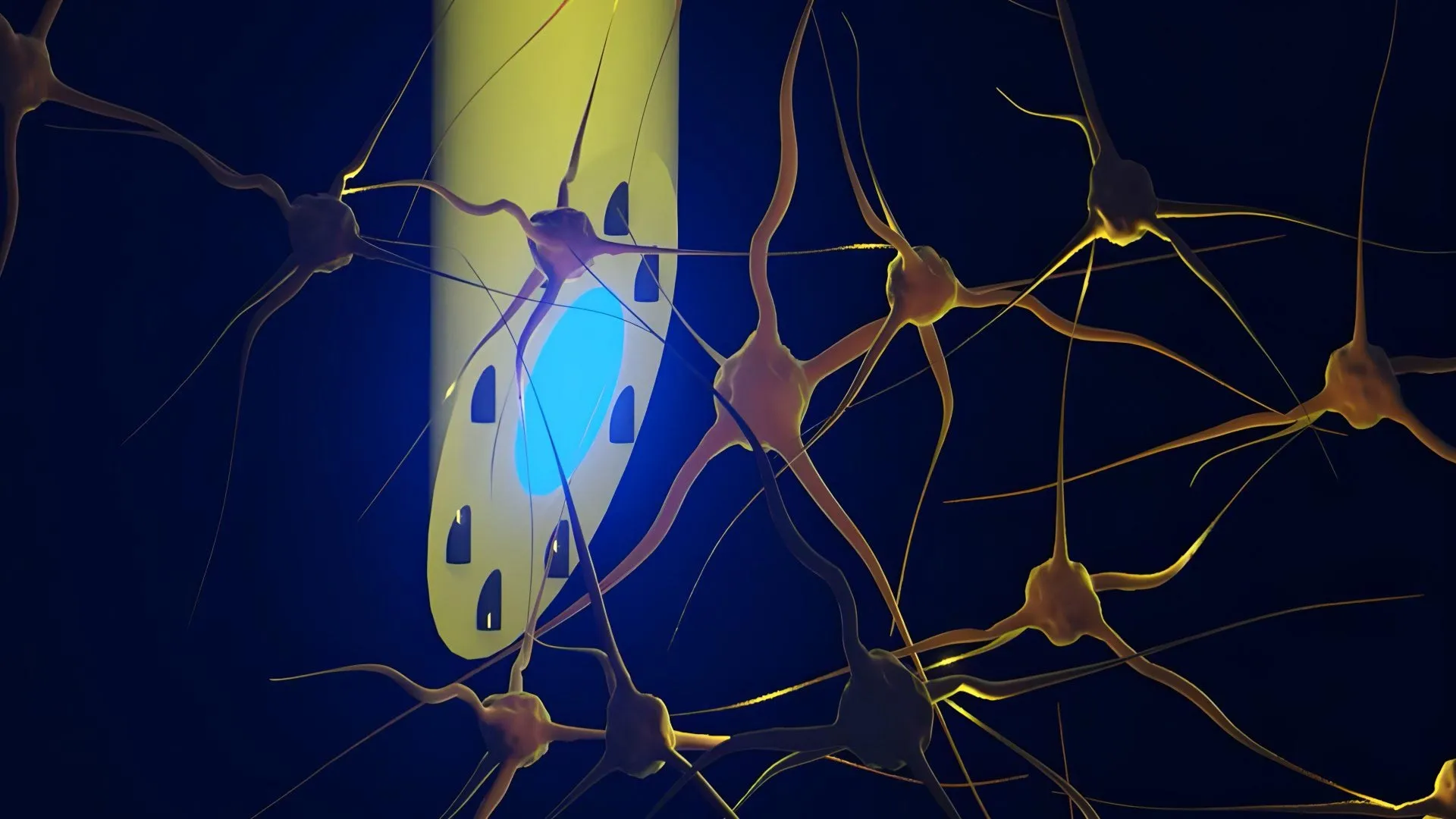
Developed through a collaborative effort involving experts from DTU (Technical University of Denmark), the University of Copenhagen, University College London (UCL), and other esteemed institutions, the mAxialtrode represents a significant leap forward in neurotechnology. The device is a long, needle-thin brain electrode uniquely engineered with an array of microscopic channels running along its length. This design allows for multiple functional points, enabling researchers to simultaneously record neural activity from various depths and deliver therapeutic agents or other substances to highly specific locations across different brain regions. This integrated approach is critical for dissecting complex neurological processes and developing targeted therapies for debilitating conditions like epilepsy, Parkinson’s disease, and severe depression.
The seminal findings detailing the mAxialtrode’s design, functionality, and initial validation were recently published in the prestigious journal Advanced Science, signaling its importance to the scientific community.
A Multifunction Tool Poised to Transform Brain Research
For the immediate future, the mAxialtrode is envisioned primarily as a powerful research tool. Its unique ability to provide spatially resolved data and interventions opens new avenues for investigating fundamental brain processes. Scientists can now meticulously trace how electrical signals propagate and interact across different layers of the brain—from the superficial cortex to deeper structures like the hippocampus—during critical functions such as memory formation, decision-making, and, crucially, the generation and spread of epileptic seizures. Understanding these intricate pathways is paramount for unraveling the mysteries of neurological disorders and developing effective countermeasures.
Beyond its research potential, the mAxialtrode holds immense promise for therapeutic applications in the longer term. The researchers anticipate that the device could be used to deliver targeted pharmacological agents directly to disease-affected brain areas while simultaneously applying electrical stimulation or even light stimulation to selected neural circuits. This synergistic approach allows for highly personalized and adaptive therapies, potentially offering relief to patients who do not respond to conventional treatments. Imagine a scenario where a patient experiencing intractable epilepsy could have anti-seizure medication delivered precisely to the seizure focus, while concurrent electrical pulses or optogenetic stimulation help to modulate aberrant neural activity, all through a single, minimally invasive implant.
Postdoc Kunyang Sui, who conceived the mAxialtrode alongside Associate Professor Christos Markos, emphasizes the device’s inherent advantage: "One of the main benefits of the mAxialtrode is its capacity to combine several distinct capabilities within a single implant," Sui explains. "This integration allows researchers to perform far more precise and comprehensive experiments, significantly reducing the need for multiple, separate devices to be inserted into the brain, which inherently minimizes invasiveness and potential trauma." This consolidation of functions into a single platform streamlines research protocols and, critically, lowers the risk associated with multiple surgical interventions in a clinical context.
Addressing Biocompatibility: The Soft Revolution in Neuro-Implants
A critical advancement embodied by the mAxialtrode lies in its material composition. "Most current brain implants are constructed from hard, rigid materials such as silicon, which, despite their technological prowess, can lead to chronic irritation and trigger inflammatory reactions within delicate brain tissue over time," Sui points out. Such foreign body responses can result in glial scarring, encapsulating the implant and hindering its long-term functionality by insulating electrodes and blocking drug diffusion.
In stark contrast, the mAxialtrode is fabricated from soft, plastic-like optical fibers. This inherent flexibility allows the implant to move congruently with the subtle pulsations and micro-movements of brain tissue, thereby minimizing mechanical stress and the resultant inflammatory cascade. Furthermore, the device incorporates a specially angled tip, which further reduces the overall footprint and the mechanical damage incurred during its placement within the brain. This design philosophy directly addresses a major challenge in chronic neuro-implantation: ensuring long-term biocompatibility and stable performance without causing undue tissue damage or triggering adverse immune responses. The selection of materials that closely match the mechanical properties of brain tissue is a cornerstone of next-generation neuro-interfacing technologies, aiming to create a more seamless and less reactive integration with the biological environment.
Despite its revolutionary potential, Sui offers a realistic perspective on its clinical timeline. "While the promise is immense, the technology is still a considerable distance from routine clinical application," he cautions. "Extensive preclinical testing, further rigorous development, and the arduous process of obtaining regulatory approvals from bodies like the FDA or EMA will be absolutely essential before it can be safely and effectively deployed to treat patients." This acknowledges the stringent requirements for medical device translation, ensuring patient safety and efficacy are paramount.
Moving Beyond Conventional Optical Fibers: A Paradigm Shift
Current neuroscience research heavily relies on conventional optical fibers for a variety of experiments, particularly in the field of optogenetics. These thin strands, typically made from glass or plastic, are adept at delivering light into deep brain regions. Optogenetics itself is a powerful technique that allows scientists to control specific nerve cells (neurons) that have been genetically engineered to become light-sensitive. By shining light of a specific wavelength, researchers can activate or inhibit these neurons with unprecedented temporal precision, offering profound insights into neural circuit function.
However, conventional optical fibers come with a significant limitation that the mAxialtrode aims to overcome. They typically interact with brain tissue only at their outermost, or "distal," tip. This means researchers are generally restricted to stimulating or monitoring just one specific location at a time. The light is emitted, and the primary contact with brain tissue occurs, solely at this single point—the "nose" of the fiber. As a result, scientists are often limited to measuring or stimulating a single brain layer, even though the vast majority of complex brain functions, from perception to cognition, depend on the intricate, multi-layered communication and synchronous activity among numerous neural circuits spanning various depths and structures. This single-point limitation has historically posed a significant bottleneck for understanding the hierarchical and distributed nature of brain processing.
The mAxialtrode shatters this limitation by providing multiple points of interaction along its entire length, opening up a truly multi-dimensional approach to brain interfacing.
The Engineering Marvel: How the New Brain Implant Works
The journey of the needle-thin mAxialtrode begins not as a tiny component, but as a much larger polymer rod. The manufacturing process involves a highly sophisticated technique akin to drawing optical fibers, but with an added layer of complexity to incorporate microfluidic channels. Researchers meticulously heat this polymer material and then stretch or "draw" it into an extremely fine, hair-like fiber. While this process might be conceptually compared to pulling a fine strand of sugar, the precision required for the mAxialtrode is orders of magnitude greater, demanding state-of-the-art microfabrication techniques to maintain the integrity and functionality of its internal structures.
At the core of this innovative fiber runs a light-conducting channel, enabling the precise delivery of light for optogenetic stimulation or other optical sensing applications. Surrounding this central core are eight microscopic channels, each just tens of micrometers in diameter. These channels serve a dual purpose: they can transport various liquids, allowing for highly localized drug delivery, neurotransmitter sensing, or chemical sampling. Additionally, these same channels are capable of housing extremely thin metal wires, which function as microelectrodes for measuring electrical activity in the brain with high spatial resolution. This integrated design is what truly distinguishes the mAxialtrode, allowing for a confluence of optical, electrical, and chemical functionalities within a single, slender device.
The finished fiber is remarkably delicate yet robust, measuring less than half a millimeter (approximately 400-500 micrometers) across. Its high flexibility, a direct consequence of its polymer composition and slender geometry, is a critical feature. Unlike rigid implants that can press unyieldingly against brain tissue, the mAxialtrode can gently flex and move in harmony with the brain’s natural pulsations. This mechanical compliance is crucial for long-term implantation, as harder implants are known to trigger chronic inflammatory responses and the formation of glial scars, which can ultimately degrade the performance and longevity of the device. The mAxialtrode’s design seeks to minimize this foreign body reaction, fostering a more stable and biologically integrated interface.
Validation in Living Systems: Testing in Living Mice
To rigorously assess the mAxialtrode’s capabilities, the research team conducted comprehensive testing not only in controlled laboratory environments but also in vivo, meaning within living biological systems. For this crucial validation phase, the device was carefully implanted into the brains of living mice. Once implanted, the electrode was connected to external light sources for optical stimulation, sophisticated recording equipment to capture neural signals, and minute pumps designed to precisely deliver fluids through the microfluidic channels.
The results from these demanding in vivo experiments were highly encouraging and provided compelling proof-of-concept for the mAxialtrode’s multi-modal functionality. The device successfully demonstrated its ability to stimulate nerve cells using both blue and red light—wavelengths commonly employed in optogenetic studies to activate different types of genetically modified neurons. Simultaneously, researchers were able to accurately record electrical activity from both superficial and deeper brain regions, specifically targeting the cerebral cortex (responsible for higher cognitive functions) and the hippocampus (a critical structure for memory formation and often implicated in epilepsy). This concurrent optical stimulation and electrical recording from multiple depths represents a significant advancement.
Furthermore, the microfluidic capabilities of the mAxialtrode were validated by successfully injecting different substances at separate, precisely defined depths, with delivery points spaced almost three millimeters apart along the fiber’s length. This demonstrates the unparalleled ability to target specific neural populations or anatomical layers for pharmacological intervention or localized chemical perturbation. Crucially, all these complex measurements, stimulations, and substance deliveries were achieved using a single, lightweight fiber. The mice, the subjects of these pioneering experiments, were able to carry the implanted device without exhibiting any obvious signs of discomfort or impairment, underscoring the device’s minimal invasiveness and excellent biocompatibility.
Unlocking Potential Applications in Epilepsy and Neuroscience
The in vivo experiments and subsequent neurophysiological validation were performed through a close and fruitful collaboration with Associate Professor Rune W. Berg of the University of Copenhagen and Associate Professor Rob C. Wykes from University College London. Their specialized expertise in analyzing complex neural circuits and developing relevant models for epilepsy was instrumental in demonstrating the mAxialtrode’s immediate relevance to neurological research and potential clinical translation. Dr. Wykes, in particular, has extensive experience in understanding seizure mechanisms and developing novel therapies, making his contribution invaluable to validating the device’s utility in an epilepsy context. This interdisciplinary synergy highlights the collaborative nature of cutting-edge scientific discovery.
The implications for epilepsy research and treatment are particularly profound. Epilepsy affects millions worldwide, and for a significant portion of patients, conventional anti-epileptic drugs fail to control seizures. Surgical resection of the seizure focus is an option, but it is highly invasive and often not possible if the focus is in a critical brain region or is diffuse. The mAxialtrode offers a less invasive, highly localized approach. By simultaneously mapping seizure activity (electrical recording), delivering anti-epileptic drugs directly to the affected region (microfluidics), and potentially modulating aberrant neural activity with light or electrical pulses (optogenetics/electrical stimulation), the device could provide a powerful new avenue for seizure control. This real-time, adaptive approach could lead to "smart" implants that detect impending seizures and deliver immediate, precise interventions, preventing seizures before they fully manifest.
Beyond epilepsy, the mAxialtrode’s multi-modal capabilities could revolutionize the study of a vast array of neurological phenomena. Researchers could investigate how specific neuromodulators influence memory consolidation across hippocampal sub-regions, or how different layers of the prefrontal cortex integrate information during complex decision-making tasks, with unprecedented spatial and temporal resolution. The ability to precisely manipulate and observe neural activity and chemistry simultaneously offers a holistic view of brain function that was previously unattainable.
The Road Ahead: From Lab to Clinic
Recognizing the immense potential of this innovative technology, the research team is actively working to secure patents for the underlying scientific principles and engineering designs behind the mAxialtrode. This crucial step will protect the intellectual property and facilitate its eventual commercialization and broader adoption.
Simultaneously, the scientists are embarking on the complex process of exploring the necessary pathways and requirements to initiate testing the device in human patients within a clinical setting. This journey from bench to bedside is notoriously long and arduous, demanding years of additional research, rigorous safety and efficacy trials, and navigating intricate regulatory landscapes. Future work will involve further refinement of the device’s long-term stability, miniaturization for chronic human implantation, and the development of robust, biocompatible power and data transmission systems. Ethical considerations, including patient privacy, data security, and the long-term impact of brain-interfacing technologies, will also be paramount throughout the development and translation process.
The mAxialtrode represents a significant stride towards a future where neurological conditions are not merely managed but understood and treated with unparalleled precision. By offering an integrated platform for sensing, stimulating, and delivering therapeutics across multiple brain layers, this technology stands to fundamentally reshape our understanding of the brain and pave the way for a new generation of highly effective, personalized neurotherapies. The collaborative spirit and innovative engineering behind the mAxialtrode underscore the exciting frontiers being explored in the quest to unlock the brain’s mysteries and improve human health.
