
 By admin
Budapest, Hungary – Hungarian Prime Minister Viktor Orban has escalated tensions with Ukraine by deploying soldiers to guard key energy facilities across Hungary, citing alleged disruptions to energy supplies orchestrated by Kyiv. This move comes as the Druzhba pipeline, a vital artery for Russian oil imports into Hungary and Slovakia, has been inoperative since late January, leading to a significant diplomatic standoff between Budapest and Kyiv. Orban, facing crucial elections next month where his Fidesz party is trailing in opinion polls, has vehemently accused Ukraine of imposing an "oil blockade" on Hungary by deliberately delaying the pipeline’s reactivation.
Ukraine, however, maintains that the pipeline suffered damage from Russian strikes last month, and its repair crews have been injured by subsequent attacks. The Druzhba pipeline, originating in Russia, is the primary conduit for delivering crude oil to both Hungary and Slovakia. The halt in shipments since January 27th has created an energy security concern, amplified by Orban’s increasingly combative rhetoric towards Ukraine.
Orban, widely perceived as Russia’s most steadfast ally within the European Union, asserts that the suspension of the critical oil flow is purely political. He has leveled accusations that Ukraine is "preparing further actions," including acts of sabotage, even as Russia’s full-scale invasion of Ukraine continues into its fourth year. Critics of Orban, however, suggest that this heightened war of words with Ukraine is a calculated political maneuver to galvanize public support by portraying Hungary as under external threat in the lead-up to the April 12th elections. This strategic positioning aims to deflect attention from domestic challenges and bolster his party’s prospects after 16 years in power, which current polling indicates is at risk.
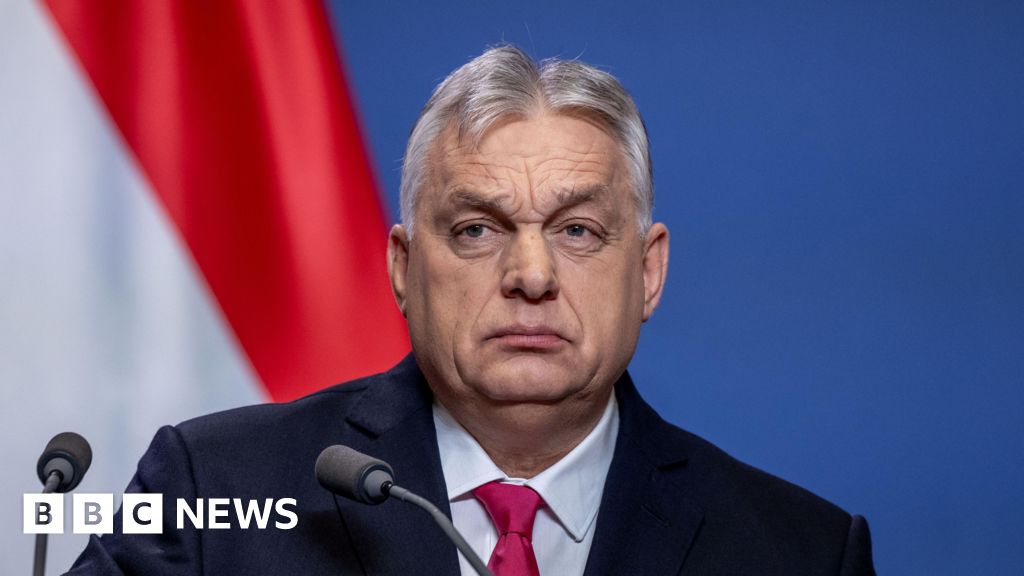
The prime minister’s assertive stance has manifested in concrete actions within the EU. This week, Orban exercised his veto power, blocking a €90 billion (£78 billion) EU loan package intended for Ukraine and also preventing the approval of the EU’s 20th sanctions package against Moscow. In a strongly worded open letter shared on social media on Thursday, Orban accused Ukraine, the European Union, and domestic opposition parties of a coordinated effort to install a "pro-Ukraine government" in Hungary. This rhetoric paints a picture of external interference and portrays his government as a bulwark against foreign influence.
The European Union, while acknowledging the pipeline’s operational issues, has urged Kyiv to expedite its repair. However, Ukrainian President Volodymyr Zelensky has countered, stating that while the EU advises repairs, they are aware that the Druzhba pipeline has already been subjected to attacks. This exchange highlights the differing perspectives and priorities of the involved parties.
Slovakia’s Prime Minister Robert Fico, another leader often characterized as close to Russia, has echoed Orban’s sentiment, accusing President Zelensky of intentionally stalling the pipeline’s reopening. In a display of solidarity and pressure, Fico’s government announced on Monday that it would cease providing emergency power supplies to Ukraine until oil shipments through the Druzhba pipeline resume. This move underscores the interconnectedness of energy security and diplomatic alliances in the region. Ukraine has been heavily reliant on energy imports from its European neighbors due to severe power shortages experienced throughout the winter, exacerbated by intensified Russian attacks on its electricity and gas infrastructure.
The European Commission, however, has sought to allay concerns regarding potential shortages. On Wednesday, an EU spokesperson clarified that while Hungary and Slovakia have begun utilizing their emergency oil reserves, there is no immediate risk to their energy supplies, and alternative sourcing options are readily available. Anna-Kaisa Itkonen, a spokesperson for the European Commission, stated after an expert meeting convened to assess the situation: "Croatia confirmed… that non-Russian crude oil is being transported through the Adria pipeline to Hungary and Slovakia." She further elaborated that the Adria pipeline serves as the "main alternative pipeline for Hungary and Slovakia to cover their needs, and the pipeline has sufficient capacity to increase volumes to fully cover the Hungarian Slovakian requirements." This statement suggests that the economic and logistical impact of the Druzhba pipeline’s outage, while politically charged, is manageable for the two nations through existing alternative infrastructure.
The context of these disputes is intrinsically linked to Ukraine’s ongoing efforts to disrupt Russia’s war machine. Ukraine’s military has consistently targeted Russian oil infrastructure within Russian territory. Earlier this week, a Ukrainian drone strike reportedly hit an oil pumping station in Tatarstan, a significant industrial region in Russia. These strikes have had a tangible impact on Russia’s oil production and export capabilities. According to Reuters news agency, these attacks have forced Russia’s primary oil operator to reduce the volume of crude oil entering its system by approximately 250,000 barrels per day, highlighting the effectiveness of Ukraine’s strategic targeting of energy assets.
In his social media message on Thursday, Orban directly accused President Zelensky of orchestrating the Druzhba pipeline blockage as an "anti-Hungarian policy." This accusation followed his statement the previous day, where he alleged that Kyiv was "preparing further actions to disrupt Hungary’s energy system." Following a meeting of the Hungarian Defence Council on Wednesday, Orban announced that soldiers had been deployed to energy facilities across the country, police would be patrolling power stations, and a ban on drones had been implemented in Hungary’s northeastern border region adjacent to Ukraine.
It is crucial to note that there is no current indication or evidence to suggest that Ukraine is planning any form of attack on Hungary or its energy infrastructure. Ukraine’s armed forces are currently stretched thin, engaged in a protracted and intense defense against Russia’s full-scale invasion along a front line spanning approximately 1,200 kilometers (750 miles). The focus of Ukraine’s military operations remains firmly on repelling Russian aggression within its own sovereign territory.
While President Zelensky has not immediately responded to Orban’s latest accusations, this narrative of Ukraine seeking to undermine Hungary is a recurring theme in Orban’s political messaging. He has consistently sought to portray Kyiv as attempting to draw Hungary into the conflict and has repeatedly used his influence within the EU to hinder financial and military aid to Ukraine. This strategic framing allows Orban to present himself as a protector of Hungarian national interests, safeguarding the country from perceived external threats and internal subversion, particularly as he navigates a challenging electoral landscape. The deployment of soldiers to energy facilities, therefore, serves a dual purpose: addressing a perceived security threat, however unsubstantiated, and projecting an image of decisive leadership and national resilience to the Hungarian electorate. The geopolitical ramifications of these escalating tensions, particularly concerning energy security and the broader European response to the war in Ukraine, continue to unfold, with Hungary’s stance remaining a significant point of contention within the EU.
