
 By admin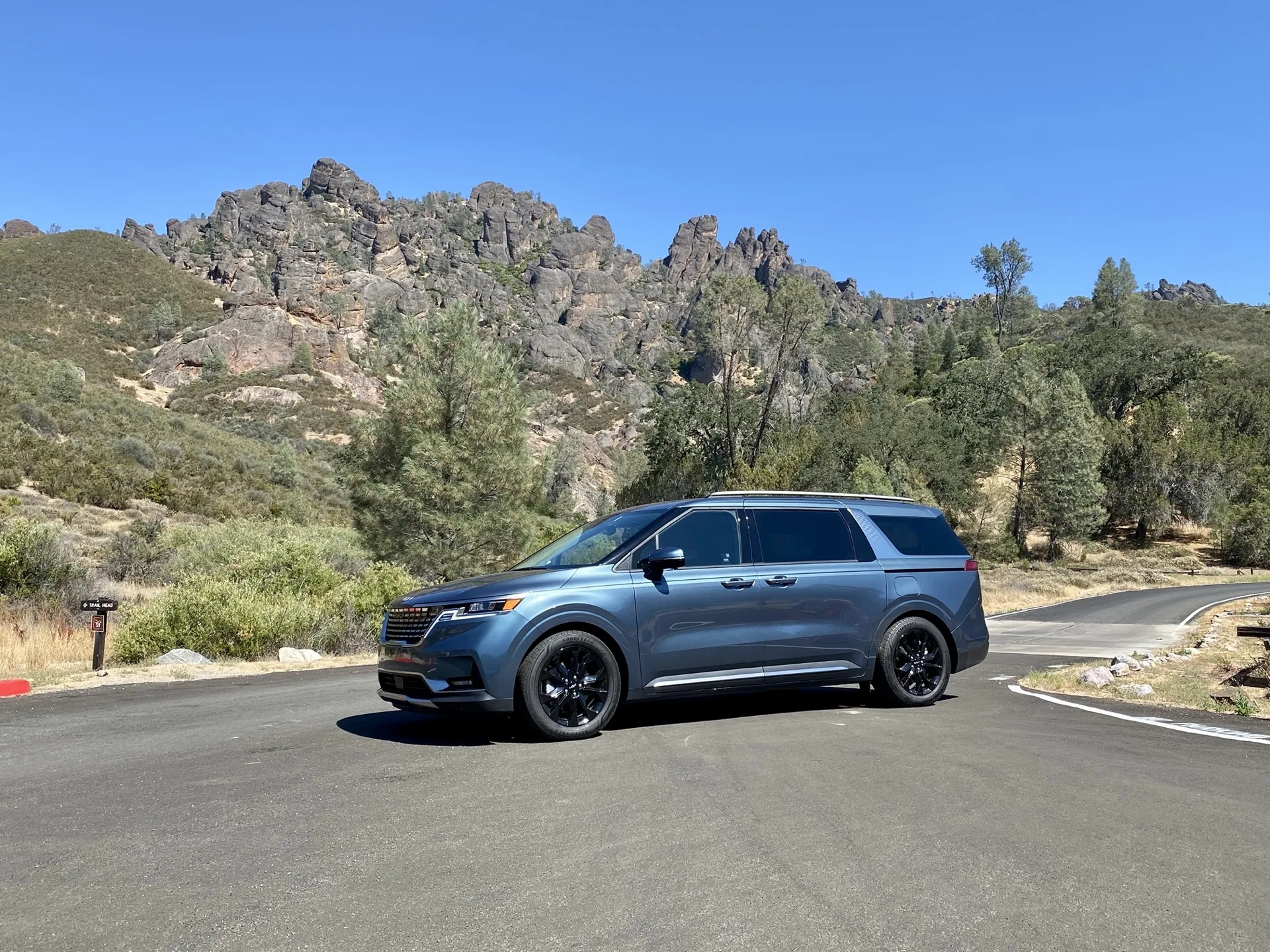
When my automotive friends heard that my son and I would be driving down U.S. Highway 1 on California’s Pacific Coast, their first question was, almost invariably, what car we would be taking. The unspoken assumption, a familiar echo in the circles of car enthusiasts, was that such an iconic journey demanded an equally iconic vehicle: a sleek convertible to embrace the ocean breeze, a sporty coupe for spirited drives, a powerful Mustang for American muscle, or perhaps a refined Porsche for European elegance. The answer, delivered with a wry smile, often elicited a pause, then a chuckle, sometimes a raised eyebrow: "A minivan. The 2024 Kia Carnival, to be specific."
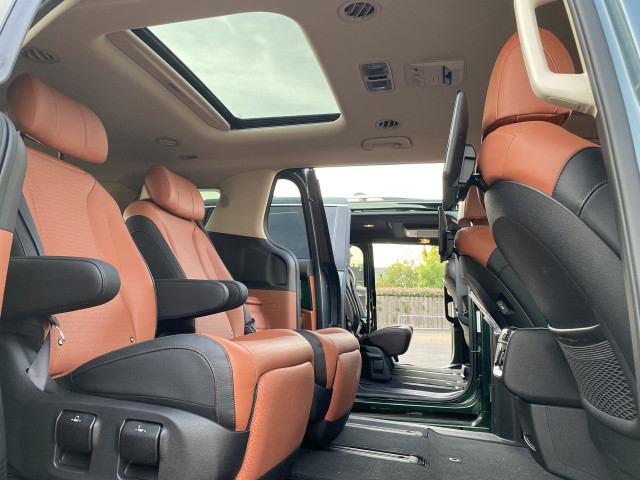
This wasn’t just any minivan, though. It was the latest iteration of Kia’s "multi-purpose vehicle," a segment blurring the lines between SUV and minivan, meticulously designed to offer the best of both worlds. While the eagerly anticipated 2025 Carnival Hybrid, promising enhanced fuel efficiency and a refreshed design, would not be ready in time for our adventure, the 2024 model, particularly in its posh SX Prestige trim, proved to be an inspired choice. Its reputation as the roomiest minivan on the market was immediately evident, and the second-row captain’s chairs, complete with extending footrests, transformed the rear cabin into a veritable first-class lounge. This wasn’t merely a mode of transport; it was a mobile sanctuary, perfectly configured for the demanding and often unpredictable nature of a cross-state road trip.

Our ambitious plan involved flying from Chicago to San Francisco to meet friends, then embarking on a southbound drive. The route was carefully mapped to bypass the infamous Highway 1 washout near Big Sur, necessitating a detour inland to Highway 101 before cutting back to the scenic coastal road. The itinerary was a deliberate blend of rustic charm and modern comfort: several nights camping under the stars, interspersed with hotel stays, culminating in a flight home from LAX. Such a varied journey, transitioning from rugged campsites to urban hotels, demanded a vehicle capable of immense flexibility – a quality the Carnival promised in spades.
The trip’s commencement, however, was immediately beset by unforeseen challenges. Flight cancellations, a frustratingly common occurrence in modern air travel, and other logistical hurdles beyond our control threatened to unravel the meticulously laid plans. Yet, through it all, my son remained remarkably unperturbed. His apparent indifference, a quiet disengagement that had become increasingly pronounced during a summer already overwrought with the complexities of planning for his imminent departure to college, pricked at my parental anxieties. "Do you even want to go?" I snapped, the exasperation bubbling to the surface. A month shy of him leaving for a university ten hours away in the Northeast, I desperately needed to see some sign of life, a flicker of excitement, anything to dispel the growing sense of apathy.
His response, delivered with a calm, measured tone and a knowing smirk, was a quintessential teenage deflection, yet undeniably insightful. "This is my graduation gift, right?" he challenged softly. "As part of that gift, I don’t wanna plan anything." It was a declaration of independence, a subtle reclaiming of control, and a clear directive to me: I was the orchestrator, and he, the recipient, would simply experience. In that moment, the true essence of the trip began to crystalize for me. It was as much for my own emotional compass as it was for his celebratory milestone. It was an opportunity to "check in," to assess if "we’re OK," to bridge the subtle but growing chasm that often develops between a parent and a young adult on the cusp of independence. A week confined within the spacious yet intimate confines of a minivan, I realized, would provide all the reconnecting he never explicitly asked for, but perhaps, deep down, needed.

Setting out from the vibrant streets of San Francisco, the Carnival’s interior transformed into our mobile command center. We tucked the third row seamlessly into the floor, a testament to the minivan’s ingenious cargo management, liberating a vast, flat storage area. The second-row captain’s chairs, the very feature that had drawn the admiration of my friends, were slid as far back as possible, creating an expansive personal space for each occupant. A cooler, strategically wedged behind the center console, was within easy reach of both front seats, ensuring a steady supply of snacks and beverages. The deep storage bucket under the center armrest became a treasure trove of road trip essentials: sunscreen, bug spray, extra phone accessories, a medley of trail mix, and, of course, the obligatory Sour Patch Kids. While the console didn’t boast the multi-tiered shelves and numerous side pockets found in some rival minivans, a design choice perhaps prioritizing aesthetics over maximal utility, it proved perfectly sufficient for keeping our frequently accessed items handy during our numerous spontaneous stops.
Our first major deviation from the highway took us inland to Pinnacles National Park, a stark contrast to the coastal cool. Here, the temperature soared by a scorching 20 degrees, the heat a palpable entity. Relief came only through the immersive experience of caving, venturing into the cool, subterranean bowels of the seemingly prehistoric park, a geological wonder that felt light-years away from the modern world.
Back on the open road, the Carnival’s premium features truly shone. We cranked up the cooled front seats, a standard luxury on the SX Prestige trim, a godsend against the California sun, and set our course south toward San Simeon. This leg of the journey promised to be the longest stretch of highway miles covered in a single day, a perfect test for the Carnival’s powertrain. The 280-hp 3.5-liter V-6 engine, paired with an 8-speed automatic transmission, offered ample power for confident passing on single-lane highways. However, during steeper uphill climbs, the "big lug" of a vehicle, while generally smooth, occasionally lagged, making me wish for the immediate response of paddle shifters to manually override the automatic transmission and tap into instant torque. Despite this minor quibble, the cabin remained remarkably quiet and the ride exceptionally smooth, insulating us from the rigors of the road.

Within minutes, my son was asleep, a familiar sight from his infancy, a testament to the Carnival’s serene environment. He hadn’t bothered to adjust the 4-way power lumbar support or even recline the passenger seat, his comfort seemingly innate. In a subtle gesture of respect and connection, he plugged in only his outboard earbud, leaving the one nearest me open, an unspoken invitation for conversation, or perhaps just a shared silence. This became our default setup: he napping or engrossed in his phone, one earbud in, one out. I observed that he was "present" with me, actively engaged in conversation or shared experience, approximately 25% of the time – a significant improvement, I noted, compared to his typical engagement level at home.
During his moments of slumber or digital immersion, I found myself "playing with the van instead." The cabin camera, accessible via the crisp 12.3-inch touchscreen, became a curious tool, allowing me to observe how our belongings had shifted and settled in the rear on some of the more rugged access roads. One persistent minor irritation, a design oversight Kia has reportedly addressed in subsequent models, was the console clutter. While my phone enjoyed the convenience of the wireless charger, my son’s device, tethered by a sprawling 9-foot cord that snaked over the console and slopped over the side, was a constant visual reminder of the shoes scattered by the rear entryway at home – a parenting irritation I’ve never quite managed to diffuse. It’s the kind of endearing, yet maddening, habit that I imagine he and his sister will later joke about: "Line up the damn shoes, close the damn door, have you drank enough water today?"
The good news, for future Carnival owners, is that the 2025 model now features wireless smartphone connectivity, promising a reduction in such visual clutter. For our trip, we defaulted to his phone for music, his meticulously curated playlists becoming the soundtrack to our journey. I was secretly delighted to discover his recent appreciation for Radiohead, a band I cherished in my youth. In return, he introduced me to the vibrant sounds of Rainbow Kitten Surprise, and I reintroduced him to the nuanced Americana of Wilco, occasionally requesting more Grateful Dead, a nod to my own musical roots.

Later that evening, after setting up camp on a picturesque bluff at Washburn Campground in Hearst San Simeon State Park, we ventured down to the beach. Armed with a frisbee, some beverages, and a shared anticipation, we witnessed his first sunset on the Pacific. This was the singular request, the only specific desire he had articulated when the planning began months ago: "I guess I want to see the sun set on the Pacific." It was a simple wish, yet profound in its execution, a quiet, breathtaking moment shared as the sun dipped below the vast horizon, painting the sky in fiery hues.
The trip, I reflected, was more than just a graduation gift; it was the fulfillment of a pandemic promise made to both him and his sister for graduating with honors. Anywhere within the contiguous United States, their pick. He had graduated with highest honors, a humblebrag I felt justified in making, considering the extraordinary challenges of the preceding years. The pandemic years, for all of us, but especially for his cohort, were uniquely fraught. The cancellation of 8th-grade graduation, the loss of associated rites of passage – the school trip to Washington D.C., the post-dance boat ride on Lake Michigan, the parties, the bewildering shift to remote learning in freshman year, the sophomore year spent behind masks and desks barricaded in plexiglass – all added up to significant, yet immeasurable, consequences. We had no idea if the kids would truly be alright. Still don’t, I suppose. Parenting, in its essence, is never truly knowing.
At 3 a.m., disturbed by the gentle rustling of the ocean breeze, I stepped out of the tent. The stars, unobscured by city lights, were a dazzling kaleidoscope, a silent, infinite spectacle that put our earthly concerns into humbling perspective.
The following day proved ambitious and, at times, fraught with the predictable tensions of road travel. Our plans included visiting the iconic elephant seals and making the pilgrimage up to Hearst Castle before hitting the road again. The easy laughs and deep conversations from the previous night crashed on the shore of breaking down an ill-equipped camp and the inevitable pressure of moving on. Charting a course of connection with an 18-year-old son, I mused, was unmapped territory, save for the universally recognized danger zone of the "Hangry Straights."
By the time we reached Morro Strand State Beach, exhaustion had settled in. We parked under a scrawny beach tree, agreeing to simply "chill" before attempting to set up camp again. He was asleep in the passenger seat before I had even finished draining the cooler. Following his lead, I climbed into the back and powered down. The SX Prestige trim, with its seven-seat layout and two luxurious captain’s chairs in the middle row, offers unparalleled comfort. Unlike lesser Carnival models, these specific chairs, equipped with power reclining, heating, and cooling functions, cannot be entirely removed. Instead, I slid my seat to its farthest rear position, which would typically butt against the folded third row. With the seat powered back, the legrest kicked up, and the sun warming the ocean, I opened the second of the Carnival’s two sunroofs – one for the front, one for the second row. This dual sunroof design, I noted, felt more intimate and effective than a single panoramic setup, dividing the cabin into two distinct zones with their own skylights. Even in that most stretched-out position, my legs couldn’t fully extend, but tucking them to the side was perfectly comfortable. I suppose I could have switched to the other side and moved the driver’s seat forward, but the beach breeze, gently blowing in from the open side door, was, in that moment, pretty much perfect. There were snores and drool, I admit, from both of us. It wouldn’t be the last time we napped in the Carnival.
Later, he discovered a Lego minifigure shop in San Luis Obispo and, with renewed energy, wanted to trek back. Thanks to the Carnival’s comprehensive suite of driver-assist technologies – including parking sensors, dynamic backup lines, and a blind-spot camera that flawlessly alerted me to an approaching cyclist I couldn’t visually clear – parallel parking the second-largest minivan on the market proved surprisingly easy. At a quaint coffeehouse, where he happily downed a milkshake and eyed the comic book store across the street, I was powerfully reminded that this emerging man, my son, was still very much a boy. As much as I tried, and often failed, to act like a peer, to let him do his own thing, to weigh in on all decisions, he still instinctively deferred to me as the parent. I was, am, and always will be the parent. Duh. When I gently called him out for walking behind me in town, engrossed in his phone, instead of beside me "like a norm," he reacted with typical teenage defiance, walking far ahead of me on our subsequent hike to a waterfall in the forest of a county park.

By the time we made it to our first hotel, a rather dilapidated establishment on Pismo Beach with no air conditioning and windows that stubbornly refused to open, we had reached the halfway mark of our journey. He clearly needed a break, a sanctuary from my constant presence. His room had a door, which he left barely ajar, a silent truce. I walked the boardwalk and the pier through the sunset, replaying conversations, dissecting what I said and shouldn’t have said, how I should and shouldn’t act. Dolphins intermingled with the surfers, their graceful arcs a calming counterpoint to my internal monologue. Back in the dark of the parking lot, I futzed around in the van, repacking the camping gear we no longer needed. It felt like parenting in a microcosm: constantly moving on before I ever fully grasped what was truly going on.
I stuffed my dad’s Army duffel bag from Vietnam with the tent, sleeping bags, mementos, and other accumulated gear. It was the first time I had ever used it, and it perfectly fit our equipment without being a cumbersome burden while flying, unlike my old framed backpack meant for serious backcountry treks. Before we left Chicago, I had asked my son if he could figure out how its unique four-ring and one-clip closure system worked. I, the supposedly experienced adult, had needed YouTube. He, the digital native, needed all of 30 seconds. I admired the durability and simplicity of it, a design that had endured generations. It became, in my mind, the luggage equivalent of the Kia Carnival: nothing flashy, perhaps, but so damn practical. Like my dad.
In January, he had told me he was done considering options to treat his lung cancer. My brother, upon hearing this, made an immediate about-face, worried he could die that very night. I was in Toronto with my daughter; the earliest flight I could catch was the day after. In a moment of desperation, I called my son and asked the impossible: "Can you go to the ER to be with Grandpa Duff in my place?" He did it without hesitation or protest. This boy, my son, was a man.

He met me later that evening, the nocturnal creature he’d become. We found a place with a dartboard. He opted for a root beer; I had a beer. We talked trash, and he proceeded to beat me at Cricket, the second time he’d beaten me in as many times as he’d played. It’s been an eventful year, much more so for him than for me. In three short weeks, he’d be leaving all he had ever known, to be surrounded by no one he knew, in a place he’d never known. What I knew of what he was going through was like the surface of the ocean, simultaneously serene and stormy. There was so much more going on below his surface.
We left the Carnival behind for a ferry ride to hike Santa Cruz Island in Channel Islands National Park, a pristine natural wonder. At a key junction on the trail, he challenged me to hike to the peak, extending our planned five-mile loop to a grueling ten miles. He wouldn’t care, he declared with youthful abandon, if the ferry left us behind overnight with no food, dwindling water, and no shelter. I was almost charmed enough to forsake the wisdom of age and revel in the pure adventure of youth. We wouldn’t, but his spirit was magnetizing. On the ride back, as the captain slowed the ferry to observe a nursing pod of dolphins – more one-week olds than she’d ever seen – I nudged him awake. The water around them danced like a celebration, a poignant, shared moment of pure wonder, an affirmation of life and connection, perfectly encapsulated by the journey the Kia Carnival had enabled.
2024 Kia Carnival SX Prestige
Base price: $47,665, including $1,365 destination
Price as tested: $49,480
Drivetrain: 280-hp 3.5-liter V-6, 8-speed automatic transmission, front-wheel drive
EPA fuel economy: 19/26/22 mpg (city/highway/combined)
Pros: Mobile den of comfort, remarkably quiet and smooth ride, exceptionally roomy and versatile interior, luxurious captain’s chairs, advanced driver-assist technology, a catalyst for genuine family connection, surprisingly capable for long-haul travel.
Cons: Wired Apple CarPlay (addressed in 2025 model), not an inexpensive family vehicle, console storage could be more optimized, V6 can feel sluggish on steep inclines without paddle shifters, the bittersweet reality of my son growing up and leaving the nest.