
 By admin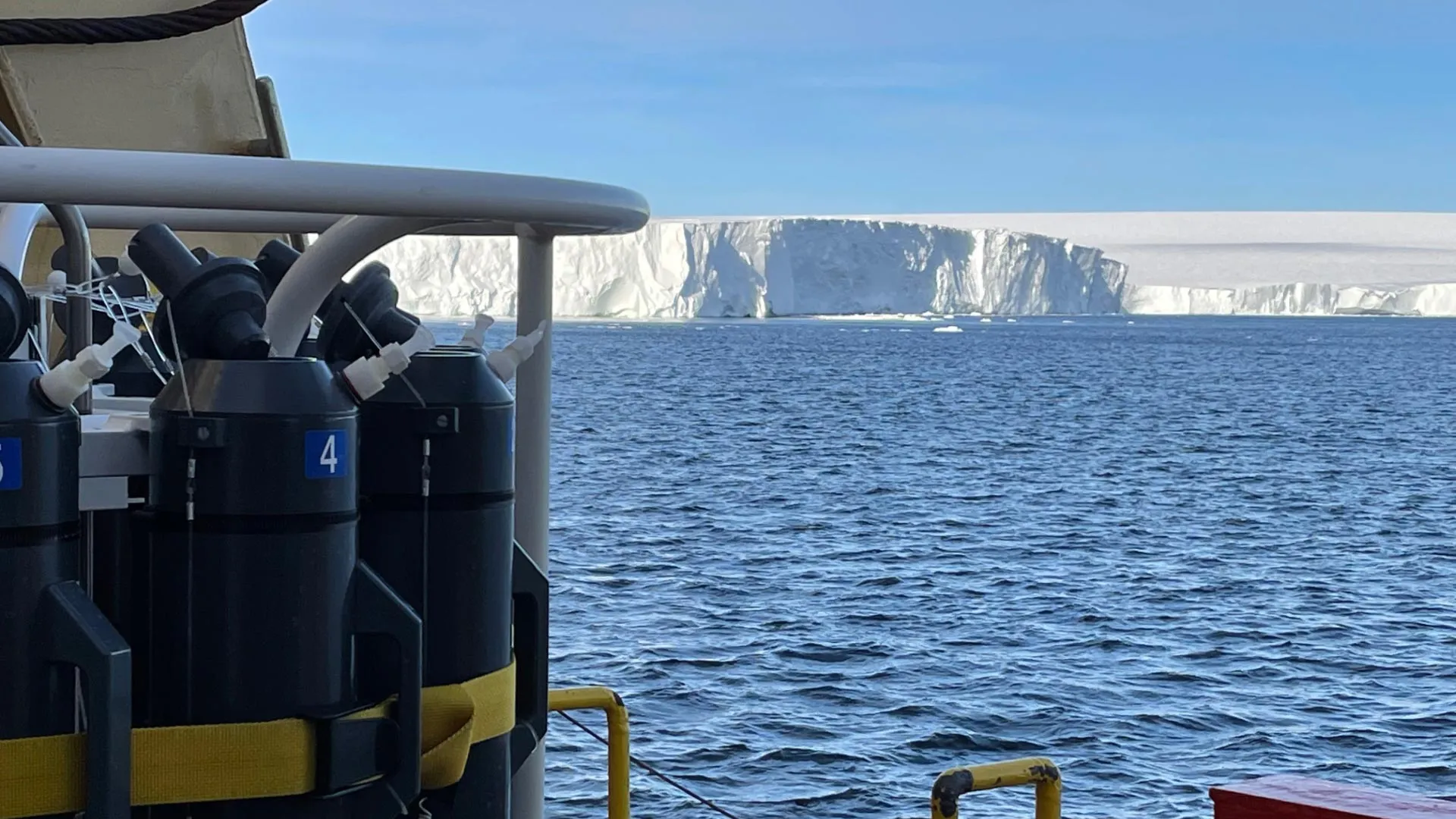
This hypothesis, often referred to as the "glacial iron pump," offered a tantalizing vision: a natural negative feedback loop where one consequence of climate change – glacial melt – could inadvertently mitigate another – rising atmospheric CO2. The Southern Ocean, a vast and often iron-limited region, is known for its critical role in global carbon cycling. Phytoplankton here are voracious consumers of CO2, and their productivity is often constrained by the scarcity of bioavailable iron, a micronutrient essential for photosynthesis. The prospect of a natural iron boost, therefore, held significant appeal for scientists seeking to understand the Earth’s complex climate system and its potential self-regulating mechanisms.
However, new evidence presented by a team from Rutgers University-New Brunswick suggests that this optimistic expectation may not be accurate, challenging a long-standing assumption about the Southern Ocean’s response to a warming world. Their groundbreaking study indicates that the contribution of iron from melting glaciers to surrounding ocean waters is significantly less than previously believed, and its primary source is far more nuanced than simple ice melt.
In what the team calls the most precise measurement so far of iron flowing from an Antarctic glacier, scientists found that meltwater from an ice shelf contributes far less iron to surrounding ocean waters than previously estimated. This discovery fundamentally alters our understanding of a key biogeochemical process in one of the planet’s most sensitive and important ecosystems. The study, published in the prestigious journal Communications Earth & Environment, raises new and critical questions about the actual origin of iron in the Southern Ocean, potentially reshaping how climate change forecasts and sophisticated Earth system models are developed and refined.
"It has been widely assumed that glacial melting underneath ice shelves contributes considerable bioavailable iron to these shelf waters, in a process of natural glacier-driven iron fertilization," stated Rob Sherrell, a distinguished professor in the Department of Marine and Coastal Sciences at the Rutgers School of Environmental and Biological Sciences and the study’s principal investigator. Sherrell emphasized that these findings necessitate a significant revision of those long-held assumptions. The amount of iron carried by meltwater, according to their rigorous measurements, is several times lower than earlier, model-based estimates. Furthermore, a substantial portion of the iron identified appears to originate from a different form of meltwater, not directly from the melting of ice shelves themselves, but from more complex subglacial processes.
This distinction is crucial. It suggests that the anticipated "iron pump" from melting glaciers, often invoked in discussions about Antarctic climate feedback, may be largely ineffective in stimulating widespread phytoplankton blooms. The implications for regional marine ecosystems and global carbon budgets are profound, potentially removing a perceived natural buffer against atmospheric carbon dioxide increases.
Why Iron in the Southern Ocean Matters: A Global Climate Perspective
To fully grasp the significance of these findings, one must understand the pivotal role of iron in the Southern Ocean. Despite enduring months of darkness and notoriously harsh conditions, the Southern Ocean is a powerhouse of biological productivity, supporting abundant phytoplankton growth. These microscopic marine plants are the bedrock of the entire Antarctic food web, sustaining the massive krill populations that, in turn, feed penguins, seals, and the vast filter-feeding whales that characterize this remote environment.
More critically, as phytoplankton grow through photosynthesis, they draw down immense quantities of carbon dioxide from the atmosphere. This process, known as the biological pump, is a fundamental component of the Earth’s carbon cycle. The Southern Ocean, due to its sheer size and unique circulation patterns, is recognized as the world’s largest oceanic sink for atmospheric CO2, playing an indispensable role in regulating global climate. However, much of this region is characterized by "high-nutrient, low-chlorophyll" (HNLC) conditions, meaning there are ample macronutrients like nitrates and phosphates but a chronic lack of micronutrients, particularly iron. Without sufficient iron, phytoplankton cannot fully utilize the available macronutrients, limiting their growth and, consequently, their capacity to absorb CO2.
Historically, sources of iron to the Southern Ocean have been attributed to various mechanisms, including atmospheric dust deposition from distant continents, upwelling from deep ocean currents, and, importantly, the release from melting glaciers and icebergs. The latter had been considered an increasingly significant source in a warming world, as accelerated glacial melt was expected to unleash previously locked-up iron. This new research directly challenges the quantitative importance of this glacial source.
A Shift from Simulation to Direct Measurement
Until now, much of what scientists understood about iron sources in these vast, remote waters came predominantly from indirect methods, such as simulations and computer models. While invaluable for exploring complex systems, these models often rely on assumptions that require empirical validation. Sherrell and his colleagues from Rutgers, alongside partner institutions in the United States and the United Kingdom, recognized this gap and chose a more arduous but ultimately more precise approach: gathering direct field measurements at the source.
In 2022, the researchers embarked on a challenging expedition aboard the now-decommissioned U.S. icebreaker, the Nathaniel B. Palmer. Their destination was the Dotson Ice Shelf, a crucial and rapidly retreating ice mass located in the Amundsen Sea of West Antarctica. The Amundsen Sea is not merely another segment of the Antarctic coastline; it is a region of immense glaciological significance, accounting for the majority of the current sea level rise driven by Antarctic melting. This makes it a critically important "hot spot" for studying ice-ocean interactions and their global consequences. The team’s ambitious goal was to collect glacial meltwater samples directly at its point of origin, beneath the ice shelf itself, to quantify its iron contribution with unprecedented accuracy.
Sampling Beneath the Ice Shelf: A Logistical Triumph
The unique geography of the Amundsen Sea dictated their sampling strategy. Here, meltwater forms not just at the surface of the ice but primarily beneath vast, floating ice shelves that extend from the land-based glaciers far out into the ocean. The melting process under these shelves is driven mainly by the intrusion of relatively warm deep ocean water, which circulates into the cavities beneath the ice, eroding it from below.
At the Dotson Ice Shelf, the research team meticulously identified and navigated to the precise locations where seawater flows into one of these sub-ice cavities and, crucially, where it exits after mixing with the meltwater. This strategic sampling design allowed them to establish a clear "before and after" scenario for the water’s chemical composition. Water samples were then painstakingly collected at both these entry and exit points, requiring specialized equipment and expertise to operate in the challenging polar environment.
Back in the more controlled environment of the laboratory in New Jersey, Venkatesh Chinni, a postdoctoral scholar and the lead author of the study, undertook the arduous task of measuring the iron concentrations in these precious samples. He analyzed both dissolved iron, which is readily available to phytoplankton, and iron attached to suspended particulate matter, which can become bioavailable over time. Simultaneously, collaborators Jessica Fitzsimmons and Janelle Steffen at Texas A&M University performed sophisticated isotopic analyses. By examining the ratios of different iron isotopes, they were able to create a "fingerprint" for the iron, allowing them to trace its precise origin, much like forensic scientists trace a suspect. Steffen had performed the initial isotopic analyses in the laboratory of Tim Conway at the University of South Florida, establishing the foundational data for this crucial aspect of the study.
Using these highly precise measurements and isotopic signatures, Chinni and the team were able to calculate how much additional iron was present in the water leaving the cavity compared with the water entering it. The isotopic data were particularly vital, as they provided definitive clues about which specific melting processes and geological sources were responsible for the iron’s presence.
Deep Water and Sediments: The Unsung Iron Suppliers
The results of this meticulous work were, as Sherrell described, "unexpected." The long-held assumption of significant iron contribution from melting ice shelves was not supported by the direct measurements. The study revealed a strikingly different picture: meltwater accounted for only about 10% of the total dissolved iron flowing out of the cavity. The vast majority of the iron originated from other, less directly glaciated sources.
Specifically, the research determined that most of the dissolved iron (a substantial 62%) came from deep ocean water that had circulated into the sub-ice cavity. This deep water, rich in iron from various geological and hydrothermal sources over long periods, proved to be a far more significant contributor than the melting ice itself. Another significant portion, 28%, originated from sediments on the continental shelf, where iron-rich particles can be resuspended by currents or dissolved under specific geochemical conditions.
"Roughly 90% of the dissolved iron coming out of the ice shelf cavity comes from deep waters and sediments outside the cavity, not from meltwater," Chinni summarized, underscoring the dramatic shift in understanding. This finding suggests that the warming-induced acceleration of ice shelf melt might not translate into a proportional increase in bioavailable iron for Southern Ocean phytoplankton, at least not directly from the melting ice.
Moreover, the isotope data pointed to an additional, previously underappreciated mechanism occurring beneath the glacier itself. The samples suggested the presence of a liquid meltwater layer that is critically lacking in dissolved oxygen – an anoxic environment – existing between the bedrock and the overlying ice sheet. Under such oxygen-depleted conditions, solid iron oxides present in the bedrock can dissolve much more readily into the water, releasing a significant amount of iron. According to Chinni, this mechanism, involving the geochemical interaction between subglacial meltwater and bedrock, may contribute more iron than the melting of the floating ice shelves themselves. This is a crucial distinction, as it implies that the iron source is not simply the melting ice but rather complex geological processes occurring at the very base of the glacier.
Rethinking Antarctic Iron and Climate Models
Together, these groundbreaking findings fundamentally challenge long-standing assumptions about the primary sources of bioavailable iron in the Southern Ocean as the planet warms. The direct measurements provide a powerful counterpoint to previous model-based predictions, necessitating a re-evaluation of how glaciological processes influence oceanic biogeochemistry.
"Our claim in this paper is that the meltwater itself carries very little iron, and that most of the iron that it does carry comes from the grinding up and dissolving of bedrock into the liquid layer between the bedrock and the ice sheet, not from the ice that is driving sea level rise," Sherrell reiterated. This distinction is paramount for climate modeling, as the processes that drive sea level rise (melting of floating ice shelves) appear to be largely decoupled from the processes that supply iron to the ocean (subglacial bedrock weathering).
Sherrell candidly acknowledged that many scientists within the glaciological and oceanographic communities may find this conclusion surprising, given the entrenched nature of the "glacial iron pump" hypothesis. The research team emphasizes that more extensive work is needed across different Antarctic regions and ice shelves to fully understand the diverse ways in which subglacial processes influence iron release into the vast Southern Ocean.
This study not only refines our understanding of Antarctic iron cycles but also has broader implications for how we model and predict the future of Earth’s climate. If the Southern Ocean’s capacity to sequester carbon is less directly enhanced by glacial melt than previously thought, then climate models might need to adjust their projections for the efficacy of natural carbon sinks. It also provides a crucial reality check for any geoengineering proposals that consider artificial iron fertilization as a means to mitigate climate change, highlighting the complexity and often unpredictable nature of natural oceanic systems. The work underscores the continuous evolution of scientific understanding, reminding us that even widely discussed ideas must be rigorously tested against the direct evidence from our dynamic planet.