
 By Rifan Muazin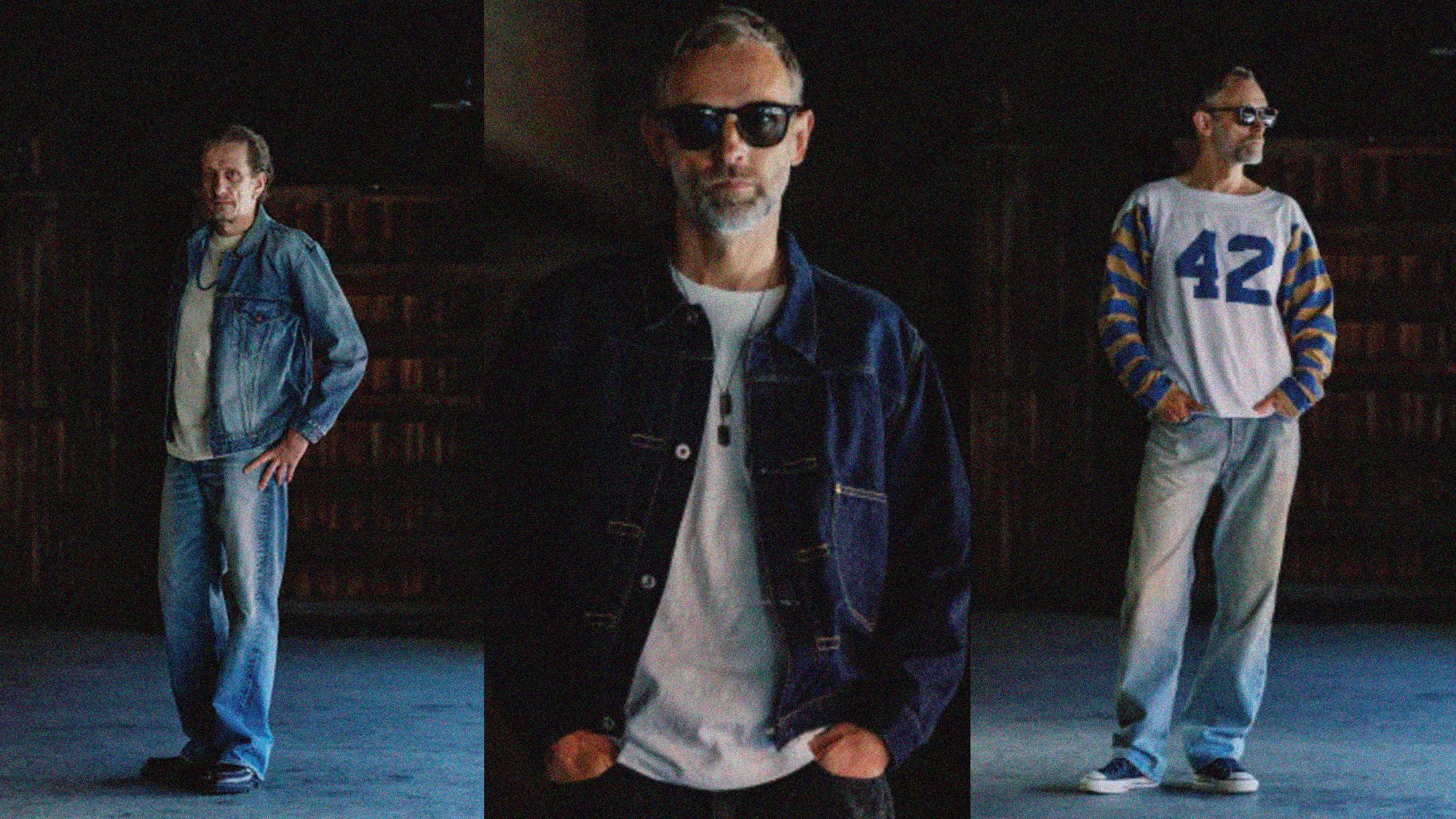
To understand why a Fullcount drop on a major e-commerce platform is noteworthy, one must first understand the historical vacuum it filled. After World War II, Japan experienced a cultural phenomenon known as Ametora (American Traditional). Young Japanese men became enamored with the rugged, utilitarian aesthetic of the American rebel—James Dean in Rebel Without a Cause or Marlon Brando in The Wild One. However, as American manufacturers like Levi’s began moving toward mass production in the 1970s and 1980s, shifting from shuttle looms to high-speed projectile looms to meet global demand, the quality and character of the denim changed. The "soul" of the fabric—the slubby texture, the hairy surface, and the distinct selvedge ID—began to vanish.
The Osaka 5 emerged as a reactionary force against this industrial homogenization. Leading the charge for comfort and texture within this group was Fullcount, founded in 1992 by Mikiharu Tsujita. While his peers focused on heavy-duty stiffness or flamboyant branding (like Evisu’s hand-painted seagulls), Tsujita-san was obsessed with the feel of the garment. He wanted to create a pair of jeans that felt like a "second skin," reminiscent of the soft, durable denim produced in the 1940s and 1950s. This led him to a discovery that would change the trajectory of the Japanese denim industry: Zimbabwean cotton.
Fullcount’s commitment to Zimbabwean cotton is the "wonky" technical detail that defines the brand’s DNA. Unlike the short-staple cotton used in mass-market jeans, Zimbabwean cotton is hand-picked, ensuring the fibers are not damaged by the aggressive metal teeth of mechanical harvesters. These fibers are exceptionally long-staple, meaning they can be spun into a yarn that is both incredibly strong and surprisingly soft. Because the cotton is naturally oily and lustrous, it takes indigo dye in a way that allows for deep, rich color while maintaining a breathable, flexible hand-feel. When Fullcount first introduced this 100% Zimbabwean cotton denim, it set a new benchmark for the "repro" (reproduction) scene, proving that vintage-style jeans didn’t have to be uncomfortable or require a multi-year "break-in" period.
The current offering on Mr Porter highlights Fullcount’s mastery over both raw and distressed finishes. For the purist, the 0105W Straight-Leg Selvedge Jeans represent the brand’s flagship silhouette. Modeled after the classic 1953 cut, these jeans feature a higher rise, a spacious seat, and a straight leg that avoids the tapered trappings of modern trends. They are woven on vintage Toyoda G3 shuttle looms—machines that are temperamental and slow, but produce a "self-edge" (selvedge) fabric that is structurally superior to the frayed edges of modern overlocked denim.
For those who prefer the look of a "grail" vintage find without the decades of labor, the "Dartford" wash included in the capsule is a masterclass in artisanal aging. The name "Dartford" itself is a nod to rock-and-roll lore, referencing the train station where Mick Jagger and Keith Richards met in 1961, sparking the formation of The Rolling Stones. The wash is designed to mimic a pair of jeans that has been worn hard for twenty years—the whiskers at the lap, the honeycombs behind the knees, and the subtle fraying at the hems are all achieved through meticulous hand-processing in Okayama, the denim capital of the world. It is a level of distress that looks organic rather than manufactured, a feat that very few brands outside of the Osaka 5 can credibly claim.
Beyond trousers, the capsule explores the architecture of the denim jacket, specifically the Type 1 and Type 2 styles. These are not merely fashion items; they are historical blueprints. The Type 1 jacket, characterized by its single chest pocket and cinch-back waist, reflects the utilitarian needs of the early 20th-century worker. Fullcount’s version maintains the "knife pleats" along the center placket, which were originally designed to be snipped to allow the jacket to expand if the wearer gained weight or needed more mobility. The Type 2, which emerged in the early 1950s, adds a second chest pocket and replaces the cinch-back with side adjusters, signaling the transition of denim from pure workwear to a symbol of youth rebellion.
The inclusion of a Denim Chore Jacket in the collection further expands the narrative. While the Type 1 and Type 2 are quintessentially American, the chore jacket finds its roots in French "bleu de travail" (work blues). Fullcount’s interpretation blends these influences, using their signature selvedge denim to create a garment that is lighter than a trucker jacket but more substantial than a shirt. It is the kind of versatile layer that has made Japanese "workwear-lite" a staple in the wardrobes of creative professionals globally.
The significance of this "pit stop online" cannot be overstated in the context of market evolution. For decades, Fullcount operated in a state of "available obscurity." To buy a pair, one often had to navigate Japanese-language websites, use third-party "proxy" shipping services, or visit a handful of specialized boutiques in London, New York, or Berlin. By partnering with Mr Porter, Fullcount is participating in a broader "democratization of craft." It allows a wider audience to appreciate the nuances of a 13.7oz denim weight—the sweet spot between durability and comfort—without the gatekeeping often associated with the heritage scene.
Moreover, the data supports this shift toward "investment dressing." In an era of fast fashion fatigue, consumers are increasingly seeking out "buy it for life" products. The resale value of Osaka 5 denim remains remarkably high, often appreciating as the jeans develop a unique patina. Unlike synthetic-blend "stretch" denim that loses its shape and ends up in a landfill within two years, a pair of Fullcount jeans is designed to age with the wearer. The indigo fades are a biological record of the user’s life—where they sat, how they walked, and what they carried in their pockets.
In a journalistic sense, the Fullcount story is a testament to the "Galapagos effect" of Japanese culture—taking a foreign concept, isolating it, and refining it to a level of perfection that surpasses the original. When Levi Strauss & Co. moved away from the shuttle loom, they left a void that Mikiharu Tsujita and his contemporaries were happy to fill. They didn’t just save American denim; they elevated it to an art form.
As we look at the specific items in this Mr Porter drop—from the 0105BK black selvedge to the ecru 0105EC—we see a brand that is confident in its legacy but aware of the modern palette. The black denim, for instance, uses a sulfur-dye process that will fade to a charcoal grey over time, offering a moody alternative to the traditional indigo. The ecru version, left in its natural, unbleached state, showcases the raw beauty of the Zimbabwean cotton, complete with tiny flecks of cotton seed husks that give the fabric an organic, earthy texture.
In conclusion, while the "mythical" status of Japanese denim was once built on its scarcity, its future lies in its integrity. Fullcount’s arrival on a major digital stage doesn’t dilute the brand’s prestige; rather, it challenges the fashion industry at large to reconsider what "quality" actually means. It is a reminder that in a world of instant gratification, there is still a place for slow-picked cotton, vintage looms, and the patient pursuit of a perfect fade. Whether you are a "denim head" with a collection of raw selvedge or a newcomer looking for your first "real" pair of jeans, Fullcount offers a masterclass in what happens when you treat a humble work garment with the reverence of a tuxedo. Disregard the pedigree and the "wonky" details if you must, but once you feel the Zimbabwean cotton against your skin, the transition from American export to Japanese masterpiece becomes undeniable.