
 By Lina Irawan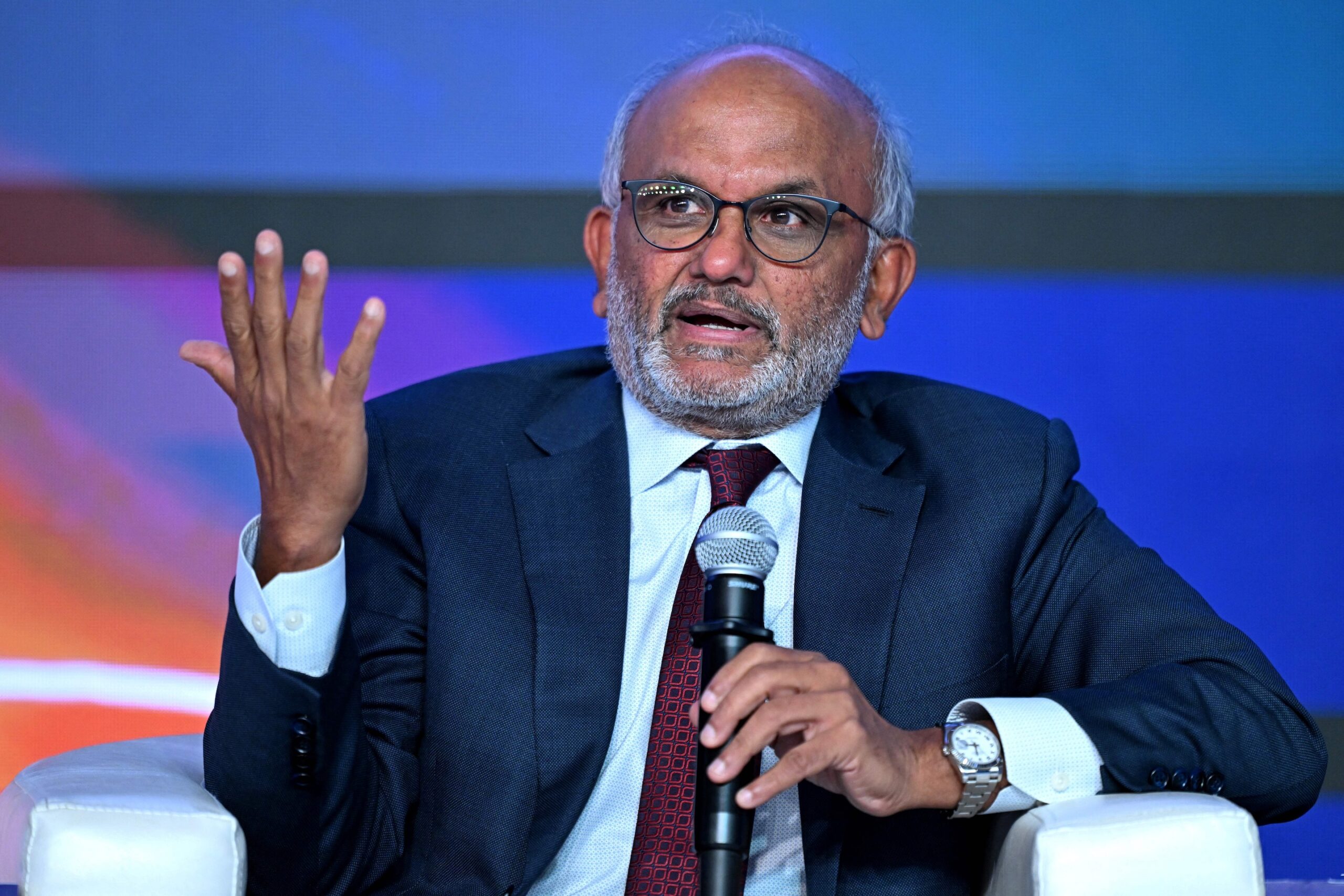
Adobe, the software giant synonymous with creativity and digital experience, announced a significant leadership transition on Thursday, as its long-serving CEO, Shantanu Narayen, revealed his intention to step down from the top executive role after an impactful 18-year tenure. Narayen, who has steered the company through profound shifts in the technology landscape, will remain as chairman of the board, ensuring continued strategic guidance during the crucial succession period. The announcement arrived concurrently with Adobe’s impressive first-quarter fiscal year 2026 earnings report, which largely surpassed Wall Street expectations, yet the news of the CEO’s impending departure, coupled with a modestly optimistic outlook, led to a slight dip in the company’s stock in after-hours trading.
In a memo to employees, Narayen articulated the commencement of the search for his successor, stating, "Over the coming months, I will be working with Frank Calderoni, our lead director, and the board of directors to identify my successor and to ensure a smooth transition." This carefully orchestrated handover underscores a commitment to continuity and stability as Adobe navigates an increasingly dynamic market, particularly one shaped by the rapid advancements in artificial intelligence.
Narayen’s legacy at Adobe is nothing short of transformative. Having joined the company in January 1998 as vice president and general manager of its engineering technology group, he ascended through the ranks, becoming president and COO in 2005, and finally assuming the CEO position in December 2007. Over the nearly three decades he has been with Adobe, and especially during his 18 years as CEO, he has overseen a period of unprecedented growth and strategic evolution. Under his leadership, the company expanded from approximately 3,000 employees to more than 30,000 globally, while its revenue surged from less than $1 billion to an impressive $25 billion-plus.
His most defining achievement, widely lauded as a masterclass in corporate transformation, was the audacious pivot from a perpetual software license model to a subscription-based, cloud-first service, epitomized by the launch of Creative Cloud in 2012. This shift was initially met with skepticism and even backlash from some loyal customers accustomed to owning their software outright. However, Narayen remained steadfast, recognizing the long-term benefits of recurring revenue, enhanced customer engagement, and the ability to deliver continuous innovation. The move not only stabilized Adobe’s financial performance but also set a benchmark for the entire software industry, proving that even entrenched giants could successfully reinvent their core business model. This strategic gamble paid off handsomely, creating a more predictable, resilient, and ultimately more valuable enterprise.
Beyond the Creative Cloud, Narayen expanded Adobe’s reach significantly into the digital marketing and customer experience space through strategic acquisitions like Omniture (2009), Marketo (2018), and Magento (2018), consolidating these offerings under the Adobe Experience Cloud. These moves positioned Adobe not just as a tool provider for designers and artists, but as a critical partner for businesses seeking to manage and optimize their entire digital customer journey, from content creation to analytics and commerce.
The timing of Narayen’s announcement coincided with a robust financial performance report for the first quarter of fiscal year 2026, which concluded on February 27. Adobe posted adjusted earnings per share (EPS) of $6.06, comfortably beating analysts’ consensus estimate of $5.87 per share. Revenue reached $6.4 billion, also surpassing analysts’ expectations of $6.28 billion, and marking a healthy 12.1% increase year-over-year.
A standout metric in the earnings release was the performance of Adobe’s AI-first products, which Narayen highlighted in his accompanying statement. "Annualized revenue from AI-first products more than tripled year over year," he announced, signaling the company’s successful integration of generative AI capabilities into its flagship offerings. This includes features like Firefly, Adobe’s family of generative AI models, which power creative workflows within applications like Photoshop and Illustrator, enabling users to generate images, text effects, and more from simple text prompts. The substantial growth in this segment underscores Adobe’s proactive approach to the AI revolution, positioning itself as an enabler of creativity in the new era rather than a potential victim of automation. Narayen emphasized this vision, stating, "Our mission to empower everyone to create represents an even larger opportunity as content powers all experiences in the AI era."
The company’s core subscription model continued to demonstrate strength, delivering 13% subscription revenue growth. Furthermore, Adobe reported a record first-quarter cash flow of $2.96 billion, reflecting the operational efficiency and strong profitability inherent in its cloud-based model. Dan Durn, Adobe’s Executive Vice President and CFO, echoed this sentiment, remarking, "As we accelerate AI-powered capabilities across creativity, productivity and customer experience orchestration, Adobe is well positioned for continued profitable growth."
Looking ahead, Adobe provided guidance for the fiscal second quarter, projecting adjusted earnings between $5.80 and $5.85 per share on revenue of $6.43 billion to $6.48 billion. These forecasts also came in above analyst expectations, which, according to LSEG data, stood at $5.68 per share and $6.42 billion, respectively.
Despite these positive financial indicators, the market’s reaction to the dual announcement was somewhat muted. Adobe’s stock, which ranks No. 201 on the Fortune 500, slipped about 1.43% in after-hours trading. This modest decline can be attributed to a confluence of factors: the inherent uncertainty that often accompanies a CEO transition, especially after such a long and successful tenure, and investors’ perpetually high expectations for tech companies in the current AI-driven market. While Adobe’s guidance did exceed Wall Street forecasts, it only did so "modestly," leading some investors to seek a more aggressive outlook, particularly concerning the company’s growth trajectory in the fiercely competitive AI landscape.
Narayen’s departure also comes at a time when Wall Street is actively debating the potential impact of artificial intelligence on traditional software tools. Early February saw a broad sell-off in SaaS (Software-as-a-Service) and cloud stocks, a phenomenon some investors dubbed "SaaS-mageddon." This reflected growing fears that "agentic AI" – AI systems capable of performing complex tasks autonomously – could potentially reduce demand for some traditional per-seat software licenses by automating workflows, thereby undermining established software pricing models.
Adobe, with its extensive suite of creative and productivity tools, is directly in the crosshairs of this debate. However, Narayen and his team have consistently argued that AI will augment human creativity and productivity, rather than replace the need for their core software. "The next era of creativity is being written right now—shaped by AI, by new workflows and by entirely new forms of expression," Narayen reiterated in his memo, underscoring Adobe’s long-standing philosophy of innovation. "Adobe has never waited for the future to arrive. We’ve anticipated it. We’ve built it. And we’ve led it. What gives me the greatest confidence isn’t just our technology—it’s our people." This perspective suggests that Adobe views AI as an expansive opportunity to embed more intelligent features into its products, making them even more indispensable for a broader range of users.
The search for a successor to a leader of Narayen’s caliber is a monumental task for Adobe’s board. The new CEO will inherit a company with a robust financial foundation, a proven subscription model, and a clear strategic direction into the AI era. However, they will also face the challenge of accelerating growth, fending off competition from both established players and nimble AI startups, and continuously innovating in a rapidly evolving technological landscape. The board, led by Frank Calderoni, will likely be looking for a candidate with a visionary outlook, deep operational expertise, a strong understanding of AI’s strategic implications, and the leadership qualities to inspire a global workforce and maintain investor confidence. Potential internal candidates could include current executives who have played key roles in Adobe’s recent successes, but the board will undoubtedly conduct a thorough search that could also consider external industry veterans.
Narayen’s impact extends beyond Adobe’s balance sheets and product roadmaps. He is widely respected across the tech industry for his strategic foresight and empathetic leadership. Satya Nadella, CEO of Microsoft, publicly praised Narayen in a post on X, stating that he "built one of the most important software companies in the world." Nadella further added, "What has always stood out to me is the empathy you’ve brought to the creative process and the example you’ve set as a leader. Grateful for your friendship, mentorship, and for all you’ve done for Adobe and for our industry." Such tributes from industry peers underscore the profound influence Narayen has had on the technology sector.
While the timeline for selecting Narayen’s successor has not yet been announced, the process will be closely watched by investors, analysts, and employees alike. The next leader will be tasked with building upon Narayen’s remarkable legacy, steering Adobe through the transformative potential and competitive pressures of the AI era, and ensuring the company remains at the forefront of creativity and digital experience for decades to come. Narayen’s transition marks the end of a pivotal chapter, but with strong financials and a clear vision for AI, Adobe appears well-prepared for its next evolutionary leap.