
 By Titik Puspa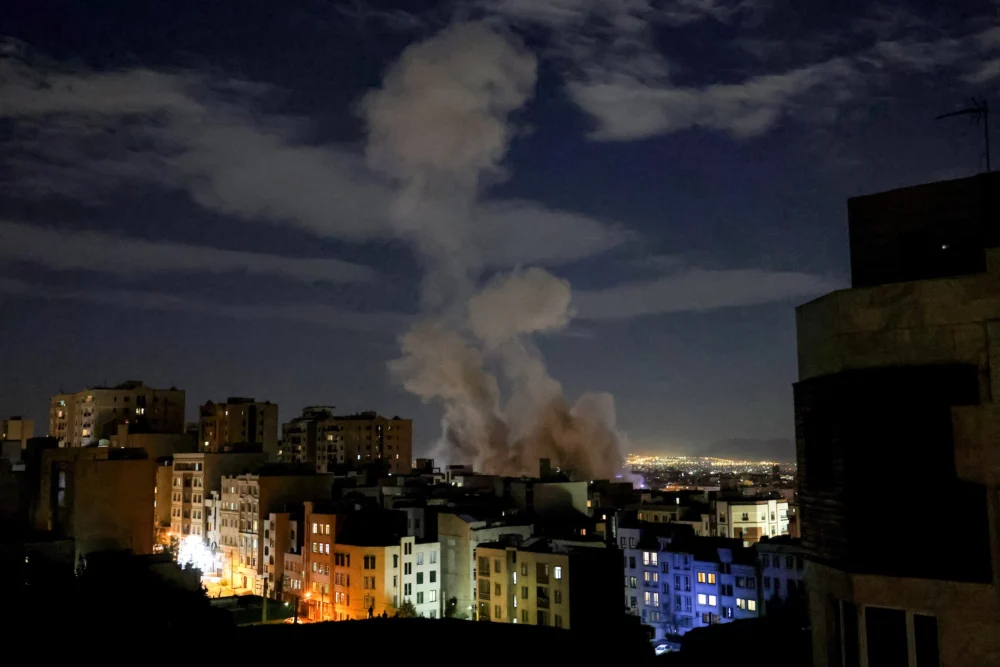
The complex and increasingly contradictory directives emanating from the U.S. government have thrust AI company Anthropic into a precarious position, finding itself simultaneously integral to the ongoing conflict between the United States and Iran and facing a significant exodus of clients from the defense sector. This paradox stems from a series of conflicting policies designed to isolate the company, which have been rendered effectively moot by the rapid escalation of hostilities. President Trump’s initial directive for civilian agencies to discontinue the use of Anthropic products, intended to sever ties with the firm, has been complicated by a six-month wind-down period granted for operations with the Department of Defense. This grace period, however, was dramatically overshadowed by the surprise aerial offensive launched by the U.S. and Israel against Tehran, plunging the region into active conflict before the directive could be fully implemented.
The immediate consequence of this temporal collision is that Anthropic’s sophisticated AI models are now actively engaged in critical targeting decisions for the U.S. military’s aerial campaign against Iran. While Secretary of Defense Pete Hegseth has publicly committed to designating Anthropic as a supply-chain risk—a move that would impose significant restrictions—no official steps have yet been taken to formalize this designation. Consequently, there are no extant legal barriers preventing the continued integration and utilization of Anthropic’s systems within the U.S. military’s operational framework, despite the stated intent to distance the government from the company.
New details unearthed by The Washington Post on Wednesday have illuminated the extent to which Anthropic’s systems are being leveraged in conjunction with Palantir’s Maven system, a potent combination for military intelligence and operations. According to the Post’s reporting, as Pentagon officials meticulously planned the strikes, the integrated AI systems were instrumental in "suggesting hundreds of targets, issuing precise location coordinates, and prioritizing those targets according to importance." The article further characterized the AI’s function as providing "real-time targeting and target prioritization," underscoring its pivotal role in the unfolding military actions. This deep integration highlights the critical dependence on AI technologies for modern warfare, a dependence that can create significant vulnerabilities when policy and operational realities diverge.
This reliance on Anthropic’s technology by the military stands in stark contrast to the actions of numerous private sector defense contractors. In response to the evolving political landscape and the implied pressure from the presidential directive, many prominent companies have begun to pivot away from Anthropic’s offerings. Reuters reported this week that major defense contractors, including Lockheed Martin, have initiated the process of replacing Anthropic’s AI models with those from competing firms. This proactive measure by industry leaders reflects a broader trend of de-risking supply chains in anticipation of potential future sanctions or regulatory actions.
The ripple effect extends to subcontractors and smaller players within the defense ecosystem. A managing partner at J2 Ventures shared with CNBC that a significant portion of his portfolio companies—specifically ten—have "backed off of their use of Claude for defense use cases and are in active processes to replace the service with another one." This widespread disengagement from Anthropic’s flagship AI model, Claude, by companies reliant on defense contracts illustrates the immediate and tangible impact of the government’s mixed signals. The urgency to find alternatives underscores the critical nature of these AI tools in the defense sector and the potential disruption caused by their removal.
The underlying confusion and contradiction in U.S. policy can be traced to the overlapping and, at times, diametrically opposed directives issued by the executive branch. President Trump’s initial order to civilian agencies aimed at a swift decoupling from Anthropic’s technologies. However, the extended transition period afforded to the Department of Defense created a critical window of opportunity for the company’s continued involvement. The subsequent launch of military operations in Iran effectively froze this transition in its tracks, forcing the military to continue relying on the very systems it was ostensibly being prepared to phase out. This temporal disconnect has created a situation where policy intentions are being undermined by the urgent demands of active combat.
The implications of this situation are far-reaching, not only for Anthropic but for the broader discourse on the ethical and strategic deployment of AI in sensitive geopolitical contexts. The company, founded with a stated commitment to developing AI safely and ethically, now finds itself in a position where its technology is being utilized in a live conflict, potentially influencing life-and-death decisions. This scenario raises profound questions about accountability, oversight, and the degree to which AI developers can control the application of their tools once they enter the hands of military or governmental entities.
The designation of Anthropic as a supply-chain risk, if and when it materializes, is expected to trigger a significant legal battle. The company, likely to contest such a designation, could argue that its continued use by the Department of Defense demonstrates its essential utility and adherence to established protocols. The outcome of such a legal challenge could set important precedents for the future regulation and oversight of AI technologies in defense applications. Furthermore, it could influence how the government balances national security imperatives with concerns about foreign influence or potential vulnerabilities associated with the origin of critical AI systems.
The current predicament of Anthropic serves as a potent case study in the evolving relationship between advanced technology, government policy, and international conflict. As the U.S. continues its military engagement in Iran, the nation’s reliance on AI for strategic advantage is undeniable. Yet, the conflicting directives surrounding Anthropic highlight the challenges of navigating the complex ethical and practical considerations that arise when cutting-edge technologies intersect with volatile geopolitical realities. The swift partitioning of Anthropic’s technology from the broader defense industry, even as its models remain operational in a war zone, underscores the dynamic and often unpredictable nature of this intersection. The ultimate resolution of this situation will likely depend on the willingness of policymakers to reconcile stated intentions with the practical demands of national security and the operational realities of modern warfare.
The image accompanying this report, depicting a plume of smoke rising from a building in Tehran following a missile strike on March 1, 2026, serves as a stark visual reminder of the conflict that has so acutely amplified Anthropic’s paradoxical situation. This photograph, credited to Atta Kenare/AFP via Getty Images, encapsulates the real-world consequences of the strategic decisions being informed, in part, by the very AI systems caught in this policy quagmire. The date of the strike, March 1, 2026, places it squarely within the period of heightened tension and active military engagement that has exacerbated the challenges faced by Anthropic and its stakeholders. The ongoing nature of the conflict means that the decisions made today regarding the use and regulation of AI will have profound and lasting implications for future military operations and the broader landscape of artificial intelligence development and deployment. The speed at which the defense industry is seeking alternatives to Anthropic’s products also suggests a broader concern about the potential for future disruptions, not just from policy shifts but from the inherent risks associated with relying on a single, potentially contentious, AI provider. The coming weeks and months will undoubtedly be critical in determining the long-term trajectory of Anthropic’s involvement in defense and the broader implications for AI governance in times of conflict.