
 By admin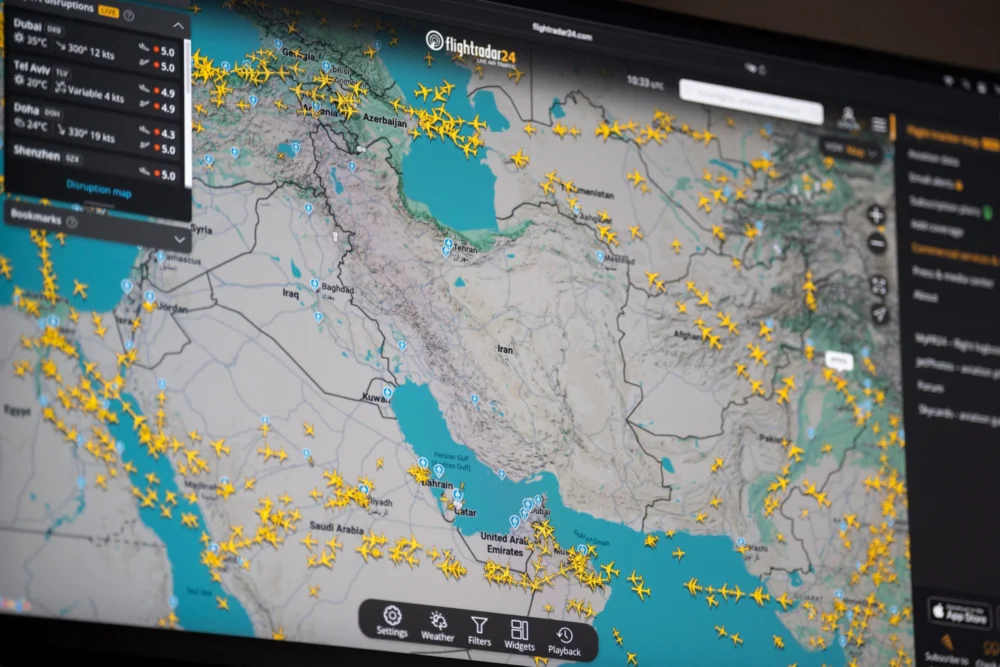
The disruption to the "Super-Connectors"—the trio of Gulf mega-carriers comprising Emirates, Etihad Airways, and Qatar Airways—is unprecedented in its scope. Dubai-based Emirates and Abu Dhabi’s Etihad Airways confirmed on Tuesday that while they are attempting to facilitate limited cargo operations and essential repatriation flights, all regularly scheduled passenger services remain suspended indefinitely. In Doha, Qatar Airways issued a similar directive, noting that operations at Hamad International Airport are "temporarily suspended" as the airline monitors the rapidly shifting security situation. These three airlines represent the backbone of global long-haul travel, facilitating millions of connections between Europe, North America, Asia, and Australia. With their hubs located within the potential theater of war, the ripple effects are being felt at check-in counters from London Heathrow to Hong Kong International.
The duration of this disruption is now the primary variable for economists and industry analysts. While early hopes suggested a brief exchange of fire, political rhetoric suggests a more protracted engagement. President Donald Trump, speaking from the White House on Monday, indicated that the military campaign could extend for "four to five weeks" or potentially longer, depending on the achievement of specific strategic objectives regarding Iran’s nuclear and missile infrastructure. This timeline is particularly bruising for the aviation sector, as it coincides with the traditional ramp-up for the spring and summer travel seasons—the periods during which airlines typically generate the bulk of their annual profits.
At the heart of the pricing crisis is the volatile energy market. Jet fuel is the lifeblood of aviation, typically accounting for approximately 25% to 35% of an airline’s total operating expenses, second only to labor. On Tuesday afternoon, global oil benchmarks saw a staggering surge, with prices jumping more than 10% in a single week to surpass $75 per barrel. The primary driver of this spike is the effective closure of the Strait of Hormuz. This narrow waterway, a chokepoint between the Persian Gulf and the Gulf of Oman, facilitates the passage of more than 14 million barrels of crude oil per day—nearly 20% of the world’s total consumption. With Iran threatening to mine the waters and the U.S. Navy engaged in active combat operations in the vicinity, the flow of energy has slowed to a trickle. If the Strait remains closed or contested for an extended period, analysts warn that oil could easily breach the $100-per-barrel mark, a threshold that historically triggers aggressive fare hikes across the board.
The financial markets have reacted with predictable alarm. U.S. airline stocks, including industry titans like Delta, United, and American Airlines, saw their valuations plunge on Monday and Tuesday. Investors are weighing a "double whammy" of soaring input costs and a potential cooling of consumer demand. There is a palpable fear that the geopolitical instability will spook leisure travelers, leading to a wave of cancellations and a postponement of summer vacation plans. For an industry that relies on high load factors to remain profitable, even a slight dip in passenger confidence, combined with higher fuel bills, can be catastrophic for the bottom line.
A report released Monday by TD Cowen underscored these anxieties, noting that the conflict’s impact on fuel prices is "likely to drive price action in airlines over the near term." The report suggests that while airlines are resilient, they are also sensitive to sudden margin compression. The precedent for this situation was set in 2022 following the Russian invasion of Ukraine. During that crisis, oil prices skyrocketed, but airlines were able to mitigate the damage by leveraging the "revenge travel" phenomenon. Coming out of the COVID-19 pandemic, demand was so inelastic that passengers were willing to absorb record-high ticket prices just to get back into the air. In 2026, however, the economic landscape is different. The global economy is grappling with the tail end of inflationary pressures, and the appetite for expensive "bucket list" travel may not be as robust as it was four years ago.
Airline analyst Tom Fitzgerald of TD Cowen pointed out that airlines typically operate on a "pass-through" model regarding fuel costs, albeit with a delay. "Airlines typically note being able to pass through fuel price increases with a 2 to 3 month lag assuming demand remains healthy," Fitzgerald wrote. This means that even if a traveler finds a deal today, the tickets for May, June, and July are almost certain to reflect the current chaos in the Middle East. In the 2022 cycle, airlines largely avoided transparent "fuel surcharges," which are often unpopular with consumers. Instead, they utilized sophisticated yield management algorithms to bake the increased costs into the base fare, aiming to extract an additional $15 to $20 per domestic ticket and significantly more for international long-haul routes.
The strategy for handling these costs often differs by cabin class. Henry Harteveldt, a respected travel industry consultant and president of Atmosphere Research Group, suggests that budget-conscious travelers might be shielded—at least partially—by those sitting in the front of the plane. Harteveldt notes that full-service carriers often recoup fuel spikes by subtly raising prices in first class, business class, and premium economy. "That could keep prices more affordable and competitive for the regular and discounted coach fares, as well as basic economy," Harteveldt explained. This cross-subsidization allows airlines to keep their "headline" prices low to attract volume while maintaining margins through their high-yield corporate and luxury segments.
However, this luxury of choice does not exist for low-cost carriers (LCCs) and ultra-low-cost carriers (ULCCs). Airlines like Southwest, Spirit, or Ryanair in Europe operate with much thinner margins and do not have expansive premium cabins to absorb the shock. For these carriers, a sustained rise in oil prices leaves them with no choice but to pass the cost directly to the consumer. Harteveldt warned that if oil reaches $100 per barrel and stays there, it could be "really problematic" for the budget sector, potentially leading to a reduction in flight frequencies or the total abandonment of less profitable routes.
Beyond the price of fuel, the conflict is forcing massive operational changes that add to the cost of a ticket. With Iranian, Iraqi, and much of the Gulf airspace declared a no-fly zone for Western carriers, flights between Europe and Southeast Asia are being forced onto much longer, circuitous routes. Rerouting a flight from London to Singapore to avoid the conflict zone can add two to three hours of flight time. This requires significantly more fuel, additional crew hours, and more wear and tear on the aircraft. These operational inefficiencies are rarely absorbed by the airline; they are almost always reflected in the final price paid by the passenger.
The resilience of the modern traveler remains the wild card in this equation. Despite the shocks of the early 2020s, the global demand for connection has proven remarkably durable. As Fitzgerald noted, "Travel demand has proved encouragingly resilient in the face of various shocks this decade." Nevertheless, the psychological impact of a hot war involving major powers cannot be discounted. If the conflict escalates further, drawing in more regional players or affecting key Mediterranean hubs, the "safety premium" may become too high for the average tourist to pay.
Ultimately, the question of how much more expensive a summer vacation will be depends on the duration of the "temporary" spike. If the U.S.-led campaign concludes within the four-week window suggested by the White House and the Strait of Hormuz is reopened to commercial traffic, the aviation industry may escape with only a minor bruise. However, if the conflict descends into a protracted war of attrition, the 2026 travel season could be defined by some of the highest airfares in history. For now, travelers are advised to monitor their bookings closely, consider travel insurance with "cancel for any reason" clauses, and prepare for a summer where the cost of the journey may rival the cost of the destination. The skies over the Middle East are dark, and for the global aviation market, the dawn of price stability feels a long way off.