
 By Titik Puspa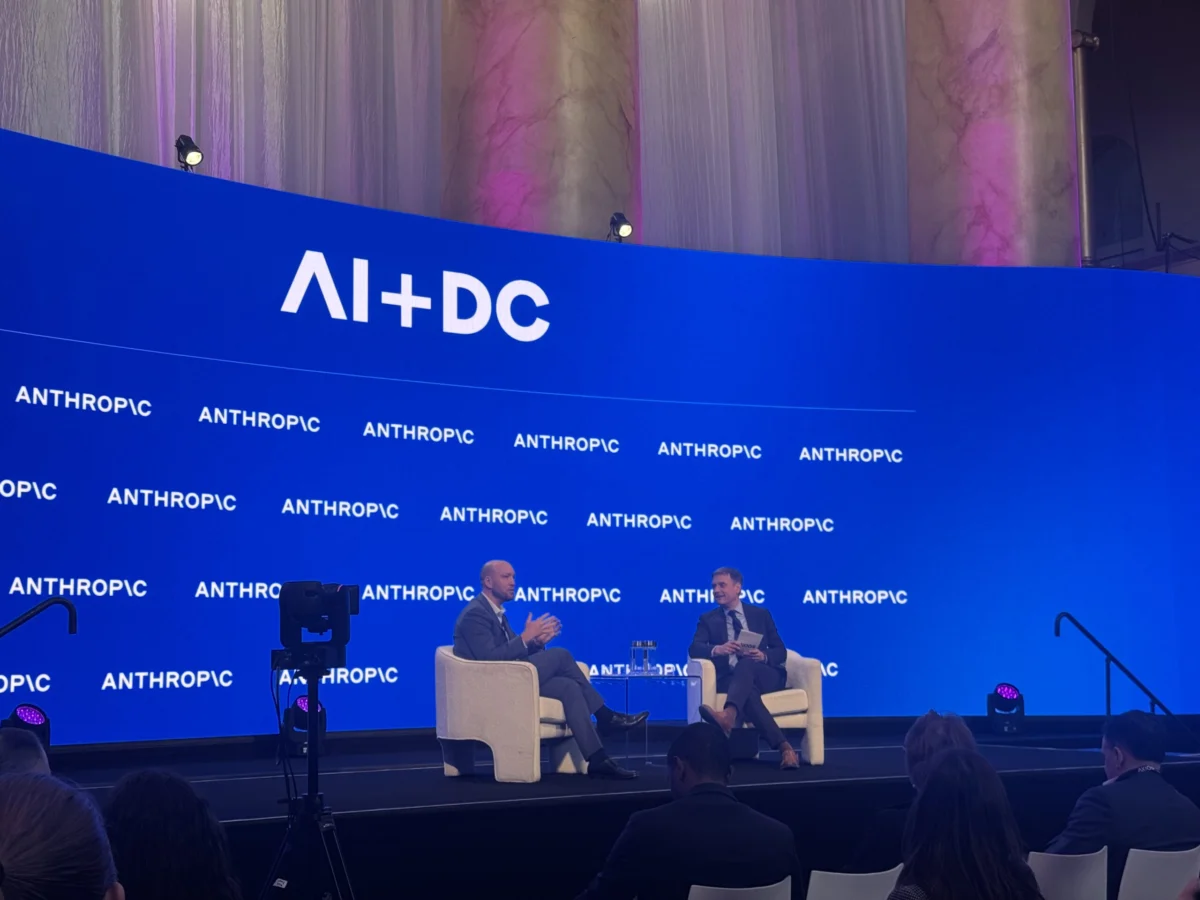
Anthropic’s latest economic research, detailed in their March 2026 report, presents a nuanced picture of artificial intelligence’s burgeoning influence on the global workforce. While AI is undeniably reshaping how work is performed across numerous sectors, the findings indicate that widespread job elimination has not yet materialized. However, beneath the surface of what Anthropic’s head of economics, Peter McCrory, describes as a "still healthy" labor market, early indicators are pointing towards significant, albeit uneven, impacts, particularly for younger workers navigating their initial steps into the professional world.
In an exclusive interview conducted on the sidelines of the Axios AI Summit in Washington, D.C., McCrory elaborated on the company’s most recent economic impact assessment. The report, he stated, reveals a scarcity of compelling evidence for substantial job displacement on a broad scale at this juncture. "There’s no material difference in unemployment rates," McCrory explained, when comparing workers who utilize Anthropic’s AI assistant, Claude, for the "most central task of their job in automated ways" – a category encompassing roles like technical writers, data entry clerks, and software engineers – with those in occupations less exposed to AI and requiring more "physical interaction and dexterity with the real world." This suggests that, for now, AI’s impact is more about augmenting existing roles rather than replacing them entirely.
However, this equilibrium is far from guaranteed. As AI adoption accelerates and permeates across an ever-wider array of industries, the landscape could shift dramatically and with considerable speed. The potential implications are starkly illustrated by the projections of Anthropic CEO Dario Amodei. In a previous statement, Amodei posited that AI could potentially "wipe out half of all entry-level white-collar jobs and push unemployment as high as 20% within the next five years." This forecast underscores the urgency of understanding and preparing for the transformative power of AI, even as current data suggests a more gradual transition.
McCrory emphasized the critical need for proactive monitoring to anticipate these potential shifts. "Displacement effects could materialize very quickly, so you want to establish a monitoring framework to understand that before it materializes so that we can catch it as it’s happening and ideally identify the appropriate policy response," he advised TechCrunch. This forward-looking approach is precisely why Anthropic is dedicating significant resources to tracking AI growth, adoption, and diffusion across the economy. Understanding these trends is not merely an academic exercise; it’s a crucial step in developing strategies to mitigate potential negative consequences and harness the benefits of AI responsibly.
The theoretical capabilities of advanced AI models like Claude are vast, capable in principle of performing nearly any task that a computer can execute. Yet, McCrory pointed out that, in practical application, most users are currently only "scratching the surface" of these extensive functionalities. This gap between potential and current utilization suggests that the full economic implications of AI may still be some time away, as users and organizations gradually unlock the deeper capabilities of these tools.
To pinpoint areas where displacement might first emerge, Anthropic’s research meticulously examined roles characterized by tasks that AI excels at, tasks that are already undergoing automation, and tasks directly tied to real-world workplace applications. These are the sectors and occupations deemed most susceptible to significant AI-driven changes.
Anthropic’s fifth economic impact report, released concurrently with these discussions, also revealed a growing disparity in AI proficiency. Even in areas where widespread job displacement hasn’t yet occurred, a discernible skills gap is widening between early adopters of AI tools like Claude and those who are newer to the technology. Early adopters are demonstrably extracting greater value from these platforms. They are more inclined to integrate AI into their core work-related tasks, employing it in sophisticated ways, such as leveraging it as a "thought partner" for iterative development and receiving feedback. This contrasts with newcomers who may be using AI for more casual or one-off purposes.
McCrory’s findings strongly suggest that AI is evolving into a technology that disproportionately benefits those already possessing the requisite skills and knowledge. Workers who can effectively integrate AI into their professional workflows are increasingly poised to gain a significant competitive advantage. This advantage, however, is not being distributed equitably across the globe or even within nations. The report further highlights that "Claude is used more intensely in high-income countries, within the U.S. in places with more knowledge workers, and for a relatively small set of specialized tasks and occupations."
This observation carries profound implications. Despite the often-touted promise of AI as a democratizing force, its current adoption patterns appear to be favoring those who are already economically and professionally advantaged. This trend could potentially exacerbate existing inequalities, as power users, armed with advanced AI capabilities, pull further ahead of their peers. The notion of AI as an "equalizer" may, in practice, be leading to an amplification of existing economic advantages.
The report also implicitly raises questions about the future of education and workforce training. If AI adoption rewards existing skills and sophisticated usage, then educational institutions and training programs must adapt rapidly to equip individuals with the necessary competencies. This includes not only technical proficiency in using AI tools but also the critical thinking and problem-solving skills required to leverage AI effectively in complex work environments. The ability to collaborate with AI, to understand its limitations, and to apply its outputs ethically and strategically will become paramount.
Furthermore, the concentration of AI adoption in specific sectors and geographies suggests that policymakers need to consider targeted interventions. For regions or industries lagging in AI adoption, there may be a need for investment in infrastructure, digital literacy programs, and support for small and medium-sized enterprises (SMEs) to access and implement AI technologies. Without such measures, the economic divide could widen further, creating pockets of prosperity driven by AI alongside areas that are left behind.
The insights from Anthropic’s research are particularly relevant in light of upcoming events that will undoubtedly further shape the discourse around AI and its economic impact. For instance, the TechCrunch event scheduled for October 13-15, 2026, in San Francisco, CA, will serve as a crucial platform for industry leaders, innovators, and policymakers to convene and discuss the evolving landscape of artificial intelligence. Such gatherings are vital for fostering collaboration, sharing best practices, and collectively navigating the complex challenges and opportunities presented by AI.
The rapid evolution of AI necessitates a continuous and adaptive approach to economic analysis and policy-making. While the immediate threat of mass job displacement may not be evident today, the underlying trends of increasing automation, widening skill gaps, and uneven adoption patterns demand attention. The "still healthy" labor market described by McCrory is a snapshot in time, and the future trajectory will depend on how effectively individuals, organizations, and governments respond to the transformative power of artificial intelligence. The insights from Anthropic’s research serve as a critical early warning system, urging proactive engagement and strategic planning to ensure that the benefits of AI are shared broadly and that its disruptive potential is managed responsibly for the betterment of society as a whole. The narrative is still being written, and the actions taken now will significantly influence the economic story of AI in the years to come.