
 By Titik Puspa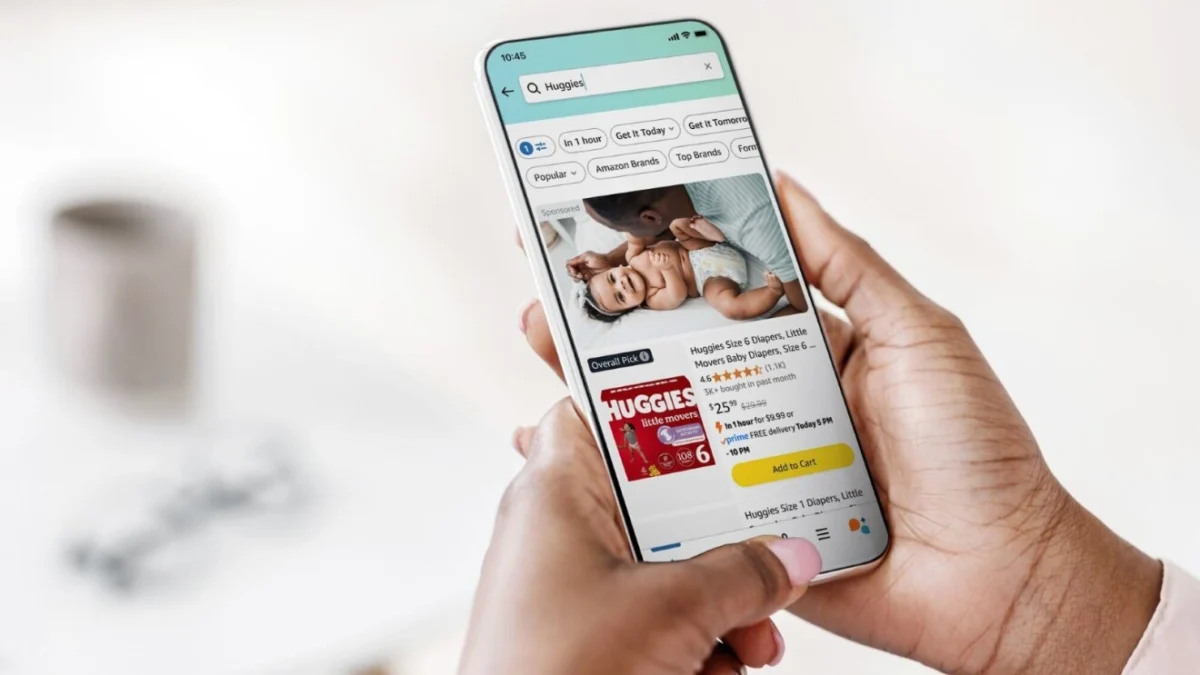
Amazon is dramatically accelerating its push into the ultra-fast delivery market, rolling out one-hour and three-hour delivery options across a vast network of U.S. cities. This strategic move signals Amazon’s intent to directly challenge the dominance of established instant delivery players like Instacart, DoorDash, and Uber Eats, aiming to capture a larger share of the rapidly growing quick commerce sector. The e-commerce behemoth is making an expansive catalog of over 90,000 items available through this new, accelerated delivery system. For consumers, the integration into the Amazon app and website will be seamless: eligible items will prominently display a clear label indicating their availability for one-hour or three-hour delivery, and users will also find dedicated filters to easily sort and select these faster shipping options.
This ambitious expansion comes with a clearly defined pricing structure designed to incentivize Prime membership while still offering value to non-subscribers. Amazon Prime members will be able to opt for one-hour deliveries for a fee of $9.99, with three-hour deliveries priced at $4.99. For customers without a Prime subscription, the cost of speed will be higher, with one-hour deliveries costing $19.99 and three-hour deliveries set at $14.99. This tiered pricing strategy aligns with Amazon’s broader Prime ecosystem, encouraging customer loyalty and subscription uptake.
The geographical reach of these new services is substantial. The one-hour delivery option is being introduced in hundreds of U.S. cities, encompassing major metropolitan hubs such as Los Angeles, Chicago, and Washington, D.C., as well as reaching into less densely populated areas like Des Moines, Boise, and American Fork. This widespread deployment suggests a sophisticated logistical strategy, leveraging Amazon’s existing infrastructure to optimize delivery times. The three-hour delivery option boasts an even broader footprint, available in over 2,000 U.S. cities and towns, ensuring a significant portion of the American population can now access rapid delivery from Amazon. To further streamline the customer experience, Amazon has launched a dedicated storefront on its platform, easily accessible via the URL amazon.com/getitfast, which will exclusively feature items eligible for these accelerated delivery windows.
Udit Madan, senior vice president of Worldwide Operations at Amazon, articulated the company’s strategic rationale behind this significant rollout. "Our customers are busier than ever and are looking for new ways to save time while keeping their households running," Madan stated in a press release. "We saw an opportunity to use our unique operational expertise and delivery network to help make customers’ lives a little easier while unlocking even more value for Prime members." This statement underscores Amazon’s commitment to leveraging its core competencies in logistics and fulfillment to meet evolving consumer demands for convenience and speed. The company confirmed that it will be utilizing its existing same-day fulfillment sites to power these new, faster delivery options, a move that capitalizes on current investments and minimizes the need for substantial new infrastructure development.
This foray into hyper-local, rapid delivery is not Amazon’s first attempt to master the instant gratification market. The company previously experimented with one-hour deliveries under its "Prime Now" service, which was initially launched in New York City in 2014. However, Prime Now was eventually discontinued in 2021, a decision that perhaps signaled a strategic shift or a re-evaluation of its approach to rapid fulfillment. More recently, in December 2025, Amazon piloted a more aggressive 30-minute delivery option in select cities like Seattle and Philadelphia, testing the operational feasibility and consumer appetite for even quicker turnarounds. These past initiatives provide valuable data and lessons learned that likely inform the current, broader rollout.
Globally, Amazon has been actively exploring and expanding its quick commerce capabilities. In India, the company launched "Amazon Now" in 2024, a service promising grocery and other item deliveries within an impressive 10 minutes. This service has since been expanded to several other Indian cities, demonstrating a commitment to rapid grocery and convenience item delivery in key international markets. Similarly, in the United Arab Emirates, Amazon launched its quick commerce service last October, with a compelling promise of deliveries within 15 minutes, further solidifying its global ambitions in the speed-dependent retail space. These international deployments highlight Amazon’s adaptability and its willingness to tailor its quick commerce strategies to local market conditions and consumer expectations.

The competitive landscape of instant delivery is fierce and rapidly evolving. Companies like Instacart have built their entire business model around rapid grocery and convenience item delivery, partnering with a wide array of retailers. DoorDash and Uber Eats, initially focused on restaurant delivery, have aggressively diversified into grocery and convenience store delivery, leveraging their vast networks of gig workers. Amazon’s entry with such a broad product selection and its established customer base presents a formidable challenge to these players. The ability to offer a vast selection of goods, from groceries and household essentials to electronics and apparel, all within a few hours, could prove to be a significant differentiator.
The operational complexities of one-hour and three-hour delivery are considerable. It requires sophisticated inventory management, efficient warehouse operations, and a robust network of delivery personnel strategically positioned to meet demand. Amazon’s extensive experience in managing complex supply chains and its significant investment in logistics infrastructure, including its own fleet of delivery vehicles and a vast network of fulfillment centers, provide it with a distinct advantage. The company’s ability to leverage technology for route optimization, real-time tracking, and predictive demand forecasting will be crucial to the success of these new services.
The pricing strategy also reflects a calculated move. While the fees are not insignificant, they are competitive with or lower than the delivery fees charged by many third-party instant delivery services, especially when considering the broader product selection Amazon offers. The potential for bundling these fast delivery options with other Prime benefits, such as free same-day or two-day shipping on millions of items, could further enhance the perceived value of a Prime membership. For non-Prime members, the higher fees might serve as an incentive to consider a subscription, especially for those who frequently require rapid delivery.
The expansion into quicker delivery windows is also a strategic response to changing consumer behavior. The COVID-19 pandemic accelerated the adoption of online shopping and heightened expectations for convenience and speed. As consumers become accustomed to having items delivered rapidly, retailers that can meet these demands are likely to gain a competitive edge. Amazon, with its vast resources and established market presence, is well-positioned to capitalize on this trend. By making its vast product catalog available for near-instant delivery, Amazon aims to become the go-to destination for virtually all consumer needs, from everyday essentials to last-minute purchases.
The success of these new delivery options will hinge on several factors, including the reliability and consistency of the delivery times, the user experience within the Amazon app and website, and the overall cost-effectiveness for both Amazon and its customers. The company’s history with quick commerce, while having had its ups and downs, demonstrates a persistent commitment to exploring and refining its capabilities in this area. The current rollout, backed by a substantial operational and technological infrastructure, appears to be a more significant and sustained push than previous attempts.
Industry analysts are closely watching Amazon’s moves in the quick commerce space. The sheer scale of Amazon’s operations and its ability to absorb costs in pursuit of market share mean that its entry into any new segment can be disruptive. The intensified competition could lead to further innovation and potentially lower delivery costs for consumers across the board. However, it also raises questions about the sustainability of ultra-fast delivery models, particularly for smaller businesses and independent couriers who may struggle to compete with the economies of scale offered by giants like Amazon.
As Amazon continues to refine its logistics and expand its service offerings, the lines between traditional e-commerce and instant delivery are blurring. The company’s ability to seamlessly integrate these faster delivery options into its existing platform, coupled with its vast selection and competitive pricing, positions it as a formidable force in the evolving landscape of retail and delivery services. The battle for the consumer’s instant gratification needs has just entered a new, accelerated phase, with Amazon at the forefront.