
 By Isnaini Azizah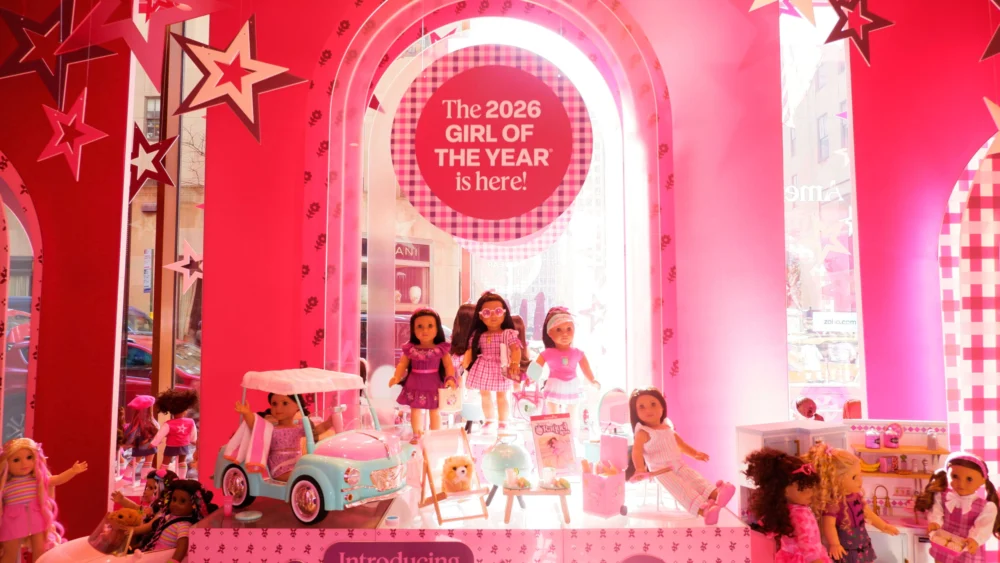
The flagship American Girl Place at Rockefeller Center in New York City feels frozen in time, a meticulously curated sanctuary where the complexities of the modern retail landscape seem to vanish behind a veil of pink frosting and vanilla-scented air. Inside this multi-story destination, the atmosphere is one of reverent childhood whimsy. Young girls dart between elaborate displays, clutching miniature denim shirts and sequined shoes with the intensity of serious collectors. Beneath glittering chandeliers, the brand’s iconic red boxes are lined up on shelves with a museum-like precision that suggests these are not merely toys, but artifacts of girlhood. In the Doll Salon, the steady hum of blow dryers accompanies the pampering of synthetic hair, while in the downstairs cafe, pink-frosted cupcakes are served to children and their dolls, the latter seated upright in custom-engineered miniature highchairs. "It feels timeless," remarked Jamie Cygielman, the global head of dolls for Mattel, the brand’s parent company. Yet, for all the preserved innocence found within the walls of Rockefeller Center, the business reality of American Girl is undergoing a profound and often painful transformation.
As American Girl celebrates its 40th anniversary, the brand finds itself at a precarious crossroads, navigating a gauntlet of modern challenges that include aggressive digital competition, shifting play patterns among younger generations, and a consumer base that is increasingly price-sensitive. The industry at large is watching closely. "The anniversary is at a precarious moment for American Girl and the whole doll industry," said Jaime Katz, an equity analyst at Morningstar who covers Mattel. According to Katz, the brand has struggled as children’s play becomes more digitized, moving away from the tactile, narrative-driven experience that once made American Girl a dominant force in the toy market.
The financial data paints a sobering picture of this struggle. Roughly a decade ago, during its mid-2010s peak, American Girl was a powerhouse, recording annual sales exceeding $600 million. It was a cultural phenomenon that seemed insulated from the broader retail malaise. However, by 2023, annual sales had plummeted to approximately $200 million—a staggering two-thirds decline from its high-water mark. While the brand has recently shown signs of life, posting five consecutive quarters of sales growth, analysts caution against over-optimism. This growth is occurring on a significantly reduced base, and as Katz noted to CNBC, "Growing off a base that’s down more than 60% doesn’t mean the brand is back. It means it’s stabilizing."
This stabilization comes at a time when Mattel is facing broader corporate headwinds. Earlier this month, the toy giant reported fourth-quarter sales of $1.77 billion, missing Wall Street expectations. The holiday season, typically the lifeblood of the toy industry, saw lighter-than-projected demand, and heavy discounting required to move inventory weighed heavily on profit margins. Consequently, Mattel’s earnings per share fell short, and the company issued a profit forecast for 2026 that was lower than analysts had anticipated. The market response was swift and unforgiving; Mattel shares have dropped approximately 19% since the February 10 report and are down 20% over the past year. High-profile financial institutions, including Citi and JPMorgan, downgraded the stock following the results, reflecting a cautious outlook on the company’s ability to drive significant profits while maintaining high levels of spending.
The challenges facing American Girl are not new, but they have been exacerbated by the COVID-19 pandemic and the subsequent economic shifts. Before 2020, the brand operated roughly 15 stores across the United States; today, that footprint has been halved to just seven locations. This retreat from physical retail occurred as the brand faced mounting pressure from lower-priced alternatives. Big-box retailers like Target have seen immense success with their "Our Generation" line, which offers 18-inch dolls and accessories at a fraction of the American Girl price point. A traditional American Girl doll typically starts at $135, and the cost of ownership quickly escalates with accessories. For example, a doll-sized bunk bed can cost as much as $250, while a beach cruiser for the "Girl of the Year" can retail for $275.
Historically, this premium price point served as a mark of prestige and quality, signaling to parents that they were investing in an educational and durable product. Laura Tretter, co-host of the American Girl Women podcast, notes that for many, the price was justified by the brand’s unique storytelling. However, in today’s inflation-conscious environment, that same price point has become a barrier to entry. "Parents are more selective about discretionary spending right now," Katz explained. "That price point looks steep to many households."
Beyond pricing, the very nature of play is evolving. Across the toy industry, giants like Hasbro and Mattel are grappling with how to capture the attention of children whose leisure time is increasingly dominated by screens. Tablets, gaming subscriptions, and short-form video content on platforms like TikTok and YouTube have fundamentally altered the competitive landscape. "The definition of ‘toy’ has changed," Katz said. "An iPad or Nintendo Switch competes directly with a doll. There are simply more claims on the same discretionary dollar." This shift is reflected in Mattel’s broader portfolio; despite the massive cultural "halo effect" of the 2023 Barbie movie, the company’s doll and preschool categories have faced steady declines for three consecutive quarters. Global doll sales fell 7% in the most recent quarter, while the infant, toddler, and preschool segment saw a 17% decline.
The continued underperformance of American Girl and Fisher-Price led activist investor Barington Capital to push for radical changes in 2024. Barington urged Mattel to streamline its portfolio and improve returns, even suggesting that the company should consider selling off these iconic brands if they continued to drag on overall profitability. While American Girl is a relatively small portion of Mattel’s total financial profile, its strategic value is frequently debated by investors who wonder if the brand’s high-touch, destination-retail model is sustainable in a digital-first world.
Despite the cold logic of balance sheets, the emotional connection consumers have with American Girl remains its most potent asset. This "emotional alchemy" was evident during a recent visit to the Rockefeller Center store, where 40-year-old Lisa Kandoski stood tearfully looking at a display of Molly McIntire. Molly, the World War II-era character known for her round glasses and navy argyle sweater, was the same doll Kandoski’s grandmother gave her in 1990. "It’s not just a doll," Kandoski told CNBC. "She taught me that you could be brave even when the world was scary… She shaped who I am."
This narrative depth is what set American Girl apart when it was founded by Pleasant Rowland in 1986. At the time, the market was saturated with fashion dolls that mirrored adult life or baby dolls that encouraged maternal rehearsal. American Girl introduced historical characters like Samantha, Kirsten, Molly, Felicity, Addy, and Josefina—dolls that came with sophisticated books tackling heavy subjects like child labor, the abolitionist movement, and the Great Depression. By treating girlhood as a formative and serious stage of life, the brand created a moral compass for its audience.
To capitalize on this legacy while adapting to the future, Mattel is leaning heavily into the "kidult" demographic—adults who buy toys for themselves. Market research from Circana indicates that by late 2024, spending on toys for adults aged 18 and older surpassed that for children aged 3 to 5, becoming a primary driver of industry growth. American Girl is meeting this trend by releasing modernized versions of its original "historical" characters and publishing its first-ever book aimed at adults, which follows the character Samantha Parkington into her adulthood during the 1920s.
At the same time, the brand is not abandoning the next generation. It continues to diversify its lineup, most recently with the 2026 Girl of the Year, Raquel Reyes, a biracial DJ and animal rescuer from Kansas City. To meet kids where they are, Mattel is also investing in digital platforms, including "American Girl World" on Roblox and expanded content on YouTube and TikTok. "Nostalgia is an entry point, not the endgame," Cygielman emphasized. The challenge for American Girl in its fifth decade will be to ensure that its "timeless" appeal can survive a world that is moving faster than ever, translating its deep emotional equity into durable, long-term revenue growth without losing the soul of the stories that made it a household name.