
 By admin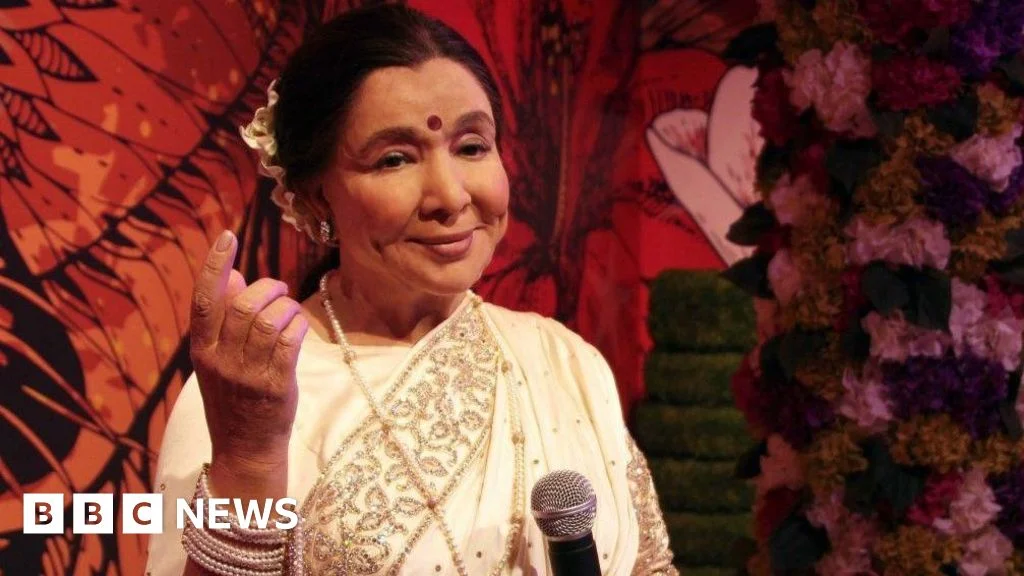
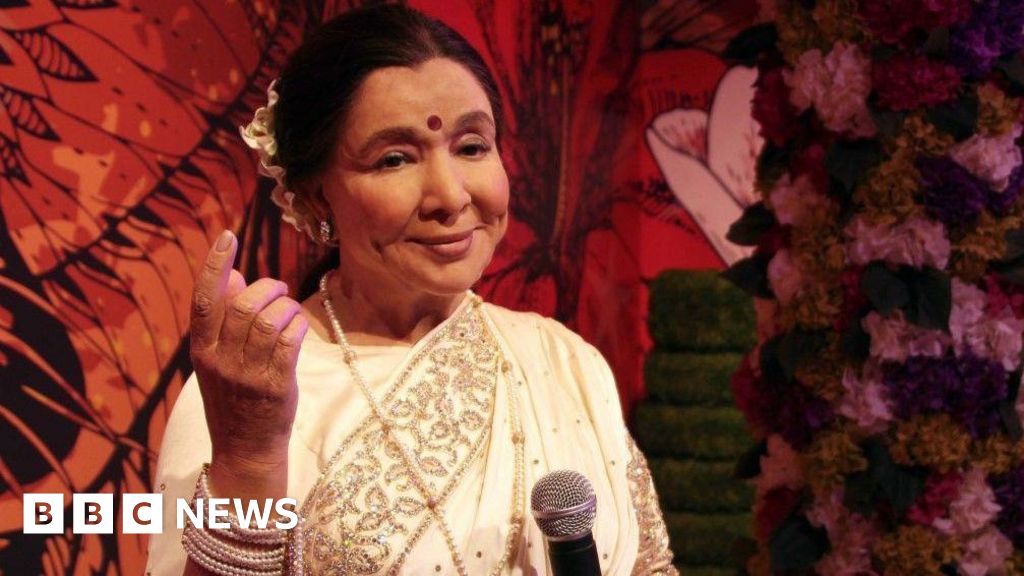
Mumbai, India – Asha Bhosle, a transcendent force in Indian music and a voice that defined generations of Bollywood cinema, has passed away at the age of 92. Her son confirmed the somber news, which reverberated across the nation and the global diaspora, marking the end of an era that spanned over eight decades and etched itself into the very fabric of popular culture. The legendary singer, admitted to a Mumbai hospital following a heart attack, breathed her last, leaving behind an unparalleled legacy of over 12,000 songs that continue to resonate with millions.
Bhosle’s distinctive vocal stylings, marked by their versatility, emotional depth, and an almost electric dynamism, breathed life into countless film songs, becoming the sonic soul for actors lip-syncing on screen. Her pervasive influence on Bollywood was so profound that the British band Cornershop paid tribute to her in their 1997 hit "Brimful of Asha," a testament to her international recognition. This global reach was further cemented through collaborations with prominent international artists, including a notable partnership with British musician Boy George.
The news of her passing triggered an immediate and overwhelming outpouring of tributes on social media and from prominent figures. Prime Minister Narendra Modi, in a heartfelt post on X, described Bhosle as "one of the most iconic and versatile voices India has ever known." He lauded her "extraordinary musical journey" for enriching the nation’s cultural heritage and touching "countless hearts across the world." Actor and politician Hema Malini voiced her deep personal grief, highlighting the emotional connection she shared with the singer, whose unique voice had popularized many of her film songs. Composer Shankar Mahadevan echoed the sentiment of national heartbreak, stating that her music would "never perish as long as humanity exists" and that her voice would "live forever, with her incredible voice echoing across the world."
These tributes underscore the immense respect and admiration Bhosle commanded for her remarkable artistry. Her voice possessed an infectious quality that compelled listeners to move, dance, and sing along, making her music the indispensable soundtrack to the lives of generations. She navigated a vast spectrum of musical genres with unparalleled ease, transitioning seamlessly from tender romantic ballads to high-energy, foot-stomping numbers. This adaptability made her the quintessential choice for composers across the Indian film industry, solidifying her status as the reigning queen of playback singing. Her range and enduring vitality transformed every song into a celebration, intrinsically defining the evolving soundscape of Bollywood for decades.
Bhosle’s discography is a treasure trove of iconic songs that continue to be celebrated. From the psychedelic fervor of "Dum Maro Dum" (Hare Rama Hare Krishna, 1971) to the melancholic plea of "Piya Tu Ab To Aaja" (Caravan, 1971), her versatility knew no bounds. Her contributions to films like Teesri Manzil (1966), Caravan (1971), Yaadon Ki Baaraat (1973), Ijaazat (1987), and Saagar (1985) represent some of her most unforgettable work. The soundtrack for Umrao Jaan (1981), composed by Khayyam, is widely considered a career-defining masterpiece, showcasing the subtle nuances of her vocal prowess.
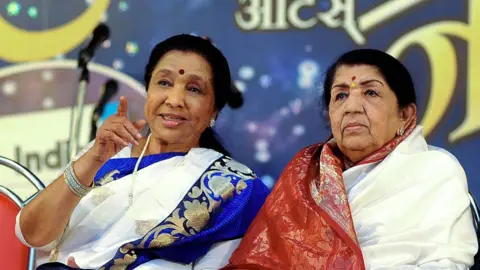
Asha Bhosle carved her own distinct musical path, often drawing comparisons with her elder sister, the equally legendary Lata Mangeshkar. While Mangeshkar embodied a classical grace and pristine purity in her renditions, Bhosle brought a bold, audacious, and often playful energy to her music. This contrast, rather than creating animosity, fostered a unique dynamic within the Indian music industry. Their individual strengths appealed to different sensibilities, allowing both sisters to achieve unparalleled success and carve out their respective, indelible legacies.
One of the most pivotal and creatively fruitful collaborations in Bhosle’s career was with composer R.D. Burman, whom she later married. Together, they forged a musical partnership that revolutionized the industry, crafting a soundscape that was both experimental and deeply rooted in Indian traditions. Bhosle’s voice was the perfect vehicle for Burman’s eclectic and innovative compositions, resulting in a string of hits that defied genre classifications, from soul-stirring melodies to infectious, upbeat numbers. Their creative synergy spanned over 25 years, producing a body of work that remains a cornerstone of Bollywood music. Asha herself acknowledged Burman’s profound influence on her artistry, recalling in a 2023 interview how he "uncovered my range as a singer" and made her explore the "inner recesses of my own voice." She admitted to being "totally unaware of the fact that I could sing with such suppleness of throat" until Burman’s guidance.
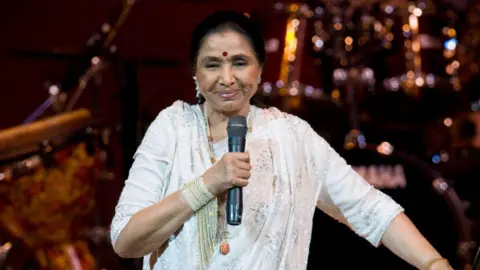
Born on September 8, 1933, in the village of Goar, Maharashtra, Asha Bhosle hailed from the illustrious Mangeshkar family, a lineage steeped in musical tradition. Her father, Deenanath Mangeshkar, was an accomplished actor and classical singer, providing a rich and nurturing environment for her early musical development. She began her singing career at a remarkably young age, recording her first song for the Marathi film Majha Bal in 1943. Her career trajectory truly took flight in the 1950s and 60s, establishing her as a remarkably versatile artist capable of excelling in diverse musical forms, including film songs, ghazals, bhajans, qawwalis, and pop music. Her collaborations with prominent composers like O.P. Nayyar, R.D. Burman, and S.D. Burman cemented her status as a household name. Evergreen hits such as "Aaiye Meherbaan" (Howrah Bridge, 1958), "Parde Mein Rehne Do" (Shikar, 1968), and the aforementioned "Dum Maro Dum" are but a few examples of her vast and enduring repertoire. Her duets with musical titans like Mohammed Rafi, Kishore Kumar, and Manna Dey continue to be celebrated as timeless classics, their voices interweaving to create magic that transcends eras.
Bhosle’s personal life was as eventful and complex as her illustrious career. At the tender age of 16, she eloped with Ganpatrao Bhosle, a neighbor, which led to a tumultuous marriage marked by separation. Her elder sister, Lata Mangeshkar, later recounted in interviews that Ganpatrao had isolated Asha from the family, preventing contact for years. He also reportedly sought to profit from her talent by taking her to music directors, exerting control over her career and causing her significant hardship. By 1960, Bhosle had left her husband, becoming a single mother to their three children. She later found solace and a profound creative partnership with R.D. Burman, whom she married in 1980. Tragically, Burman passed away in 1994 at the age of 54, leaving a void in her life and in the Indian music industry.
Despite their cordial relationship and shared familial bond, Asha Bhosle often found herself in the shadow of her elder sister, fueling public perception of a rivalry. While they lived in the same building and maintained a civil relationship, Bhosle herself once suggested that her career might have progressed "earlier than I did" with her sister’s support. Mangeshkar, in turn, attributed their silence on certain matters to the influence of Bhosle’s first husband. While the narrative of a rivalry has persisted in public discourse, many close to the sisters believe it has been largely exaggerated. In a candid conversation with film writer Raju Bharatan in 1971, Asha acknowledged the inherent advantage her sister had, stating, "After all we’d both inherited… the bounty of music. No doubt didi had a headstart, but that only made me more determined to catch up with her."
Bhosle’s remarkable ability to adapt her voice to evolving musical styles was a hallmark of her enduring appeal. Throughout her career, she embraced contemporary sounds and collaborated with a diverse range of international artists. In the early 1990s, she joined forces with Boy George, and later recorded a track with Michael Stipe of R.E.M. The Cornershop tribute, "Brimful of Asha," achieved even greater popularity through a remix by Fatboy Slim, further solidifying her global presence.
Beyond her musical pursuits, Asha Bhosle harbored a well-known passion for cricket, which was one of her favorite pastimes. This passion led to a unique collaboration in 2007 with Australian cricketer Brett Lee. Together, they recorded the song "You’re the One for Me," which was featured during the inaugural season of the Indian Premier League (IPL). Raju Bharatan, her biographer, aptly described her personality, noting that "Any meeting with Asha has to be a talk show. She will do all the talking, of course, interrupting the flow of words only to sing." He added that she possessed a good-natured resilience, stating, "You could make all the fun that you wanted of her – she would take it on the chin like the good sport that she is."
Even as she entered her twilight years, Bhosle remained actively engaged with her art. She celebrated her 90th birthday in 2023 with a triumphant live concert in Dubai, remarking, "At 90, standing for three hours on stage and singing is a blessing." Her dedication to her craft never wavered. In 2020, she launched the online talent show "Asha Ki Asha," and with the encouragement of her granddaughter Zanai, she started a YouTube channel where she shared anecdotes from her extensive career, garnering over 160,000 subscribers. In a 2023 interview, Bhosle reflected on her lifelong journey with music: "For me, music is my breath. I have spent my life with this thought. I have given a lot to music. I feel good I’ve come out of difficult times. Many times I felt I would not be able to survive, but I did."
Her final artistic endeavor was a poignant collaboration with the British virtual band Gorillaz on their 2026 album, The Mountain, an album exploring themes of grief and mortality. The track, "The Shadowy Light," featured her unmistakable voice alongside an international ensemble of musicians. The song’s imagery of a boatman guiding a soul across unknown waters served as a profound meditation on death and the afterlife, providing a powerful and fitting closing note to a career that consistently transcended boundaries of genre, geography, and time.
Correction: An earlier version of this story mistakenly attributed the song "Mehndi Hai Rachnewali" to Asha Bhosle.