
 By Lina Irawan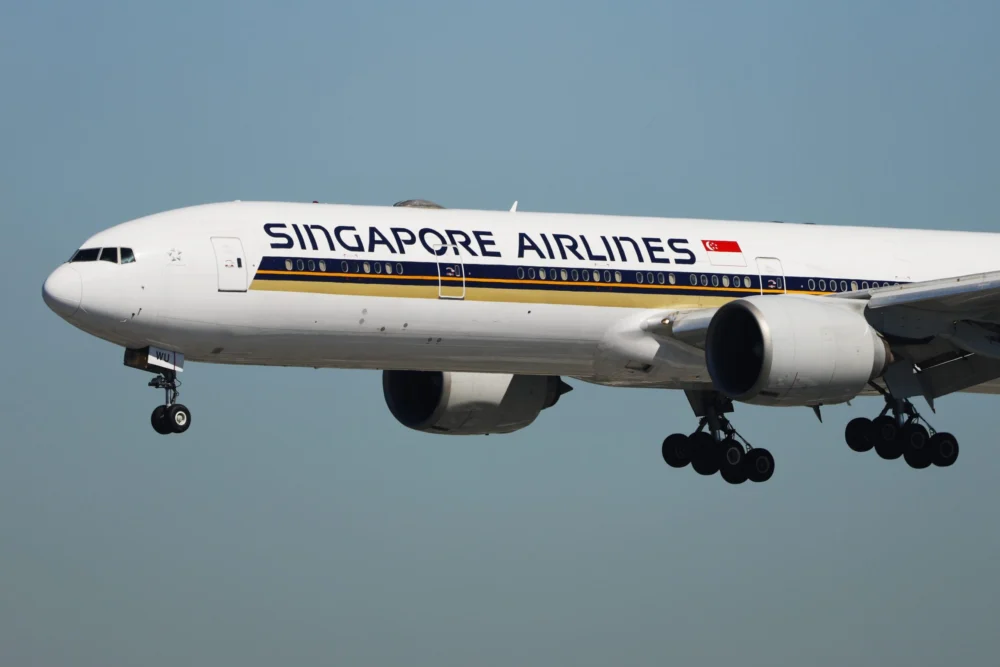
The geopolitical landscape of the Middle East, a region long synonymous with volatile dynamics, was dramatically reshaped over the weekend as news emerged of a decisive military intervention by the United States and Israel against targets within Iran. This coordinated action, reportedly in response to what U.S. and Israeli intelligence agencies described as escalating Iranian aggression and proxy attacks across the region, sent immediate shockwaves through global financial markets, with Asian equities, particularly the aviation sector, bearing the brunt of the initial fallout. The conflict swiftly escalated with Iran’s retaliatory launch of missiles into neighboring countries, notably the United Arab Emirates, prompting an urgent and widespread disruption to international air travel and commerce.
The immediate and most visible consequence of this rapid escalation was the unprecedented cancellation of hundreds of flights to and from the Middle East. Airlines, prioritizing passenger safety and adhering to evolving airspace restrictions, were forced to ground services or implement lengthy diversions. The impact was particularly severe on three of the region’s most critical aviation hubs: Doha in Qatar, and Dubai and Abu Dhabi in the United Arab Emirates. These major international airports, vital arteries connecting East and West, were compelled to halt operations entirely in the immediate aftermath of the missile strikes. Reports subsequently confirmed that the airports in Dubai and Abu Dhabi also sustained physical damage from the Iranian retaliatory attacks, raising concerns about the speed of recovery and long-term operational integrity.
The ripple effect on Asian airline stocks was instantaneous and pronounced. Singapore Airlines, a bellwether for the region’s aviation industry, saw its shares plummet by 4.5% as of 11:00 PM Eastern Time. The airline, renowned for its extensive global network and premium services, is particularly vulnerable to disruptions in key transit regions like the Middle East, which serves as a crucial bridge for its Europe-bound flights. Similarly, Australia’s flag carrier, Qantas, experienced an even sharper decline, with its stock dropping by 5.4%. Qantas frequently utilizes Middle Eastern hubs for its long-haul routes to Europe and the UK, making it highly susceptible to regional instability. Hong Kong’s Cathay Pacific, grappling with its own set of challenges in recent years, also saw its shares fall by 2.8%, reflecting broad investor anxiety. Japan Airlines, one of Japan’s two major carriers, was not spared, registering a significant decline of 5.6%. These figures underscore the deep-seated concern among investors regarding the financial implications of flight cancellations, rerouting costs, potential long-term drops in passenger demand for Middle Eastern travel, and the broader economic uncertainty stemming from an inflamed geopolitical environment.
In an official statement released on March 1, Singapore Airlines confirmed the severe operational impact, announcing the cancellation of a total of 16 flights between February 28 and March 7, specifically affecting its critical Singapore-Dubai route. This particular route is a high-frequency service, catering to both business travelers and tourists, as well as connecting passengers transferring through Dubai’s massive hub. The airline’s budget subsidiary, Scoot, also took precautionary measures, momentarily ceasing flights between Singapore and the Saudi Arabian city of Jeddah. These cancellations are not merely logistical inconveniences; they represent significant revenue losses for the airlines and create a cascade of logistical challenges for passengers, freight forwarders, and supply chains. The decision to halt flights to Jeddah, a major pilgrimage destination, highlights the pervasive nature of the safety concerns, extending beyond the immediate conflict zones. The broader aviation industry is now bracing for increased operational costs due to longer flight paths to avoid conflict zones, higher fuel consumption, and potentially increased insurance premiums, all of which could erode profit margins already under pressure from post-pandemic recovery efforts.
The tremors of the Middle Eastern conflict extended far beyond the aviation sector, prompting a broad slump across Asian markets. Hong Kong’s Hang Seng Index, a key barometer for investor sentiment in Asia, dropped by 1.6%. Singapore’s Straits Times Index, reflecting the health of Southeast Asia’s financial hub, fell by 1.8%. Japan’s Nikkei 225 index, a benchmark for one of the world’s largest economies, saw a decline of 1.4%. The only exception noted was South Korea’s markets, which were closed on Monday, thus deferring their reaction to the unfolding crisis. This widespread market downturn illustrates a classic "risk-off" environment, where investors retreat from equities and seek safer assets amid heightened geopolitical uncertainty. The fear of broader economic contagion, potential disruptions to global trade routes, and the inflationary pressures from surging oil prices contributed to the pervasive bearish sentiment. Analysts across major financial institutions began to issue warnings about potential headwinds for global growth, particularly for Asian economies heavily reliant on stable energy supplies and open trade routes.
Conversely, while the broader market stumbled, certain sectors experienced an unexpected surge, showcasing the complex and often counter-intuitive reactions to geopolitical crises. Asia-Pacific defense stocks, in particular, witnessed a significant uplift, aligning with a longer-term boom in the industry driven by a global surge in defense spending. This trend has been amplified by various factors, including the ongoing conflict in Ukraine, escalating tensions in the South China Sea, and a general re-evaluation of national security priorities across many nations. The International Institute for Strategic Studies (IISS) recently reported that global military spending reached a record high of $2.6 trillion in 2024, with projections indicating a continued upward trajectory into 2025. This backdrop of increased defense budgets and perceived threats creates a fertile ground for defense contractors.
Japan’s Mitsubishi Heavy Industries, a diversified conglomerate with significant interests in defense, aerospace, and heavy machinery, saw its stock rise by a robust 3.6%. This reflects not only the immediate conflict but also Japan’s evolving defense posture, which has seen increased investment in advanced military capabilities. Similarly, Singapore’s ST Engineering, a global technology, defense, and engineering group, experienced a 3.4% increase in its share price. ST Engineering is a key player in providing defense solutions, aerospace maintenance, and smart city technologies, benefiting from both regional and international demand for enhanced security and technological advancements. The rationale behind this surge is clear: investors perceive defense companies as beneficiaries of increased military spending and a more volatile global security environment, offering a degree of insulation from broader economic downturns in times of conflict.
Another sector that defied the general market slump was energy. Expectations that the Iran conflict could severely affect oil shipments from the Middle East, a region that accounts for a substantial portion of the world’s crude oil supply, drove significant gains for energy companies. The Strait of Hormuz, a narrow waterway bordering Iran, is a critical chokepoint through which approximately one-fifth of the world’s total oil consumption passes. Any threat to this passage or to oil infrastructure in the Gulf region sends immediate jitters through global energy markets.
Australia’s Woodside Energy, one of the largest independent oil and gas producers in the Asia-Pacific region, saw its stock climb by 5.4%. As a major exporter of liquefied natural gas (LNG) and crude oil, Woodside stands to benefit directly from higher commodity prices. Even more dramatically, Hibiscus Petroleum—Malaysia’s first listed independent oil and gas exploration and production company, ranked No. 410 on the Southeast Asia 500—jumped by an impressive 13.1%. Smaller, independent players like Hibiscus often exhibit higher volatility and can see magnified gains during periods of sharp price increases. These companies are viewed as direct beneficiaries of supply disruption fears, as higher crude prices translate directly into increased revenues and profitability.
The most tangible evidence of this energy market anxiety was the significant upward movement in global oil prices. Brent Crude, the international benchmark, surged by more than 10%, reaching as high as $82.37 per barrel in early trade—its highest level since last January. West Texas Intermediate (WTI) crude, the U.S. oil benchmark, also experienced a substantial increase of 6.95%, hitting $75.33 per barrel, its highest point since last June. This rapid escalation in oil prices is a direct reflection of market participants pricing in the risk of supply disruptions from the Middle East. Higher oil prices, while beneficial for energy producers, pose a significant challenge to the global economy. They translate into higher costs for transportation, manufacturing, and consumer goods, potentially fueling inflation and acting as a drag on economic growth. Central banks, already battling persistent inflationary pressures, now face the added dilemma of managing an energy shock while trying to maintain economic stability.
Expert analysts are closely monitoring the situation, with many suggesting that the current market volatility reflects a high degree of uncertainty regarding the conflict’s duration and potential for escalation. "This isn’t just about regional stability; it’s about the very arteries of global commerce," remarked Dr. Lena Soh, a geopolitical risk analyst at the Singapore Institute of International Affairs. "The Middle East is too central to global energy supply and aviation networks for a conflict of this nature not to have widespread repercussions." Others pointed to the immediate need for diplomatic efforts to de-escalate the situation, warning that a prolonged conflict could severely undermine the fragile global economic recovery. The coming days will be critical in determining whether the current market reactions are a temporary shock or the precursor to a more sustained period of instability and economic headwinds. Investors, businesses, and governments alike are now on high alert, navigating a rapidly evolving landscape where geopolitical events hold immense sway over financial fortunes.