
 By admin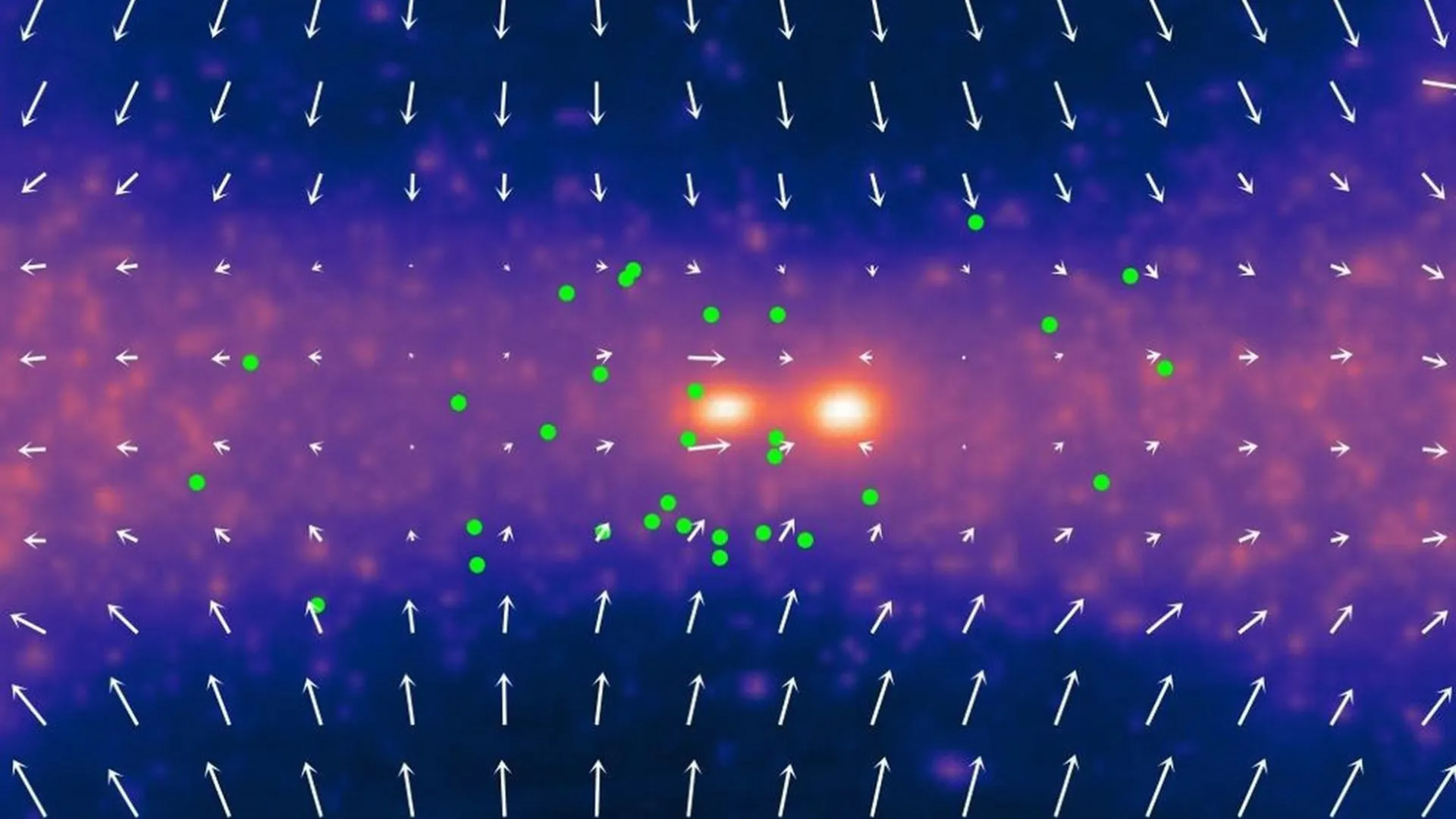
However, even in Hubble’s pioneering era, astronomers recognized that this universal pattern of cosmic expansion had its notable exceptions. Gravity, the dominant force on local scales, can overcome the large-scale expansion of space, causing galaxies to cluster and interact. One such prominent exception, well-known to astronomers then and now, is our closest galactic neighbor, the Andromeda Galaxy (M31). Andromeda is not receding but is, in fact, hurtling toward the Milky Way at an impressive speed of approximately 100 kilometers per second. This collision course, driven by the immense gravitational pull between the two largest members of our Local Group, is predicted to culminate in a spectacular galactic merger billions of years from now. This local gravitational dominance over the cosmic expansion is entirely expected and understood, a testament to the interplay of forces across different cosmic scales.
For about fifty years, beyond the well-understood case of Andromeda, scientists have been puzzled by another related mystery concerning the motions of galaxies in our immediate cosmic vicinity. While Andromeda’s approach is due to its strong gravitational bond with the Milky Way, most other large galaxies relatively close to our own—those residing just outside the gravitational dominion of the Local Group—also appear to be moving away from us. This observation seems counterintuitive and surprising because these galaxies reside in a region that should, in principle, experience a noticeable gravitational pull from the combined mass of the Local Group. The Local Group, a collection comprising the Milky Way, the Andromeda Galaxy, and dozens of smaller dwarf galaxies, represents a significant concentration of mass, estimated to be several trillion times that of our Sun. Such a colossal gravitational well should, one might assume, draw nearby galaxies inward, or at least significantly slow their recession from us. Yet, for decades, observations have indicated that many of these surrounding galaxies continue to participate in the general Hubble flow, receding from the Local Group at speeds that seem largely unaffected by its proximity. This apparent paradox has been a persistent challenge to cosmological models attempting to accurately describe our cosmic neighborhood.
A Giant Cosmic Sheet Around the Local Group Offers a Solution
An international research team, spearheaded by PhD graduate Ewoud Wempe of the prestigious Kapteyn Astronomical Institute at the University of Groningen in the Netherlands, believes it has finally found a compelling explanation for this long-standing cosmic enigma. Their breakthrough relied on the application of advanced computer simulations, which revealed a previously unappreciated arrangement of matter surrounding the Local Group. The researchers discovered that the matter in our immediate cosmic environment is not uniformly distributed but is instead arranged in a broad, flattened structure, resembling a vast cosmic sheet or disc, that stretches for tens of millions of light-years across space.
This gargantuan structure is not merely composed of the ordinary, visible baryonic matter that forms stars, planets, and gas clouds; crucially, it also incorporates the invisible, elusive dark matter that accounts for approximately 27% of the universe’s mass and constitutes the primary gravitational scaffold upon which galaxies are built. Dark matter, detectable only through its gravitational effects, plays a pivotal role in the formation and evolution of cosmic structures, from individual galaxies to the largest clusters. The simulations further indicated that above and below this flattened, matter-rich region lie enormous, relatively empty areas known as cosmic voids. These voids are vast expanses of space with significantly lower densities of galaxies and matter compared to the filaments and sheets that define the large-scale structure of the universe, often referred to as the "cosmic web."
The power of these sophisticated simulations lies in their ability to accurately reproduce both the observed positions and the measured speeds of the galaxies in our local cosmic environment. In essence, the computer model successfully recreates the same intricate patterns and dynamics that astronomers meticulously observe in the real universe, providing strong validation for the proposed cosmic sheet hypothesis. This level of agreement between theoretical predictions and observational data is a hallmark of robust scientific discovery, transforming a puzzling anomaly into a coherent part of our cosmological understanding.
Creating a Virtual Twin of Our Cosmic Neighborhood
To construct their highly realistic model, the scientists embarked on an ambitious computational journey, starting from the universe’s earliest moments. Their initial conditions were derived from precise measurements of the cosmic microwave background (CMB). The CMB, often described as the "afterglow" of the Big Bang, is the faint radiation left over from when the universe was only about 380,000 years old, cool enough for protons and electrons to combine into neutral atoms. The subtle temperature fluctuations observed in the CMB provide an invaluable snapshot of the universe’s initial density variations—the primordial seeds from which all subsequent cosmic structures, including galaxies and galaxy clusters, would eventually grow under the relentless pull of gravity.
Armed with these initial conditions, a powerful supercomputer was tasked with evolving this early universe forward in time, applying the fundamental laws of physics, including gravity and the effects of dark energy, over a period of approximately 13.8 billion years. This computationally intensive process allowed the researchers to simulate the gradual clumping of matter, the formation of galaxies, and their subsequent motions, eventually producing a cosmic system that closely mirrors the present-day Local Group and its surroundings. Such N-body simulations, often augmented with hydrodynamical calculations for baryonic matter, are at the forefront of modern astrophysical research, enabling scientists to test cosmological theories against the observed universe.
The resulting simulations were remarkably successful, replicating with high fidelity the estimated masses, precise locations, and intricate motions of both the Milky Way and the Andromeda Galaxy. Beyond these two dominant members, the model also accurately reproduced the positions and velocities of 31 additional galaxies situated just outside the Local Group, which were the focus of the initial mystery. The extraordinary degree to which the model mirrors our actual cosmic surroundings has led researchers to aptly describe it as a "virtual twin" of our immediate cosmic environment, offering an unparalleled tool for understanding local cosmology.
When this "virtual twin" model incorporated the newly discovered flat distribution of matter—the giant cosmic sheet—the motions of the surrounding galaxies aligned perfectly with observational data. Specifically, galaxies within this plane were observed to recede from us at speeds strikingly similar to those actually measured by astronomers. This phenomenon occurs despite the gravitational pull of the Local Group, which, in isolation, would tend to draw them inward. The key insight provided by the simulation is that the distant mass distributed throughout this expansive cosmic sheet exerts its own gravitational influence. This diffuse yet significant gravitational pull from the broader plane effectively counterbalances the inward tug of the Local Group’s gravity. It’s a delicate gravitational equilibrium where the local pull is offset by the extended mass distribution, allowing the underlying cosmic expansion (the Hubble flow) to dominate the observed motion. Meanwhile, the simulations also illuminated why regions outside this plane appear largely devoid of galaxies falling towards us. These areas correspond to the vast cosmic voids, which contain very little matter. With minimal gravitational attraction from these directions, there’s nothing to counteract the general expansion of the universe, hence we do not observe objects being pulled toward the Local Group from those sparse regions.
A Longstanding Puzzle Finally Explained
According to lead researcher Ewoud Wempe, this study represents a monumental achievement: the first detailed and comprehensive attempt to precisely determine the distribution and motion of both ordinary and dark matter in the intricate region immediately surrounding the Milky Way and Andromeda. "We are meticulously exploring all possible local configurations of the early universe that could ultimately lead to the formation and dynamics of the Local Group as we observe it today," Wempe explained. "It is truly gratifying that we now possess a model that is not only consistent with the overarching current cosmological model, which describes the universe on grand scales, but also accurately reflects the nuanced dynamics of our immediate local environment. This bridge between the global and the local is incredibly powerful."
The findings were also warmly welcomed by astronomer Amina Helmi, a renowned expert in galactic dynamics and co-author on the study, who emphasized the historical significance of the problem. "This particular problem, concerning the unexpected motions of galaxies near the Local Group, has challenged researchers for decades, representing a persistent observational anomaly that was difficult to reconcile with theoretical predictions," Helmi noted. "I am incredibly excited to see that, based purely on the observed motions of galaxies—their kinematics—we can now robustly determine a mass distribution that corresponds so precisely to the actual positions of galaxies both within and just outside the Local Group. This ability to infer the invisible architecture of dark matter from the visible motions of galaxies is a testament to the power of these advanced simulations and the underlying physical laws."
This groundbreaking research offers more than just an explanation for a half-century-old mystery; it profoundly refines our understanding of the cosmic web’s intricate structure on relatively small scales. By revealing the existence and influence of this giant cosmic sheet, the study provides a more accurate gravitational "map" of our local universe, which is crucial for future studies of galaxy evolution, dark matter distribution, and even the precise measurement of the universe’s expansion rate in our immediate vicinity. It underscores how the interplay between the grand-scale expansion of the universe and the local gravitational forces sculpts the cosmos, constantly challenging and deepening our comprehension of its majestic complexity. The "virtual twin" of our cosmic neighborhood now serves as an invaluable laboratory, allowing astronomers to explore various scenarios and parameters, further unlocking the secrets of our place in the expanding universe.