
 By Lina Irawan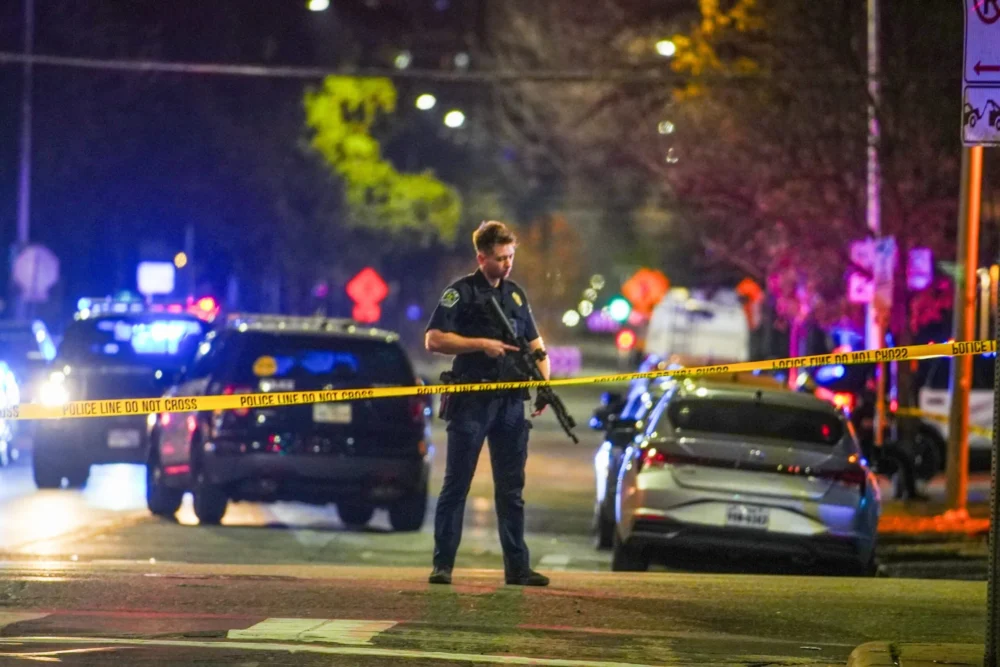
A tranquil early Sunday morning in Austin, Texas, was shattered by an act of horrific violence, leaving three people dead, including the alleged gunman, and 14 others wounded in a shooting at a popular bar in the city’s vibrant nightlife district. The incident, which unfolded with chilling precision, has sent shockwaves through the community, prompting a joint investigation by local and federal authorities, with the FBI cautiously indicating the possibility of a terrorism nexus.
The targeted location, Buford’s Backyard Beer Garden, a well-known establishment on West 6th Street, typically buzzes with patrons enjoying live music and camaraderie. However, just before 2 a.m., the festive atmosphere dissolved into chaos and terror. According to Austin Police Chief Lisa Davis, the assailant initiated his assault from an SUV, driving near the bar with his vehicle’s flashers activated. A chillingly deliberate action, he then lowered his window and began firing a pistol indiscriminately at patrons gathered on the bar’s patio and directly in front of the establishment. This initial volley of gunfire sowed panic, turning a night of revelry into a desperate scramble for survival.
The suspect’s calculated attack did not end there. After the initial fusillade from his vehicle, he parked the SUV, retrieved a rifle, and disembarked, continuing his deadly rampage by targeting individuals who were passing by. This escalation from a pistol to a rifle indicates a premeditated intent to inflict maximum casualties and highlights the grave threat posed by high-capacity firearms in public spaces. The rapid transition between weapons and tactics suggests a level of planning and determination that has become a grim hallmark of modern mass casualty events.
It was at this critical juncture that Austin Police Department officers, responding swiftly to multiple 911 calls reporting a "male shooting," confronted the armed suspect. The precise details of the exchange are under investigation, but Chief Davis confirmed that officers engaged the assailant, "returned fire, killing the suspect" at the scene. The prompt arrival and decisive action of law enforcement are being lauded by city officials, with Austin Mayor Kirk Watson stating unequivocally that their rapid response "definitely saved lives," preventing what could have been an even more catastrophic loss. The inherent dangers faced by first responders, who often put themselves directly in harm’s way to protect the public, were once again starkly evident.
The aftermath was a scene of profound devastation and frantic emergency response. EMS Chief Robert Luckritz reported that three individuals were found dead at the scene, among them the shooter. Additionally, 14 people sustained injuries and were urgently transported to various area hospitals. Of those injured, three were listed in critical condition, underscoring the severity of their wounds and the life-threatening nature of the incident. The sudden influx of trauma victims placed immediate strain on Austin’s medical facilities, requiring a coordinated effort from emergency room staff, surgeons, and support personnel. The rapid deployment of ambulances, paramedics, and medical teams to triage and transport the wounded was crucial in mitigating further loss of life.
A significant dimension to this tragedy emerged with the involvement of federal authorities. Acting Special Agent in Charge Alex Doran of the FBI San Antonio Field Office revealed that the shooting was being investigated as "potentially" an act of terrorism. Doran elaborated, stating, "There were indicators that on the subject and in his vehicle that indicate potential nexus to terrorism. Again, it’s still too early to make a determination on that." This cautious but significant announcement has broadened the scope of the investigation, drawing in federal resources and expertise typically reserved for cases with national security implications.
The "indicators" mentioned by the FBI could encompass a range of evidence, from extremist ideologies found in personal writings, digital communications, or manifestos, to specific symbols, flags, or literature discovered on the suspect or within his vehicle. Federal investigators will meticulously sift through the suspect’s digital footprint, financial records, travel history, and personal associations to ascertain any links to domestic or international terrorist organizations, or if the individual was radicalized through online propaganda. Determining a terrorism nexus is a complex process, often requiring extensive intelligence gathering and analysis to differentiate between a lone actor driven by personal grievances or mental health issues, and someone motivated by a broader ideological or political agenda. The implications of a confirmed terrorism link would be far-reaching, impacting national security assessments and counter-terrorism strategies.
Austin, a city celebrated for its vibrant culture, live music scene, and tech industry, prides itself on its open and welcoming atmosphere. The West 6th Street district, where Buford’s Backyard Beer Garden is located, is a cornerstone of this identity, drawing thousands of locals and tourists every week. The notion that such a beloved public space could become the target of a potentially terror-motivated attack has deeply unsettled the community. This incident inevitably raises questions about security measures in crowded public venues and the balance between maintaining an open, accessible city and ensuring the safety of its residents and visitors. City officials will likely face pressure to review and enhance security protocols, potentially including increased police presence, surveillance, and public awareness campaigns in popular entertainment zones.
This tragic event also casts a somber light on the broader issue of gun violence in the United States. Mass shootings have become an alarmingly frequent occurrence, transforming everyday locations—schools, workplaces, supermarkets, and entertainment venues—into scenes of unspeakable horror. According to data from organizations like the Gun Violence Archive, the U.S. consistently records hundreds of mass shootings annually, defined as incidents where four or more people are shot, excluding the shooter. The use of both a pistol and a rifle in this attack underscores the lethality and accessibility of various firearms, fueling ongoing national debates about gun control, background checks, and the regulation of high-capacity weapons. While the focus of the Austin investigation currently includes a potential terrorism link, the underlying mechanism of widespread gun violence remains a pervasive societal challenge.
The psychological toll of such an event extends far beyond the immediate casualties. Witnesses, survivors, first responders, and the wider Austin community will grapple with trauma, fear, and grief for an extended period. The suddenness and brutality of the attack can lead to post-traumatic stress disorder, anxiety, and a pervasive sense of insecurity in public spaces. Support services, including counseling and mental health resources, will be crucial for helping individuals and the community process the tragedy and begin the long journey toward healing. Local businesses in the affected district may also experience a downturn as people hesitate to return to places associated with such violence, impacting the economic vitality of an area central to Austin’s identity.
As the investigation continues, authorities will work tirelessly to piece together the full narrative of what transpired, delving into the suspect’s background, motives, and any potential accomplices. The collaboration between the Austin Police Department, the FBI, and other federal agencies like the Bureau of Alcohol, Tobacco, Firearms and Explosives (ATF) will be critical in ensuring a thorough and comprehensive inquiry. While the immediate danger has passed with the neutralization of the gunman, the questions surrounding this horrific act—particularly the potential terrorism link—will linger, demanding answers and reinforcing the complex challenges faced by communities grappling with violence in the modern era. The city of Austin, known for its resilience and spirit, now begins the arduous process of mourning its dead, supporting its wounded, and confronting the difficult implications of a night that forever altered its sense of security.