
 By admin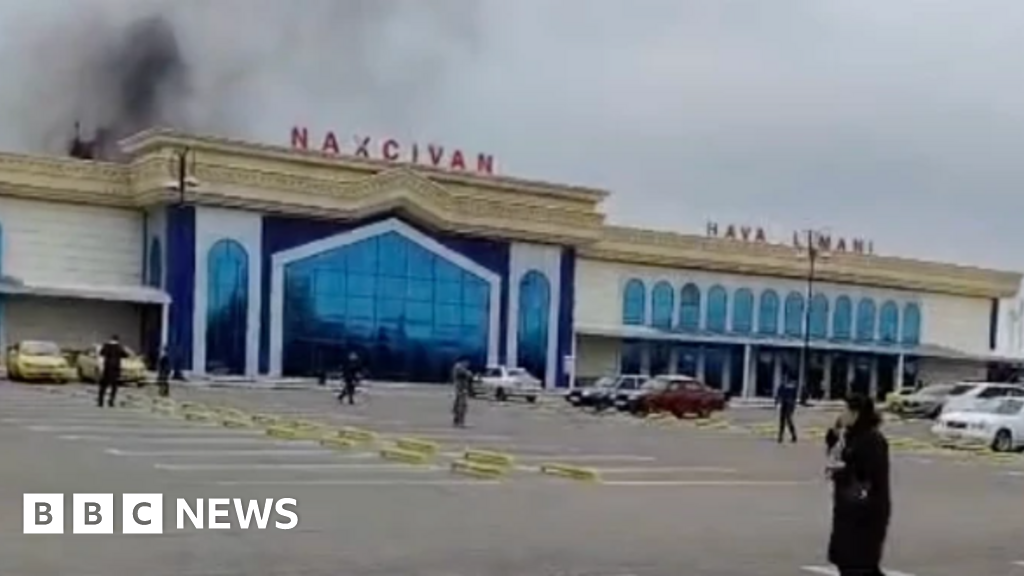
Azerbaijan has initiated the withdrawal of its diplomatic personnel from Iran, citing security concerns in the wake of accusations that Tehran launched four drones into the Azerbaijani exclave of Nakhchivan. The audacious drone attacks, which struck the airport terminal, caused a drone to detonate near a school injuring civilians, and resulted in another drone being shot down, mark a significant escalation as the volatile conflict in the Middle East appears to be spilling across Iran’s northern border. Azerbaijani President Ilham Aliyev vehemently condemned the actions as an "act of terror," demanding a formal explanation and an unequivocal apology from the Iranian government. In a further hardening of its stance, state media reported that the Azerbaijani military has been placed on maximum combat readiness, signaling a readiness for a robust response.
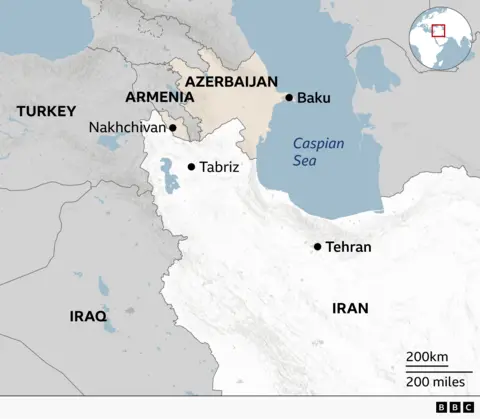
The geopolitical ramifications of these attacks are profound. Azerbaijan, a strategically vital Caspian nation situated at the crossroads of Russia, Iran, Armenia, and Georgia, finds itself increasingly entangled in a broader regional confrontation. The Nakhchivan exclave, geographically isolated and bordered by Iran, Turkey, and Armenia, is particularly vulnerable during periods of heightened conflict, making it a sensitive flashpoint. President Aliyev’s condemnation was unusually sharp, labeling the Iranian forces responsible for the strike as "ugly, cowardly and disgusting," a direct and personal insult rarely exchanged between heads of state. This strong rhetoric, however, was not merely rhetorical. Aliyev also strategically invoked the sensitive issue of Iran’s ethnic Azerbaijani population, stating, "independent Azerbaijan is a place of hope for Azerbaijanis living in Iran." This assertion marks a significant departure from Baku’s long-standing policy of carefully navigating this delicate subject with Tehran.
Iran, meanwhile, has categorically denied any involvement in the Thursday strikes, suggesting instead that the attack may have been a sophisticated Israeli "false flag" operation designed to sow discord. This denial, however, has done little to de-escalate the mounting crisis.
The Azerbaijani President’s pivot to addressing the plight of Iranian Azeris is a calculated geopolitical maneuver. Iran is home to an estimated 20 to 25 million ethnic Azeris, constituting its largest minority group, predominantly concentrated in the northwestern provinces bordering Azerbaijan. The Islamic Republic has historically viewed the identity and political affiliations of this demographic with extreme caution, perceiving any cross-border solidarity as a potential threat to its internal cohesion. Aliyev’s overt embrace of Iranian Azeris as a source of hope for an "independent Azerbaijan" signals a willingness to leverage this sensitive issue as a potential countermeasure. This messaging comes at a time when Iran is reportedly facing immense internal pressures, including widespread unrest and political uncertainty, compounded by the ongoing regional conflicts. Aliyev’s statement can be interpreted as a clear warning to Tehran: any attempts to exert military or diplomatic pressure on Azerbaijan could provoke a response that destabilizes Iran’s internal affairs.
Historically, Iranian Azeris have voiced grievances regarding the denial of basic cultural rights, particularly the right to education in their native language. Numerous Azerbaijani activists, journalists, and language campaigners are currently imprisoned in Iran, facing charges that range from "propaganda against the regime" to "conspiracy against national security." The community’s political significance is also noteworthy. Recent calls for uprisings against the Iranian regime have come from exiled figures like Crown Prince Reza Pahlavi, who has actively encouraged Iranian ethnic minorities, including Azeris, to challenge the current leadership.
Intriguingly, the current Iranian President, Masoud Pezeshkian, is himself of Azerbaijani descent. Even the late Supreme Leader Ayatollah Ali Khamenei, who was reportedly killed in the initial stages of US-Israeli strikes on Saturday, was also claimed to have Azerbaijani roots. Furthermore, historical records indicate that several Iranian shahs throughout history were of Azerbaijani origin. Shah Ismail Khatai, a prominent 16th-century ruler, notably used Azerbaijani as the primary language of his court, underscoring the historical influence of Azerbaijani culture within the Iranian state. Despite this rich historical connection, the aspirations of Azeris within Iran for language rights have largely remained unfulfilled.
The strained relationship between Iran and Azerbaijan, despite their shared Shia Muslim identity, has been further exacerbated by Azerbaijan’s military successes in the 2020 and 2023 Karabakh wars, conflicts significantly bolstered by weaponry from Turkey and Israel. Iran views Baku’s robust defense partnership with Israel with considerable apprehension. Iranian officials and media outlets have repeatedly accused Azerbaijan of facilitating Israeli intelligence operations along Iran’s northern border, allegations that Baku consistently denies. The Azerbaijan-Israel relationship extends beyond security; Israel is a significant consumer of Azerbaijani oil, and the two nations maintain close political and intelligence ties. For Tehran, this collaboration represents a core element of its suspicion and mistrust.
Conversely, Azerbaijan has long harbored resentment towards Iran’s political and military backing of neighboring Armenia, perceiving it as direct interference in a conflict deemed critical to Azerbaijan’s own security interests. This historical backdrop of mutual distrust significantly shapes Baku’s interpretation of Tehran’s actions, particularly in the context of the recent escalation.
A significant point of contention remains Iran’s opposition to the establishment of a direct land connection between Azerbaijan and its Nakhchivan exclave. Tehran has consistently voiced objections to any potential Armenian agreement that would grant Azerbaijan a land corridor to Nakhchivan.
Azerbaijan’s role as a major energy supplier further amplifies its geopolitical importance. Over a million barrels of crude oil are transported daily through the 1,768-kilometer (1,100-mile) Baku-Tbilisi-Ceyhan pipeline, which transits through Georgia to Turkey’s Mediterranean coast. This vital energy artery provides Europe with a crucial supply route that bypasses both Russian and Iranian territory. Notably, this pipeline also supplies a substantial portion of Israel’s oil imports. Consequently, the pipeline is considered a significant potential target for Iran, and any threat of disruption could trigger widespread security fears and destabilize global energy markets.
Despite the escalating rhetoric and actions, both Iran and Azerbaijan have publicly stated their desire to avoid further escalation. President Aliyev has reiterated that Azerbaijan "will not participate" in military operations against Iran, while Tehran continues to disavow responsibility for the drone attack. However, Aliyev’s deliberate decision to publicly frame Azerbaijan as a "place of hope" for Iranian Azeris introduces a new and potentially unpredictable dimension to the regional dynamics.
President Aliyev has also highlighted his efforts to foster goodwill with Iran. He pointed out that he was the sole foreign leader to visit any Iranian embassy to offer condolences following the killing of Ayatollah Khamenei, and that he personally responded to a request for assistance in evacuating Iranian embassy staff from Lebanon. Aliyev views Iran’s alleged drone strikes on Azerbaijani territory as a profound betrayal, a stark contrast to the gestures of support Azerbaijan claims to have extended. This perceived betrayal underscores the deepening chasm of mistrust and the volatile nature of the current geopolitical landscape.