
 By admin
The narrative around minivans has shifted. While sales figures paint a picture of diminishing interest, those who remain loyal to the segment, or are discovering it anew, are finding vehicles that are purpose-built for family life, offering unparalleled practicality, space, and thoughtful features that many SUVs struggle to match. The vehicles rolling out of showrooms today are not just survivors; they are innovators, pushing the boundaries of what a family vehicle can be, particularly in the realm of powertrain technology.

For years, the minivan market was characterized by mostly traditional gasoline powertrains, often with middling fuel economy. This is rapidly changing. The impending arrival of the 2025 Volkswagen ID.Buzz electric van marks a significant turning point, promising to revitalize the segment with zero-emission battery power and a potent dose of nostalgic charm. But the ID.Buzz is not alone in ushering in this electrified era. Today, three of the four established minivans—the Toyota Sienna, Chrysler Pacifica, and Kia Carnival—already offer hybrid or plug-in hybrid options, leaving the Honda Odyssey as the sole holdout in the gas-only camp. This rapid embrace of electrification underscores a broader industry trend and a clear response to consumer demand for greater efficiency and lower running costs. The ID.Buzz, however, stands out as the only pure battery-electric model, setting a new benchmark for the future of family transportation and capitalizing on the popular "retromod" trend of resurrecting beloved bygone nameplates with modern technology. Its iconic design, reimagined for the electric age, combined with the inherently practical sliding side doors, positions it as a true standout.
The question for discerning families, then, is no longer if a minivan is a viable option, but which of these sophisticated machines offers the best blend of features, value, and future-proofing. Are the long-standing stalwarts still the best choice, or do the newfangled electrified options present a superior proposition? Our comprehensive ranking system aims to answer this by evaluating these contenders on a holistic set of criteria designed to reflect the real-world needs and priorities of modern families.
Our assessment goes beyond the initial sticker price, deeply factoring in the crucial aspect of long-term cost of ownership. This methodology naturally favors hybrids and plug-in hybrids, which offer significant savings on fuel over the vehicle’s lifespan, offsetting their potentially higher upfront cost. But financial considerations are just one piece of the puzzle. Safety remains paramount for any family vehicle, and we meticulously evaluate crash test ratings, advanced driver-assistance systems, and structural integrity. Interior roominess and versatility are core minivan strengths, so we scrutinize passenger comfort across all three rows, cargo capacity, and, critically, how easily seats can be configured, removed, or folded to adapt to varying needs – a vital feature for busy parents whose "small hands" often need to manipulate "big seats." Furthermore, in an increasingly connected world, intuitive connectivity features, user-friendly infotainment systems, and thoughtful convenience features also play a significant role in our rankings, recognizing that a minivan is often a mobile command center for families on the go.
From the sheer convenience of power-sliding side doors that simplify school drop-offs and grocery runs, to the added confidence of all-wheel drive, now available with an electrified powertrain, these family haulers are making all the right moves. Here’s how they stack up, with all prices including destination charges, as we delve into the details of each contender.

5. Honda Odyssey
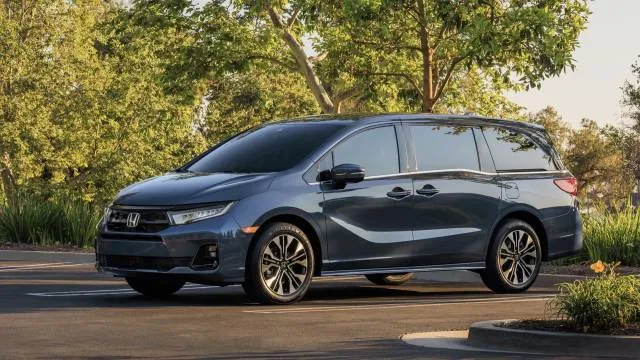
The Honda Odyssey, a long-standing titan in the minivan segment, finds itself at a crossroads. While its fifth-generation iteration, last redesigned in 2018, remains a capable family vehicle, its relative stagnation in a rapidly evolving market places it at the bottom of our current rankings. The most significant factor contributing to its lower standing is its adherence to a gas-only powertrain, making it the sole minivan in its class to lack any hybrid or plug-in hybrid option. Furthermore, it’s exclusively available with front-wheel drive, limiting its appeal for those in colder climates or seeking enhanced traction.
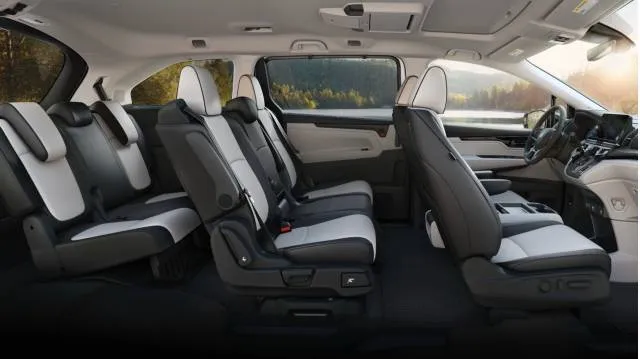
Despite these limitations, the Odyssey has undeniable strengths that have cemented its reputation over decades. It remains one of the better-handling minivans, offering a surprisingly engaging driving experience with responsive steering that belies its size. Its 3.5-liter V-6 engine, producing 280 horsepower, provides ample power for highway merging and family road trips, a distinct advantage over some of its hybrid rivals that can feel underpowered. Moreover, its exceptional reliability and robust build quality are hallmarks of Honda engineering, benefits often associated with a design that hasn’t seen radical changes over the years. The Odyssey’s unique "Magic Slide" second-row seats, which can slide sideways and fore-aft, offer unmatched flexibility in configuring the cabin for passenger access or cargo, a feature deeply appreciated by parents. Its quiet ride and comfortable seating make it an excellent long-distance cruiser.
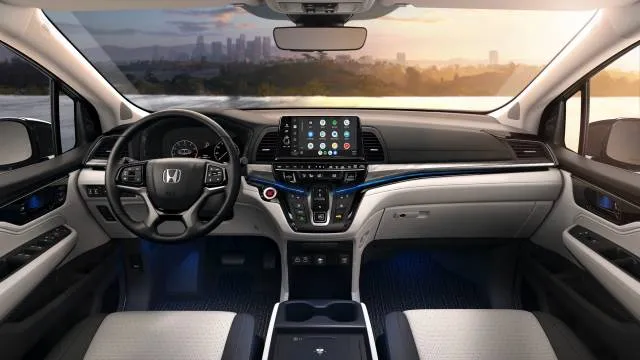
However, the Odyssey’s technology suite, particularly its infotainment system, lags behind its more recently updated rivals. The interface can feel dated, and its connectivity features, while present, don’t always offer the seamless integration or intuitive experience found in competitors. This technological gap, combined with its lack of electrification, fuels ongoing speculation about the Odyssey’s future. Industry observers ponder whether Honda will discontinue the model after its impressive 30-year run in the U.S. market, or if it will finally receive a much-needed hybrid powertrain update in the coming years. Honda’s broader push towards electrification, evident in the success of its CR-V Hybrid and Accord Hybrid models, and plans for a three-row electric crossover by 2027, suggests that a gas-only minivan might not align with the brand’s long-term vision. For now, the Odyssey’s journey, much like Homer’s, faces an uncertain, yet potentially transformative, path.
3. Chrysler Pacifica (tie)
The Chrysler Pacifica stands as a fascinating duality in the minivan segment, a tale of two distinct yet equally compelling vehicles. Launched in 2017 as the successor to the venerable Town & Country, the Pacifica quickly re-established Chrysler’s credentials in the family hauler market. Its innovative spirit truly shone a year later with the introduction of the Pacifica Hybrid, the industry’s first and still only plug-in hybrid (PHEV) minivan.
The gasoline-powered Pacifica is celebrated for its revolutionary Stow ‘N Go seating system, a Chrysler innovation that allows both the second and third-row seats to fold completely flat into the floor, creating a cavernous, uninterrupted cargo space without the need to remove heavy seats. This unmatched versatility is a cornerstone of the Pacifica’s appeal. Additionally, it offers available all-wheel drive (AWD), a crucial feature for families navigating inclement weather or diverse terrains, giving it an edge over some front-wheel-drive-only competitors.
The Pacifica Hybrid, on the other hand, offers a different kind of innovation. It boasts an impressive 32 miles of all-electric range, making it perfectly suited for daily errands, school runs, and short commutes without consuming a drop of gasoline. This allows families to significantly reduce their fuel consumption and carbon footprint. When the battery is depleted, a V-6 engine seamlessly takes over, providing extended range and efficiency. However, the integration of the battery pack means the Pacifica Hybrid cannot be equipped with the second-row Stow ‘N Go seats, nor can it be had with all-wheel drive – a significant trade-off for some buyers. This creates a clear choice for consumers: ultimate flexibility and AWD in the gas model, or exceptional efficiency and electric range in the hybrid.

Adding a third dimension to Chrysler’s minivan strategy, the brand recently reintroduced the Voyager nameplate as a more budget-friendly base model. While sharing the Pacifica’s underlying architecture and design cues, the Voyager targets a more value-conscious consumer, often fleets, but is now more broadly available. At a starting price nearing $42,000, its "budget" status might be debatable for some, but it does offer a robust standard feature set, including a modern 10.1-inch touchscreen with wireless smartphone compatibility, and importantly, Stow ‘N Go seating in both rear rows. It foregoes the more luxurious options and higher trim levels available on the Pacifica, which can push the latter’s price tag well into the $60,000 range.
A critical financial advantage for the Pacifica Hybrid is its eligibility for the full $7,500 federal EV tax credit. Depending on a buyer’s income and tax situation, this incentive can substantially reduce the effective purchase price, potentially making the advanced PHEV model cost nearly the same, or even less, than a comparably equipped gasoline Pacifica. This makes the Pacifica Hybrid a particularly attractive proposition for those seeking to embrace electrification without compromising on space or family functionality, despite the aforementioned seating and AWD limitations. Chrysler’s Pacifica, in its various forms, offers a compelling blend of traditional minivan utility and forward-thinking powertrain options, solidifying its strong position in the market.

3. Toyota Sienna (tie)
The Toyota Sienna, in its latest generation, firmly establishes itself as the pragmatic and efficient choice in the minivan segment, earning a tie for third place. Toyota’s renowned expertise in hybrid technology is on full display here, as every Sienna model comes standard with a hybrid powertrain. This commitment to efficiency is reflected in its impressive fuel economy figures: 36 mpg combined for front-wheel-drive (FWD) models and a still excellent 35 mpg combined for those opting for the available all-wheel-drive (AWD) system. This makes the Sienna a particularly attractive option for families looking to minimize their fuel costs and environmental impact without sacrificing space or capability.
The Sienna continues to check nearly all the practical boxes for minivan owners. Its robust hybrid system, combining a 2.5-liter inline-4 engine with two electric motors (three motors in AWD variants), delivers a combined 245 horsepower. While this output might lack the raw grunt of the V-6 options found in some competitors, it provides adequate power for daily driving and highway cruising, albeit without the spirited acceleration some might desire. What it lacks in brute force, it makes up for in refinement and stability. Toyota has tuned the Sienna’s suspension to deliver a composed and less "wobbly" ride compared to some rivals, making it a stable and comfortable highway cruiser – a critical attribute for long family road trips.

However, the Sienna does come with one significant practical limitation: its second-row seats are bolted down. Unlike the Stow ‘N Go system in the Pacifica or the removable seats in the Carnival, the Sienna’s second-row seats are difficult, if not impossible, for most owners to remove. This severely limits its versatility when it comes to maximizing cargo space for large items, a traditional strength of minivans. While the seats do slide a substantial distance fore and aft, offering excellent legroom, the inability to easily create a completely flat load floor is a notable drawback.
With six distinct trims and a plethora of options, there is a Sienna configuration to suit most tastes and budgets. From the practical LE to the more luxurious Platinum, buyers can tailor the vehicle to their specific needs. Higher trims offer enticing features such as a built-in vacuum cleaner, a cooler, footrests for second-row passengers, and other premium amenities. Despite these luxurious touches, the Sienna, at its core, prioritizes practicality over overt poshness in most of its myriad configurations. Its strength lies in its reliable, efficient, and comfortable transportation, underpinned by Toyota’s reputation for quality and resale value. For families seeking a no-nonsense, highly efficient, and dependable minivan, the Sienna remains a top-tier choice, provided they can live with the fixed second-row seating.

2. Kia Carnival
The Kia Carnival, which boldly re-entered the U.S. market as a "Multi-Purpose Vehicle" (MPV) rather than strictly a minivan, has made a significant leap in our rankings, securing the second spot. Its recent refresh, notably including a new hybrid option, transforms the Carnival from merely a stylish and practical family hauler into a highly efficient and refined contender. This electrification elevates the ride experience, adding a layer of efficiency and smoothness that was previously absent.
From its initial launch, the Carnival distinguished itself with an SUV-like exterior design, shedding much of the traditional minivan aesthetic. This "un-minivan" look, coupled with its robust feature set, immediately appealed to buyers who appreciated minivan functionality but desired a more adventurous styling cue. The new hybrid powertrain, typically combining a turbocharged 1.6-liter four-cylinder engine with an electric motor, not only boosts fuel economy but also enhances overall performance and quietness, making for a more composed and enjoyable driving experience.

While the refreshed Carnival may still lack certain features found in rivals, such as all-wheel drive (it remains front-wheel-drive only) or the fold-into-the-floor second-row seats like Chrysler’s Stow ‘N Go, it excels in nearly every other aspect. Its interior is remarkably well-appointed, offering a blend of premium materials and thoughtful design that often belies its competitive price point. The infotainment interface is intuitive and easy to use, featuring large, responsive screens and seamless smartphone integration, which are crucial for busy families. Kia’s commitment to customer satisfaction is further underscored by its exceptional warranty, which remains one of the best in the industry, providing peace of mind for owners.
The Carnival truly shines as the "value play" in the class. It offers a compelling combination of features, style, and now efficiency, without ever feeling like a budget vehicle. Its second-row "VIP Lounge Seating" available on higher trims, complete with power adjustments, leg rests, and heating/ventilation, offers a level of luxury typically found in much more expensive vehicles. The ease of access provided by its power-sliding doors, generous cargo space, and comprehensive suite of safety features further cement its appeal. With the addition of the hybrid powertrain, the Kia Carnival now presents an even more compelling argument as a top-tier family vehicle, skillfully blending practicality, style, technology, and efficiency into an attractive package.

1. Volkswagen ID. Buzz
Our top spot goes to the 2025 Volkswagen ID. Buzz, a vehicle that transcends the traditional minivan definition to become a true segment revitalizer and a beacon for the future of family transport. Our TCC Rating, which accounts for innovation and forward-thinking design, reflects a clear preference for new, clean-energy solutions, and the ID. Buzz embodies this perfectly. The much-anticipated return of the iconic Volkswagen Bus, reimagined as the all-electric ID. Buzz, isn’t just a nod to nostalgia; it’s a bold step forward, pointing the entire minivan segment towards an electrified future.
The ID. Buzz immediately captivates with its distinctive retro-modern aesthetic. Available in eye-catching two-tone paint schemes and featuring a long wheelbase with charmingly snubbed ends, it masterfully cashes in on the retro trend while simultaneously showcasing cutting-edge technology. But beyond its undeniable curb appeal, it excels in modern power delivery and functionality. The U.S.-spec model will come with a substantial 91-kWh battery pack, powering either a single-motor rear-wheel-drive configuration (282 horsepower) or a dual-motor all-wheel-drive setup (330 horsepower). This provides instant torque and smooth, responsive acceleration, making it surprisingly agile for a vehicle of its size.

While its estimated range of up to 260 miles (VW has since updated estimates, initially 234 miles) might seem modest compared to some long-range EVs, it’s important to consider that the ID. Buzz is an exceptionally roomy and relatively heavy minivan. The battery pack, strategically placed in the floor between the axles, not only contributes to a low center of gravity but also makes the ID. Buzz feel incredibly planted and stable on the road, offering a comfortable and confident ride.
The interior of the ID. Buzz is a testament to clever design and modern functionality. The "cockpit" offers expansive views, reminiscent of the original Bus, thanks to its short nose and large windows. Storage solutions are plentiful and innovative, including a convenient dash shelf for the front passenger, a dedicated smartphone charging recess, and a generally clean, minimalist aesthetic. Volkswagen’s latest infotainment system, centered around a 12.9-inch touchscreen, handles most controls. However, a potential downside, shared with some other VW ID models, is the integration of climate controls within the touchscreen and the use of haptic sliders for temperature adjustments, which can be less precise and intuitive to operate while driving compared to physical buttons.

One significant consideration for U.S. buyers is that the ID. Buzz, being manufactured in Germany, does not qualify for the federal EV tax credit. This, combined with its advanced technology and unique design, means it will likely carry a relatively high price tag compared to other minivans, making it a premium offering in the segment. However, for those seeking a unique, environmentally conscious, and stylish family vehicle that truly stands apart, the cost of embracing this "shiny—and comparatively clean—new thing" is a worthwhile investment. The Volkswagen ID. Buzz is more than just a minivan; it’s a statement, proving that practicality and personality can coexist, and that the future of family transportation is vibrant, electric, and undeniably cool.