
 By Isnaini Azizah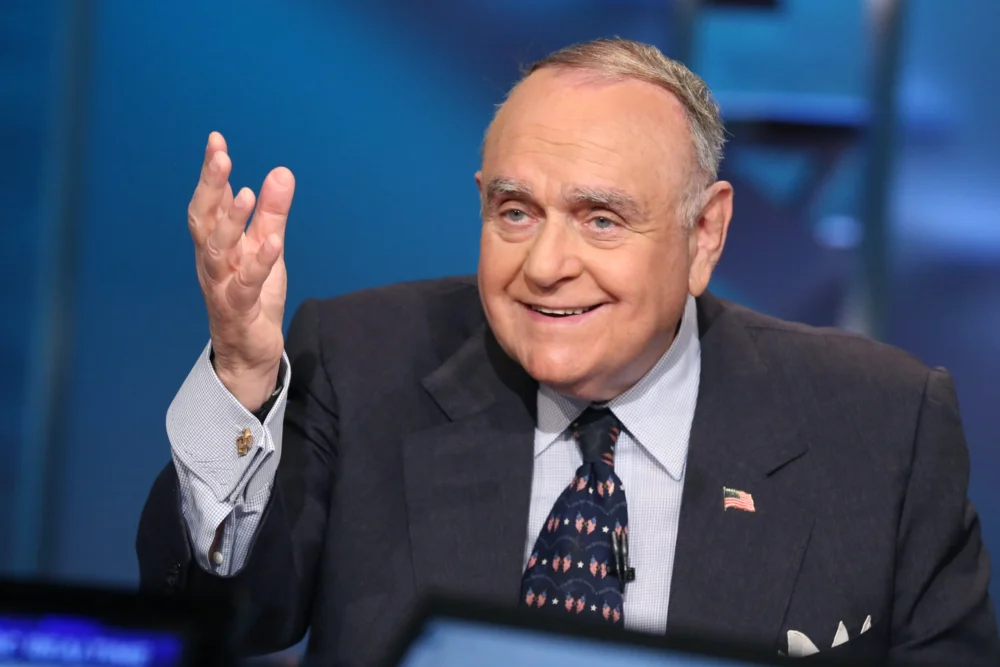
The landscape of global finance is increasingly dominated not just by institutional giants and hedge funds, but by the private investment vehicles of the world’s most affluent dynasties. These family offices, which now manage an estimated $6 trillion globally, have become a primary barometer for market sentiment among the "smart money" set. As the fourth quarter of 2025 drew to a close, a series of 13F securities filings analyzed by CNBC revealed a striking divergence in strategy among these ultra-high-net-worth investors. From high-stakes bets on the future of English soccer and the resilience of the American mortgage market to defensive crouches in precious metals and speculative forays into digital assets, the latest disclosures provide a roadmap of where the world’s wealthiest individuals believe the economy is headed in 2026.
At the forefront of the recent filing cycle was Leon Cooperman, the legendary founder of Omega Advisors. While Cooperman transitioned his hedge fund into a family office years ago, his market maneuvers continue to command significant attention. Last week, headlines were dominated by the disclosure that Omega Advisors had significantly increased its stake in Manchester United. The English Premier League giant, which has been the subject of intense ownership speculation and restructuring over the last year, saw Cooperman’s position rise to a valuation of approximately $46.5 million. For fans of the "Red Devils," the filing initially sparked rumors of a potential billionaire-led takeover. However, subsequent disclosures clarified that Cooperman’s 5.2% stake is purely a passive investment, signaling a belief in the long-term appreciation of sports franchises as "trophy assets" rather than an intent to influence club operations.
Despite the media frenzy surrounding the soccer club, Omega Advisors’ most substantial capital allocation occurred far closer to home. The firm executed a massive buy-in for Rocket Companies, the parent organization of Rocket Mortgage. Purchasing more than $375 million worth of shares, Cooperman has made the mortgage lender his largest single holding, currently valued at nearly $407 million. This move suggests a contrarian bet on the American housing market and a potential stabilization of interest rates. By positioning heavily in Rocket Companies, Omega is betting on the firm’s technological edge in the lending space and its ability to capture market share as the refinancing cycle eventually turns.
While Cooperman looked toward consumer finance and sports, other billionaire investors focused on the relentless march of artificial intelligence. David Tepper’s Appaloosa Management, a firm known for its aggressive and often highly successful opportunistic bets, tripled down on its commitment to the semiconductor industry. Appaloosa increased its position in Micron Technology to $428.1 million, making it the crown jewel of the portfolio. This conviction has already yielded significant dividends; shares of Micron, a critical producer of memory chips essential for AI data centers, have surged by roughly 50% since the beginning of 2026. Tepper’s move reflects a broader market thesis that the "picks and shovels" of the AI revolution—specifically high-bandwidth memory—remain undervalued relative to their projected utility.
Similarly, Stanley Druckenmiller’s Duquesne Family Office has been recalibrating its approach to the tech sector. Druckenmiller, who famously managed money for George Soros, is regarded as one of the most successful macro traders in history. In the final quarter of 2025, Duquesne initiated a new position in Bloom Energy, a fuel-cell company that provides on-site power generation. As AI data centers demand unprecedented levels of electricity, companies like Bloom Energy that offer "behind-the-meter" power solutions have become darlings of the energy transition. This bet has paid off spectacularly, with Bloom Energy’s stock price climbing over 100% year-to-date.
However, Druckenmiller’s activity also highlighted a growing skepticism toward some of the market’s previous leaders. While he increased his Amazon holdings by 69%, bringing the total to roughly $170 million, he simultaneously exited his position in Meta Platforms entirely. This "Mag 7" divergence was mirrored by Longbow SA, the investment arm of the billionaire Rausing family (the heirs to the Tetra Pak fortune). Longbow took a more holistic defensive stance, downsizing positions across the entire "Magnificent Seven" spectrum, including Amazon, Nvidia, Microsoft, Apple, Alphabet, and Meta. This suggests a growing concern among European old-money dynasties that the domestic U.S. tech trade may be reaching a point of saturation or overvaluation.
The fourth-quarter filings also shed light on the varying appetites for digital assets among the ultra-wealthy. While 2024 and 2025 saw a wave of institutional adoption for Bitcoin following the approval of spot ETFs, the recent performance of these assets has tested the resolve of new entrants. WIT LLC, the investment vehicle for the Walton family (the founders of Walmart), disclosed a $4 million allocation to the iShares Bitcoin Trust ETF. While a drop in the bucket for the world’s wealthiest family, representing less than 1% of the WIT portfolio, it marks a significant symbolic entry into the crypto space. However, the timing proved difficult, as the ETF has declined by 21% since the start of the year. Similarly, Alan Parker’s Kemnay Advisory Services increased its exposure to Coinbase by 44% last quarter, only to see the stock slide 18% in the early months of 2026. These moves highlight that even with the infrastructure of ETFs and regulated exchanges, the crypto market remains a source of significant volatility for family office portfolios.
Perhaps the most striking disclosure came from Ray Dalio, the founder of Bridgewater Associates, who now manages his personal wealth through Marino Management. Dalio has spent much of the last year issuing somber warnings about the global economic order. He has frequently spoken of an "AI bubble" that threatens to burst and a looming "capital war" driven by geopolitical tensions between the U.S. and China. His portfolio reflects this "doomsday" caution. Marino Management disclosed a staggering $438.5 million position in the SPDR Gold Trust (GLD), which accounts for nearly 90% of the firm’s reported equity holdings.
Dalio’s commitment to gold is not merely a short-term trade but a fundamental philosophical stance on portfolio construction in an era of high debt and political instability. In recent interviews, Dalio has emphasized that gold should not be viewed through the lens of price speculation but as a vital diversifier. He argues that central banks and sovereign wealth funds should maintain a consistent percentage of gold to hedge against the "poor parts" of a traditional paper-asset portfolio. For Dalio, gold represents the ultimate "neutral" asset in a world where currency debasement and international sanctions are becoming standard tools of statecraft.
The data from these filings paints a picture of a billionaire class that is far from a monolith. While some, like Tepper and Druckenmiller, are aggressively chasing the next leg of the AI trade, others like the Rausing family are trimming their exposure to tech giants that have dominated the last decade. Meanwhile, the Waltons are cautiously dipping their toes into the digital future, even as Ray Dalio returns to the most ancient form of wealth preservation.
As we move further into 2026, these family office strategies will be put to the test. The heavy concentration in specific sectors—such as Cooperman’s bet on mortgage lending or Tepper’s reliance on semiconductor demand—leaves these portfolios vulnerable to shifts in Federal Reserve policy and global supply chains. Furthermore, the massive shift into gold by figures like Dalio suggests that a segment of the ultra-wealthy is bracing for a "regime change" in the global markets, characterized by higher inflation and geopolitical fragmentation.
Ultimately, the Q4 2025 filings serve as a reminder that for the ultra-wealthy, the primary goal is often as much about wealth preservation and risk mitigation as it is about capital appreciation. Whether through the ownership of iconic sports brands, the financing of the American dream of homeownership, or the stockpiling of bullion, the world’s most successful investors are currently positioning themselves for a year that promises both technological breakthroughs and significant macroeconomic uncertainty. For the average investor, these moves provide a rare glimpse into the playbooks of those who have the resources to see over the horizon—and the capital to act on what they find there.