
 By Isnaini Azizah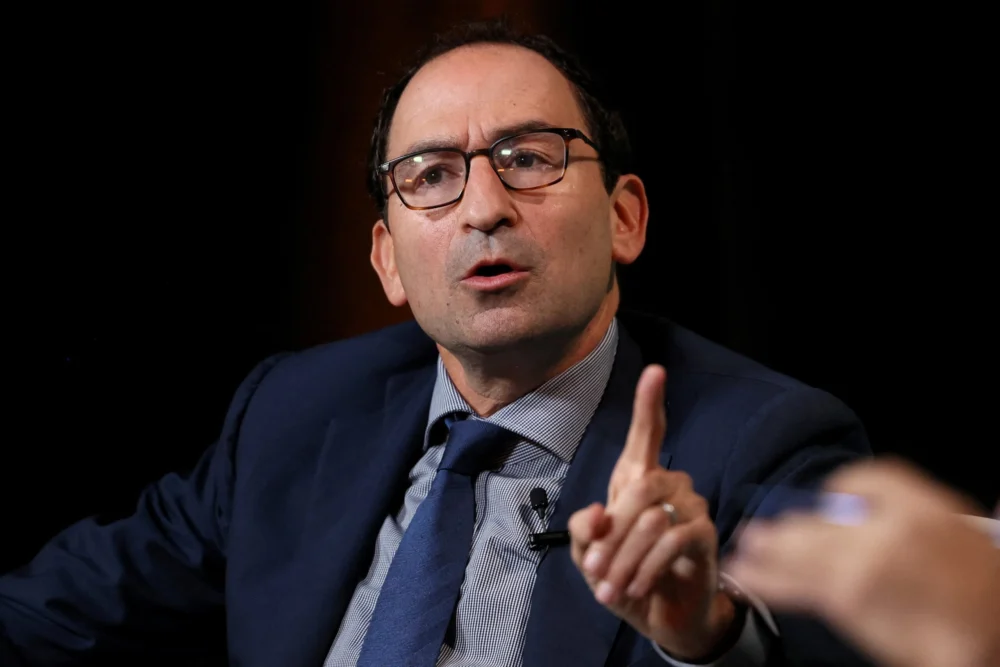
The global financial landscape was jolted this week as Blackstone, the world’s largest alternative asset manager, moved to address mounting anxieties surrounding its flagship private credit vehicle, the Blackstone Private Credit Fund (BCRED). In a series of strategic maneuvers and public statements, Blackstone President and COO Jon Gray sought to reinforce investor confidence after the firm revealed that it had processed redemption requests totaling approximately 7.9% of the fund’s net asset value in the most recent quarter. The news, disclosed in a late-Monday regulatory filing, triggered a significant reaction in the public markets, with Blackstone shares tumbling as much as 8.5% during Tuesday morning trading and casting a shadow over the broader private credit sector.
The $82 billion BCRED fund stands as a titan in the private credit space, a market that has ballooned to an estimated $1.7 trillion globally as traditional banks have retreated from mid-market lending following the 2008 financial crisis and subsequent regulatory tightening. However, the sheer scale of the redemptions—and the unconventional method Blackstone used to meet them—has reignited a debate about the liquidity and underlying health of private lending portfolios. To fulfill the surge in withdrawal requests while maintaining the fund’s stability, Blackstone and its employees personally injected $150 million of their own capital into the fund. This move was intended to ensure that 100% of investor redemption requests were met with "certainty and timeliness," according to a company spokesperson, but it also signaled to some analysts that the fund was facing an unprecedented level of pressure.
Appearing on CNBC’s "Squawk on the Street," Jon Gray pushed back against the narrative of a burgeoning crisis. He emphasized that the underlying fundamentals of the fund’s borrowers remain robust despite the "noise" in the media and the broader financial markets. "When you think about credit quality, the 400-plus borrowers here, they had 10% EBITDA growth last year," Gray told David Faber, referring to earnings before interest, taxes, depreciation, and amortization—a key metric for assessing a company’s ability to service its debt. "So when we look at this, we feel pretty darn good." Gray’s defense is centered on the idea that the current sell-off is driven more by sentiment and a "spin cycle" of negative headlines than by a deterioration in the actual creditworthiness of the companies Blackstone has financed.
The jitters in the private credit market did not emerge in a vacuum. The sector has been under intense scrutiny since last fall, following the high-profile collapses of firms like Tricolor and First Brands. Tricolor, a subprime auto lender, and First Brands, a consumer products company, both faced allegations of fraud and financial mismanagement, leading to indictments and federal charges against executives. While these cases were idiosyncratic, they served as a "canary in the coal mine" for investors who fear that the rapid expansion of private credit may have led to lax underwriting standards. Furthermore, last month, Blue Owl Capital, a major competitor in the space, reported that it had found buyers for $1.4 billion of its loans to help facilitate a massive 30% cash-out for an embattled credit fund. These events have created a climate of suspicion, where any sign of liquidity pressure is viewed as a potential precursor to a wider systemic failure.

A primary focal point for skeptics is BCRED’s heavy exposure to the software industry, which accounts for approximately 25% of the fund’s total portfolio. For years, software has been the "darling" of private credit because of its recurring revenue models, high margins, and "sticky" customer bases that make these companies appear safer than traditional manufacturing or retail firms. However, the rise of generative artificial intelligence (AI) has introduced a new layer of uncertainty. Critics argue that many legacy software business models could be disrupted or rendered obsolete by AI-driven automation, potentially eroding the collateral value of the loans Blackstone has extended.
Gray acknowledged these concerns but maintained a pragmatic outlook. While he admitted that "there are software companies that will be disrupted" by AI in the coming years, he argued that the structure of private credit provides a significant safety net. As debt lenders, Blackstone sits at the top of the capital stack, meaning they are senior to equity holders and are the first to be paid. Gray also noted that many enterprise software systems are deeply integrated into the infrastructure of their clients, making them incredibly difficult to dislodge even in a changing technological environment. "There’s this disjointed environment now between what’s happening on the ground with underlying portfolios and what’s happening in the news cycle," Gray remarked. "Ultimately, these things will resolve themselves."
The structure of BCRED itself is also a topic of discussion among institutional and retail investors. BCRED is organized as a non-traded Business Development Company (BDC), a structure designed to provide individual investors with access to private markets that were previously reserved for pension funds and endowments. To manage liquidity, these funds typically have "gates" or limits on how much capital can be withdrawn in a single quarter—usually around 5% of the fund’s total value. By allowing redemptions to reach nearly 8%, Blackstone effectively signaled that it was willing to go above and beyond its stated limits to appease investors, supported by the $150 million internal investment. While this was framed as a show of strength, some market participants interpreted it as a necessary intervention to prevent a larger panic.
The broader implications for the private credit industry are profound. For the past decade, private credit has thrived in a low-interest-rate environment, offering yields that far outpaced government bonds or public corporate debt. However, as the Federal Reserve raised interest rates to combat inflation, the cost of borrowing for the companies in these portfolios skyrocketed. Most private credit loans are floating-rate, meaning that as central bank rates go up, so do the interest payments for the borrowers. This has led to concerns about "interest coverage ratios"—the ability of a company to pay its interest expenses out of its operating cash flow. While Gray’s citation of 10% EBITDA growth suggests that many borrowers are keeping pace, the aggregate pressure on mid-market firms remains a concern for the "higher-for-longer" interest rate camp.
Despite the recent turbulence, the performance data for BCRED remains a strong selling point for Blackstone. Since its inception, the fund’s Class I shares have delivered a 9.8% annualized return. This track record is what Blackstone points to when suggesting that the current redemption wave is a temporary phenomenon driven by financial advisors rebalancing portfolios or reacting to market volatility rather than a fundamental flaw in the fund’s strategy. Blackstone spokespeople have been quick to remind the public that the firm’s employees are heavily invested alongside their clients, aligning their interests with the long-term health of the fund.

The "liquidity mismatch" is perhaps the most persistent criticism of the private credit boom. Private loans are inherently illiquid; they cannot be sold as easily as stocks or public bonds. When a fund offers monthly or quarterly redemptions to investors but holds assets that take years to mature, a "run on the fund" becomes a theoretical risk. Blackstone’s decision to use its own balance sheet to bridge the gap this quarter is a direct response to this structural challenge. By providing a liquidity backstop, the firm is attempting to prove that the "private wealth" model of alternative investing can withstand periods of heightened withdrawal requests.
As the dust settles on this week’s disclosures, the financial community will be watching closely to see if other major players like Apollo Global Management, KKR, or HPS Investment Partners experience similar redemption pressures. The private credit market is currently at a crossroads. If Blackstone can successfully navigate this period of "noise" and prove that its default rates remain low and its EBITDA growth remains steady, it could solidify the asset class as a permanent and resilient fixture of the global financial system. However, if redemptions continue to accelerate or if the software sector experiences a genuine AI-induced downturn, the questions surrounding the "shadow banking" sector will only grow louder.
For now, Jon Gray and Blackstone are leaning into their reputation as disciplined underwriters. Gray’s message to the market is one of patience and focus on the "ground-level" reality of the companies they fund. He believes that the current anxiety is a byproduct of a broader market that is hypersensitive to any sign of weakness in the non-bank lending space. "This has become a story," Gray noted, acknowledging the media’s role in amplifying investor fears. Whether that story ends in a successful stabilization of the private credit markets or a more significant correction remains the most pressing question for Wall Street in 2024 and beyond. For the investors who stayed in BCRED, the hope is that Gray’s "pretty darn good" assessment of the portfolio holds true as the economic cycle continues to evolve.