
 By Titik Puspa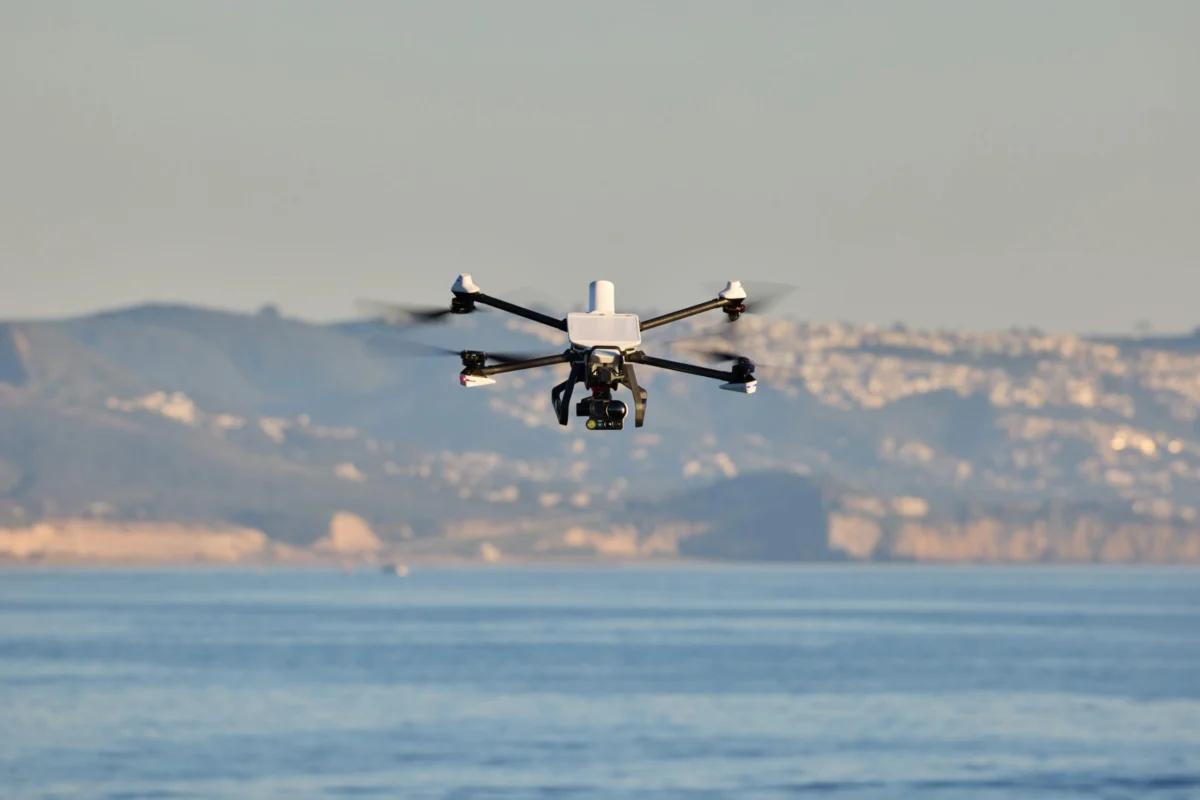
Blake Resnick, the visionary CEO of Brinc, a rapidly expanding drone startup, is currently overseeing the setup of his company’s expansive new 50,000-square-foot office space in Seattle. While Resnick estimates the cavernous facility won’t be fully operational until November, its sheer scale embodies the ambition of a company poised to dominate the public safety drone market. Brinc, which develops and sells drones specifically for law enforcement and public agencies across the United States, has openly declared its aspiration to become the "DJI of the West." This bold statement is a direct nod to the Chinese drone manufacturing giant, signaling Resnick’s intent for Brinc to achieve a similar level of brand recognition and market dominance within its specialized sector.
Resnick, a distinguished Thiel Fellow – a prestigious program that empowers young entrepreneurs by enabling them to forgo or defer traditional higher education – founded Brinc in 2017. His entrepreneurial journey quickly attracted the attention of prominent figures in the tech world, including Sam Altman, a co-founder of OpenAI at the time. Altman became one of Brinc’s earliest seed investors, a testament to the company’s initial promise and Resnick’s leadership. Since its inception, Brinc has successfully navigated multiple funding rounds, and according to Resnick, the company was most recently valued at nearly half a billion dollars, underscoring its significant growth and market traction.
This ambitious trajectory has been further bolstered by the recent launch of Brinc’s latest innovation: the Guardian drone. Unveiled on Tuesday, the Guardian is being heralded by Resnick as "the closest thing to a police helicopter replacement that the drone industry has ever produced." Brinc boldly claims it is the world’s "most capable 9-11 response drone" to date, a powerful statement reflecting the advanced capabilities packed into this new aerial platform.
The Guardian drone boasts an impressive suite of specifications and functionalities designed to meet the demanding needs of public safety professionals. It can achieve flight speeds of up to 60 mph and offers an exceptional flight endurance of 62 minutes, allowing for extended operational periods. Its advanced sensor suite includes high-resolution thermal imaging cameras, complemented by two additional 4K cameras, all equipped with powerful zoom capabilities. Resnick highlighted the practical implications of this technology, stating, "Even from significant altitude, a police department could read, like, license plate details." Beyond its surveillance prowess, the Guardian is also equipped with a powerful spotlight and a loudspeaker that surpasses the volume of a standard police siren, enhancing its utility in communication and illumination during critical incidents.
Complementing the drone itself is its sophisticated landing station, which Brinc refers to as a "charging nest." This innovative hub provides fully automated battery swapping, ensuring minimal downtime and rapid redeployment. Furthermore, the charging nest can be pre-stocked with essential safety supplies such as defibrillators, flotation devices, and Narcan (naloxone hydrochloride), allowing the drone to deliver life-saving equipment to those in need without requiring direct human intervention at the scene. This autonomous delivery capability represents a significant leap forward in emergency response logistics.
A groundbreaking feature of the Guardian drone is the integration of a Starlink panel directly into its body. This strategic inclusion, according to Brinc, makes it the first public safety drone to offer such a capability. Starlink, SpaceX’s revolutionary satellite internet service, provides the drone with ubiquitous connectivity, enabling it to operate effectively in any location worldwide, regardless of terrestrial network availability. Resnick emphasized the transformative nature of this integration: "Starlink has never been built into a commercially produced quadcopter before, so [it] gives this airframe unlimited range anywhere in the world." This capability is particularly crucial for rural areas, disaster zones, or any situation where traditional communication infrastructure may be compromised or non-existent.
The potential market for Brinc’s public safety drones is immense, and Resnick’s vision for its penetration is ambitious. He estimates that within America alone, there are approximately 20,000 police departments and 30,000 fire departments, translating to roughly 80,000 police and fire stations. Resnick confidently predicts that "the top half of that market in the future will have a 911 response drone in a recharging nest on the roof." This projection suggests a staggering market opportunity, which he further quantifies as a "$6 billion to $8 billion market opportunity," considering both domestic and international markets. This optimistic outlook is grounded in the increasing recognition of drone technology’s value in enhancing public safety operations.
Brinc is actively working to foster relationships with potential customers and accelerate the adoption of "drone as first responder" programs. The company recently partnered with the National League of Cities on an initiative aimed at scaling these programs across communities nationwide. This collaboration is instrumental in building trust and demonstrating the practical benefits of drone deployment to local governments and emergency services, paving the way for wider adoption.
Adding a significant tailwind to Brinc’s growth is the evolving geopolitical landscape surrounding drone technology. Historically, DJI has held an almost monopolistic position in the global drone market, including a substantial presence in the United States, where safety agencies have long relied on their products. However, recent policy shifts, notably the Trump administration’s ban on foreign-made drones entering the country, have created a substantial opening for domestic manufacturers like Brinc. This regulatory change has effectively removed a major competitor from the U.S. market, creating a fertile ground for American companies to innovate and capture market share.
"There is this huge need for a DJI of the West, or a leading drone manufacturer for the free world, and ultimately, that’s what we want to be," Resnick articulated, clearly positioning Brinc as the answer to this growing demand. The company’s strategic focus on public safety, combined with its cutting-edge technology and favorable market conditions, positions it as a formidable contender to achieve this ambitious goal.
The upcoming TechCrunch event in San Francisco, scheduled for October 13-15, 2026, will likely provide a platform for Brinc to further showcase its advancements and connect with industry stakeholders. As the drone industry continues to mature, companies like Brinc are not just developing new hardware; they are fundamentally redefining the capabilities and applications of aerial technology, particularly in critical sectors like public safety. The Guardian drone, with its advanced features and forward-thinking design, represents a significant step in this ongoing evolution, promising to enhance the effectiveness and efficiency of emergency response for years to come. The company’s aggressive expansion, coupled with its strategic product development and market positioning, suggests that Brinc is well on its way to becoming a household name in the realm of public safety technology.