
 By Isnaini Azizah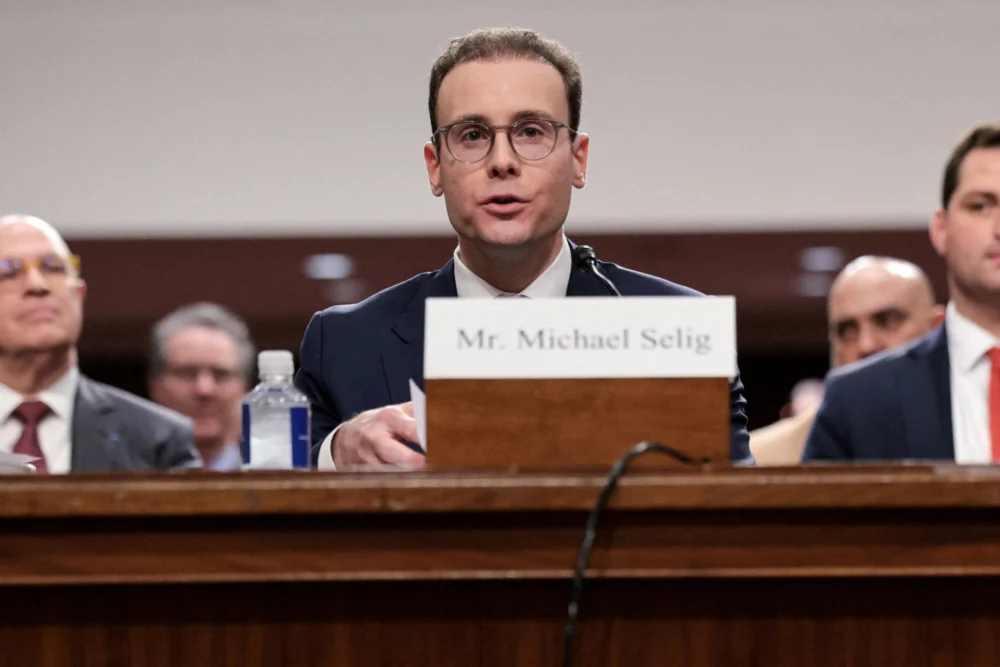
In a decisive move aimed at cementing federal authority over the rapidly evolving landscape of event-based derivatives, the Commodity Futures Trading Commission (CFTC) filed a high-stakes amicus brief in federal court on Tuesday, signaling a major shift in the regulatory treatment of prediction markets. The filing, announced by the newly appointed CFTC Chairman Michael Selig, represents a direct challenge to individual state governments that have sought to classify and regulate these platforms under traditional gambling and gaming statutes. By asserting "exclusive jurisdiction," the CFTC is effectively attempting to preempt a patchwork of state-level prohibitions that Selig argues are stifling innovation and undermining the federal government’s mandate to oversee commodity derivatives.
The legal maneuver marks a significant escalation in the ongoing tug-of-war between federal regulators and state gaming boards. The amicus brief was filed in the Ninth U.S. Circuit Court of Appeals in support of Crypto.com, which is currently embroiled in a high-profile dispute with the Nevada Gaming Control Board. Nevada, a state with a deeply entrenched and highly regulated traditional gambling industry, has argued that certain event contracts—which allow users to trade on the outcome of non-financial events—constitute unlicensed gambling. Selig’s CFTC, however, contends that these contracts are legally defined "swaps" or commodity derivatives and thus fall under the sole purview of the Commodity Exchange Act (CEA).
Chairman Selig, who was nominated by President Donald Trump and confirmed by the Senate in late 2025, has wasted little time in reshaping the agency’s priorities. In an assertive op-ed published Monday in The Wall Street Journal, Selig laid out a philosophical and legal defense of prediction markets, characterizing them as sophisticated financial tools rather than mere games of chance. He pointed to nearly 50 active legal cases across the country where states are attempting to shut down or restrict prediction markets, calling these efforts an "encroachment" on federal territory. Selig argued that the CFTC will no longer remain a passive observer while "overzealous state governments" attempt to dismantle a burgeoning sector of the American economy.
The rise of prediction markets, such as Kalshi and Polymarket, has been one of the most disruptive trends in financial technology over the last several years. These platforms allow participants to buy and sell contracts based on the outcome of everything from Federal Reserve interest rate hikes and election results to pop culture events, sports scores, and even weather patterns. During the 2024 election cycle, these markets gained mainstream prominence, often providing more accurate "real-time" data than traditional polling. However, their success has drawn the ire of critics who argue that they facilitate a culture of ubiquitous gambling and could potentially be manipulated to influence the very events they are predicting.
The debate centers on the legal definition of an "event contract." Under the previous administration, the CFTC, led by Rostin Behnam, had taken a more cautious and at times adversarial approach toward these markets, specifically expressing concerns over contracts involving political contests and sports. In late 2024 and early 2025, the agency had proposed bans on certain types of event contracts, citing public interest concerns. However, the political tide shifted with the 2025 inauguration, and Selig’s appointment signaled a 180-degree turn in policy. By late January 2026, Selig had already scrapped proposed bans on sports-related contracts, promising instead a "clear, robust, and pro-growth" regulatory framework.
In his WSJ op-ed, Selig pushed back against the "Wild West" narrative often applied to these exchanges. He emphasized that platforms like Kalshi are registered as Designated Contract Markets (DCMs) and are subject to rigorous oversight, including capital requirements, market surveillance, and self-regulatory obligations. "These exchanges aren’t the Wild West, as some critics claim, but self-regulatory organizations that are examined and supervised by experienced CFTC staff," Selig wrote. He further argued that event contracts serve "legitimate economic functions," such as allowing businesses to hedge against specific risks—for example, a concert promoter hedging against a cancellation or a retailer hedging against specific supply chain disruptions.
The implications of the CFTC’s intervention in the Ninth Circuit are profound for the broader fintech industry. If the court sides with the CFTC’s interpretation, it would establish a powerful precedent that federal law preempts state gambling laws when it comes to regulated derivatives. This would provide a "safe harbor" for companies like Crypto.com, Kalshi, and others to operate nationally without the fear of being shut down by individual state attorneys general or gaming commissions. For the industry, this represents the "regulatory clarity" they have long lobbied for, arguing that a unified federal standard is necessary for the United States to remain a leader in financial innovation.
Expert analysis suggests that the CFTC’s stance is rooted in the "Preemption Doctrine," a legal principle derived from the Supremacy Clause of the U.S. Constitution. The Commodity Exchange Act specifically grants the CFTC "exclusive jurisdiction" over accounts, agreements, and transactions involving swaps and futures. By classifying event contracts as swaps, Selig is making a jurisdictional claim that, if upheld, would invalidate state laws that conflict with federal oversight. Legal scholars note, however, that the definition of "gambling" has traditionally been a "police power" reserved for the states, setting the stage for a constitutional showdown that could eventually reach the Supreme Court.
The opposition from state regulators is expected to be fierce. States like Nevada, New Jersey, and Pennsylvania, which generate significant tax revenue from legalized sports betting and casinos, view unregulated (or federally regulated but state-exempt) prediction markets as a threat to their fiscal bottom lines and their ability to protect consumers from problem gambling. Critics also argue that the CFTC lacks the manpower and localized expertise to handle the consumer protection issues inherent in high-frequency retail betting on pop culture and sports. They contend that while a hedge fund might use these tools for "economic utility," the vast majority of retail users are using them for speculative entertainment, which should be governed by gaming laws.
Chairman Selig’s aggressive rhetoric has only added fuel to the fire. In a video posted to the social media platform X on Tuesday, Selig spoke directly to state regulators and critics of the agency’s expansion. "Today, the CFTC is taking an important step to ensure that these markets have a place here in America and have the integrity and resilience and vibrancy that our derivative markets deserve," he said. He concluded the video with a blunt warning to those challenging the agency’s authority: "We will see you in court."
This confrontational stance is a hallmark of the new administration’s broader deregulatory agenda, which seeks to reduce the "administrative state’s" friction on emerging technologies, particularly in the crypto and decentralized finance (DeFi) sectors. Prediction markets are often seen as the "killer app" for blockchain technology, with platforms like Polymarket utilizing decentralized ledgers to facilitate global trading. While the CFTC’s current focus is on centralized, US-regulated exchanges, the legal principles being established will undoubtedly influence how the government eventually handles decentralized prediction protocols.
The specific case in the Ninth Circuit involves Crypto.com’s efforts to offer a variety of event-based contracts to its US user base. The Nevada Gaming Control Board had previously issued warnings or cease-and-desist orders, claiming the platform was facilitating "wagering" without a state gaming license. By filing in support of Crypto.com, the CFTC is not necessarily endorsing the specific company’s business model, but rather defending the agency’s right to be the sole arbiter of what constitutes a derivative versus a bet.
As the legal proceedings move forward, market participants are watching closely. The outcome will determine whether prediction markets become a standardized asset class available on every brokerage app in America or remain sidelined by a thicket of state-level litigation. For now, Michael Selig has made it clear that the CFTC intends to be the primary architect of this new financial frontier. By reframing the debate from "gambling" to "exclusive federal jurisdiction," the agency is attempting to bypass the moral and social arguments against prediction markets and win on the cold, hard grounds of statutory authority and federal supremacy.
The commercial stakes are also significant. Organizations like CNBC, which holds a minority investment in Kalshi, reflect the growing institutional interest in these platforms as sources of both data and revenue. As these markets mature, the line between "information" and "investment" continues to blur. Selig’s Monday op-ed touched on this, suggesting that the "wisdom of the crowds" harnessed by these markets provides a public good by offering more accurate forecasts than traditional experts. Whether the courts agree that this public good overrides the states’ rights to regulate gambling remains the billion-dollar question for the future of American finance.