
 By Lina Irawan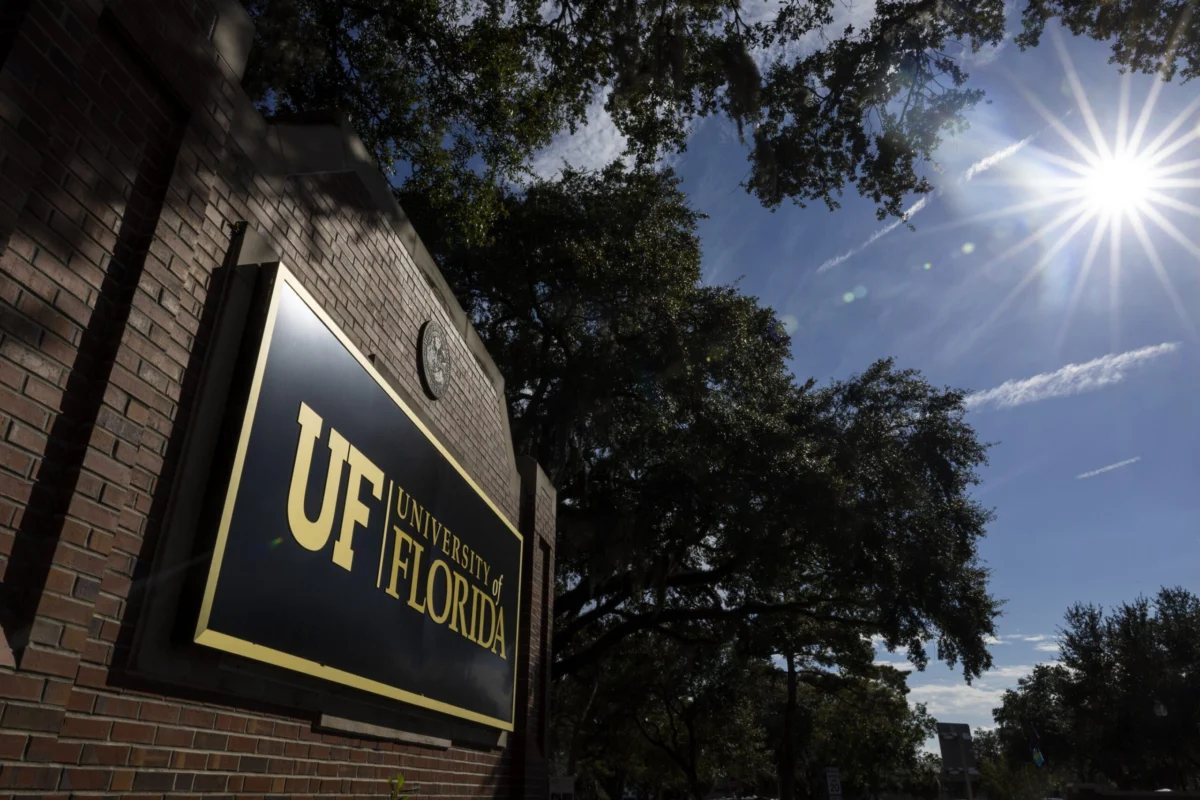
The University of Florida College Republicans (UFCR) has initiated a federal lawsuit against the university’s interim president, Donald Landry, challenging the school’s decision to deactivate its chapter following allegations that at least one member engaged in an antisemitic act. The legal action, filed Monday in federal court, contends that the university’s move constitutes a violation of the student group’s First Amendment rights to free speech and association, and was carried out without due process. The lawsuit seeks an immediate injunction to halt the enforcement of the deactivation, restore the chapter’s recognition, and reinstate its access to campus facilities and resources on the Gainesville campus.
According to court documents, the UFCR argues that the university "punitively deactivated and shut down the UFCR, in response to alleged viewpoints expressed by a member of UFCR, and in an effort to silence the club and chill its future speech." This assertion places the case squarely within the ongoing national debate about the limits of free speech on public university campuses, particularly when balanced against concerns over hate speech and creating an inclusive environment.
In response to inquiries, University of Florida spokeswoman Cynthia Roldan Hernandez stated via email that the university does not comment on pending litigation, adhering to standard institutional policy. This reticence leaves the institution’s detailed defense to be presented in court, but previous statements provide some insight into the university’s stance.
The controversy began over the weekend when University of Florida officials announced they had been notified by the Florida Federation of College Republicans (FFCR) that the statewide federation had formally disbanded its Gainesville campus chapter. The FFCR reportedly made this decision after determining that some UFCR members had "engaged in a pattern of conduct that violated its rules and values, including a recent antisemitic gesture." Following this notification, the university acted to deactivate the campus chapter, signaling that it would assist in reactivating the chapter under new student leadership once the Florida Federation of College Republicans was prepared to do so.
However, the UFCR lawsuit contends that the deactivation was not based on any specific university policy or rule but rather solely on a member’s expression of a viewpoint "which was alleged to be antisemitic." The legal filing further alleges that the university failed to provide the College Republicans with adequate notice of the allegations or an opportunity to explain their side of the story, thereby violating fundamental principles of procedural due process. This claim highlights a critical aspect of free speech jurisprudence on public campuses: while universities have a legitimate interest in regulating student conduct and maintaining order, they must do so in a manner that respects constitutional rights, including providing fair procedures before imposing sanctions.
The First Amendment on Campus: A Complex Landscape
The legal battle underscores the complex and often contentious relationship between free speech rights and institutional responsibilities at public universities. As a state-funded institution, the University of Florida is bound by the First Amendment, which protects students’ rights to free speech and association. Landmark Supreme Court cases, such as Tinker v. Des Moines Independent Community School District (1969) and Healy v. James (1972), established that students do not "shed their constitutional rights to freedom of speech or expression at the schoolhouse gate." These rulings affirm that public universities cannot deny recognition to student groups simply because they find their views disagreeable.
However, these rights are not absolute. The Supreme Court has also recognized that speech can be regulated if it incites imminent lawless action (Brandenburg v. Ohio), constitutes true threats, harassment, or defamation, or substantially disrupts the educational environment. The challenge for universities lies in distinguishing between protected, albeit offensive, speech and conduct that crosses the line into unprotected categories, especially in the emotionally charged context of antisemitism and identity politics.
Legal scholars often point out that for a public university to restrict student speech, it must typically demonstrate a compelling governmental interest and employ narrowly tailored regulations. In the case of student organizations, universities usually have policies governing conduct, use of facilities, and adherence to non-discrimination principles. The UFCR’s lawsuit appears to hinge on the argument that the university’s action was a form of "viewpoint discrimination," meaning the university targeted the group because of the content or message of its speech, rather than a neutral application of conduct rules. Viewpoint discrimination is a highly disfavored form of speech restriction under the First Amendment.
Furthermore, the due process claim is significant. Public universities are required to provide fair procedures before depriving students or student organizations of significant benefits, such as official recognition. This typically includes notice of the charges, an opportunity to be heard, and a decision based on evidence. If the university simply adopted the FFCR’s decision without its own independent investigation and procedural safeguards for the UFCR, it could be vulnerable to a due process challenge.
The Shadow of Antisemitism on Campus
The allegations of an "antisemitic gesture" are particularly potent in the current climate, where concerns about antisemitism on college campuses have intensified dramatically. Following the October 7th attacks in Israel and the subsequent war in Gaza, incidents of antisemitism and Islamophobia have surged across the United States, including at universities. Organizations like the Anti-Defamation League (ADL) have reported a significant increase in antisemitic incidents, including harassment, vandalism, and assaults, often manifesting in various forms, from overt hate speech to more subtle, yet still harmful, expressions.
Universities are under immense pressure from students, alumni, donors, and lawmakers to address these concerns effectively while simultaneously upholding commitments to free speech and academic freedom. This balancing act is fraught with difficulty. What one group considers protected political speech, another might view as hate speech or harassment. The specific nature of the alleged "antisemitic gesture" in the UFCR case has not been publicly detailed, but its characterization by the FFCR as a violation of its "rules and values" suggests it was perceived as crossing a line from political expression into offensive or discriminatory conduct.
The debate over what constitutes antisemitism itself is complex. While certain acts, like Holocaust denial or calls for violence against Jews, are universally condemned, other expressions related to Israeli policy or even certain historical symbols can be subject to varying interpretations. The International Holocaust Remembrance Alliance (IHRA) working definition of antisemitism, which includes examples related to Israel, has been adopted by many institutions but also faces criticism for potentially chilling legitimate criticism of Israeli government policies. Without specifics on the alleged gesture, it is challenging to assess its nature within this broader framework, but the context of heightened sensitivity is undeniable.
A Pattern of Controversies: Republican Youth Groups Under Scrutiny
The deactivation effort at the University of Florida campus marks the second time this month that a public university in Florida has taken action against a Republican group accused of being involved in racist or antisemitic behavior, and it reflects a broader national trend of scrutiny facing conservative youth organizations.
Earlier this month, Florida International University (FIU) in Miami launched a comprehensive investigation into a group chat that reportedly included violently racist slurs, antisemitic comments, and misogynistic language. This chat, initiated by an official with the Miami-Dade chapter of the Republican Party, involved students and several top conservative leaders at FIU. The allegations at FIU spurred widespread condemnation and raised serious questions about the culture within certain segments of youth political organizations. The content described – including slurs and hateful rhetoric – falls closer to unprotected speech categories, such as harassment or incitement, making a university’s response more defensible from a legal standpoint, provided due process is followed.
These incidents in Florida are not isolated. Last fall, New York’s Republican State Committee suspended a Young Republican organization following the release of a group chat that included appalling jokes about rape and flippant commentary on gas chambers, directly referencing the Holocaust. These revelations prompted outrage and led to the suspension of the group’s state recognition, underscoring a recurring challenge for the Republican Party in policing the conduct and rhetoric of its youth wings.
These repeated controversies suggest a concerning pattern within some youth conservative groups, where online platforms or private communications allegedly become venues for expressing hateful, discriminatory, or offensive viewpoints. For universities, these situations present a difficult dilemma: how to uphold constitutional free speech protections while simultaneously fostering an inclusive campus environment free from harassment and discrimination, and how to respond when allegations of misconduct involve speech that many find deeply offensive.
The outcome of the UFCR lawsuit will likely have significant implications for how public universities in Florida and potentially across the nation balance these competing interests. It will test the boundaries of free speech on campus, the procedural requirements for sanctioning student organizations, and the institutional response to allegations of antisemitism and other forms of hate speech. As the legal process unfolds, it will further illuminate the ongoing struggle to define the acceptable limits of expression within academic communities.