
 By Isnaini Azizah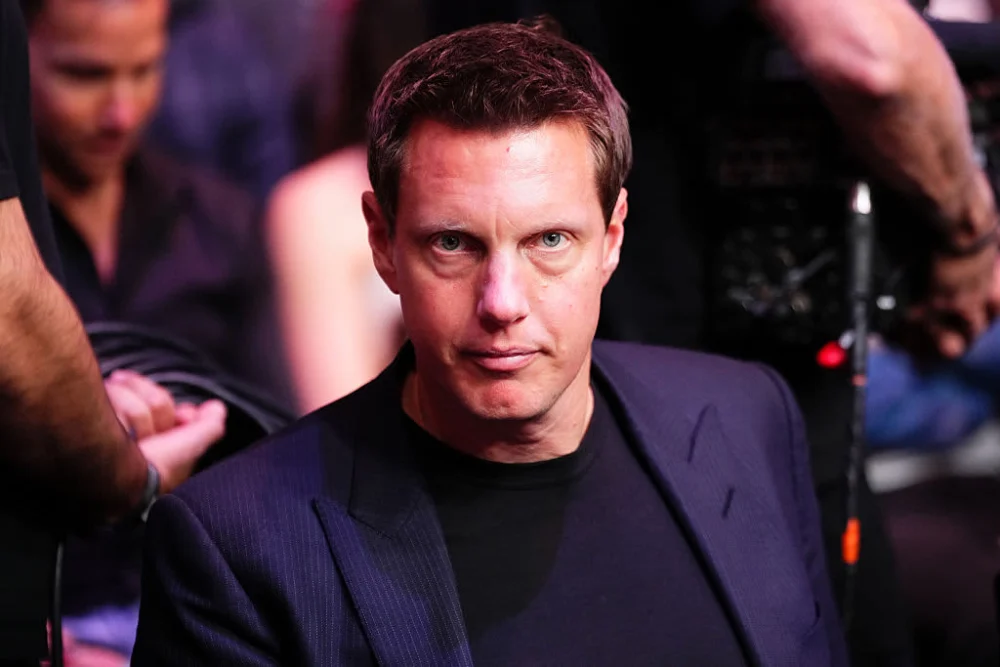
When David Ellison, the Chairman and CEO of the newly merged Paramount Skydance, was spotted at the UFC 324 event at T-Mobile Arena in Las Vegas on January 24, 2026, he appeared as a man comfortable with high-impact collisions. In the octagon of media consolidation, Ellison has spent the better part of the last six months navigating a corporate melee that would rival the plot of one of his own "Mission: Impossible" blockbusters. As the producer behind some of the most successful action franchises of the 21st century, Ellison is no stranger to high-risk, high-reward scenarios, but his pursuit of Warner Bros. Discovery (WBD) represents the most audacious gamble of his career—a move intended to fundamentally reshape the hierarchy of Hollywood.
The saga began in September 2025, when Ellison issued an initial, unsolicited offer for WBD, catching the industry by surprise. At the time, Warner Bros. Discovery was already navigating the choppy waters of a post-merger integration and a shifting streaming landscape. Ellison’s move acted as a catalyst, forcing the WBD board to explore a formal sale process by October. This process briefly seemed to favor Netflix, the Silicon Valley disruptor that had long maintained a complicated relationship with the traditional theatrical model. An agreement was initially reached for Netflix to acquire the legendary Warner Bros. film studio and WBD’s prestige streaming assets, including the crown jewel, Max. However, Ellison refused to concede. Utilizing a hostile tender offer and leveraging a critical seven-day negotiating waiver granted by Netflix, Paramount Skydance returned to the table with a superior proposal. By late February 2026, Paramount officially upped its bid for the entirety of WBD, ultimately unseating Netflix after the streaming giant declined to match the revised, multi-billion-dollar valuation.
For Ellison, the motivation behind this relentless pursuit is clear: the acquisition of the Warner Bros. movie studio is a strategic necessity for survival in an era dominated by "ecosystem" companies like Disney and Apple. While Paramount and Skydance have enjoyed significant individual successes, their combined domestic box office footprint has often lagged behind the "Big Three" of Disney, Universal, and Warner Bros. In 2025, Warner Bros. secured its position as the second-highest grossing studio at the domestic box office, fueled by a diverse slate of intellectual property and filmmaker-friendly prestige projects. Paramount, by comparison, finished the year in fourth place. By absorbing WBD, Ellison isn’t just buying a library; he is buying the "horsepower" required to compete for the top spot in global entertainment.
Paul Dergarabedian, the head of marketplace trends at Comscore, notes that the fierce competition for WBD is rooted in the immense brand identity the studio carries. "If a merger were to be approved, the entity that then grabs up Warner Bros. would add tremendous brand identity and revenue-generating potential to their portfolio," Dergarabedian explained. This is particularly vital for Ellison, whose production company, Skydance, has historically relied on a "theatrical-first" playbook. Unlike Netflix, which has prioritized subscriber growth and internal streaming metrics, Skydance has remained a staunch defender of the traditional cinema experience. For Ellison, taking ownership of Warner Bros. isn’t just about content; it’s about preserving and dominating the theatrical window.
The history of Skydance is a testament to Ellison’s belief in the power of the big screen. Since releasing its first theatrical feature in 2006—the World War I drama Flyboys—Skydance has grown from a boutique production house into a major industry player. Over two decades, the studio has launched nearly 30 films, the vast majority of which were produced in tandem with Paramount. This long-standing partnership culminated in the formal merger of the two entities in August 2025, a deal engineered by Ellison to consolidate his creative vision with Paramount’s distribution infrastructure.

However, a closer look at Skydance’s track record reveals a heavy reliance on a single, aging superstar: Tom Cruise. The studio’s six highest-grossing films globally all feature Cruise in the lead role, including five installments of the "Mission: Impossible" series and the cultural phenomenon Top Gun: Maverick. While Maverick was a "lightning in a bottle" moment—becoming Skydance’s only billion-dollar film and the only title in its library to exceed $230 million domestically—it also highlighted a lack of depth in the studio’s portfolio. In the post-pandemic era, reaching the billion-dollar milestone has become the benchmark for "A-list" studio status. Disney, for instance, has managed to release six billion-dollar films since 2021, including Avatar: The Way of Water, Inside Out 2, and Deadpool & Wolverine. Warner Bros. achieved this with 2023’s Barbie, Universal with The Super Mario Bros. Movie, and Sony with Spider-Man: No Way Home.
The challenge for Ellison is that outside of the Tom Cruise orbit, Skydance’s performance has been inconsistent. Only five of its features have generated more than $200 million in the U.S. and Canada. Globally, seven films have surpassed the $500 million mark, but these figures are often overshadowed by astronomical production costs. "The challenge for Ellison and Skydance is to keep budgets in line," says Dergarabedian. "Latter installments of major franchises tend to have diminishing returns as compared to earlier releases, making it harder to justify continued investment."
The economics of modern blockbusters are punishing. Consider Mission: Impossible – The Final Reckoning. While it generated a respectable $599 million at the global box office, its reported production budget ballooned to $400 million. When marketing costs—typically half of the production budget—are added, the total investment likely reached $600 million before a single ticket was sold. Because studios split box-office proceeds roughly 50-50 with theater operators, a film like The Final Reckoning can gross over half a billion dollars and still fail to turn a profit during its theatrical run. Furthermore, the Mission: Impossible brand lacks the multi-generational merchandising revenue seen with Disney’s Marvel or Star Wars franchises. There are no billion-dollar toy lines or theme park lands dedicated to Ethan Hunt, leaving the studio entirely dependent on ticket sales and licensing.
This is precisely why the Warner Bros. Discovery library is so coveted. By acquiring WBD, Ellison gains access to a "mountain of content" that is far more diversified and commercially resilient than Paramount’s current slate. While Paramount has seen success with the Sonic the Hedgehog franchise, A Quiet Place, and the Scream series, these hits are often dwarfed by the sheer scale of WBD’s assets. Warner Bros. holds the keys to the DC Universe (Batman, Superman, Wonder Woman), the Wizarding World of Harry Potter, Middle-earth (Lord of the Rings), and the vast HBO library, which includes Game of Thrones and The Last of Us. They also distribute Legendary’s "Monsterverse" (Godzilla and Kong) and the Dune franchise.
Shawn Robbins, director of analytics at Fandango and founder of Box Office Theory, points out that Paramount’s market share has struggled to keep pace with competitors since its peak years leading up to 2015. "While occasional hits have provided bright spots, some of the studio’s most bankable IP has seen diminishing returns among modern moviegoers," Robbins says. With the Mission: Impossible series reaching its conclusion and the Transformers franchise experiencing a regression in domestic earnings, Paramount is in desperate need of fresh, high-ceiling intellectual property. The Star Trek brand, once a cinematic powerhouse, has shifted its focus toward streaming series, leaving a void in Paramount’s theatrical schedule.
By merging with WBD, Ellison aims to create a media titan that combines Skydance’s production efficiency and "talent-first" philosophy with the massive IP library of Warner Bros. and the distribution reach of Paramount. It is a strategy built on the belief that in a fractured media landscape, only the biggest entities will survive. For David Ellison, the "impossible mission" isn’t just about buying a studio—it’s about ensuring that the legacy of the silver screen has a home in a digital future. As the industry watches the fallout of this massive deal, one thing is certain: Ellison has moved beyond being a mere producer of movies; he is now the architect of a new Hollywood empire.