
 By Isnaini Azizah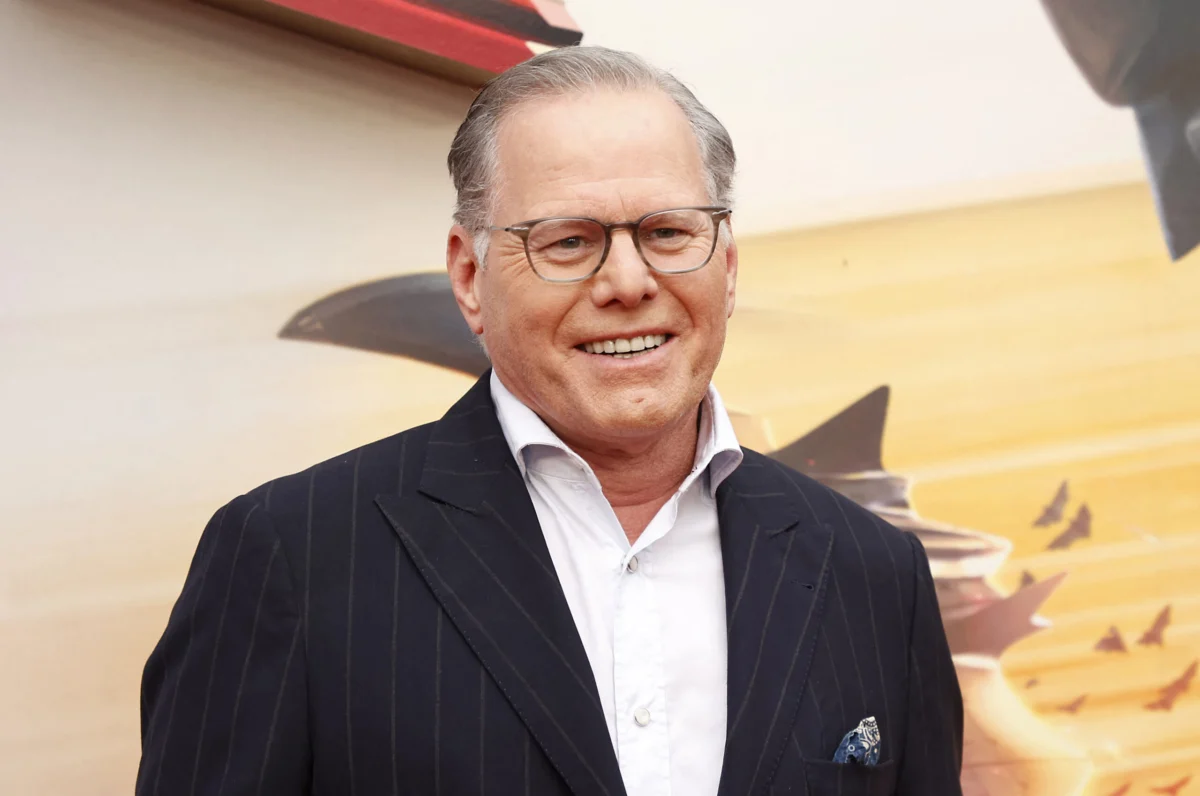
According to the detailed financial disclosures, Zaslav stands to collect a multi-layered windfall consisting of approximately $500 million in share awards, $115 million in vested stock awards, and a direct cash payment of $34 million in severance. However, the most scrutinized portion of this package is a potential $335 million "gross-up" payment designed to cover what is known as the "golden parachute" excise tax. This tax, a relic of 1980s-era corporate regulation, was originally intended by the United States Congress to curb the very type of massive executive payouts that Zaslav is now poised to receive. Instead, management experts argue that the rule has been effectively weaponized by corporate boards to ensure that CEOs remain "whole" during a sale, often at the expense of the acquiring company’s shareholders.
The golden parachute excise tax, codified under Section 280G of the Internal Revenue Code, was established in 1984 as part of the Deficit Reduction Act. At the time, the American public and lawmakers were increasingly frustrated by "greenmail" and the perceived decadence of corporate raiders and executives who enriched themselves during hostile takeovers while workers lost their jobs. The law mandates a 20% excise tax on "excess parachute payments"—specifically, payments that exceed three times an executive’s average annual compensation over the preceding five years. While the intent was to create a financial deterrent against excessive change-of-control bonuses, the reality has evolved into a standard negotiating lever. In Zaslav’s case, Paramount has agreed to foot the bill for this tax, ensuring that the CEO’s net take-home pay remains untouched by the federal penalty.
This reimbursement, or "gross-up," is a point of significant contention. The Paramount board of directors has defended the move, stating that without this protection, Zaslav would be at a "substantial disadvantage" compared to other potential merger scenarios. Specifically, the board pointed to a previously explored transaction with Netflix, which reportedly would not have triggered the same excise tax obligations due to the structural nature of that proposed deal. To remain competitive and secure Zaslav’s cooperation in the merger with Skydance and Paramount, the board felt compelled to neutralize the tax burden.
The timing of this payout is particularly sensitive given the broader economic context of Warner Bros. Discovery. Under Zaslav’s leadership, the company has undergone a period of aggressive and often painful restructuring following the 2022 merger of Discovery Inc. and AT&T’s WarnerMedia. This era has been defined by multibillion-dollar write-offs, the controversial cancellation of nearly finished projects like Batgirl and Coyote vs. Acme, and thousands of layoffs across the CNN, HBO, and Warner Bros. Studio divisions. Zaslav has frequently framed these moves as necessary "debt-reduction" strategies to manage the company’s $40 billion-plus debt load. Critics, however, point to his potential $887 million payday as a jarring juxtaposition to the austerity imposed on the company’s creative and operational staff.
Jeffrey Gordon, the co-director of Columbia Law School’s Ira M. Millstein Center for Global Markets and Corporate Ownership, has analyzed the evolution of these payments, noting that they have transformed from protective measures into "platinum parachutes." In a recent research paper, Gordon argued that the shift toward stock-based compensation has made these parachutes exponentially more lucrative than they were in the 1980s. He noted that while a firm’s sale might result in significant pain for rank-and-file employees—who often face "redundancy" layoffs during mergers—the CEO emerges as a singular, undisputed winner. The $887 million figure is a testament to this trend, representing a sum that exceeds the annual revenue of many mid-sized media companies.

The mechanics of the Paramount-WBD deal are equally complex. Paramount, led by David Ellison’s Skydance Media and backed by RedBird Capital, is aiming to close the acquisition by this fall, pending the necessary regulatory approvals from the Department of Justice and the Federal Communications Commission. The deal includes a provision where the tax reimbursement for Zaslav declines over time, eventually dropping to zero if the closing is delayed into 2027. This creates a powerful financial incentive for all parties to expedite the merger, potentially bypassing more rigorous scrutiny of the deal’s impact on market competition and consumer pricing.
The role of the Paramount board in approving these "gross-ups" has also raised questions about fiduciary responsibility. While the board emphasized that the reimbursement would be paid by Paramount and not by Warner Bros. Discovery shareholders, the distinction is largely academic in the context of a combined entity. Ultimately, the capital used to pay Zaslav’s taxes is capital that cannot be reinvested into content creation, technology infrastructure, or debt reduction for the newly merged conglomerate. Management experts argue that this practice effectively shifts the tax burden from the individual executive to the corporation’s equity holders, undermining the original legislative intent of Section 280G.
Furthermore, Zaslav’s history with executive compensation has long been a lightning rod for shareholder activism. In 2021, prior to the WarnerMedia merger, he received a compensation package valued at approximately $246 million, largely driven by stock options. While WBD has attempted to tie his pay more closely to free cash flow and debt reduction targets in subsequent years, the sheer scale of the Paramount payout suggests that "change-of-control" provisions remain the most potent wealth-generation tool for modern CEOs.
The broader media industry is watching the WBD-Paramount-Skydance saga as a bellwether for future consolidation. As traditional linear television continues to decline and the "streaming wars" enter a phase of consolidation and profitability-seeking, more legacy media companies are expected to seek safety in mergers. If the Zaslav payout becomes the new benchmark for "change-of-control" compensation, it could set a precedent that makes future mergers even more expensive for shareholders. The "golden parachute" was intended to be a ceiling; in the modern era of the media mogul, it has become a launchpad.
Institutional investors, including major pension funds and asset managers, have increasingly voiced opposition to "gross-ups" in executive contracts. Groups like the Council of Institutional Investors (CII) have argued that such payments insulate executives from the consequences of tax laws and create a misalignment of interests between management and owners. In the case of WBD, however, the board has prioritized the strategic necessity of the merger over the optics of the payout. They argue that Zaslav’s leadership and the integration of WBD’s massive library—including the DC Universe, Harry Potter, and HBO—into the Paramount-Skydance ecosystem is worth the high price of admission.
As the deal moves toward its expected fall closing, the $887 million figure will likely remain a central point of debate in the conversation surrounding corporate governance and wealth inequality. While Zaslav has been credited with having the "stomach" for the difficult decisions required to navigate the decline of cable TV, the magnitude of his potential exit package challenges the narrative of shared sacrifice. Whether this payout remains a singular anomaly or becomes the standard for the next generation of media mergers, it serves as a definitive example of how 1980s regulations have failed to keep pace with the modern era of "platinum" executive compensation. The story of David Zaslav’s windfall is not just a story of a single deal, but a reflection of a system where the rules designed to limit excess have, through clever engineering, facilitated it.