
 By admin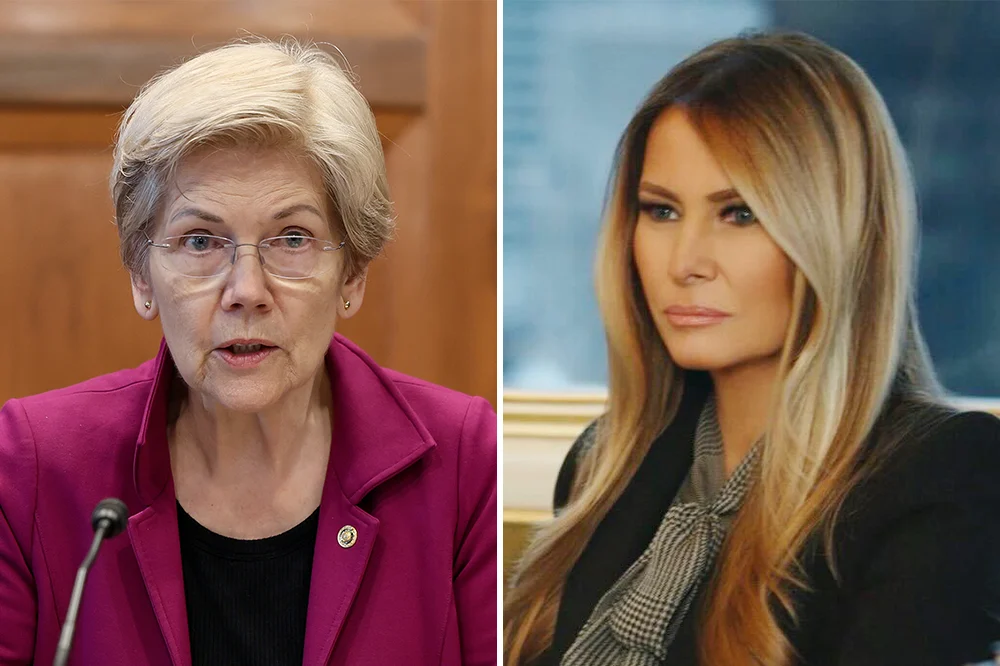
A significant controversy has erupted in Washington, D.C., with Democratic Senator Elizabeth Warren of Massachusetts leveling serious accusations against Amazon MGM Studios, alleging "bribery in plain sight" in the company’s lavish acquisition of a documentary about former First Lady Melania Trump. The media giant vehemently denies these allegations, maintaining its actions were entirely proper and business-driven. The dispute centers on Amazon MGM’s substantial financial commitment to the documentary, titled "Melania," and the timing of this investment in relation to potential favorable treatment from the Trump administration.
The investigation, spearheaded by Senator Warren and Representative Hank Johnson of Georgia in March, delved into whether Amazon MGM’s significant outlay for "Melania" constituted a "corrupt pay-to-play arrangement with the Trump administration." The lawmakers’ concerns were ignited by the sheer magnitude of the financial transaction. Amazon MGM reportedly paid an eye-watering $40 million to acquire the documentary and an additional $35 million to market it. These figures are considered unprecedented for a documentary, a genre not typically known for blockbuster box office returns.
Further fueling the suspicion, Senator Warren highlighted that Amazon MGM’s winning bid was a staggering $26 million higher than that of the next highest bidder, Disney. This dramatic overpayment, according to critics, raises questions about the underlying motivations. Despite the significant investment, "Melania" concluded its theatrical run with a global box office total of $16.6 million. While this is considered a respectable performance within the documentary sphere, it falls far short of recouping Amazon MGM’s expenditure, given that exhibitors typically retain half of ticket sales. The financial realities underscore the difficulty for even successful documentaries to achieve profitability at the box office, a challenge exacerbated in the post-pandemic era.
The core of Senator Warren and Representative Johnson’s argument lies in the potential for quid pro quo. In a strongly worded letter to Amazon on March 15, the lawmakers stated, "The fact that Amazon is seeking favorable treatment from the Trump Administration while paying a far-above-market sum to produce and promote the Trump family’s film raises questions about Amazon’s exposure under federal anti-bribery law." They emphasized that "The American people deserve assurance that powerful corporations are not using their financial resources to gain political influence or favorable treatment at public expense – and that these corporations are not violating federal bribery laws."
Federal anti-bribery statutes prohibit the offering of "anything of value," which can encompass business opportunities and financial arrangements, to elected officials or individuals closely associated with them with the intent to influence official actions. Senator Warren and Representative Johnson specifically requested that Amazon provide explanations for the $40 million payment for the documentary and clarify whether the company had engaged in direct discussions regarding its bid with Melania Trump or any members of the Trump administration.
Amazon, however, has firmly rejected the notion that its financial commitment was indicative of a bribe. The company’s official stance is that its decision to license "Melania" was based on "the access, the story, and its cultural and historical relevance." Brian Huseman, Amazon’s Vice President of Public Policy, issued a statement on March 30, obtained by Variety, asserting, "We disagree with any suggestion that Amazon’s decision to license this film and accompanying series was improper. We regularly release documentaries that offer unique perspectives on cultural and historical figures across the political spectrum."
Huseman further elaborated on Amazon MGM Studios’ decision-making process, stating, "Amazon MGM Studios became the licensor of the film and accompanying series following a thorough and competitive bidding process. ‘Melania’ gave us the opportunity to tell a story that’s never been told before, with unprecedented access to a historic presidential transition through the perspective of the First Lady. Our decision was based on the film and series itself – the access, the story, and its cultural and historical relevance."
Undeterred by Amazon’s defense, Senator Warren escalated her criticism, characterizing the company’s response as "reeking of desperation to please Donald Trump." She directly challenged Amazon’s claims of a competitive bidding process, stating in a new statement, "If there’s nothing corrupt about this deal and the bidding process was truly ‘competitive,’ why won’t Amazon explain why it reportedly paid three times as much as the next highest bidder?" Warren reiterated her central accusation: "The logical explanation is that Amazon is trying to buy the President’s favor by dumping millions into the Trump family’s pockets. This looks like bribery in plain sight, and Amazon must give Congress – and the American people – answers now."
The lawmakers’ letter also pointed to other instances of Amazon’s financial engagement that they deemed questionable. It noted that since President Trump’s re-election in 2024, Amazon has contributed $1 million to his inauguration fund, in addition to an undisclosed sum for the construction of a new "gold-encrusted" ballroom at the White House. Furthermore, the letter argued that Amazon and its founder, Jeff Bezos, have significant financial stakes in several matters currently before the administration, including an antitrust lawsuit recently settled with the Federal Trade Commission, foreign trade deals, and federal contracts.
Representative Johnson echoed Senator Warren’s concerns, drawing a stark parallel between the documentary deal and the broader influence of wealthy corporations on political power. He stated, "When we saw the oligarchs and tech bros gather in front-row seats at Trump’s second inauguration – some of whom gave him millions for his re-election campaign – it raised the specter that the rich and powerful were going to wield dangerous levels of power and influence on the nation through their largess to this transactional and corrupt president." Johnson concluded, "Amazon’s ‘nothing-to-see-here’ response makes this fear even more of a reality. If there were truly nothing to see, then Amazon would have answered these basic questions."
The documentary "Melania" itself generated considerable media attention and speculation during its theatrical release, with many outlets questioning whether the film was a strategic move by Amazon to curry favor with the then-current administration. This speculation is not entirely without precedent in the political landscape. During Trump’s presidency, media companies have faced situations requiring them to navigate complex relationships with the White House. For instance, last summer, Paramount reportedly paid $16 million to the president to settle a lawsuit that the company initially characterized as "meritless," stemming from a "60 Minutes" segment. The year prior, Disney settled a defamation lawsuit brought against ABC News anchor George Stephanopoulos by making a $15 million payment to Trump’s presidential library.
When Amazon MGM initially acquired "Melania" in early 2025, a studio spokesperson offered a simpler rationale, stating, "We licensed the film for one reason and one reason only – because we think customers are going to love it." This statement, however, has done little to quell the concerns raised by Senator Warren and Representative Johnson, who maintain that the substantial financial commitment, coupled with the political context, warrants a deeper investigation into potential impropriety. The ongoing dispute highlights the delicate balance between commercial interests, artistic expression, and the potential for undue influence in the political arena, particularly when large corporations engage with figures at the highest echelons of power. The ramifications of this controversy could extend beyond the specific case of the Melania Trump documentary, potentially influencing how businesses interact with political administrations and how such interactions are scrutinized by lawmakers and the public. The call for transparency and accountability from Amazon MGM Studios remains a central demand from the concerned legislators.