
 By Lina Irawan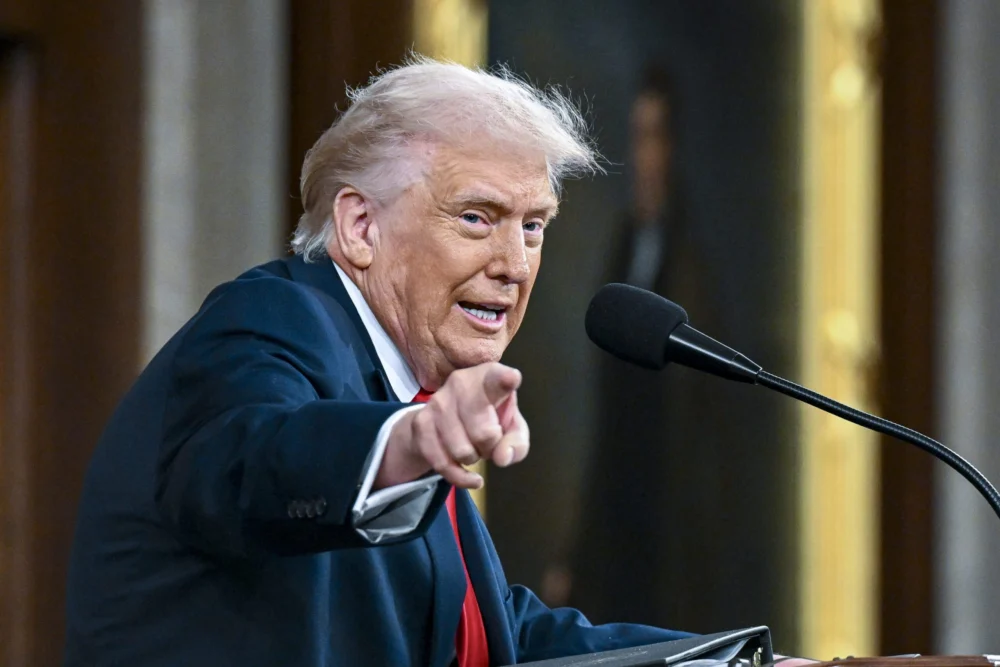
Since military strikes targeting Iran’s leadership began on Saturday, the Trump administration has provided several explanations to justify its campaign, although has refrained from explicitly mentioning a change in leadership as a clear-cut goal—despite its outcome so far effectively amounting to a decapitation. Over the weekend, President Donald Trump claimed initial strikes had killed as many as 48 members of Iran’s leadership, including Supreme Leader Ali Khamenei, in an unprecedented operation that has fundamentally reshaped the geopolitical landscape of the Middle East.
The sudden and decisive nature of the strikes, dubbed "Operation Epic Fury," saw a barrage of precision-guided munitions and advanced drone attacks target key command-and-control centers, Revolutionary Guard Corps facilities, and residences associated with Iran’s top echelons. While the administration initially cited the need to neutralize imminent threats to American personnel and assets in the region, and retaliate for alleged Iranian-backed attacks on U.S. bases in the Mideast and Israel, the sheer scale of the operation and the resulting power vacuum have far outstripped these initial justifications.
Defense Secretary Pete Hegseth, in his first public remarks on Monday, navigated the semantic tightrope of the administration’s stance. “This is not a so-called ‘regime change war’,” Hegseth said, “but the regime sure did change.” This statement, delivered amidst rising global concern, underscored the administration’s perplexing position: executing an operation with the unmistakable outcome of leadership decapitation, yet publicly disavowing the very objective it achieved. This rhetorical dance has only fueled skepticism among allies and adversaries alike, questioning the true strategic intent behind the devastating strikes.
But for Trump, the attack’s sweeping scale has also been accompanied by a profound lack of clarity as to what comes next, specifically to plug a gaping leadership vacuum without risking a reversion to Khamenei’s dictatorial rule, or worse, the rise of an even more destabilizing force. It’s a challenge of which even Trump is painfully aware, a stark admission that contrasts sharply with the initial triumphalism surrounding the military successes.
“The worst case would be we do this and then somebody takes over who’s as bad as the previous person,” Trump said during public remarks Tuesday, outlining a worst-case scenario that might mirror the very instability the military operation was ostensibly designed to resolve. “It would probably be the worst. You go through this, and then, in five years, you realize you put somebody in who was no better,” Trump stated, a sentiment that eerily echoes the long-term quagmires faced by the U.S. in Afghanistan and Iraq following interventions aimed at regime change. The ghosts of past interventions, particularly the protracted and costly nation-building efforts that followed, loom large over the current situation. The historical precedent suggests that military victory, while often swift, rarely translates into stable political transitions without a robust and meticulously planned post-conflict strategy.
The president’s candid assessment came as voices in the U.S. and abroad criticize the administration for its apparent lack of a comprehensive plan on how to resolve Iran’s leadership program and, more broadly, to secure a stable future for the nation. These questions have become especially pointed as initial estimates of the war’s escalating cost are released. Kent Smetters, director of the Penn Wharton Budget Model, recently told Fortune the total economic toll on the U.S. could reach as high as $210 billion. This staggering figure accounts for direct military expenditures—estimated at up to $95 billion for munitions, troop deployments, logistical support, and intelligence operations—alongside massive disruptions to global trade routes, energy markets, and overall financial conditions around the globe.
The economic ramifications extend far beyond the direct military ledger. The Strait of Hormuz, a critical chokepoint for global oil shipments, faces unprecedented risks, potentially driving crude oil prices to historic highs and triggering widespread energy insecurity. Global supply chains, already fragile from recent geopolitical tensions and pandemic aftershocks, could face severe disruptions, leading to inflation in consumer goods and raw materials. Investor confidence has plummeted, manifested in volatile stock markets and capital flight from emerging economies, signaling a broader slowdown in global economic growth.
U.S. involvement in Iran might change in scale, not necessarily by design, but by necessity. For one, its campaign could soon run out of munitions for key weapons systems, including advanced cruise missiles and precision-guided bombs, if the intensity of operations is sustained. This raises critical questions about America’s industrial defense capacity and its ability to wage prolonged, high-intensity conflicts without significant strain. The war’s price tag, however, could rise exponentially the longer it lasts and if it eventually involves more factions and belligerents from elsewhere in the region, drawing in proxy forces and potentially even state actors like Saudi Arabia, Israel, or Russia, each with their own strategic interests at stake. Prolonged disruption affecting oil and gas production in the Middle East could lead to higher inflation and slower economic growth worldwide, Mohamed El-Erian, Allianz’s chief economic advisor, warned this week. He painted a grim picture of "stagflation," a scenario characterized by high inflation, stagnant economic growth, and rising unemployment, a phenomenon not seen on such a global scale since the 1970s oil shocks.
An Unfavorable Audience
The lack of a clear succession plan in Iran, coupled with the immense financial outlay and diplomatic fallout, is part of what has many Americans deeply concerned about U.S. involvement in another potential “forever” war in the Middle East. Public opinion polls reflect this apprehension: A Reuters/Ipsos poll shows 43% of Americans disapprove of the war, a significant portion for a conflict barely four days old. Furthermore, a CBS survey conducted on Monday and Tuesday also found a striking 62% of Americans do not think the Trump administration has yet to fully explain what the U.S. military goals are in Iran, highlighting a critical communication and trust deficit between the government and its citizens.
The absence of a defined endgame has also alarmed lawmakers on both sides of the aisle. Bipartisan criticism has mounted, echoing concerns about strategic drift and the lessons unlearned from previous military engagements in the region.
“It’s like we’re going to break all the china and you guys decide how to put it back together,” Sen. Tim Kaine (D-Va.) said Sunday, a metaphor vividly capturing the perceived recklessness of the administration’s approach without a coherent plan for the aftermath. His remarks underscore the fear that the U.S. has unleashed forces it cannot control, leaving a shattered state for others to painstakingly reassemble. On Tuesday, Rep. Adam Smith (D-Wash.), ranking member of the House Armed Services Committee, called the administration’s approach “incredibly costly” while speaking to Fox News, directly linking the strategic vacuum to the burgeoning financial burden on American taxpayers. Such sentiments reflect a deep-seated frustration within Congress over the perceived lack of foresight and strategic depth.
The economic fallout is already being felt globally. Gas prices across the U.S. jumped $0.11 overnight on Tuesday, directly impacting household budgets and signaling the immediate ripple effect of the conflict on energy markets. While Trump insisted Tuesday oil prices would eventually drop “lower than even before,” a claim met with widespread skepticism by market analysts, the immediate reality is one of mounting uncertainty and severe geopolitical friction. Allies including Spain and the U.K. refused to participate in the initial strikes, signaling a significant fracture in transatlantic relations and international consensus. Spain’s President Pedro Sánchez declared the war a violation of international law, prompting Trump to respond by threatening to cut off trade with the country, a move that would have profound implications for global trade relations and the stability of alliances. The UK’s Labour Party leader, Keir Starmer, also reportedly expressed reservations about the use of British air bases for the strikes, causing "deep disappointment" in the Oval Office and further illustrating the diplomatic isolation faced by Washington. These refusals highlight a growing international reluctance to endorse unilateral military actions perceived as lacking a clear legal basis or a viable post-conflict strategy.
While Trump has called on the Iranian people to “take over” their government, his administration has offered virtually no support to the civil society groups who might otherwise build a rule-of-law society in the wake of such a cataclysmic leadership change. Atlantic reporter Anne Applebaum wrote over the weekend that this omission is particularly glaring. She warned that the vacuum left by the attacks might not be filled by a nascent democratic movement but rather by breakaway groups within the Revolutionary Guard, regional warlords, or other fanatical factions eager to seize power in a destabilized environment. Such an outcome would not only negate the stated goals of the intervention but could also plunge Iran into prolonged civil conflict, creating a new breeding ground for extremism that far surpasses the threats the initial strikes aimed to neutralize.
Applebaum also noted how some of the Trump administration’s actions over the past year, including funding cuts to international broadcaster Voice of America—which previously provided daily news service in Persian servicing citizens of authoritarian regimes like Iran’s—had paradoxically set up more obstacles to Iran’s future. These cuts effectively silenced a crucial conduit for independent information and democratic ideals, leaving the Iranian populace more susceptible to misinformation and extremist narratives in a post-Khamenei era. The apparent dismantling of soft power tools, even as hard power is unleashed, underscores a troubling disconnect in the administration’s overall strategic vision, compounding the already immense challenges of forging a stable, democratic future for Iran. The coming weeks will undoubtedly test the limits of American power and strategic foresight, as the world watches whether the profound changes wrought by military force can be channeled into a constructive path, or if they will merely sow the seeds of greater instability.