
 By Titik Puspa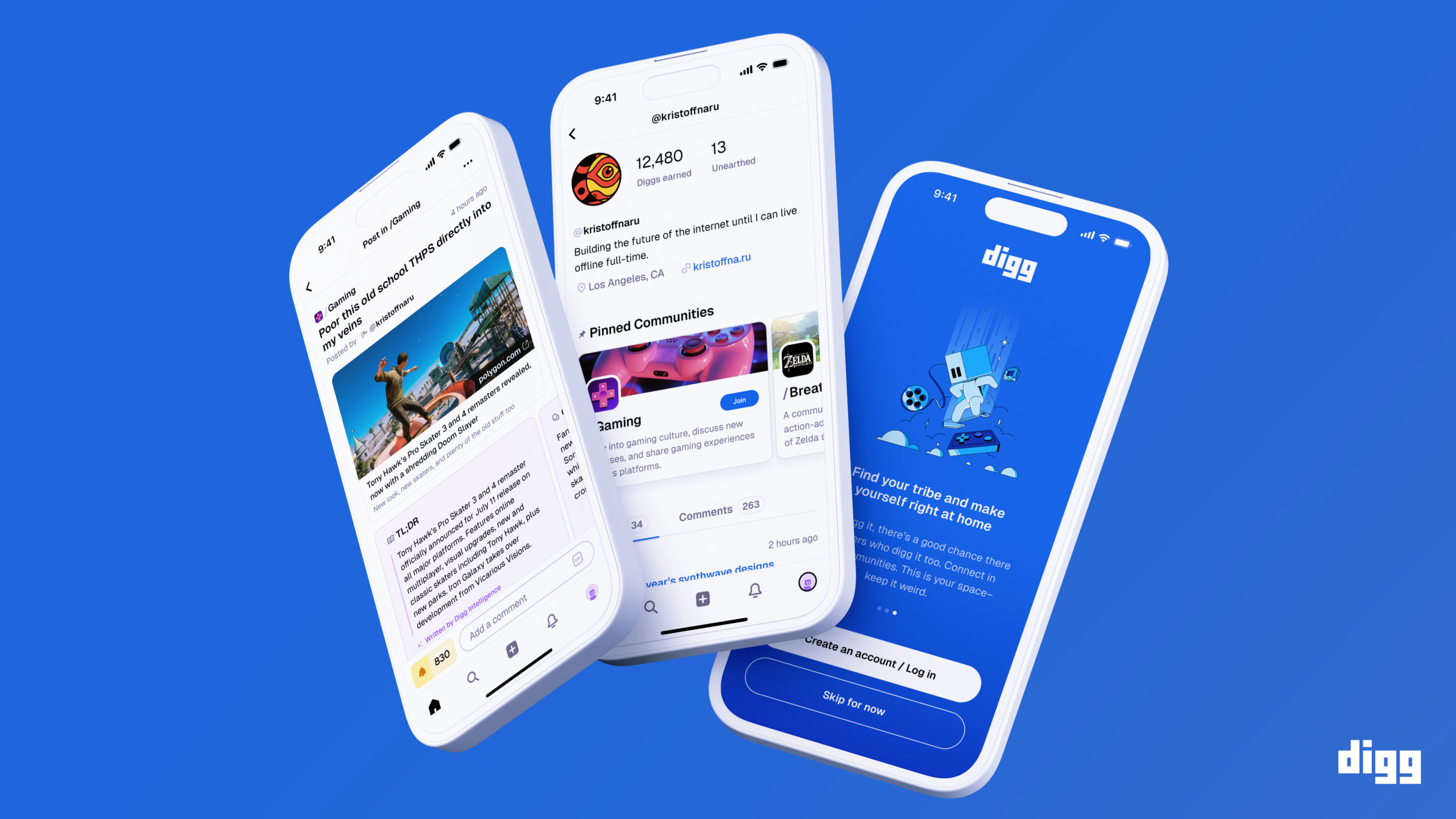
The ambitious relaunch of Digg, Kevin Rose’s revival of the once-dominant link-sharing platform, has been met with a stark reality check, resulting in substantial staff reductions and a strategic pivot. The company confirmed on Friday that a significant portion of its workforce has been laid off, though CEO Justin Mezzell emphasized that Digg is not ceasing operations. Instead, founder Kevin Rose is stepping back into a more hands-on advisory role, dedicating his full attention to navigating the platform through its current challenges and finding a sustainable path forward.
This restructuring comes as Digg grapples with two formidable adversaries: an overwhelming influx of sophisticated bots that compromised the integrity of its user-driven ranking system, and the daunting task of competing with established online communities that have solidified their user bases and operational frameworks. Rose, while continuing his advisory duties at investment firm True Ventures, is now making Digg his primary professional focus, signaling a renewed commitment to salvaging the platform he helped reimagine.
The rebooted Digg set out with the laudable goal of providing a more curated and controlled alternative to the sprawling, often chaotic, landscape of existing community forums. The vision was to foster environments where users could reliably share links, media, and text, engaging in meaningful discussions on topics of interest. The platform introduced innovative features aimed at improving content moderation and enhancing user verification, aiming to build a more trustworthy online space. However, these efforts were quickly undermined by an unforeseen and pervasive bot problem, which plagued the platform even in its nascent beta stages.
Mezzell, in a candid post on the Digg website, directly addressed the bot issue, drawing a parallel to the increasingly discussed "dead internet theory." This theory posits that a substantial portion of online activity is now driven by automated accounts and artificial intelligence, rather than genuine human users. The Digg beta launch immediately exposed the vulnerability of the platform to what Mezzell described as "SEO spammers," who recognized Digg’s residual Google link authority as a valuable asset for their artificial traffic generation schemes.
"When the Digg beta launched, we immediately noticed posts from SEO spammers noting that Digg still carried meaningful Google link authority," the company’s layoff announcement detailed. "Within hours, we got a taste of what we’d only heard rumors about. The internet is now populated, in meaningful part, by sophisticated AI agents and automated accounts. We knew bots were part of the landscape, but we didn’t appreciate the scale, sophistication, or speed at which they’d find us."
The company’s attempts to combat this digital onslaught were extensive. Tens of thousands of bot accounts were identified and banned, and the team deployed both proprietary internal tooling and engaged external vendors to bolster their defenses. Despite these considerable efforts, the sheer volume and advanced nature of the bot activity proved overwhelming. For a platform that fundamentally relies on user votes to determine content visibility and ranking, an uncontrollable bot problem rendered the entire system untrustworthy, as automated votes skewed the perceived popularity and relevance of shared links.
The challenge, as Mezzell articulated, extends far beyond Digg’s internal struggles. "This isn’t just a Digg problem. It’s an internet problem," he stated, underscoring the pervasive nature of bot infiltration across the digital ecosystem. The implications of this are profound, impacting everything from search engine rankings and social media engagement to the very authenticity of online discourse.
Adding to the operational hurdles, Mezzell also acknowledged the immense difficulty of challenging entrenched competitors, a clear reference to platforms like Reddit, which have cultivated massive and loyal user bases over many years. He described the competitive landscape not merely as a "moat," but as an insurmountable "wall," suggesting that the network effects and established communities of rival platforms present a barrier that is exceptionally difficult to breach.
While the exact number of employees affected by the layoffs remains undisclosed, the company stated that a reduced team will continue to work on rebuilding Digg, aiming to create something "genuinely different" from its previous iteration and its competitors. In a visible sign of the ongoing restructuring, the Digg app has been removed from app stores, and the company’s website currently features only the layoff announcement, signifying a deliberate pause in content publication. However, a notable exception is the continuation of the Diggnation podcast, a video show hosted by Kevin Rose, which will persist as a continuing element of the Digg brand.
To provide crucial context, the current iteration of Digg emerged from a significant acquisition earlier last year. Kevin Rose, alongside Reddit co-founder Alexis Ohanian, spearheaded a leveraged buyout of the remnants of the original Digg. Their stated intention was to cultivate a platform where communities would possess greater control and ownership over their spaces, with enhanced moderator and administrator capabilities. This ambitious acquisition involved a consortium of investors, including True Ventures, Ohanian’s firm Seven Seven Six, Rose and Ohanian personally, and the venture capital firm S32. Specific financial details of this deal were not publicly disclosed, but the intent was to inject new life and a refined vision into the venerable, albeit diminished, Digg brand.
The original Digg, which launched in 2004, was a pioneering force in the social bookmarking and news aggregation space. It allowed users to submit links to interesting content found on the web, which were then voted on by the community. Popular stories would rise to the front page, making Digg a significant discovery engine and a powerful driver of traffic for publishers. At its peak, Digg was a major player in the internet landscape, influencing how content was discovered and consumed. However, it faced significant challenges in adapting to the evolving web, particularly with the rise of social media giants and the increasing complexity of content moderation and community management. The platform experienced a significant user exodus following a controversial redesign in 2010, which alienated many long-time users. The subsequent acquisition by a different company and a series of redesigns and pivots ultimately failed to recapture its former glory, leading to its eventual acquisition by Rose and Ohanian.
The current predicament of the rebooted Digg underscores the persistent challenges facing content platforms in the modern internet era. The pervasive influence of bots and the difficulties in distinguishing authentic human engagement from automated activity represent a fundamental threat to the integrity of online communities and information dissemination. Furthermore, the intense competition from established players with deeply entrenched user bases makes it an uphill battle for any new platform to gain significant traction.
The strategic decision to have Kevin Rose return to a full-time role is a clear indication of the company’s recognition of the immense challenges and the need for strong leadership with intimate knowledge of the platform’s history and potential. His experience as a founder and innovator in the tech space, coupled with his personal investment in Digg’s future, positions him to guide the company through this critical juncture. The focus on creating something "genuinely different" suggests a move away from direct competition with existing giants and towards identifying a unique niche or value proposition that can resonate with a specific audience.
The removal of the app and the pared-down website signal a period of intense internal recalibration. This strategic pause allows the remaining team to focus on core product development and strategy without the immediate pressure of maintaining a fully operational public-facing platform. The continuation of the Diggnation podcast, however, provides a potential avenue for continued engagement with the existing audience and for communicating the evolving vision of Digg directly to its supporters.
The future of Digg, in this significantly altered form, remains uncertain. However, the company’s commitment to continuing operations, albeit with a smaller team and a refocused strategy, demonstrates a resilience and a belief in the underlying potential of the platform. The success of this latest pivot will likely hinge on Digg’s ability to effectively address the bot problem, find a defensible competitive advantage, and cultivate a community that values its unique offerings. The lessons learned from this turbulent period will undoubtedly shape the ongoing evolution of Digg and contribute to the broader discourse on the future of online communities in an increasingly automated world.