
 By admin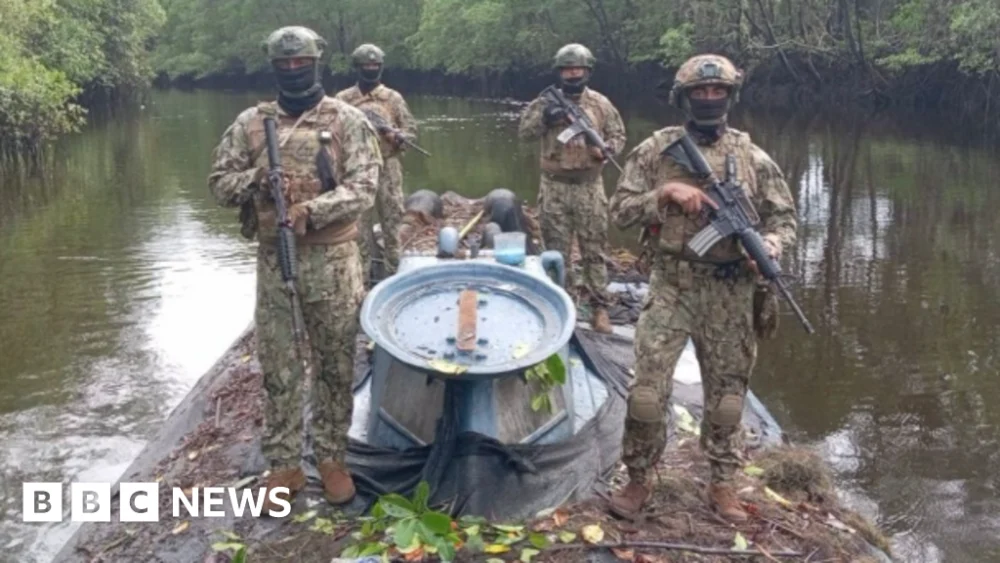
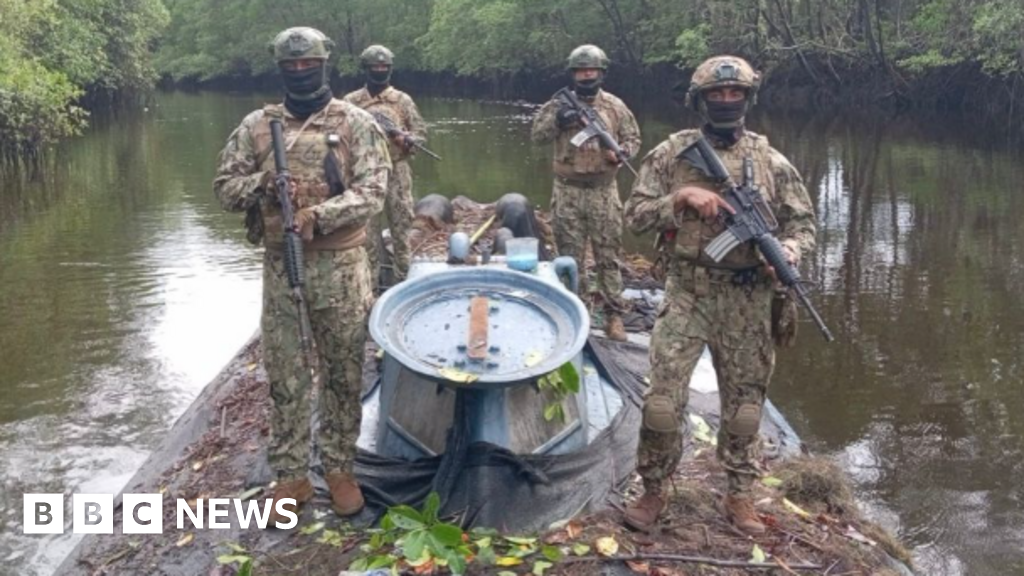
In a significant development in Ecuador’s escalating battle against transnational criminal organizations, Ecuadorean military forces have unearthed a colossal 35-meter-long (approximately 115 feet) semi-submersible vessel, commonly referred to as a "narco submarine," concealed within the dense mangrove swamps of the Cayapas-Mataje nature reserve. This sophisticated clandestine craft, discovered near the volatile border with Colombia, was laden with an estimated 6,000 gallons (22,700 liters) of fuel, indicating its readiness for an extensive drug-smuggling operation. The discovery, made public by Ecuador’s Ministry of Defence, arrives at a critical juncture as President Daniel Noboa recently declared a "new phase" in the government’s aggressive campaign against powerful drug cartels that have plunged the nation into a state of internal armed conflict.
Ecuador’s strategic geographical position, nestled between Colombia and Peru—the world’s foremost producers of illicit coca leaf and cocaine—has unfortunately transformed it into a crucial transit hub for narcotics destined for lucrative international markets, including the United States, Europe, and even as far afield as Australia. The sheer scale of this 35-meter vessel underscores the increasing sophistication and ambition of drug trafficking networks operating within and through Ecuadorian territory. These semi-submersibles, designed to operate just below the water’s surface, are notoriously difficult to detect by conventional maritime surveillance methods, offering a significant advantage to smugglers aiming to evade interdiction efforts.
The operation that led to the seizure of the narco submarine was a meticulously planned military endeavor. Ecuadorean troops, navigating the challenging terrain of the mangrove ecosystem, not only located the submerged vessel but also uncovered an adjacent makeshift camp. Intelligence suggests this clandestine site was actively utilized by criminal elements as a logistical base, serving to prepare and outfit vessels like the one seized for their illicit voyages. The discovery of this operational hub provides valuable insights into the organizational capacity and resourcefulness of these criminal syndicates.
Beyond the formidable narco submarine, the security forces also confiscated a substantial cache of supporting equipment, including six high-speed speedboats, seven powerful outboard motors, and dozens of barrels of fuel. This comprehensive haul highlights the extensive logistical network required to sustain such large-scale smuggling operations. The presence of this arsenal of maritime assets further emphasizes the significant financial and material resources at the disposal of these criminal enterprises.
The operation, however, was not without peril. The Ministry of Defence reported that Ecuadorean troops faced armed resistance from unidentified individuals during the course of the seizure. This exchange of fire underscores the dangerous nature of these interdiction missions and the willingness of drug traffickers to resort to violence to protect their illicit cargo and operations. Despite the confrontation, the ministry’s statement did not provide immediate details regarding any arrests made or the quantity of narcotics, if any, found on board the seized vessel. The absence of confirmed drug seizures in this particular operation does not diminish the significance of dismantling the smuggling infrastructure.
The recent discovery and the broader crackdown on drug trafficking align with President Noboa’s intensified efforts to restore order and security to Ecuador. Since taking office, Noboa has adopted a hard-line stance against organized crime, authorizing military intervention against designated terrorist groups and reinforcing the role of security forces in combating drug-related violence and illicit trade. This strategy has involved increased patrols, intelligence gathering, and international cooperation.
Ecuador’s President Noboa has been actively pursuing closer security cooperation with the United States, particularly with the Trump administration, in a concerted effort to curb the flow of drugs originating from his country. Earlier this week, President Noboa engaged in discussions with General Francis Donovan, the Commander of the US Southern Command, in the Ecuadorean capital, Quito. These high-level meetings have focused on enhancing bilateral collaboration in intelligence sharing, maritime interdiction, and capacity building for Ecuadorean security forces. While there was no immediate indication of direct US involvement in the specific operation that led to the narco-sub’s seizure, the broader context of intensified US-Ecuadorian security partnership is undeniable.
The United States, through initiatives like "Operation Southern Spear," has been actively involved in combating drug trafficking in the Pacific Ocean and the Caribbean Sea. Since its inception in September, this operation has reportedly involved dozens of strikes against vessels suspected of transporting illicit substances. These actions have, regrettably, resulted in over 150 fatalities, highlighting the high-stakes and often lethal nature of these interdiction efforts. The increased tempo of US naval operations in the region reflects a shared concern over the burgeoning drug trade and its destabilizing impact on both transit and destination countries.
The seizure of the narco submarine represents a tangible success for Ecuadorean authorities, demonstrating their commitment and capability in confronting sophisticated criminal networks. However, it also serves as a stark reminder of the persistent challenges posed by the global drug trade. The sheer size of the seized vessel and its strategic concealment within a protected natural reserve suggest that traffickers are continuously evolving their tactics to circumvent law enforcement.
The economic and social ramifications of drug trafficking on Ecuador have been profound. The country has witnessed a dramatic surge in violence, corruption, and social instability, directly linked to the presence and activities of powerful drug cartels. Prisons have become centers of power for gang leaders, and communities have been terrorized by extortion, kidnappings, and territorial disputes. The government’s response, characterized by President Noboa’s declaration of an "internal armed conflict," signifies a recognition of the severity of the threat and the need for extraordinary measures.
The Cayapas-Mataje nature reserve, where the narco-sub was found, is a crucial ecological zone, home to a rich biodiversity and important mangrove ecosystems. The use of such a sensitive environmental area by criminal organizations for illicit activities poses a dual threat: not only does it facilitate drug trafficking, but it also endangers the delicate ecological balance of the region. Environmental organizations have expressed concerns about the potential long-term damage caused by such clandestine operations, including pollution from fuel spills and habitat destruction.
The international dimension of this drug trafficking problem cannot be overstated. The demand for narcotics in consumer countries fuels the production and transit operations in producer and transit nations like Ecuador. Therefore, effective solutions require a comprehensive approach that addresses both supply and demand, alongside robust interdiction efforts and strategies to dismantle the financial infrastructure of criminal organizations. International cooperation, including intelligence sharing, joint operations, and efforts to disrupt money laundering, remains paramount.
The successful interdiction of this large narco submarine is a testament to the bravery and dedication of the Ecuadorean military personnel involved. It also highlights the ongoing cat-and-mouse game between law enforcement and sophisticated criminal organizations. As authorities work to dismantle one smuggling operation, traffickers are likely already developing new methods and routes. The continuous adaptation and innovation demonstrated by these criminal syndicates necessitate a parallel evolution in the strategies and technologies employed by law enforcement agencies.
The seizure is likely to provide valuable intelligence for Ecuadorean and international security agencies. Analyzing the vessel’s construction, fuel capacity, and potential operational range could offer insights into the manufacturing capabilities and logistical networks of the groups responsible. Furthermore, any recovered materials or forensic evidence could aid in identifying individuals involved and tracing the origins and destinations of the illicit cargo.
The "new phase" of Ecuador’s war on drug cartels, as announced by President Noboa, appears to be translating into more aggressive and extensive operations. The discovery of such a substantial narco submarine within a protected area underscores the urgency and scale of the challenge. While the immediate focus is on interdiction and dismantling operational capabilities, the long-term success of Ecuador’s strategy will also depend on addressing the root causes of drug production and trafficking, including poverty, corruption, and the lack of economic opportunities in vulnerable communities. The ongoing efforts, supported by international partners, aim to disrupt the flow of drugs, degrade the power of cartels, and ultimately restore peace and security to Ecuador and the wider region.