
 By admin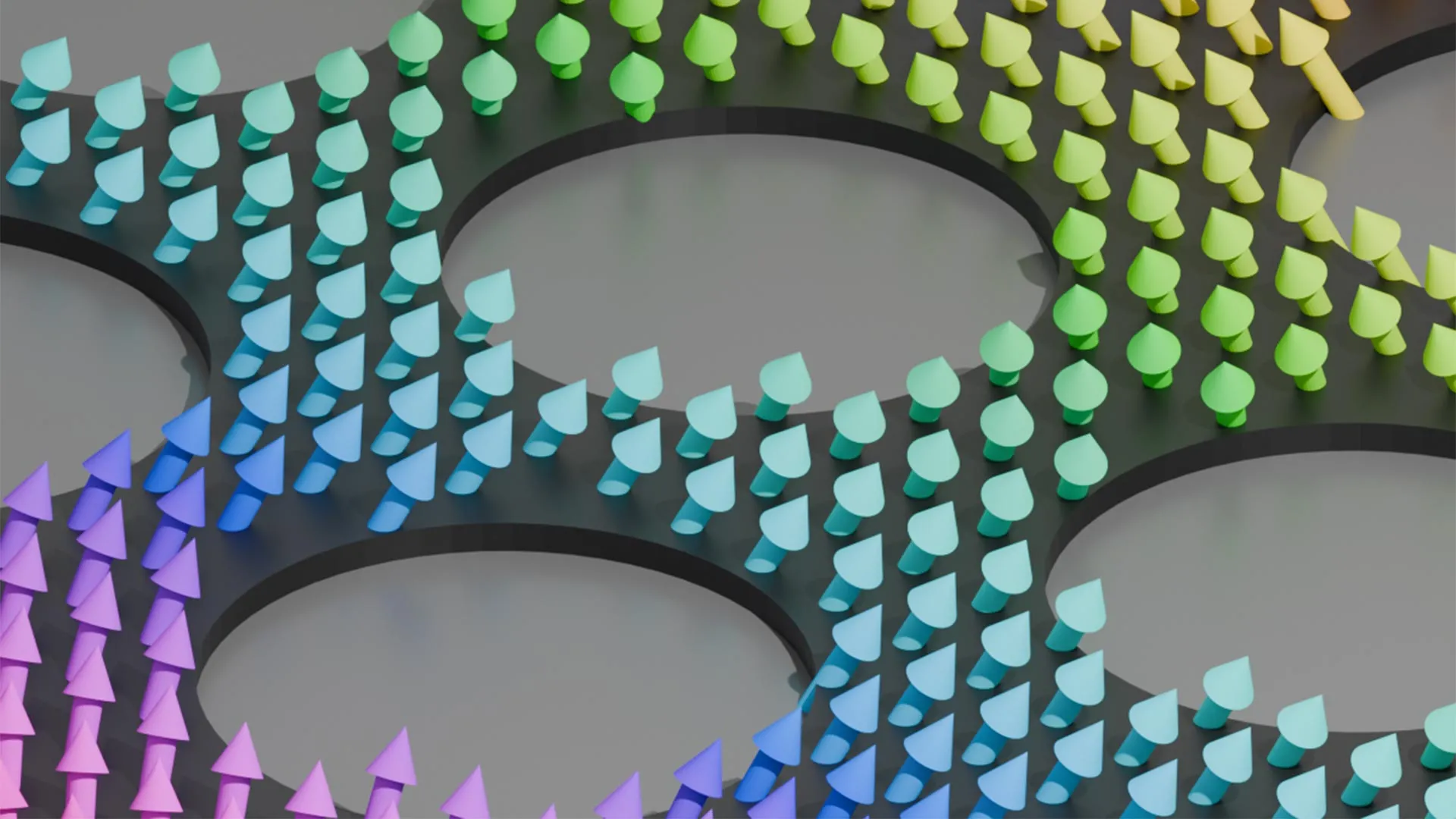
The implications of this discovery are far-reaching, challenging long-held assumptions in condensed matter physics and materials science. For decades, the study of electronic properties, which govern charge transport and semiconductor device operation, and magnetic properties, which underpin spintronics and data storage, have largely proceeded along parallel, distinct pathways. While both fields grapple with quantum phenomena at the nanoscale, the direct mathematical mapping between them has remained elusive until now.
"It’s not at all obvious that there is an analogy between 2D electronics and 2D magnetic behaviors, and we’re still amazed at how well this analogy works," stated Bobby Kaman, the study’s lead author and a materials science and engineering graduate student. His sentiment underscores the sheer unexpectedness and elegance of the finding. "2D electronics are very well studied thanks to the discovery of graphene, and now we’ve shown that a not-so-well-studied class of materials obeys the same fundamental physics." This statement highlights the potential for accelerating research in magnonics by leveraging the vast body of knowledge accumulated from graphene studies.
The Enduring Allure of Two-Dimensional Materials
To fully appreciate the significance of this work, it’s essential to understand the landscape of two-dimensional materials. These materials, consisting of a single layer of atoms, have captivated the scientific community since the isolation of graphene in 2004. Graphene, a single sheet of carbon atoms arranged in a hexagonal lattice, showcased extraordinary properties: exceptional electrical conductivity, remarkable mechanical strength, and unique optical transparency. Its discovery sparked a veritable gold rush in materials science, leading to the identification and exploration of a vast family of 2D materials, including transition metal dichalcogenides (e.g., MoS2, WSe2), hexagonal boron nitride (hBN), and topological insulators, each possessing its own unique set of electronic, optical, or magnetic characteristics.
The intense interest in 2D materials stems from several key factors. Their extreme thinness leads to quantum confinement effects, which can drastically alter their electronic band structure, giving rise to novel phenomena not observed in their bulk counterparts. They offer high surface-to-volume ratios, making them ideal for sensing applications. Furthermore, the ability to stack different 2D materials like LEGO bricks, forming van der Waals heterostructures, opens up an almost infinite design space for creating bespoke functionalities and exploring new physics at their interfaces. These properties hold immense promise for powering future technologies, from ultra-fast, energy-efficient electronics and flexible displays to advanced sensors, catalysts, and even components for quantum computing.
Graphene: A Paradigm for 2D Electronics
Graphene stands as the quintessential example of a 2D electronic system, and its unique properties are central to the analogy discovered by the Illinois team. In graphene, electrons behave as "massless Dirac fermions," meaning they travel at incredibly high speeds without scattering, effectively mimicking relativistic particles. This behavior arises from the material’s distinctive electronic band structure, characterized by "Dirac cones" where the conduction and valence bands meet at specific points (Dirac points). The linear dispersion relation near these points is what gives graphene its extraordinary electron mobility, enabling ballistic transport over significant distances and making it a candidate for ultra-high-frequency transistors and other advanced electronic devices. The mathematical framework describing these massless Dirac fermions has been meticulously developed and is a cornerstone of modern condensed matter physics.
Inspiration From Metamaterials and Magnonics
The conceptual genesis of this discovery sprang from Bobby Kaman’s prior work with metamaterials. Metamaterials are synthetic composites engineered with a specific internal structure—often on a scale larger than individual atoms but smaller than the wavelength of interest—to achieve properties that are not found in naturally occurring materials. Examples include materials with negative refractive indices, which can bend light in counterintuitive ways, or "invisibility cloaks." The key insight here is that the macroscopic structure dictates the material’s effective properties, rather than solely its atomic composition. This principle of structural engineering to elicit novel behaviors proved pivotal.
Kaman, working in the distinguished research group of Professor Axel Hoffmann, a Founder Professor of materials science and engineering at Illinois, recognized a crucial commonality: both the electrons in graphene and the microscopic magnetic excitations in so-called magnonic materials behave like waves. This seemingly simple observation sparked an intriguing hypothesis: Could a magnetic system be designed with a specific architecture such that its emergent properties would mathematically mirror those of graphene?
Magnonics is an emerging field focused on utilizing spin waves, or magnons—quanta of spin waves—as carriers of information, much like electrons carry charge in conventional electronics. Unlike electrons, magnons do not carry charge, potentially leading to significantly lower energy dissipation during information transfer, a critical advantage for developing ultra-low-power computing devices. While the concept of magnons has existed for decades, the ability to precisely control and manipulate them in engineered structures, known as magnonic crystals, is a relatively recent development.
"Graphene is unique because its conduction electrons organize into massless waves, so I was curious if altering the physical geometry of a magnonic material to look like graphene would make it act like graphene," Kaman elaborated. His initial expectation was modest: "I thought it would maybe have a handful of similar properties to graphene, but the analogy was much deeper and richer than I expected." This understated comment hints at the profound nature of their findings.
Designing a Magnetic System That Mimics Graphene
To rigorously test this hypothesis, the researchers embarked on a sophisticated modeling endeavor. They designed a thin magnetic film, a material like yttrium iron garnet (YIG) known for its excellent magnetic properties, but crucially, they introduced an array of tiny holes arranged in a precise hexagonal pattern, mirroring the atomic lattice of graphene. Within this engineered structure, the microscopic magnetic moments, or "spins," of the electrons interact. These interactions give rise to propagating disturbances known as spin waves.
The core of their work involved calculating the energies of these spin waves within their specially designed magnonic crystal. This is analogous to calculating the electronic band structure in a semiconductor. What they discovered was nothing short of astonishing: the mathematical behavior describing the propagation and energies of these spin waves closely matched that of electrons moving through graphene. This direct mathematical correspondence suggested that the complex physics governing graphene’s electrons could be translated to engineer and understand magnonic systems.
The system, however, proved to be even more intricate and fascinating than a simple one-to-one analogy. Instead of merely replicating graphene’s single set of Dirac cones, the researchers identified an impressive nine distinct energy bands. This multiplicity of bands implies that the engineered magnonic system can support several types of behaviors simultaneously, offering a remarkable degree of control and functionality. Among these behaviors, they observed:
- Massless Spin Waves: Crucially, some of these bands exhibited massless spin waves, directly analogous to graphene’s massless Dirac fermions. This implies that magnons in such engineered systems could potentially travel with minimal energy loss and at high speeds, opening avenues for ultra-efficient spintronic devices.
- Low Dispersion Bands Associated with Localized States: Other bands showed low dispersion, indicating that the spin waves in these energy ranges are more localized rather than propagating freely. Such localized states could be leveraged for creating magnetic resonators, trapping magnons, or enabling specific frequency filtering in devices.
- Topological Effects Spanning Multiple Bands: Perhaps most excitingly, the study revealed the presence of topological effects that spanned multiple bands. Topological materials are a frontier in condensed matter physics, celebrated for their robust properties that are immune to defects and disorder. The discovery of topological magnons in this system suggests the possibility of building spintronic devices that are inherently more resilient and fault-tolerant, potentially leading to breakthroughs in quantum information processing and robust signal transmission. Topological magnonics is a burgeoning field, and this work provides a new, accessible platform for its exploration.
Professor Hoffmann emphasized the profound explanatory power of this analogy: "What makes Bobby’s work remarkable is that it makes a direct connection between an engineered spin system and a fundamental physics model." He further noted, "Magnonic crystals are notorious for producing an overwhelming variety of structure- and geometry-dependent phenomena, most of which are cataloged without really being understood. The graphene analogy in this system provides a clear explanation for the observed behaviors." This highlights a critical contribution: the analogy provides a unifying theoretical framework to understand the often-complex and seemingly disparate phenomena observed in magnonic crystals, transforming a descriptive field into a predictive one.
Potential for Smaller Microwave Devices and Beyond
Beyond its fundamental scientific importance, the research carries significant practical implications, particularly in the realm of microwave technology, which is ubiquitous in modern wireless and cellular communication, satellite systems, and radar. The team believes their engineered magnonic system holds immense promise for miniaturizing critical microwave components.
"One such device is a ‘microwave circulator’ that only allows microwave radio signals to propagate in one direction," Hoffmann explained. Microwave circulators are essential non-reciprocal components in telecommunication systems, preventing reflected signals from interfering with the source and protecting sensitive equipment. "They are usually bulky, but the magnonic system we studied could allow microwave devices to be miniaturized to the micrometer scale."
Current microwave circulators typically rely on ferrites and external magnetic fields, leading to devices that are often several cubic centimeters in size – a significant impediment to the ongoing trend of miniaturization in electronics, especially with the advent of 5G, IoT (Internet of Things) devices, and highly integrated communication systems. By leveraging magnonic crystals, where spin waves operate at microwave frequencies and their propagation can be precisely controlled by the engineered structure, the Illinois team envisions circulators that are orders of magnitude smaller. This miniaturization would enable higher integration densities, reduce power consumption, and potentially lead to new functionalities in microwave circuits. The ability to integrate such micro-scale circulators directly onto silicon chips would be a game-changer for integrated photonics and RF systems.
The practical potential of this research is already being pursued vigorously, with Hoffmann’s research group having already filed a patent application covering their innovative microwave device concepts. This proactive step underscores the immediate translational relevance of their fundamental discovery.
This work also opens doors to broader applications in spintronics, a field that seeks to exploit the intrinsic spin of electrons in addition to their charge. By creating systems where magnons behave like massless Dirac fermions, researchers could potentially develop new types of spintronic logic devices, memory elements, and sensors that are more energy-efficient and faster than conventional electronic counterparts. The topological aspects further enhance the prospect of building robust spintronic devices for applications where stability against defects is paramount, such as in quantum computing.
The collaborative nature of this research is also noteworthy, with Jinho Lim and Yingkai Liu contributing significantly to the study. The work received crucial financial support from the Illinois Materials Research Science and Engineering Center, which is funded by the National Science Foundation, highlighting the importance of federal investment in fundamental scientific inquiry.
Axel Hoffmann’s multifaceted role as an Illinois Grainger Engineering professor of materials science and engineering in the Department of Materials Science and Engineering, his affiliation with the Materials Research Laboratory, and his prestigious Founder Professor appointment, underscore the institutional strength and interdisciplinary environment at the University of Illinois Urbana-Champaign that fosters such groundbreaking discoveries. This research not only pushes the boundaries of fundamental physics but also lays a robust foundation for the development of transformative technologies, solidifying Illinois Grainger Engineering’s position at the forefront of materials innovation.