
 By Isnaini Azizah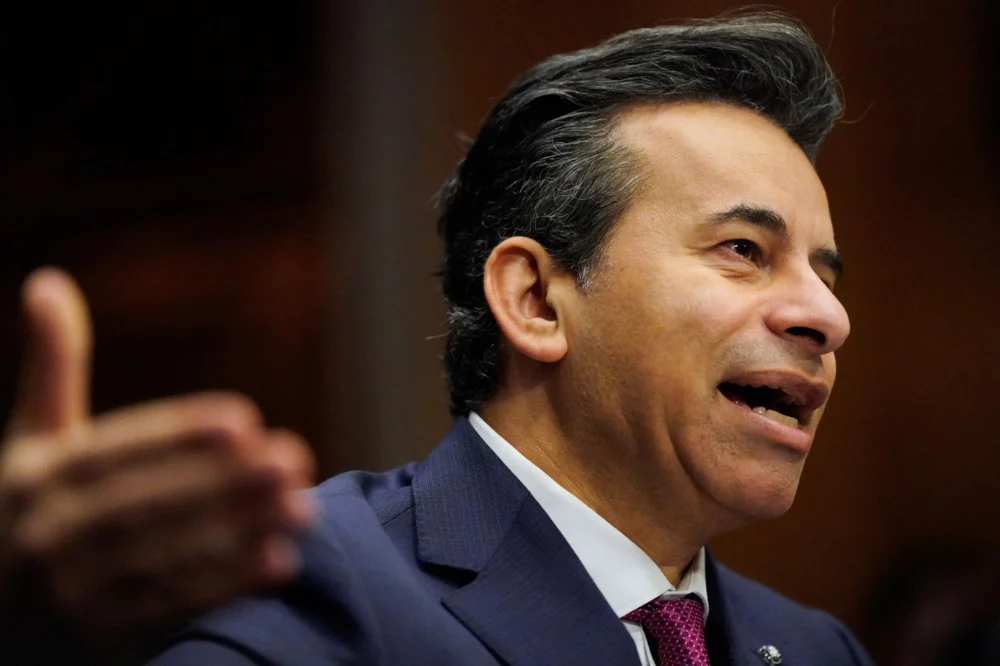
In a wide-ranging interview Wednesday in Washington, D.C., Commissioner Marty Makary articulated a vision for the FDA that prioritizes patient access and price competition over traditional regulatory hurdles. Speaking after the PhRMA Forum—an event hosted by the pharmaceutical industry’s most powerful lobbying arm—Makary doubled down on a policy agenda that aims to move a vast swath of prescription drugs onto retail shelves. The commissioner’s philosophy is rooted in a simple but radical premise: the default status for a medication should be over-the-counter (OTC) unless there is a compelling, evidence-based reason for it to remain behind the pharmacy counter.
The Makary Doctrine: Shifting the Burden of Proof
For decades, the FDA has operated under a framework where a drug is prescription-only until a manufacturer undergoes a rigorous, often multi-year process to prove it can be safely used without professional supervision. Makary intends to flip this script. He argues that the agency should be asking "why not?" rather than demanding a "long, tedious process" for every transition.
"In my opinion, everything should be over the counter and not requiring a prescription, unless it’s unsafe, unless you need laboratory tests to monitor how it’s being received by your body, or if it could be used for some nefarious purpose or it’s addictive," Makary told CNBC. By narrowing the criteria for restriction to safety, addiction potential, and the necessity of laboratory monitoring (such as blood thinners that require regular INR testing), Makary is opening the door for hundreds of medications to become as accessible as ibuprofen or aspirin.
Among the first targets for this transition are "basic, safe" medications, including nausea treatments and vaginal estrogen. The latter is a crucial treatment for menopausal symptoms like dryness and pain, and advocates have long argued that requiring a doctor’s visit for a refill creates an unnecessary barrier to care for millions of women.
Economic Warfare Against "The Money Game"
While the public health benefits of increased access are a primary driver, Makary’s push is equally motivated by the Trump administration’s broader goal of slashing drug costs. The commissioner’s strategy involves a direct assault on the "middlemen" of the healthcare industry—specifically Pharmacy Benefit Managers (PBMs) and insurers.
In the current prescription-based system, drug prices are often obscured by a complex web of rebates, copays, and "spread pricing." Makary argues that by moving drugs to the OTC market, the FDA can bypass this "money game" entirely. When a drug is sold over the counter, it enters a transparent, competitive retail environment where consumers can compare prices at various outlets like Walmart, Amazon, or local pharmacies.
"We should be asking, why not? Instead of, ‘Oh, you want to move over the counter, you got to go through a long, tedious process,’" Makary said. He pointed out the irony of the current system, where the "cash price" for an OTC medication is frequently lower than a patient’s insurance copay for the same drug in prescription form. By removing the insurer from the transaction, the market can theoretically drive prices down to their natural equilibrium, unencumbered by the rebate-driven incentives that often keep list prices artificially high.
Legislative Tailwinds and Regulatory Reform
Makary’s agenda is supported by recent legislative action. In November, Congress passed legislation designed to streamline the regulatory process for prescription-to-OTC transitions. This law introduced more flexible pathways, including "full," "conditional," and "partial" switches. These pathways allow the FDA to approve OTC status for a drug even if it requires some form of technological assistance—such as a diagnostic app—to help the consumer determine if the drug is right for them.
To facilitate this shift, Makary confirmed that the FDA is currently updating its "OTC monographs." These are essentially the rulebooks or "recipes" that dictate the conditions under which a drug can be marketed without a prescription. By modernizing these monographs, the FDA can provide a clearer, faster roadmap for pharmaceutical companies to transition their products to the retail market.
Industry Resistance: The Cost of Coverage
The pharmaceutical industry, however, is far from unanimous in its support. While the Pharmaceutical Research and Manufacturers of America (PhRMA) expressed general support for expanding access, they and other groups have raised significant concerns regarding the economic fallout for patients.
The Association for Accessible Medicines, which represents generic drug manufacturers, warned that moving drugs to OTC status could actually increase costs for many patients. Their logic is simple: most insurance plans, including Medicaid and Medicare, do not cover over-the-counter medications. If a generic drug that currently costs a patient a $5 copay moves to the OTC shelf with a $30 price tag, the patient’s out-of-pocket expenses quintuple. For low-income populations who rely on comprehensive insurance coverage, the "freedom" of OTC access could translate into a financial barrier.

Furthermore, PhRMA reminded the FDA that the agency’s mandate is rooted in safety and efficacy, not economics. In a comment to the agency, the group stated that "pricing considerations may not factor into FDA regulatory decision-making." This highlights a potential legal friction point: can the FDA use its regulatory power to force OTC transitions primarily to lower prices, or must it stick strictly to clinical safety data?
The Safety Debate: The Case of Statins
The tension between consumer autonomy and medical safety is perhaps best illustrated by the ongoing debate over statins—the cholesterol-lowering drugs taken by tens of millions of Americans. AstraZeneca, the maker of the popular statin Crestor, noted in its comments to the FDA that previous attempts to move statins to OTC status have failed.
The primary concern is "self-selection." Historically, the FDA has been skeptical that a consumer can accurately diagnose high cholesterol and monitor the potential side effects of statins—such as muscle pain or liver issues—without a doctor’s guidance. AstraZeneca argued that consumers have "consistently had difficulty making proper self-selection decisions" regarding these medications.
Makary’s response to such concerns is a call to end "paternalism." He told CNBC, "We have to trust people to make their decisions. We’ve got to get away from this paternalistic mindset." This reflects a broader ideological shift within the agency, moving away from a "doctor-knows-best" model toward one of informed consumerism.
A Culture Shift at the FDA
The implementation of this new vision has already led to personnel changes within the agency. In December, the FDA removed Theresa Michele, the longtime director of the Office of Over-the-Counter Drugs. Michele was often seen as a traditionalist who adhered to the rigorous, slow-moving switch processes of the past. Her departure, reported by STAT News, was interpreted by many as a clearing of the decks for Makary’s more aggressive, deregulatory approach.
This cultural overhaul is not without risk. Critics within the public health community worry that rapid OTC transitions could lead to a rise in drug-drug interactions or misdiagnoses. If patients bypass doctors, they may miss the opportunity for comprehensive health screenings that often occur during a routine visit for a prescription refill.
The "Time Tax" and Social Equity
Beyond the economics and the clinical data, Makary’s push addresses what some sociologists call the "time tax" on the working class. For a patient working an hourly job without paid leave, seeing a doctor for a routine refill of a nausea medication or a menopause treatment isn’t just a medical hurdle—it’s a financial one. It requires taking time off work, securing transportation, and potentially paying a doctor’s office copay.
By making these drugs available OTC, the FDA aims to improve health equity. Improved accessibility could lead to better medication adherence, particularly for chronic conditions that are currently managed through prescription-only regimens. If a patient can pick up their medication while doing their weekly grocery shopping, the likelihood of them staying on their treatment plan increases significantly.
Looking Ahead: The 2024-2025 Roadmap
Commissioner Makary has indicated that the FDA aims to finalize several of these changes within the current year. The agency is expected to prioritize drugs with long safety records and those that treat conditions easily self-diagnosed by the patient.
The success of this initiative will likely depend on three factors: the speed at which the FDA can update its monographs, the willingness of manufacturers to forego the "protected" pricing of the prescription market, and the public’s ability to navigate their own healthcare decisions.
As the FDA moves forward, the American pharmacy landscape is poised for its most significant transformation in half a century. If Makary succeeds, the "pharmacy counter" may eventually become a relic of the past for all but the most complex and dangerous medications, replaced by a retail model that treats patients as informed consumers rather than passive recipients of medical authority. Whether this leads to a new era of affordable, accessible health or a chaotic marketplace of self-medication remains the central question of Makary’s tenure.