
 By admin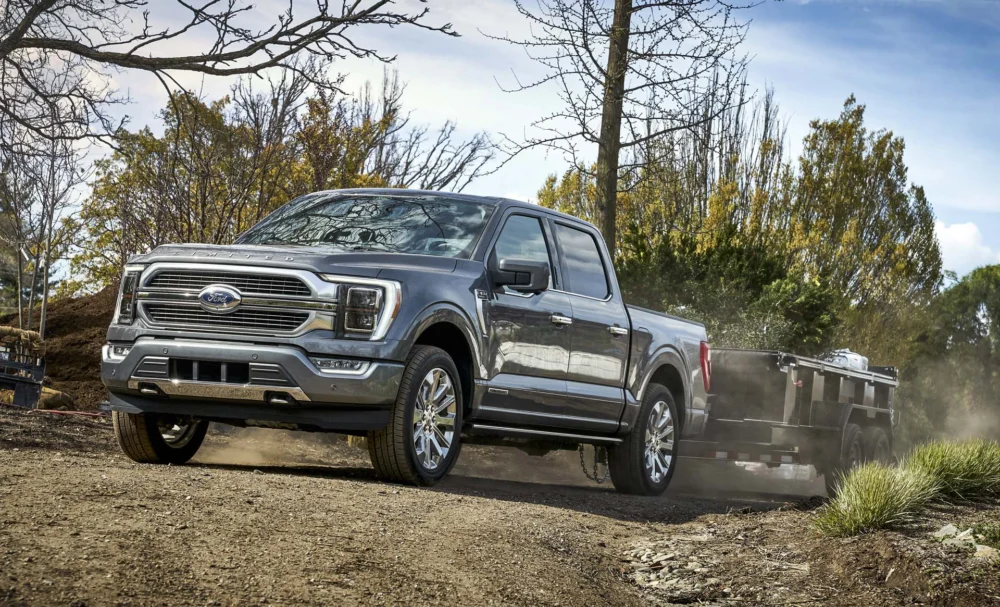
Ford Motor Company has once again issued a significant safety recall, this time affecting 10,627 pickup trucks and SUVs, marking a concerning second attempt to rectify a persistent software glitch impacting trailer brake performance. The recall, identified by Ford’s reference number 25S18, stems from a critical issue where the trailer brake controller in these vehicles may fail to properly apply trailer brakes when towing trailers equipped with electric or electric-over-hydraulic braking systems. This malfunction can lead to significantly reduced braking effectiveness, thereby extending stopping distances and substantially increasing the risk of a collision.
The urgency of this recall, announced on March 18, 2025, is amplified by the fact that it is a re-recall of vehicles that were supposedly fixed under a previous campaign. According to the National Highway Traffic Safety Administration (NHTSA), the core problem – a software defect – was intended to be resolved by dealers installing updated software. However, a critical flaw in the remediation process has come to light: the software tool used by dealerships may not have successfully uploaded the correct software to all affected vehicles, leaving a subset of the initially recalled population still vulnerable to the dangerous braking anomaly. While Ford has stated it is unaware of any crashes or injuries directly linked to vehicles remaining in circulation with this uncorrected issue, the potential for severe consequences underscores the seriousness of the defect.
The specific models implicated in this recall were not detailed in the initial announcement provided, listed simply as "pickup trucks and SUVs." However, given the nature of the issue – affecting vehicles with integrated trailer brake controllers designed for heavy-duty towing – it is highly probable that models such as the F-Series (F-150, F-250, F-350), Expedition, Explorer, and potentially Lincoln Navigator, which are frequently equipped with advanced towing technology, are among those impacted. These vehicles are often purchased by owners who regularly tow large loads, from recreational campers and boats to work trailers, making reliable trailer braking an indispensable safety feature.
Understanding the mechanics of trailer braking is crucial to grasping the severity of this defect. Modern trailers, especially those exceeding a certain weight threshold, are mandated to have their own braking systems. For many utility and recreational trailers, these are electric brakes, where an electrical signal from the tow vehicle activates magnets that press brake shoes against the drum. Electric-over-hydraulic systems, common on heavier trailers, use an electric signal to power a hydraulic pump, which then actuates the trailer’s hydraulic brakes. An integrated trailer brake controller in the tow vehicle allows the driver to adjust the braking force applied to the trailer and ensures synchronized braking between the tow vehicle and the trailer. Without proper synchronization and sufficient braking force from the trailer, the tow vehicle alone must bear the brunt of stopping the combined mass, leading to dangerously long stopping distances, excessive wear on the vehicle’s brakes, and potential loss of control, particularly in emergency maneuvers or on downhill grades. A fully loaded truck or SUV towing a large trailer can easily weigh upwards of 15,000 pounds or more, and even a slight increase in stopping distance can mean the difference between a safe stop and a catastrophic accident.
The repeated nature of this recall highlights a growing challenge within the automotive industry: the increasing reliance on complex software systems and the potential pitfalls in their deployment and updates. Automakers are incorporating millions of lines of code into every new vehicle, controlling everything from engine management and infotainment to advanced driver-assistance systems (ADAS) and, critically, safety-related functions like braking. While software offers immense opportunities for innovation and feature enhancement, it also introduces new vectors for defects and necessitates robust validation and update mechanisms.

For affected owners, this recall means another inconvenient trip to the dealership. Ford has assured customers that the installation of the correct software will, again, be performed free of charge. Furthermore, the company has committed to reimbursing owners for any related out-of-pocket expenses incurred due to the previous unsuccessful repair or this subsequent recall. This might include costs for fuel, lost wages, or alternative transportation, though owners will need to retain receipts and follow Ford’s specific reimbursement procedures. Ford plans to mail owner notification letters starting April 14, 2025. Owners seeking more information can contact Ford’s customer service department directly at 1-866-436-7332 or visit the dedicated recall section on Ford’s official website.
This incident is not an isolated one for Ford, nor is it unique in the broader automotive landscape. The source article points to a pattern of software-related re-recalls for the automaker. Just last month, Ford initiated two new recalls for its Maverick pickup, both aimed at fixing issues that had been the subject of previous, unsuccessful recall campaigns. In January, a separate recall affecting 272,000 Maverick and Bronco Sport crossovers was issued to address a 12-volt battery issue, again after a prior recall remedy proved ineffective. This series of events suggests potential systemic challenges within Ford’s software development, testing, or deployment processes, particularly concerning the validation of over-the-air (OTA) updates or dealer-installed software patches.
The increasing prevalence of software-related recalls across the industry reflects a paradigm shift in automotive engineering. Gone are the days when recalls primarily involved mechanical components. Today, a single line of faulty code can compromise safety functions across an entire fleet. This trend places immense pressure on manufacturers to not only develop robust software but also to ensure that the methods of delivering updates – whether through dealership visits or increasingly, through OTA updates – are foolproof. When OTA updates are not feasible for critical safety issues, or when the process of applying updates at dealerships proves faulty, the burden on consumers and the reputational damage to manufacturers can be substantial.
From a regulatory standpoint, the NHTSA plays a crucial role in monitoring these recalls, ensuring manufacturers take appropriate steps to protect public safety. The agency investigates consumer complaints, analyzes accident data, and works with manufacturers to define the scope and remedy of recalls. Repeated failures to fix an issue, as seen in this Ford case, draw increased scrutiny from the NHTSA, potentially leading to fines or more stringent oversight. The NHTSA’s involvement underscores the gravity of the trailer brake issue, as it directly impacts a fundamental safety function critical for preventing serious accidents involving heavy loads.
For consumers, these repeated recalls can erode trust and cause significant inconvenience. While Ford’s commitment to free repairs and reimbursement for out-of-pocket expenses is standard practice for recalls, the time and effort involved in multiple dealership visits are a real cost. Owners of affected vehicles are strongly advised not to delay scheduling the necessary repair. Until the correct software is installed, exercising extreme caution when towing, including increasing following distances and reducing speeds, is paramount. In some cases, owners may consider refraining from towing until the fix is applied, especially if they frequently tow heavy loads or travel in challenging conditions.
Looking ahead, the automotive industry must continue to evolve its approach to software quality and lifecycle management. This includes investing heavily in rigorous software testing, employing sophisticated validation tools, and ensuring that dealer service technicians are adequately trained and equipped with reliable tools for applying software updates. The aspiration for seamless OTA updates, while promising, also requires robust cybersecurity measures and fail-safe mechanisms to prevent partial or incorrect installations. For manufacturers like Ford, addressing these underlying process deficiencies will be key to regaining full consumer confidence and mitigating the significant costs, both financial and reputational, associated with repeated safety recalls. This latest recall serves as a potent reminder that in the age of the software-defined vehicle, the integrity of code is as critical as the strength of steel in ensuring vehicle safety.