
 By Lina Irawan
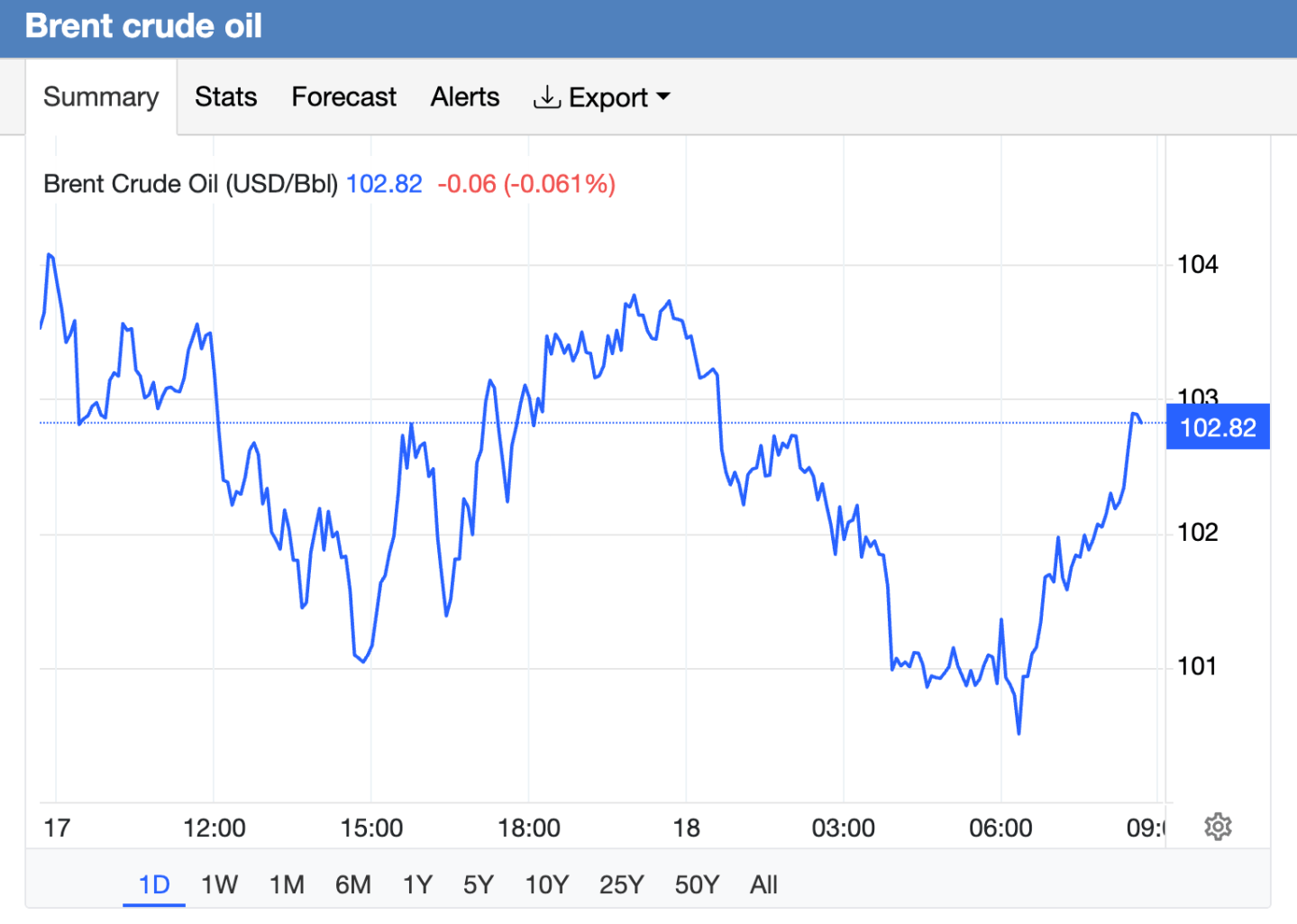
Global financial markets surged this morning, fueled by a significant development in the energy sector and continued optimism from yesterday’s trading. Brent crude, the international benchmark, was seen moderating downward to $102 a barrel, a notable retreat from recent highs. This softening in oil prices comes after Iraq successfully brokered a deal to export oil through Turkey, circumventing the geopolitically sensitive and often volatile Strait of Hormuz. The strategic implications of this new route, offering a more secure and reliable flow of crude, immediately provided a sense of relief to a market long anxious about supply disruptions in the Middle East.
The Strait of Hormuz, a narrow chokepoint between Iran and Oman, is a critical artery for global oil trade, with roughly one-fifth of the world’s petroleum consumption passing through it daily. Its vulnerability to geopolitical tensions, particularly those involving Iran, has historically kept energy markets on edge. The new Iraqi-Turkish pipeline deal, while not entirely replacing the Strait’s capacity, significantly diversifies export routes for Iraqi crude, the second-largest producer within OPEC. This development is seen as a crucial step towards enhancing energy security and reducing the premium often built into oil prices due to regional instability. Energy analysts at Goldman Sachs noted, "While the immediate price drop is modest, the long-term strategic value of this alternative route cannot be overstated. It introduces a new layer of resilience into global supply chains, potentially capping future price spikes related to Middle East flare-ups."
The positive sentiment resonated across equity markets. S&P 500 futures were up a robust 0.5% before the opening bell, building on yesterday’s 0.25% gain for the index. This pre-market surge signals continued investor confidence, likely buoyed by the prospect of lower energy costs potentially easing inflationary pressures and boosting corporate profitability. Technology and consumer discretionary stocks, often sensitive to energy prices, are expected to be among the beneficiaries. "Lower oil prices are a direct positive for consumers and businesses alike, acting like a tax cut that can stimulate spending and investment," commented Dr. Eleanor Vance, chief economist at Vanguard. "This, coupled with generally robust corporate earnings expectations, is providing a strong tailwind for equities."
Optimism was not confined to Western markets, extending its reach across Asia and Europe. South Korea’s KOSPI index led the charge, soaring an impressive 5%, likely driven by its heavily export-oriented and technology-laden economy benefiting from a more stable global outlook. Japan’s Nikkei 225 followed suit, climbing 2.87%, as a weaker yen and strong corporate guidance continued to attract foreign investment. In Europe, the Stoxx Europe 600 was up 0.57% in early trading, reflecting broad-based gains across the continent. The U.K.’s FTSE 100, often influenced by commodity prices and global trade, also saw a healthy mid-morning rise of 0.33%. These synchronized global rallies underscore a collective sigh of relief from investors regarding the energy market and a broader appetite for risk assets.
IRAN: No End in Sight, but Plenty of ‘Butterfly Effects’ Amidst Diverging Agendas
Despite the positive market reactions to the Iraqi oil deal, the underlying geopolitical tensions surrounding the ongoing conflict with Iran remain a significant concern, casting a long shadow over the fragile stability. The resignation of Joe Kent, the director of the White House’s National Counterterrorism Center (NCTC), has intensified scrutiny on the Trump Administration’s multifaceted and seemingly contradictory strategy for the conflict. Kent, a decorated Green Beret and a vocal MAGA loyalist who previously ran for political office, cited his belief that the U.S. should never have been involved, arguing that Iran “posed no imminent threat to our nation,” as reported by Fortune’s Catherina Gioino. His departure from such a high-level intelligence position, particularly with his public criticisms, suggests deep internal divisions within the administration regarding the conflict’s rationale and execution.
Kent further complicated matters by floating a conspiracy theory, widely seen as anti-Semitic, that the war was orchestrated primarily by Israel. This controversial assertion not only drew sharp condemnation but also highlighted the dangerous rhetoric surrounding the conflict. Such pronouncements from former senior officials can erode public trust and embolden dissenting voices within the Republican party, many of whom are becoming increasingly vocal in their opposition to the prolonged engagement, as noted by The Wall Street Journal. The debate over the "imminent threat" justification has been a recurring theme in U.S. foreign policy, and Kent’s resignation reignites questions about intelligence assessments and the decision-making process that led to the current entanglement.
A significant challenge exacerbating the conflict’s complexity is the fundamental divergence in objectives between the United States and Israel. According to Axios, the U.S. is primarily focused on degrading Iran’s conventional military capabilities and preventing its nuclear proliferation, aiming for a degree of regional stability and de-escalation. In stark contrast, Israel has adopted a far more aggressive stance, reportedly engaging in targeted assassinations and "hunting down" as many top-level members of the Tehran regime as it can find, as detailed by The Wall Street Journal. Axios also provided a sobering list of Iranian officials killed in recent operations, underscoring the lethal effectiveness of Israel’s strategy. This disparity in aims creates a precarious dynamic, with the U.S. attempting to manage a broader regional crisis while its closest ally pursues a more direct, regime-destabilizing approach.
This strategic misalignment is reportedly causing significant friction within the White House. A senior White House official, speaking anonymously to Axios, candidly admitted the resulting "chaos." "Israel doesn’t hate the chaos. We do. We want stability. Netanyahu? Not so much, especially in Iran. They hate the Iranian government a lot more than we do," the official stated. This stark assessment reveals the profound ideological and strategic chasm between the two allies. For Israel, internal instability within Iran might be seen as a pathway to weakening a long-standing existential threat. For the U.S., however, widespread chaos risks igniting a broader regional conflagration, disrupting global trade, and diverting critical resources away from other strategic priorities. The long-term implications of this sustained instability could include humanitarian crises, further proxy conflicts, and an emboldened network of non-state actors exploiting the power vacuum.
The "chaos is producing ‘butterfly effects’ across the world," warned Deutsche Bank’s George Saravelos in a client note seen by Fortune. These "unexpected ‘second-order effects’" are rippling far beyond the Middle East. Saravelos highlighted two primary concerns: "First, a disruption to chip production in Taiwan given the industry’s reliance on Middle East energy production, including helium. Disruptions to the semiconductor supply chain could be highly relevant given the importance of AI in driving equity valuations." Taiwan’s semiconductor industry, a cornerstone of global technology, depends on a stable supply of specialized gases like helium, which are often sourced from regions susceptible to geopolitical instability. Any interruption could severely impact the production of advanced chips, essential for everything from smartphones to artificial intelligence infrastructure, thereby threatening the very tech-driven market rally currently underway. Saravelos also noted he is closely watching "the broader knock-on influence on the credit cycle," fearing that prolonged uncertainty could tighten credit conditions, raise borrowing costs, and impede global economic growth.
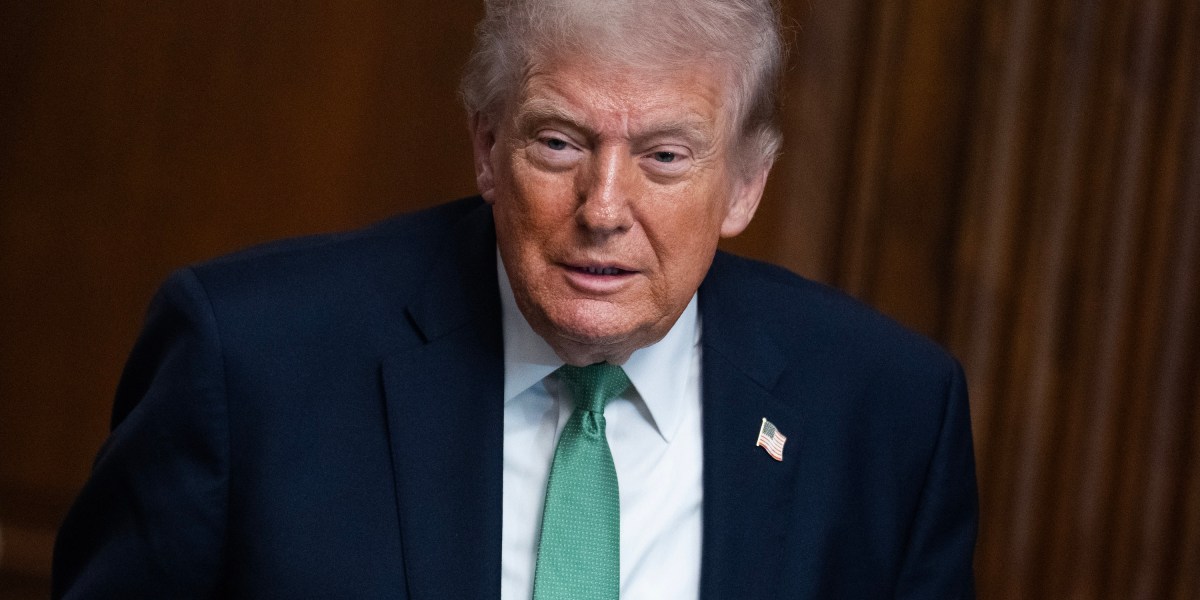
Adding another layer of complexity to the already strained international relations, President Trump expressed his fury after NATO declined to send minesweepers to aid the war effort. "WE DO NOT NEED THE HELP OF ANYONE!" he raged on social media last night, a post on Truth Social that underscored his administration’s increasingly isolationist stance and willingness to challenge traditional alliances. The lack of NATO support is particularly problematic given the U.S. Navy’s current capacity constraints. The Wall Street Journal reported that four of the U.S. Navy’s anti-mining ships are en route to Philadelphia for decommissioning, while another four are deployed in distant Japan. This depletion of critical assets leaves the U.S. with limited capabilities to clear potential naval mines in the Strait of Hormuz, further complicating efforts to secure vital shipping lanes and manage the ongoing conflict without broader international assistance.
ARTIFICIAL INTELLIGENCE: Reshaping Work and Consulting
The burgeoning field of artificial intelligence continues to generate headlines, not just for its technological advancements but also for its potential to revolutionize business practices and redefine the future of work.
Nvidia Might Pay Engineers in AI Tokens
In a bold move that could redefine compensation in the tech sector, Nvidia CEO Jensen Huang revealed his company is considering plans to pay engineers in "tokens"—a novel approach aimed at amplifying their output. As reported by Fortune’s Jake Angelo, Huang envisions a future where "every single engineer in our company will need an annual token budget." He elaborated on the concept, stating, "They’re going to make a few 100,000 a year as their base pay. I’m going to give them probably half of that on top of it as tokens so that they could be amplified 10 times.” These "AI tokens" are likely computational credits or access units for advanced AI models and infrastructure, directly empowering engineers with the resources needed to leverage cutting-edge AI tools in their work. This innovative compensation model could revolutionize productivity, allowing engineers to experiment, iterate, and deploy AI solutions at an unprecedented pace. However, it also raises questions about the valuation of such tokens, potential inequalities in access, and the broader implications for traditional salary structures within the tech industry. Nvidia, a dominant player in AI hardware and software, is uniquely positioned to experiment with such an incentive system, leveraging its own ecosystem to drive internal innovation.
AI Isn’t Destroying Consultants, Capgemini Says
Despite widespread speculation that artificial intelligence would render human consultants obsolete, Capgemini Chief Strategy Officer Fernando Alvarez Alvarez offers a different perspective: "Not dead yet!" Alvarez told Fortune’s Jeremy Kahn that clients are far from ready to abandon human expertise. While every company is keen to integrate AI agents, they simultaneously recognize the critical need for robust governance frameworks, comprehensive cybersecurity measures, seamless interaction with complex legacy systems, and the ability to unify fragmented data sources. These intricate challenges, traditionally the bread and butter of consulting firms like Capgemini, demand nuanced human judgment, strategic oversight, and deep domain expertise that AI alone cannot provide. Alvarez emphasized, “The conversation is, do you have the domain expertise to understand my problem?” This highlights the enduring value of human strategic thinking, problem-solving, and the ability to navigate complex organizational landscapes, positioning consultants not as competitors to AI, but as essential guides in its implementation.
CHART OF THE DAY: Prediction Markets See the War Getting Longer
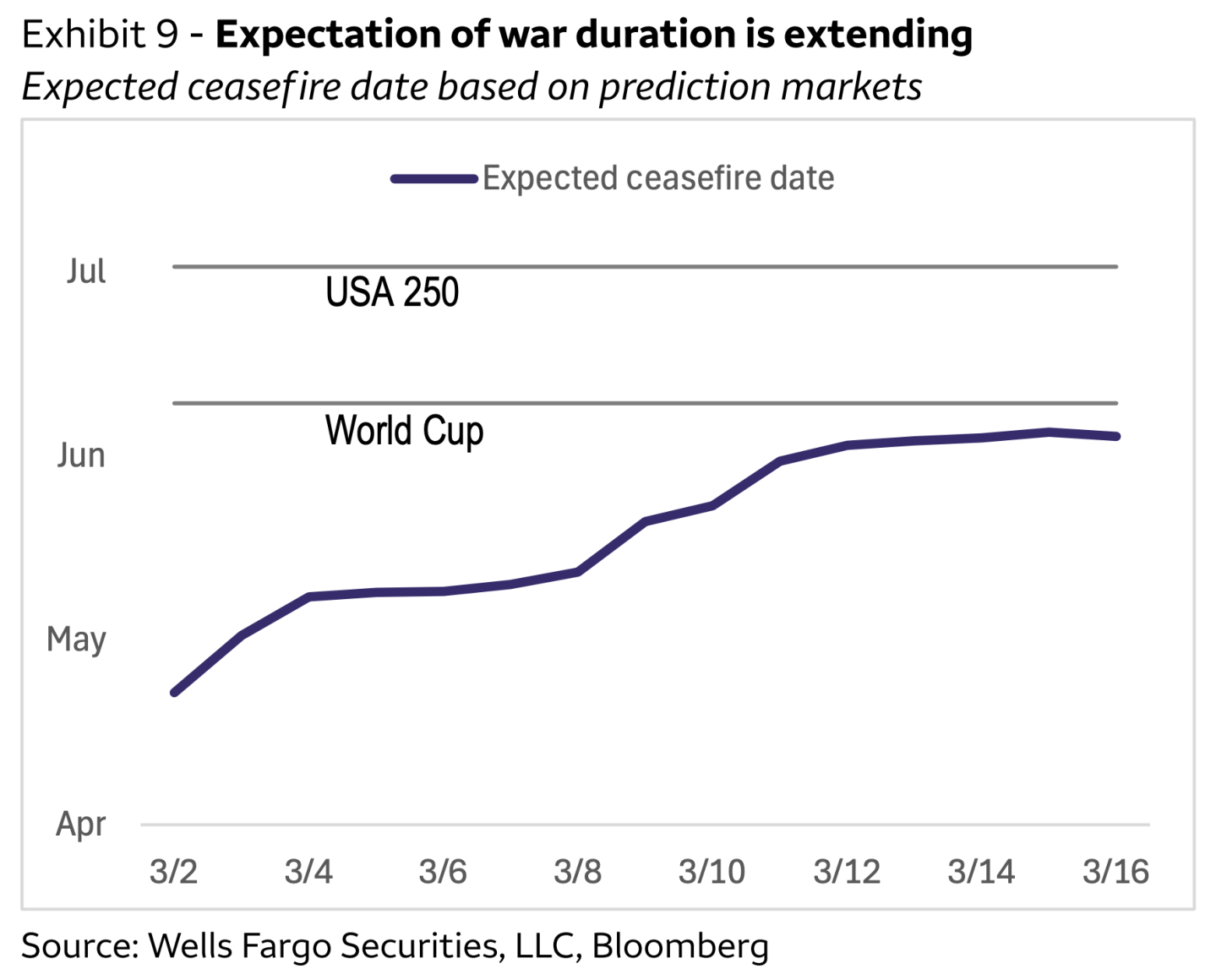
A sobering assessment from prediction markets indicates a growing consensus that the conflict with Iran is far from over. As depicted in today’s chart, the probability of a ceasefire has been pushed back significantly. "The market seems to agree on one thing: the longer the war goes with Iran, the worse it gets for risk assets," says Ohsung Kwon and his team at Wells Fargo. "Prediction markets don’t expect a ceasefire until early June, just before the World Cup starts, up from the third week in April at the start of the war." This shift reflects a deepening pessimism regarding a swift resolution, with implications for global economic stability and investor confidence. Prolonged geopolitical uncertainty typically dampens investor appetite for risk, leading to capital flight from equities and other growth-oriented assets towards safer havens. The extension of the predicted conflict timeline suggests a period of sustained volatility and potential headwinds for global markets.
NUMBER OF THE DAY: $18 Billion
This staggering figure represents the largest amount of outflows from exchange-traded funds (ETFs) covering S&P 500 companies, as a percentage of market cap, since March 2023, as tracked by Wells Fargo. While today’s futures show optimism, this significant outflow signals a notable shift in investor sentiment, perhaps reflecting profit-taking after recent market highs, or a growing apprehension about the broader economic outlook. The last comparable outflow in March 2023 coincided with heightened fears around regional bank failures, indicating that investors may be responding to new systemic concerns or reallocating capital amidst the ongoing geopolitical tensions and interest rate uncertainties. This divergence between daily market movements and underlying ETF flows suggests a complex and potentially volatile landscape ahead.
MORE FROM FORTUNE
- McDonald’s newest $3 value menu is sounding an alarm about America’s K-shaped economy by Marco Quiroz-Gutierrez. The introduction of a new budget-friendly menu at McDonald’s underscores growing economic disparities, suggesting that while some segments of the economy thrive, lower-income workers are increasingly struggling to afford basic necessities. This phenomenon, dubbed the "K-shaped recovery," highlights the widening wealth gap and its societal implications.
- ‘100% completely unsustainable as a society.’ Billionaire advisor calls out widening inequality that leaves America’s poorest 80% ‘falling behind’ by Tristan Bove. This piece further amplifies concerns about wealth inequality, with a prominent billionaire advisor warning of the long-term dangers of a society where the vast majority of the population struggles to keep pace with economic growth, potentially leading to social unrest and instability.
- Scott Galloway wants the stock market to crash. Gen Z is already betting like it will by Nick Lichtenberg. Professor Scott Galloway’s provocative stance on a market correction resonates with a generation that has grown up amidst economic uncertainty, suggesting a pervasive financial nihilism among Gen Z who are already positioning their investments for a downturn.
- Stocks haven’t hit bottom yet, says the analyst who called a ‘rolling recession’ when everyone else saw a boom by Nick Lichtenberg. This article features Mike Wilson of Morgan Stanley, a contrarian analyst known for accurately predicting market trends. His latest warning about a further market correction stands in stark contrast to much of the current bullish sentiment, urging investors to remain cautious.
THE FRONT PAGES TODAY
- France ready to help U.S. secure Strait of Hormuz — but not while ships are under attack – CNBC. This report highlights the delicate balance of international alliances, with France expressing conditional support for U.S. efforts in the Strait of Hormuz, underscoring the dangers and complexities of military involvement in the region.
- Warner Bros chief David Zaslav in line for $700mn payday – FT. A spotlight on executive compensation, this article details the immense potential payout for the head of Warner Bros, likely tied to performance metrics and stock incentives, drawing attention to wealth concentration in corporate leadership.
- Anthropic is now capturing over 73% of all spending among companies buying AI tools for the first time – Axios. This signals a major shift in the competitive landscape of the AI industry, with Anthropic emerging as a dominant force for new enterprise customers, challenging established players like OpenAI.
- How a Deep State Bureaucrat Became Trump’s ‘Fake News’ Enforcer – Bloomberg. This feature explores the role of a previously obscure government official in the Trump administration’s efforts to control narrative and challenge media credibility, raising questions about press freedom and government oversight.
- Netanyahu Posts ‘Proof of Life’ Video as A.I. Sows Doubts About What’s Real – NYT. In an age of deepfakes and AI-generated content, this story highlights the increasing difficulty of discerning truth from fabrication, even prompting political leaders to use technology to verify their own existence amidst online disinformation campaigns.
ONE MORE THING: Hinge CEO Thinks She Can Fix the ‘Dating Recession’
The realm of online dating, often fraught with frustration and disappointment, is currently experiencing what many are calling a "dating recession." As Fortune’s Ellie Austin reports, the pervasive sentiment is that online heterosexual dating is "awful." Women frequently report being overwhelmed by an influx of low-effort matches, while men often lament a dearth of genuine connections, leading to few-to-zero actual dates. The landscape is further complicated by lackluster conversations and aggressive upselling tactics by apps, creating a generally unfulfilling user experience. This widespread dissatisfaction has prompted a noticeable exodus from certain platforms; Bumble, for instance, saw its revenue decline by 14.3% year-on-year in the last quarter of 2025.
However, Hinge, under the leadership of its new CEO Jackie Jantos, appears to be bucking this trend, reporting a robust 26% revenue growth in the same period. Jantos, addressing the widespread malaise, acknowledges the universal challenges of forging connections. “I don’t see any group’s challenges in life or in relationships as sizably larger or smaller than another,” she stated, offering a nuanced perspective on the frustrations experienced by users across the gender spectrum. Her philosophy, encapsulated by the simple yet profound observation that "Dating has never been easy," suggests a strategy focused on fostering more meaningful connections rather than simply maximizing swipes. Hinge’s success is attributed to its emphasis on deeper profiles, prompts designed to spark genuine conversation, and a user experience aimed at cultivating relationships that lead to real-world dates, rather than endless digital interactions. As Jantos navigates the complexities of modern romance, her leadership at Hinge offers a glimmer of hope that the "dating recession" might yet be overcome through thoughtful design and a focus on authentic human connection.